A wooden climbing triangle is a beloved piece of Montessori-inspired play equipment that supports gross motor development and independent play. Whether your child uses it daily or occasionally, proper care ensures the triangle remains safe, sturdy, and beautiful for years. This guide covers cleaning routines, maintenance checks, and safety practices every parent should know.
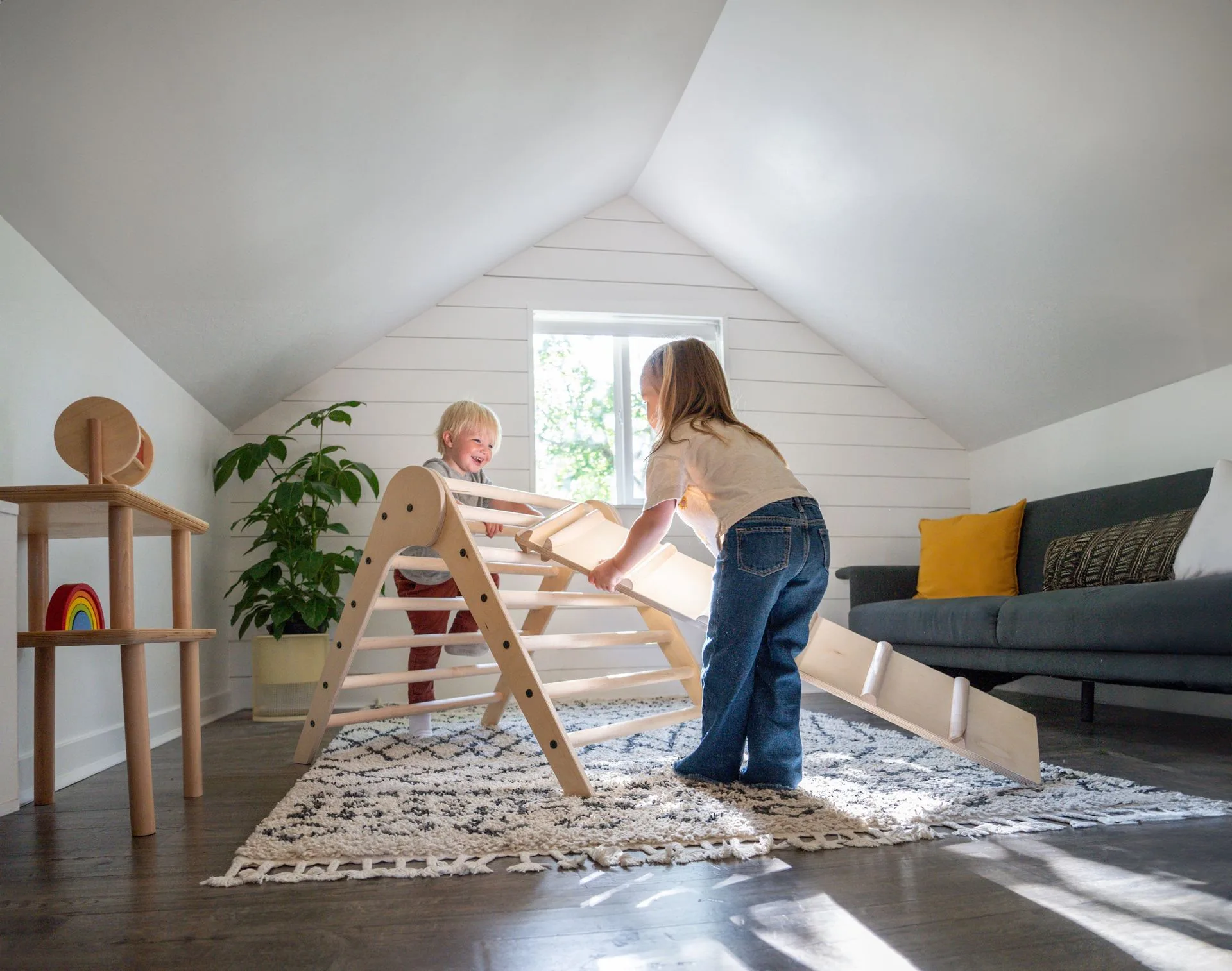
wooden climbing triangle
Unlike plastic toys, wooden climbing triangles require a bit of attention to prevent wear and tear. With the right approach, you can preserve the natural wood finish and avoid common issues like splinters or loose joints. Let's dive into the essentials of climbing triangle care.
How to Clean a Wooden Climbing Triangle
Regular cleaning keeps the climbing triangle free of dirt, grime, and germs. For day-to-day touch-ups, simply wipe the wood with a soft, slightly damp cloth. Avoid soaking the wood or using harsh chemical cleaners, as these can strip the natural finish or cause warping. If you need to disinfect, mix a few drops of mild dish soap with water, or use a diluted vinegar solution (1 part vinegar to 10 parts water). Apply with a damp cloth and then dry thoroughly with a clean towel.
For deeper cleaning, especially if the triangle has been used outdoors or has sticky residue, you can gently sand the affected area with fine-grit sandpaper (220-grit) and then wipe clean. This removes surface stains without damaging the wood. Always ensure the triangle is completely dry before allowing your child to play on it. Avoid placing the triangle in direct sunlight or near heat sources, as this can cause the wood to crack.
- Use a damp (not wet) cloth for daily cleaning.
- Avoid bleach, ammonia, or other harsh chemicals.
- Dry the triangle thoroughly after every cleaning.
Wooden Climbing Triangle Maintenance: What to Check Regularly
Wooden climbing triangle maintenance involves inspecting the structure for signs of wear. Check all bolts, screws, and joints monthly to ensure they are tight. Over time, wood can expand and contract with humidity, causing hardware to loosen. Tighten any loose connections with the appropriate tool (usually a hex key or screwdriver). If your triangle has wooden dowels, ensure they are not cracked or splintered.
Also examine the wood surface for splinters or rough spots. Lightly sand any rough areas with fine-grit sandpaper and apply a thin coat of food-safe mineral oil or beeswax polish to restore the finish. This not only protects the wood but also keeps it smooth for little hands. If the triangle is used outdoors, consider bringing it inside during wet weather to prevent moisture damage.
- Tighten hardware every 4-6 weeks.
- Sand and oil the wood annually or as needed.
- Store indoors to avoid weather-related damage.
Climbing Triangle Safety: Ensuring a Safe Play Environment
Climbing triangle safety starts with proper placement. Set up the triangle on a flat, level surface away from walls, furniture, or hard edges. A soft play mat or rug underneath can cushion falls. Always supervise young children during use, especially when they are first learning to climb. The triangle is designed for independent play, but toddlers may need guidance to use it safely.
Check the weight limit of your specific model, typically around 50-100 pounds. Do not allow multiple children to climb at the same time unless the triangle is explicitly designed for that. Also, inspect the triangle for any loose parts or sharp edges before each use. If you have the Wooden Climbing Triangle from Sprout Kids, it comes with a sturdy build and rounded edges, but regular checks are still important. For added stability, you can pair it with a play mat or use it on a carpeted floor.
- Always supervise young children.
- Place on a soft surface like a play mat.
- Check for loose parts before each use.
When to Replace or Repair Your Climbing Triangle
Even with excellent care, wooden climbing triangles may eventually need replacement or repair. Signs that it's time to retire the triangle include deep cracks that compromise structural integrity, broken dowels, or hardware that cannot be tightened. If the wood has become warped or shows signs of rot (from moisture), it's safer to replace it. Minor issues like surface scratches or small splinters can be sanded and treated.
For repairs, contact the manufacturer for replacement parts. Many brands, including Sprout Kids, offer individual components like rungs or bolts. Avoid using glue on load-bearing parts unless specified by the manufacturer, as it may not hold under dynamic loads. A well-maintained climbing triangle can last through multiple children, making it a worthwhile investment.
- Replace if there are deep cracks or broken parts.
- Contact the manufacturer for replacement hardware.
- Don't use glue on structural joints without guidance.
Caring for a wooden climbing triangle doesn't have to be complicated. With regular cleaning, periodic maintenance, and a focus on safety, your child can enjoy this classic Montessori toy for years. By following these simple tips, you'll keep the triangle in excellent condition while providing a secure environment for active play.