Quick answer
Choose the Wooden Drawer Puzzle if your rabbit or guinea pig needs a problem-solving challenge that slows down treat eating and redirects digging. Choose Tiny Paws Seagrass Sticks if your pet mainly needs a safe, tossable chew that satisfies the urge to gnaw and carry. Many small pets do best with both: a puzzle for mealtime and chew sticks for the in-between hours.
How the two toys differ in play style
The Wooden Drawer Puzzle is built around three hidden compartments. Your pet has to sniff, search, and work out how to reach a reward, which turns a handful of pellets or a few dried bell pepper flakes into a longer activity. It is a foraging toy first and a chew object second.
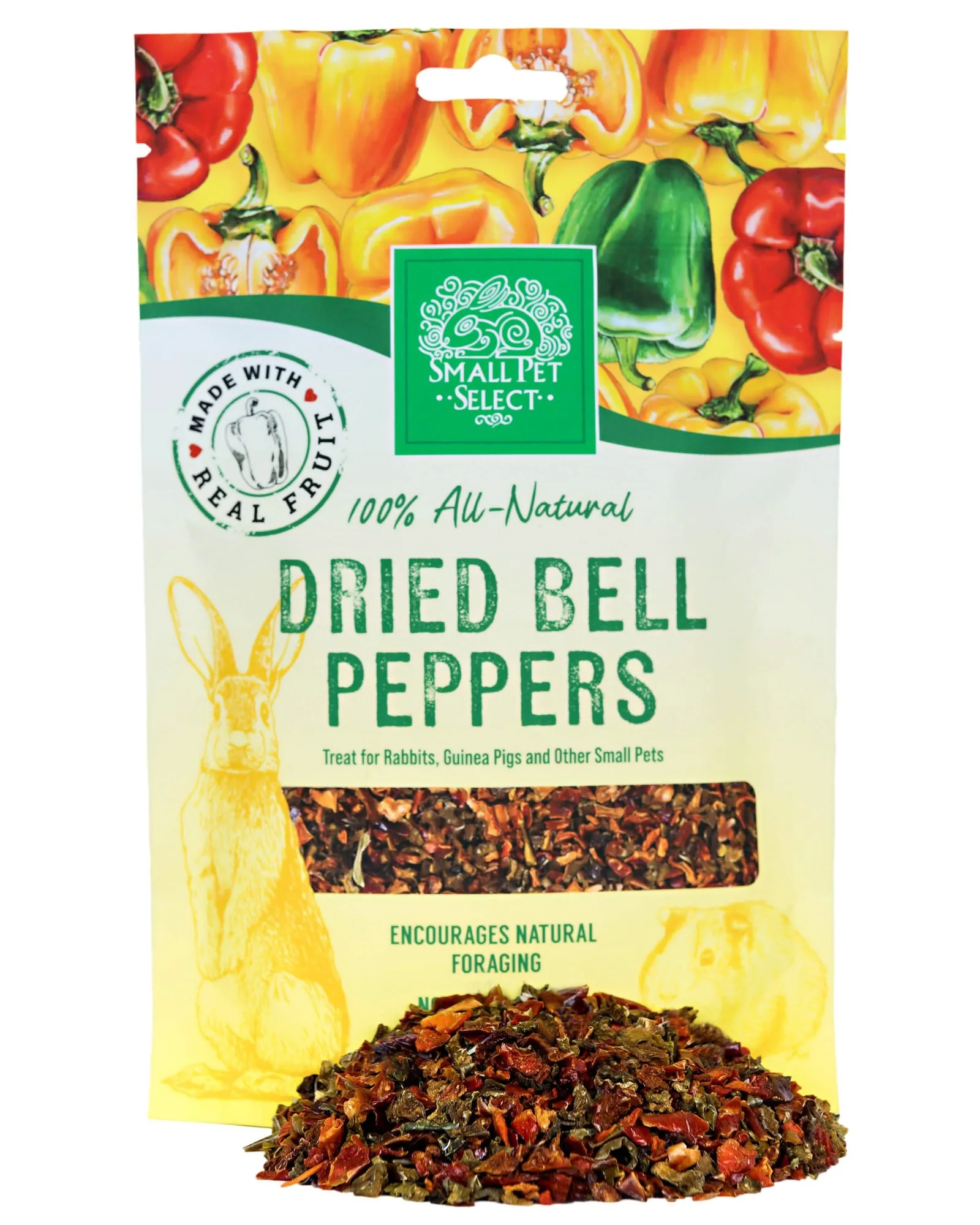
dried bell pepper
Tiny Paws Seagrass Sticks are the opposite kind of enrichment. They are lightweight, easy to grip, and meant to be nibbled, carried, stacked, or tossed. There is no puzzle to solve, so a shy or older pet can enjoy them immediately without learning a new skill.
Materials and what they mean for daily use
The Wooden Drawer Puzzle is made from 1/2-inch birch veneer plywood with a pine core. That construction is designed to stand up to daily play, so it holds its shape when a guinea pig paws at the drawers or a rabbit nudges it around the cage. It is not a disposable item, and it should be inspected for splinters or loose edges as part of your normal cage check.
Seagrass Sticks are handwoven from 100% natural seagrass and are inherently a consumable. They satisfy the instinct to chew while supporting healthy teeth and gums, and they wear down as your pet works on them. That is the trade-off: one toy is a durable puzzle, the other is a chewable supply you replace over time.
Matching the toy to your pet's behavior
Watch what your pet does when bored. A rabbit that digs at cage corners, tips bowls, or nips at bars is often under-stimulated and tends to take to a small pet puzzle feeder quickly. A pet that gnaws on cage bars, cardboard, or fabric usually needs more appropriate chew outlets, which is where seagrass sticks shine.
If you are unsure, start with the cheaper experiment. A pack of seagrass sticks costs less than a puzzle, so it is a low-risk way to see whether your pet engages with a new object at all. Once you know your pet investigates new items, a puzzle becomes a better investment.
Cleaning, rotation, and safety checks
Wipe the wooden puzzle with a damp cloth and let it dry fully before refilling the compartments. Avoid soaking it, since prolonged moisture is hard on wood. Rotate it out of the cage for a few days every week or two so it stays novel rather than becoming furniture.
Seagrass sticks need less maintenance, but check for frayed ends and remove any piece small enough to swallow. Offer one or two at a time rather than leaving a whole bundle in the cage, and pair them with fresh hay so chewing stays directed at safe items.
Trade-offs at a glance
- Mental challenge vs instant chewing: The wooden puzzle asks your pet to solve a problem before eating, which is mentally tiring in a good way. Seagrass sticks require no learning and deliver chewing satisfaction right away. Pick the puzzle for a busy brain; pick the sticks for a pet that just wants to gnaw.
- Durable object vs consumable supply: The birch and pine puzzle is a one-time purchase you clean and rotate. Seagrass sticks wear down as they are chewed, so you restock them regularly. Budget for a durable toy once, or for a steady supply of chew sticks.
- Supervision needs: Puzzles should be checked for loose edges and refilled with measured treats. Sticks should be removed once they are small enough to swallow. Both need a quick daily safety check, just for different reasons.
Product facts
- Wooden Drawer Puzzle: Crafted from durable 1/2-inch birch veneer plywood with a pine core, with three hidden compartments that encourage sniffing, searching, and problem-solving. The compartments turn a treat into a longer foraging session, and the plywood build is intended to hold up to daily play rather than being chewed apart in one sitting.
- Tiny Paws Seagrass Sticks: Handwoven from 100% natural seagrass, these crunchy fibrous sticks are lightweight, easy to grip, and suited to nibbling, carrying, stacking, and tossing. They give rabbits and guinea pigs a simple chew outlet with no learning curve, and the lightweight shape makes them easy for smaller pets to pick up and move.
- Tiny Paws Seagrass Heart: A seagrass heart-shaped toy described as a playful companion and a natural, wholesome gift-like item for a small pet. If you want a seagrass option that doubles as a cage accessory or a small gift, the heart shape offers the same natural chew material in a different form.
Which enrichment toy fits your pet?
Best for
- Rabbits and guinea pigs that dig, tip bowls, or need to slow down treat eating
- Owners who want one durable, reusable foraging toy for daily enrichment
- Pets that already investigate new objects and enjoy a challenge
Not for
- Pets that ignore objects and only want to chew, who do better with seagrass sticks
- Owners who prefer a consumable chew supply over a reusable wooden toy
- Cages where a heavier wooden item would be knocked around or soiled quickly