Start with the two pieces you already have
The Wooden Mini Mart is a complete pretend grocery store in one set: a retro-style stand with a clock and shelves, a small till with three coins, and twelve grocery items (jam, juice, coffee, chips, sardines, toilet paper, cat food, milk, an apple, two donuts, and two baguettes). It requires self-assembly and is certified to ASTM F963.
The Wooden Fishmonger Crate adds a separate market basket with three blue fish and three pink fish. It is a small, open-ended play food set that pairs naturally with the Mini Mart’s grocery stock. Together they let a child run a shop that sells both pantry goods and fresh fish.
What each piece contributes to the shop
-
Wooden Mini Mart Pretend Grocery Store: The Wooden Mini Mart includes a stand with clock and shelves, a small till with 3 coins, and 12 grocery items. This is the core of the shop: a counter, a way to take payment, and stock to arrange and sell.
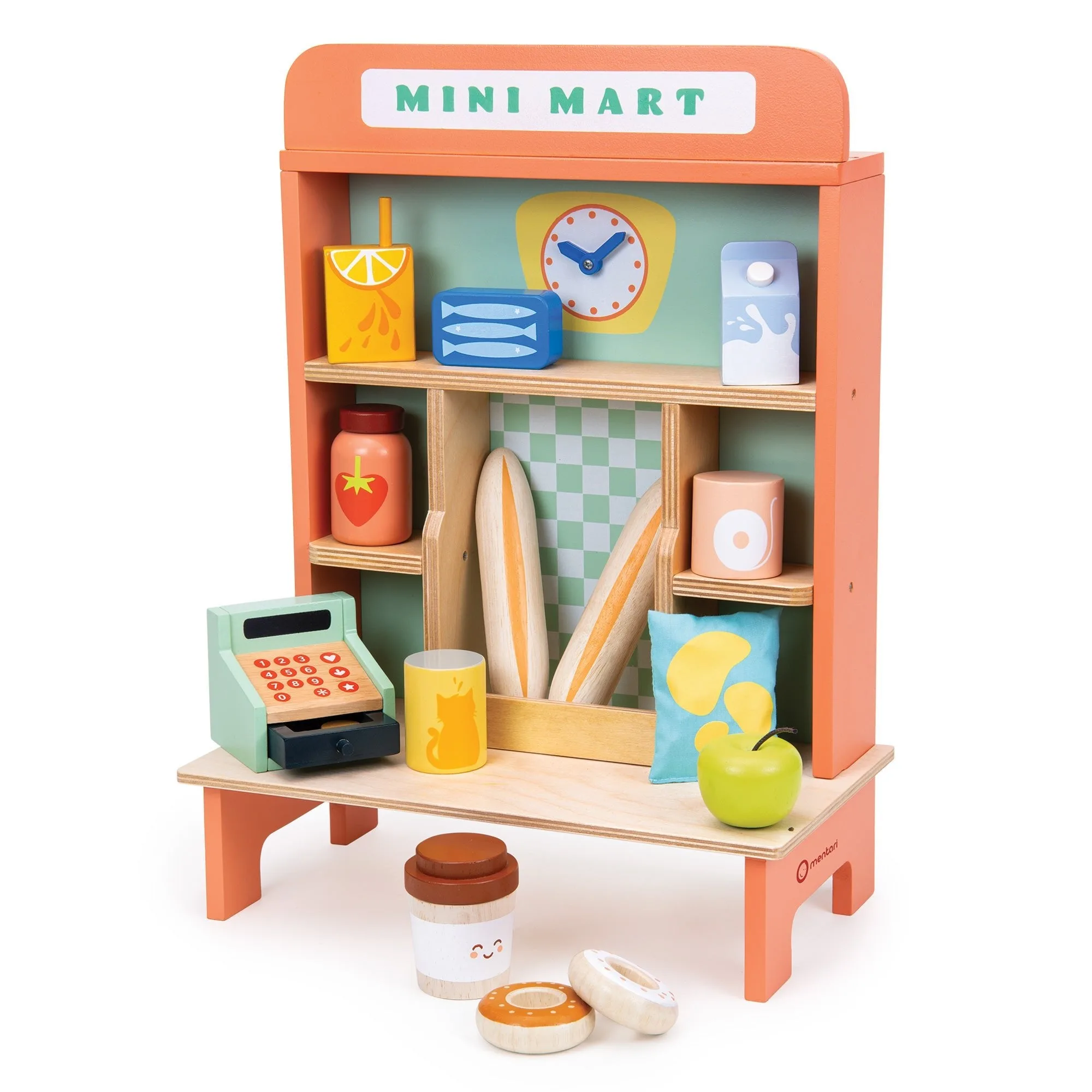
Wooden Mini Mart Pretend Grocery Store
-
Wooden Fishmonger Crate: The Wooden Fishmonger Crate contains 3 blue fish and 3 pink fish. It adds a distinct category of goods (fish) that invites sorting by color and a separate role (fishmonger) within the same shop.
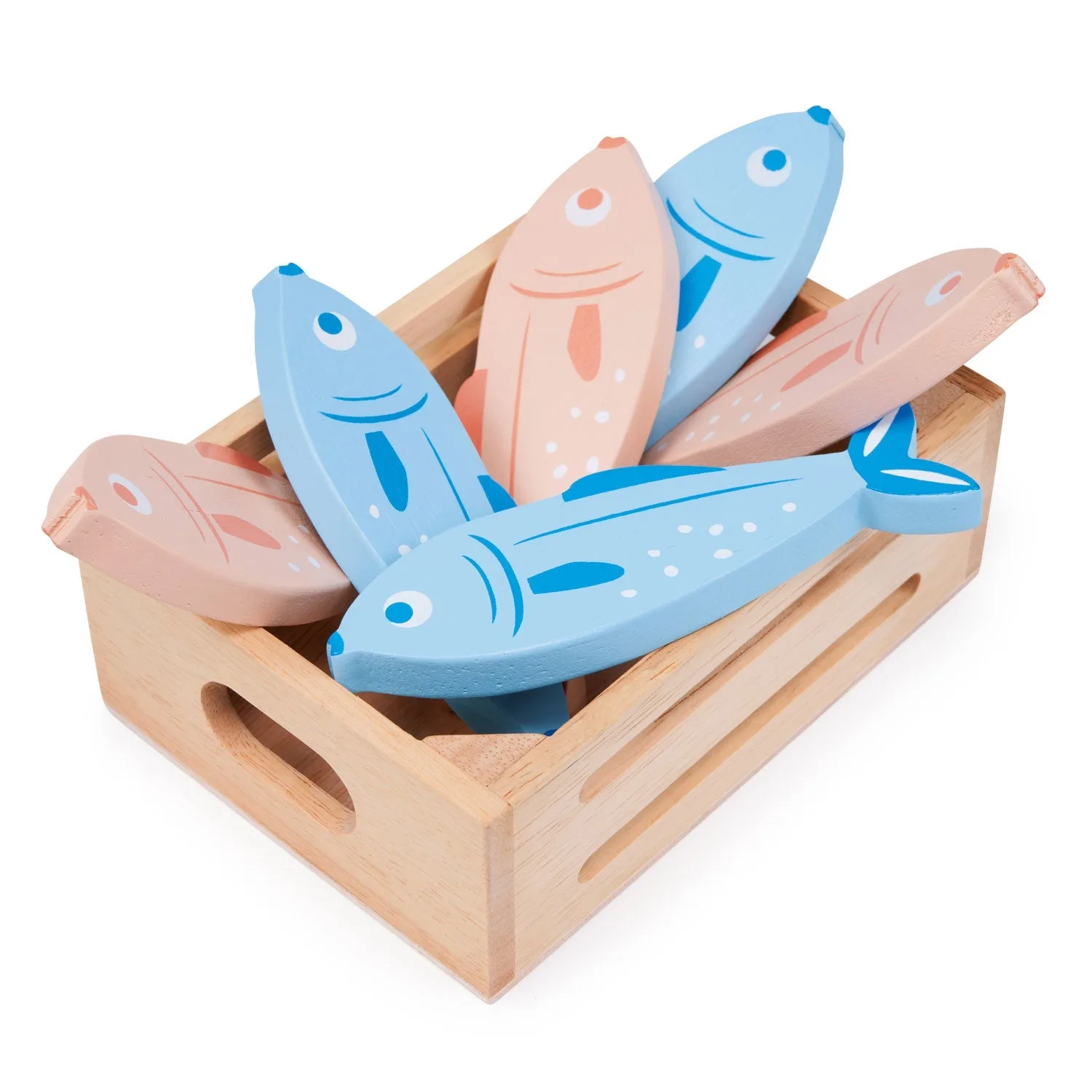
Wooden Fishmonger Crate
Set up the shop in four simple steps
- Assemble the Mini Mart stand: Follow the supplied instructions to build the stand. The self-assembly requirement means you will need a little time before play begins. Once built, place it where the shelves are reachable for a child aged 3 and up.
- Stock the shelves with the grocery items: Arrange the twelve grocery items on the shelves. The variety (jam, juice, coffee, chips, sardines, toilet paper, cat food, milk, apple, donuts, baguettes) gives you natural groups to sort by type or size.
- Add the fishmonger crate as a separate counter: Place the fish crate beside the Mini Mart, either on the same surface or on a nearby low table. Keeping it separate helps children understand that the fish is a different kind of stock, and it makes the fish easier to see and handle.
- Set out the till and coins: Put the small till on the counter with the three coins. This gives the shopkeeper a clear place to ring up totals and count change, which supports early number play.
Play ideas that use both pieces
- Sort the fish by color: Ask your child to put the blue fish in one pile and the pink fish in another. This simple sorting task builds color recognition and fine motor control as they pick up the small pieces.
- Run a two-counter shop: One person can be the grocery clerk at the Mini Mart while another is the fishmonger. Customers move between counters, which encourages turn-taking and cooperative play.
- Take orders and count coins: Use the till and three coins to practice counting. A customer can “buy” one fish and one grocery item, and the shopkeeper names the items and counts out coins.
- Restock the shelves: After a round of play, invite your child to put the grocery items back on the Mini Mart shelves and the fish back in the crate. This tidy-up routine is part of the shopkeeper role and reinforces categorization.
What to keep in mind before you buy
Both toys are recommended for ages 3 years and up. The Mini Mart is the larger purchase and requires assembly; the fish crate is a small add-on that works well if you already have the Mini Mart or another play shop. The supplied information does not specify care instructions for either item, so check the packaging or manufacturer guidance for cleaning.
The Mini Mart’s fixed setup means it stays in one place, which suits a play corner. The fish crate is lightweight and easy to move, so it can travel to a different room or be packed away. Together they offer a complete pretend shop experience without needing additional pieces.