Quick answer
Set up a wooden herb planter by expanding the soil discs, filling the biodegradable pots, planting basil, parsley, and cilantro seeds at the labeled depth, and placing the box on a sunny windowsill. Water when the top inch of soil feels dry, rotate the box weekly, and never let the pots sit in standing water.
Why drainage matters more than pot size
Herb roots need oxygen as much as water. In a wooden box with three nested pots, the biggest risk is a waterlogged base that keeps the lower soil saturated. Empty any water that collects in the wooden tray after watering, and if you add a layer of pebbles under the pots, keep it thin so the pots still sit level. Cilantro is the first to sulk in soggy soil; if its leaves yellow and droop, check drainage before you change anything else.
Light and placement for a kitchen counter
Basil wants the brightest spot you have, ideally six or more hours of direct sun. Parsley tolerates a little less, and cilantro bolts quickly in heat, so a slightly cooler windowsill suits it. Turn the planter a quarter turn every few days so stems grow straight instead of leaning toward the glass. If your counter gets no direct sun, a small clip-on LED grow light placed a few inches above the herbs is a practical fix.
A simple watering and feeding rhythm
Check moisture with a finger, not a schedule. When the top inch of soil is dry, water slowly until a little runs into the wooden tray, then stop and empty the tray. Feed with a diluted liquid fertilizer every two to three weeks once seedlings have two sets of true leaves. Overfeeding produces leafy basil with weak flavor, so err on the light side.
Step-by-step wooden herb planter setup
- Expand the soil discs: Place each compressed disc in a bowl and add warm water a little at a time until it breaks apart into loose, moist soil. It should feel like a wrung-out sponge, not a puddle. Checkpoint: if water pools on top, you have added too much; wait for it to absorb before adding more.
- Fill the biodegradable pots: Loosely fill each pot to about half an inch below the rim. Tap the pot gently on the counter to settle the soil, but do not press it down hard. Common mistake: compacting the soil, which squeezes out the air roots need.
- Plant seeds at the labeled depth: Use the pre-labeled bamboo markers to keep basil, parsley, and cilantro in their own pots. Scatter a few seeds per pot and cover them with a thin layer of soil, roughly twice the seed's thickness. Checkpoint: basil and cilantro usually germinate faster than parsley, so do not assume parsley has failed after a week.
- Water gently and cover: Mist the surface until evenly damp, then place the pots in the wooden box. A clear plastic dome or loose plastic wrap for the first few days keeps humidity high for germination. Common mistake: leaving the cover on after sprouts appear, which encourages mold.
- Move to bright light: Once green sprouts show, remove the cover and place the planter in its brightest windowsill. Keep the soil lightly moist but never soggy. Checkpoint: if seedlings stretch tall and thin, they need more light, not more water.
- Thin and start harvesting: When each pot has a few healthy seedlings, snip the weakest ones at soil level so one or two strong plants remain. Begin harvesting outer leaves once plants are several inches tall. Next step: pinch basil tips regularly to keep it bushy and delay flowering.
Product facts
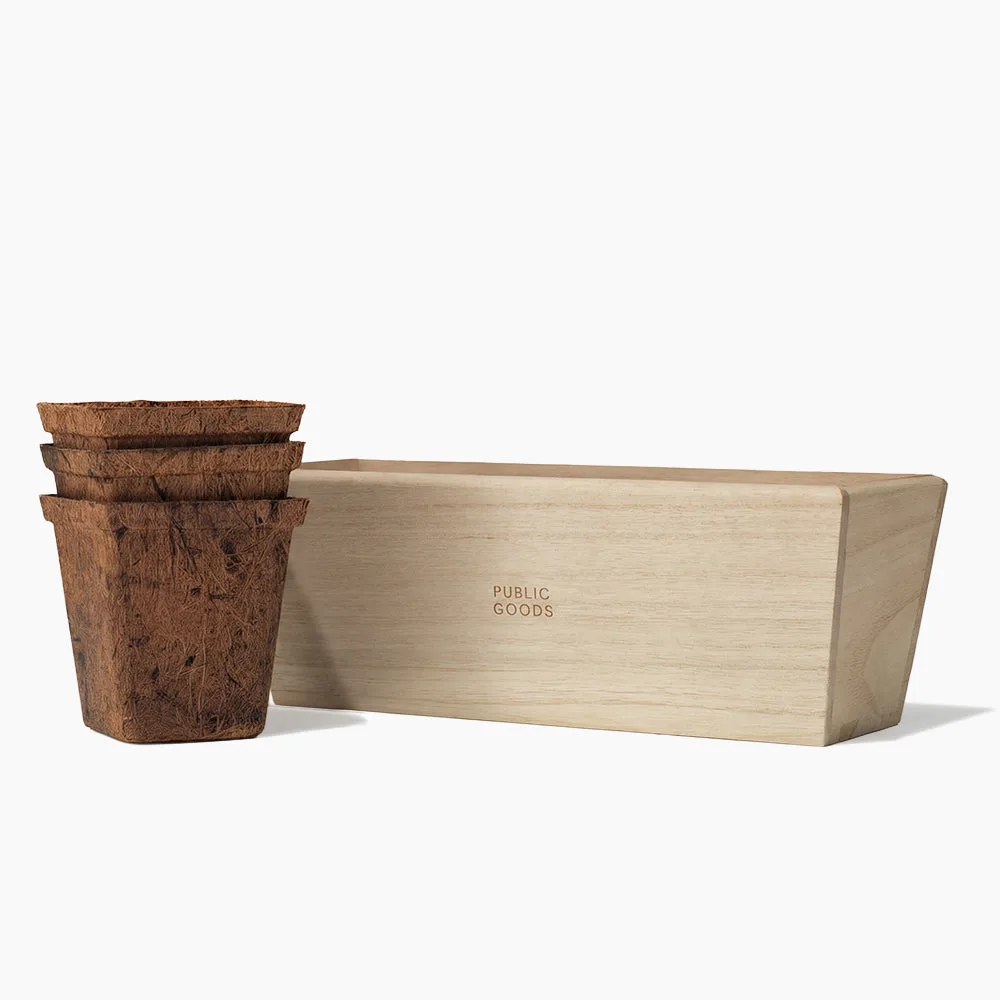
- Wooden Herb Planter: Includes three biodegradable pots nestled in a wooden planter box, three compressed soil discs that expand with water, and three bamboo markers pre-labeled for basil, parsley, and cilantro. Seeds are not included. You get the pots, soil, and labels in one kit, so you only need to choose seeds and follow the included beginner guide.