Quick answer
If you want a complete role-play setup that encourages turn-taking and storytelling, start with the Wooden Kitchen. If your toddler thrives on mastering a single, repeatable sequence, the Smoothie Maker offers a focused, confidence-building activity that pairs well with any kitchen set.
Why the Wooden Kitchen builds social confidence
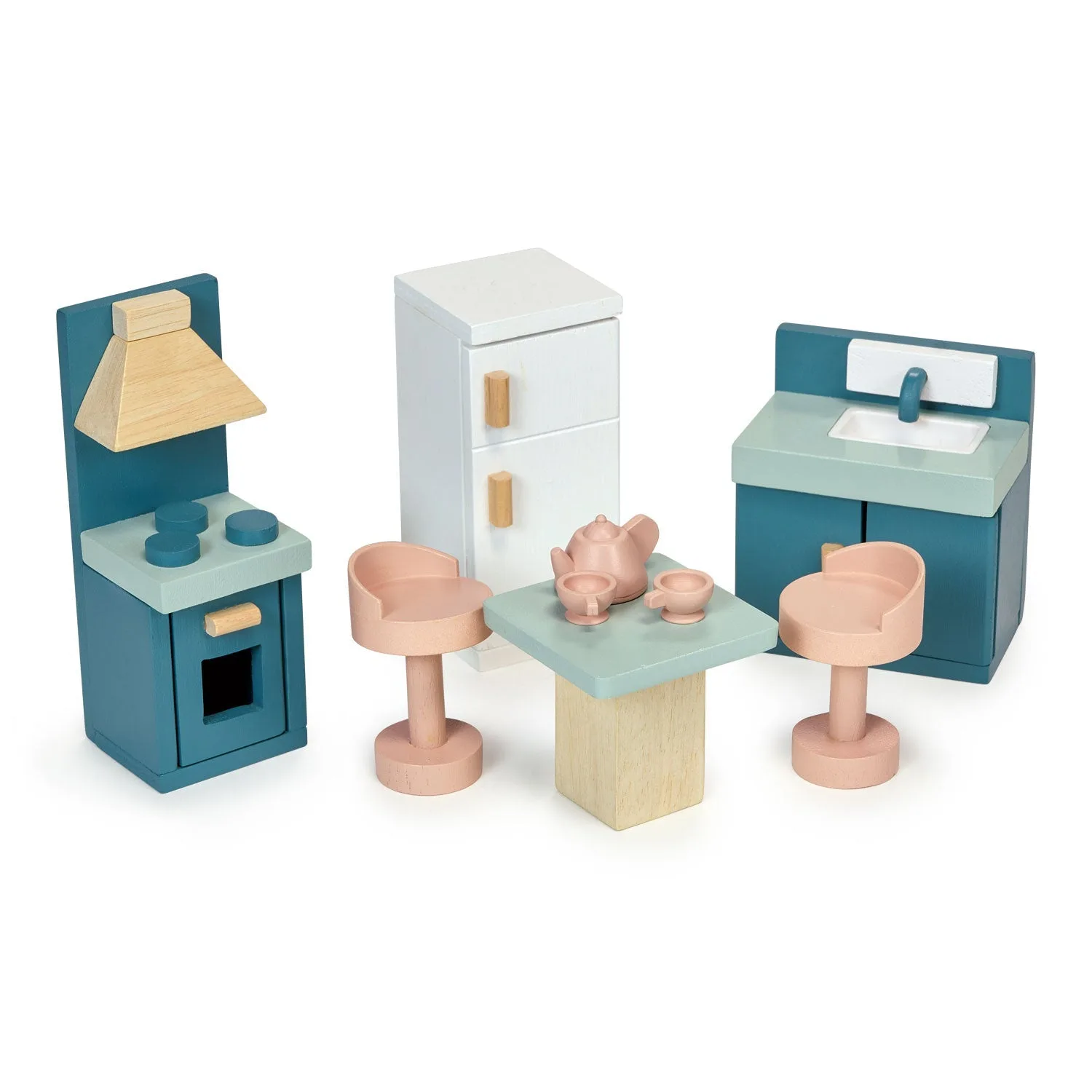
The Wooden Kitchen includes a cooker, fridge, sink, table, and stools—enough pieces for two children to cook and serve together. That shared setup naturally prompts conversations about roles ('I'll be the chef, you be the customer') and simple turn-taking, which grows language and empathy. The set is open-ended: a child might host a tea party one day and run a pretend restaurant the next, so the play evolves as their imagination does.
When the Smoothie Maker is the better first toy
For a younger toddler or a child who gets overwhelmed by too many pieces, the Smoothie Maker offers a clear, manageable sequence: load the fruit, press the button, and pour. The wooden fruit splits in half for slicing, adding a fine-motor step that the kitchen set doesn't provide. Because the activity has a defined start and end, it gives a sense of accomplishment each time a child serves a pretend drink. It also introduces a healthy cooking theme that can spark conversations about food choices.
Trade-offs to consider
- Play variety vs. focused task: The Wooden Kitchen supports open-ended scenarios (cooking, serving, cleaning) that change daily. The Smoothie Maker follows one repeatable recipe—load, blend, pour—which is great for mastery but less varied. Choose the kitchen if your child enjoys inventing new stories; choose the smoothie maker if they prefer routines and repetition.
- Social play vs. independent play: With its table and two stools, the Wooden Kitchen invites a second child to join in. The Smoothie Maker is designed for one child to operate the blender and serve the drink, though a caregiver can participate verbally. The kitchen is better for siblings or playdates; the smoothie maker works well for solo play or quiet time.
- Fine motor challenge: The Smoothie Maker includes fruit that splits in half for slicing, adding a fine-motor step that the Wooden Kitchen does not offer. The kitchen's opening fridge and cupboard doors provide a simpler cause-and-effect action. If your child is ready for a small fine-motor challenge, the smoothie maker adds that layer; if they are just starting pretend play, the kitchen's doors are easier.
Product facts at a glance
-
Wooden Kitchen: This wooden doll’s house furniture set includes a cooker with oven, a fridge with opening doors, a sink unit with cupboard, a table, 2 stools, a teapot and 2 cups. The multiple pieces and seating for two make it ideal for cooperative play and social skill development.
Wooden Kitchen
-
Smoothie Maker: Load the fruit, press the clacking button, and pour. This wooden blender lifts off its base for filling and brings a pretend smoothie routine to the play kitchen, with apple, watermelon and orange pieces that split in two for slicing first. The step-by-step process and clacking button give toddlers a satisfying, repeatable activity that builds sequencing and fine motor control.
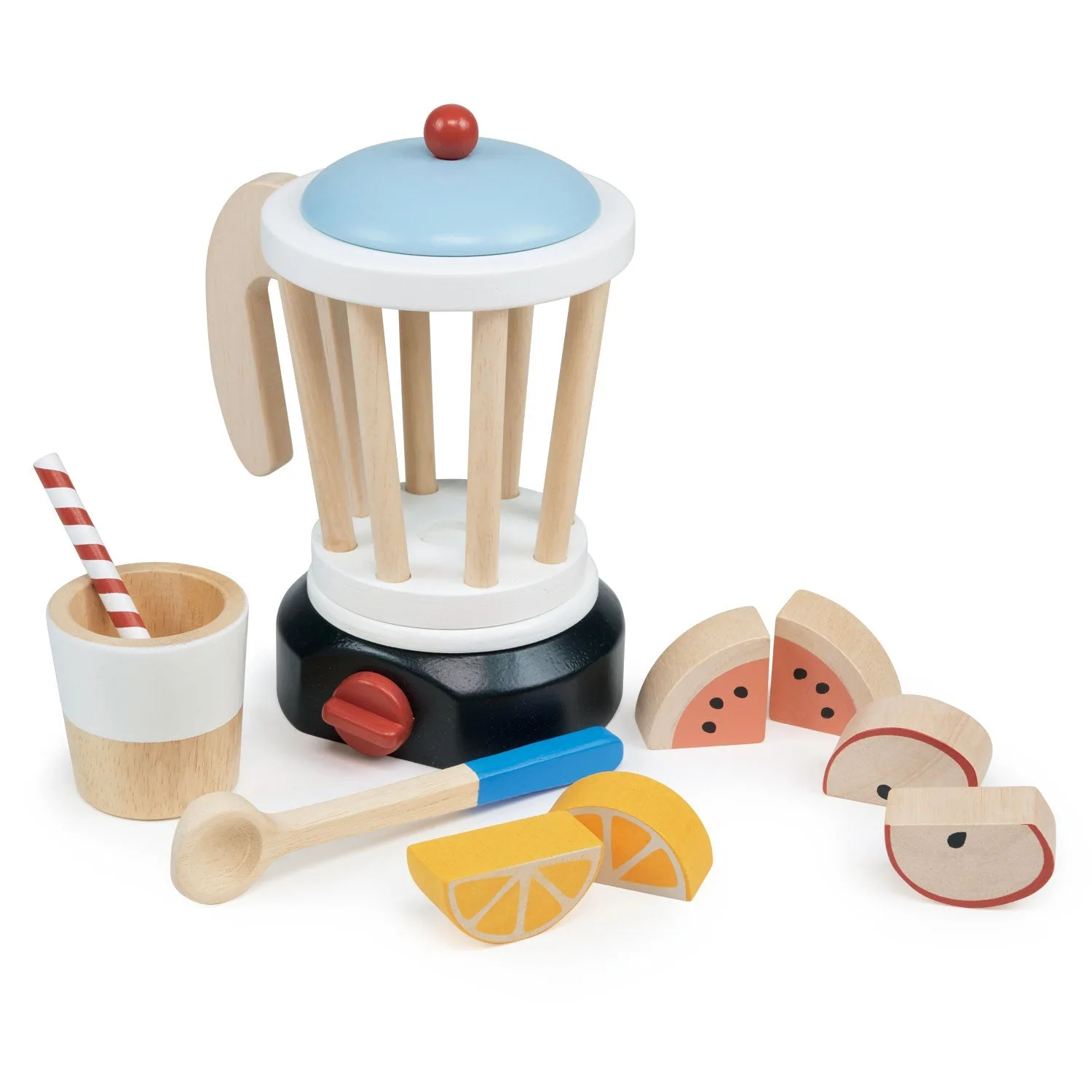
Smoothie Maker
Which set fits your child?
Best for
- Toddlers who enjoy role-playing with a friend or sibling and benefit from open-ended storytelling
- Families looking for a complete pretend-play starter that grows with the child's imagination
Not ideal for
- A child who gets overwhelmed by many loose pieces and would prefer a single, repeatable activity
- Parents who want to add a fine-motor slicing step to pretend food play