Quick answer
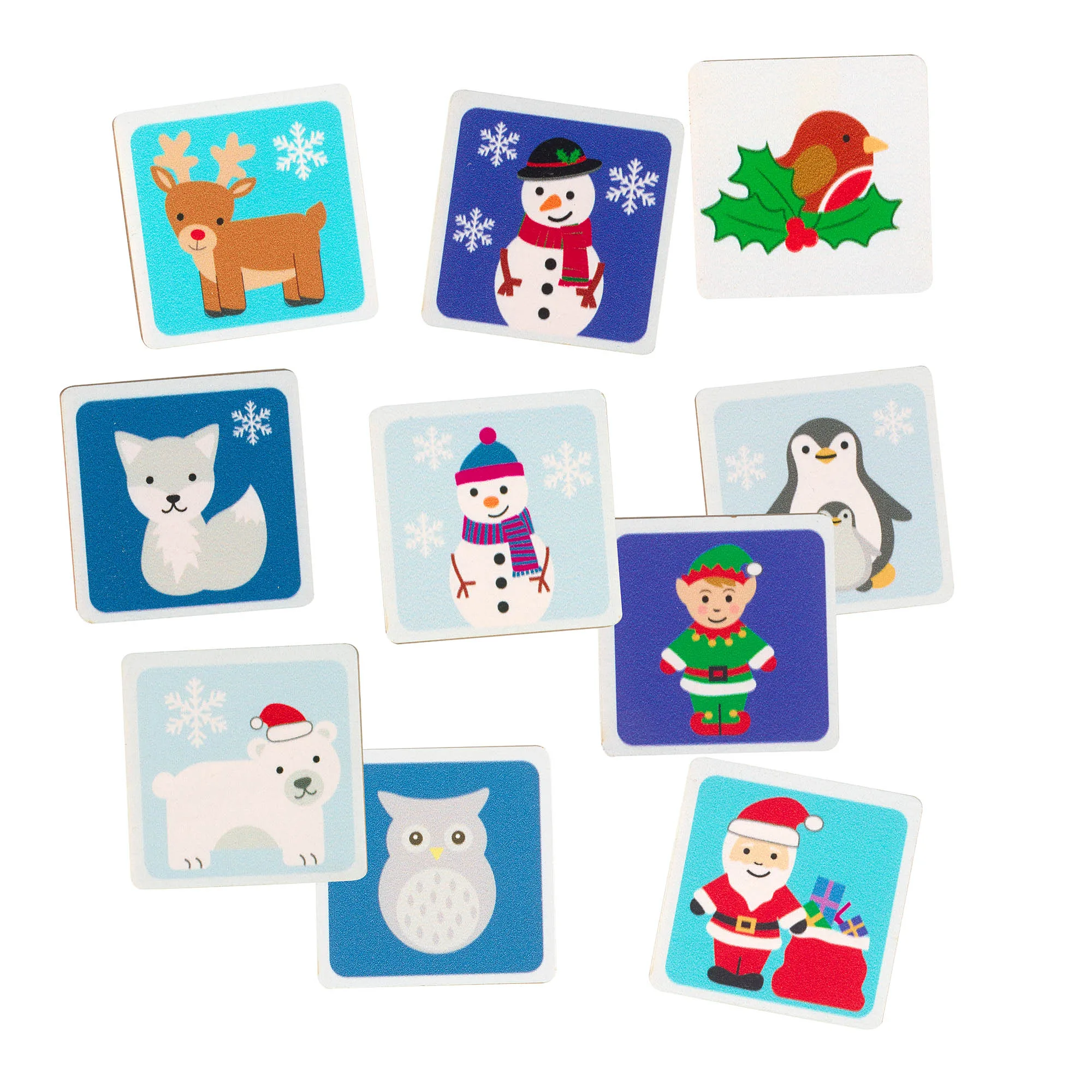
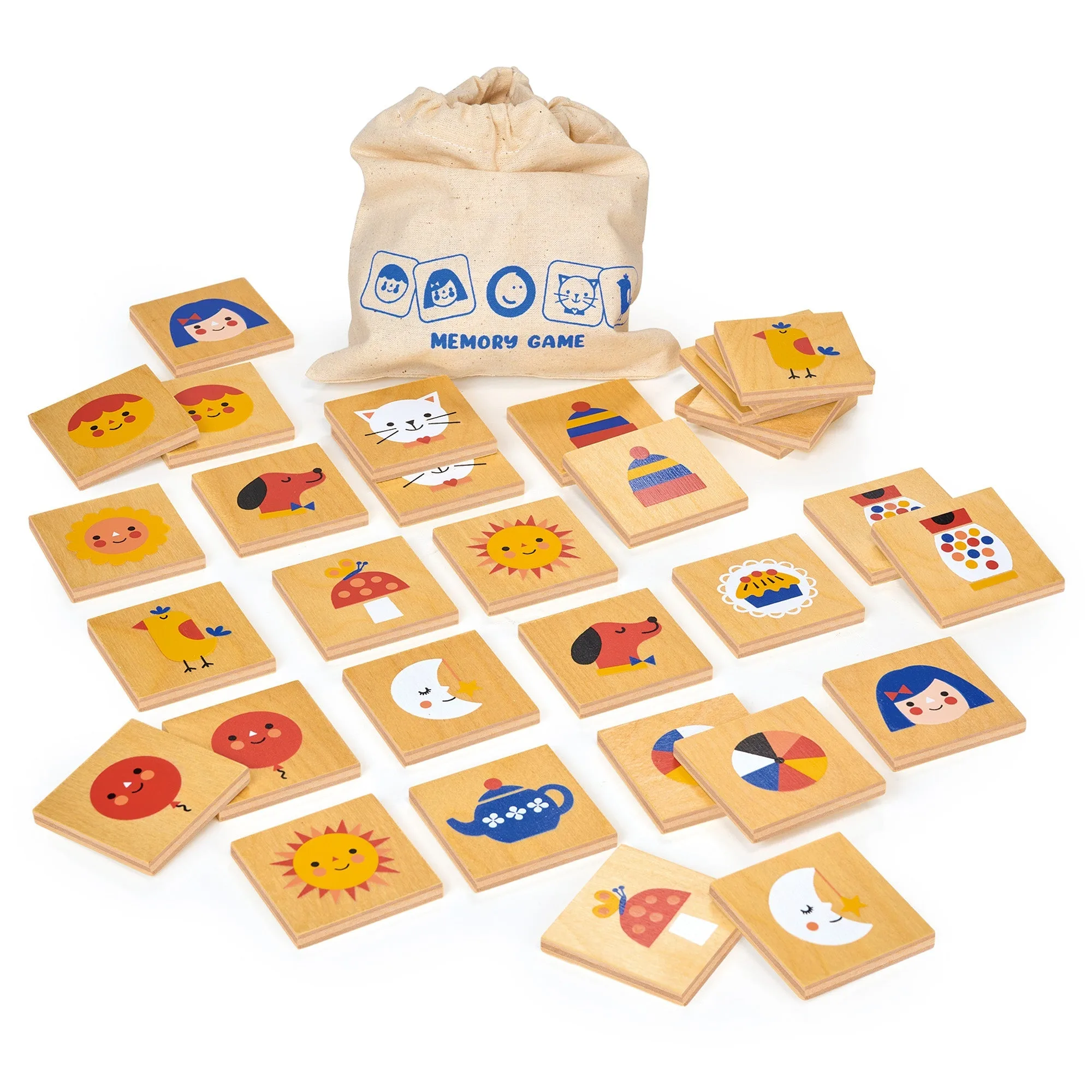
Start with just 3–4 matching pairs face up, name each picture as you turn it, and let your toddler find the match. Once they understand matching, move to face-down play with 4–6 pairs. Keep turns short, celebrate every attempt, and stop before they lose interest. A simple wooden set like the Winter Wonderland Memory Game is ideal because the pieces are chunky and the illustrations are clear.
Why wooden memory games work well for toddlers
Wooden memory games offer a tactile, screen-free way for toddlers to build concentration and visual recall. The chunky pieces are easy for small hands to turn over, and the lack of digital distractions helps children focus on the faces and patterns. Many wooden sets, including the Winter Wonderland Memory Game, are made from FSC-certified wood, so you can feel good about the materials while your child plays.
Setting up the game for the first time
Before you introduce rules, let your toddler explore the pieces freely. Name the pictures together—'snowman,' 'tree,' 'present'—and talk about what they see. This builds vocabulary and familiarity. When you're ready to play, choose a small number of pairs and place them face up on a flat surface. Sit opposite your child so you can see their reactions and guide gently.
Teaching the matching concept
The first goal is understanding 'same.' Pick up one piece, say its name, and ask your toddler to find its partner among the face-up pieces. If they pick the wrong one, don't correct immediately—say, 'Let's look at this one. Is it the same?' and guide their hand to the correct match. Repeat with the next pair. Keep sessions to 5 minutes or less, and end on a success.
Moving to face-down play
Once your child can match face-up pairs reliably, turn the pieces face down. Start with just 4 pairs (8 pieces) arranged in a grid. Take turns flipping two pieces. If they match, keep them and go again; if not, turn them back. Model turn-taking by narrating: 'My turn. I turn over... a star! Now I turn over... a tree. Not a match. Your turn.' Expect your toddler to need reminders about turning only two pieces—this is normal.
Adapting for different ages and abilities
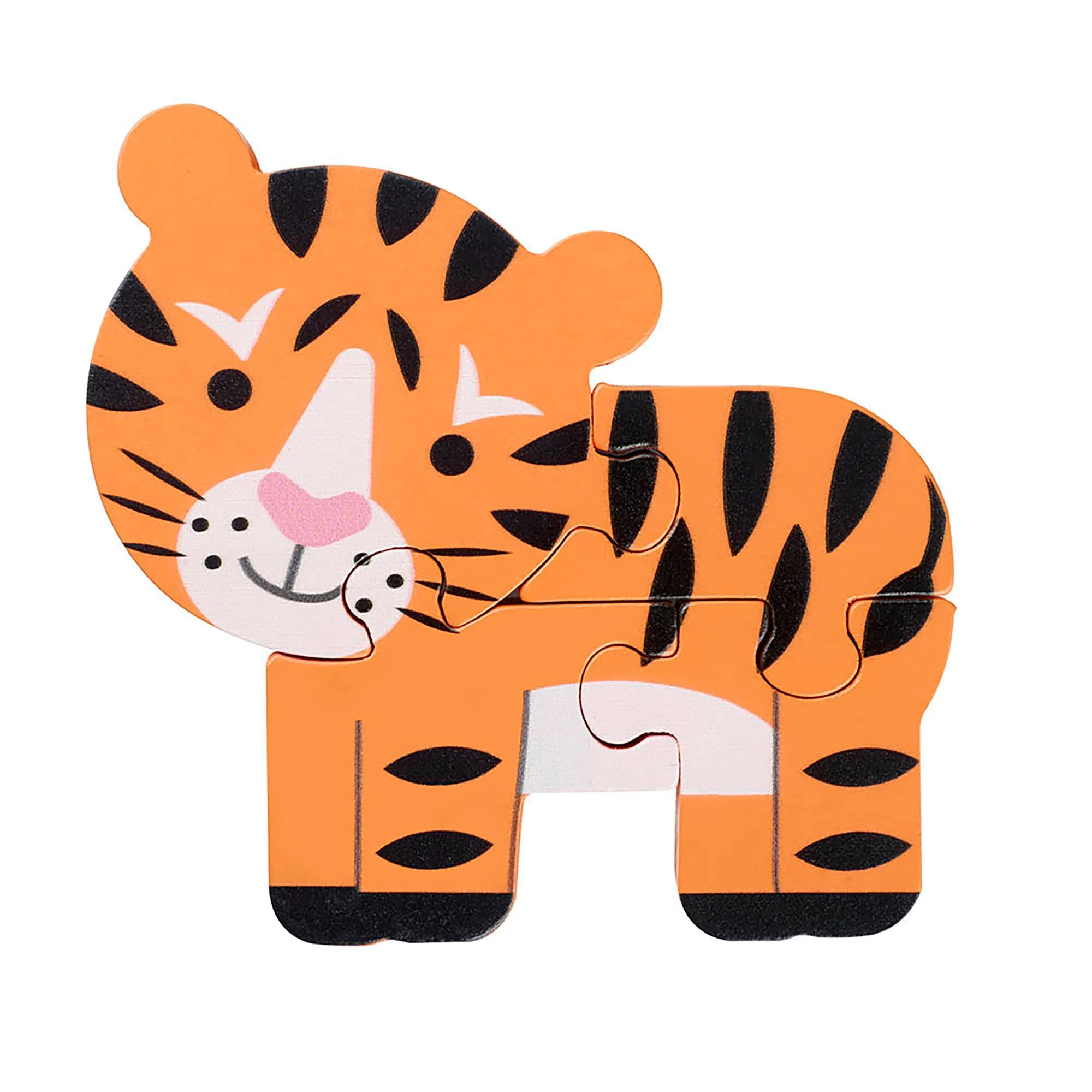
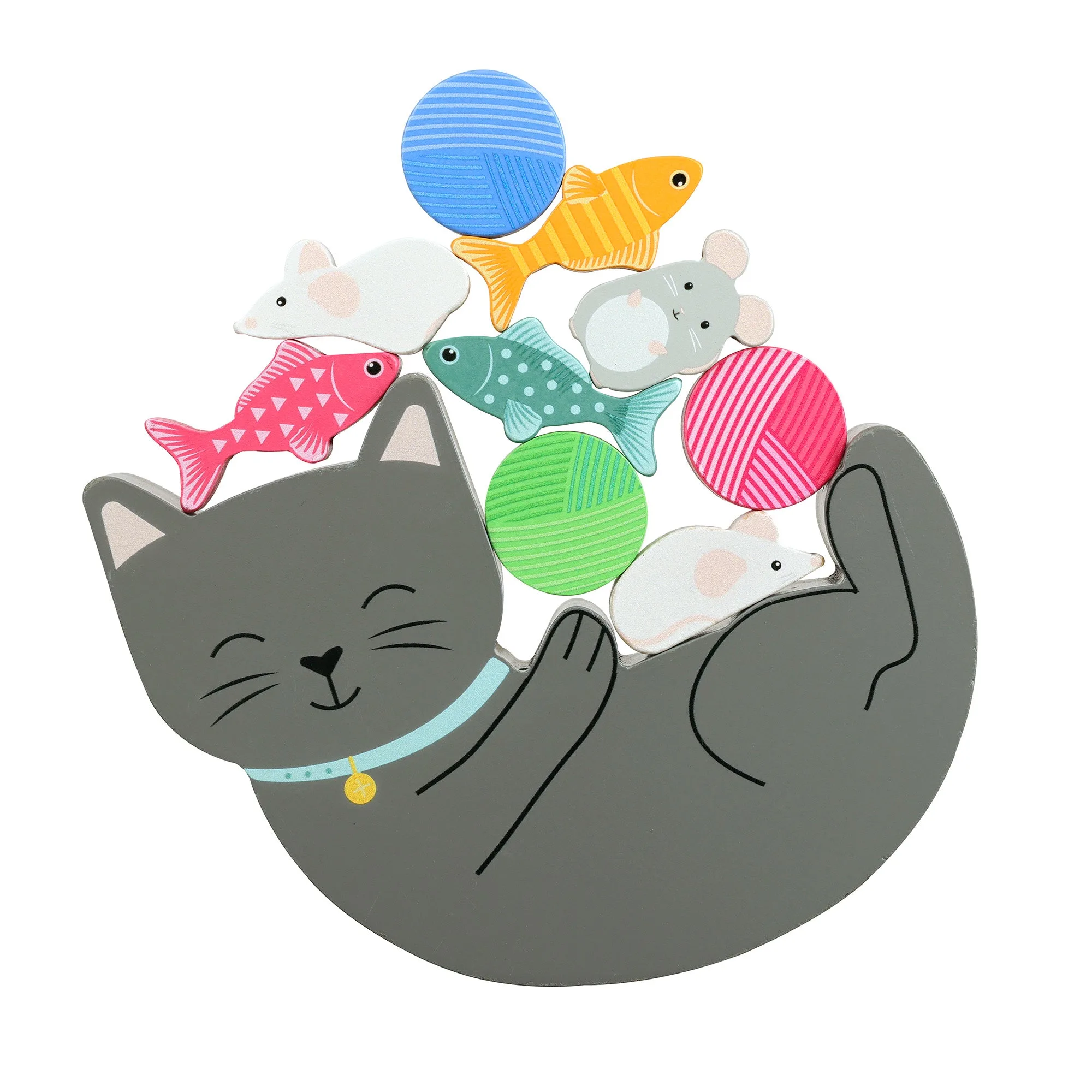
For a 2-year-old, stick to 3–4 pairs and keep all pieces face up. For a 3-year-old, try 4–6 pairs face down. If your child loses interest, reduce the number of pairs or switch to a simpler matching activity. The Tiger Wooden Puzzle and the NEW Kitty Balancing Game are good alternatives that still build matching and motor skills without the memory challenge. Always follow your child's lead—frustration means it's time to stop.
How to teach a wooden memory game: 6 steps
- Step 1: Free exploration: Let your toddler handle the pieces without rules. Name each illustration and talk about the colors and shapes. This builds familiarity and vocabulary. Checkpoint: your child can point to a piece when you name it.
- Step 2: Face-up matching: Place 3–4 pairs face up. Pick one piece, say its name, and ask your child to find its match. Guide their hand if needed. Celebrate every correct match. Common mistake: expecting your child to remember rules before they understand 'same.' Keep it face up until matching is easy.
- Step 3: Introduce turns: With pieces still face up, take turns picking a pair. Model saying 'my turn' and 'your turn.' This teaches patience and turn-taking. Checkpoint: your child waits (even briefly) for their turn without grabbing.
- Step 4: Face-down with 4 pairs: Turn 4 pairs face down in a grid. Take turns flipping two pieces. If they match, keep them. If not, turn them back. Narrate every flip. Common mistake: using too many pairs too soon. Stick to 4 pairs until your child consistently finds matches.
- Step 5: Increase pairs gradually: Add one pair at a time when your child succeeds with 4 pairs. Most 3-year-olds can handle 6 pairs. Go at your child's pace. Checkpoint: your child stays engaged for at least 3 turns.
- Step 6: Keep sessions short and positive: Aim for 5–10 minutes. End while your child is still having fun. Put the pieces in the drawstring bag together as part of the routine. Next step: try playing at different times of day to see when your child focuses best.
Wooden games that support memory and matching
- Winter Wonderland Memory Game: Winter Wonderland Memory Game includes wooden pieces with festive illustrations and a drawstring bag for storage. The bag keeps pieces together, so you can grab the game for a quick 5-minute session without hunting for missing pairs.
- Tiger Wooden Puzzle: Tiger Wooden Puzzle is a chunky wooden puzzle that encourages hand-eye coordination and shape recognition. If your toddler isn't ready for memory rules, this puzzle offers a simpler matching challenge—fitting shapes—that builds the same underlying skills.
- NEW Kitty Balancing Game: NEW Kitty Balancing Game involves stacking mice, balls of wool, and fish on a cat's tummy, encouraging patience and concentration. Balancing games teach turn-taking and focus, which transfer directly to memory games. Use it as a warm-up or a break.