Quick answer
Clean wooden puzzles with a barely damp cloth and mild soap, then dry immediately. Store them fully assembled in a tray or breathable bag away from direct sun and damp. Avoid soaking, harsh chemicals, and dishwashers. With this simple routine, a wooden puzzle can stay smooth, colorful, and safe for years.
Wooden puzzles are built to last, but they still need a little care to stay smooth, safe, and looking their best. Whether you have a chunky first puzzle or a buildable model, the right cleaning and storage habits make a real difference.
This guide walks you through a simple routine: how to clean wooden puzzles safely, how to store them so pieces stay together, and the small mistakes that cause warping, fading, or lost parts. No special products required.
Why wooden puzzle care matters
Wood is a natural material. It responds to moisture, heat, and sunlight, so the way you clean and store a puzzle affects how long it lasts. A quick wipe with the wrong cleaner can dull the paint; a damp cupboard can warp the pieces; a loose box can scatter them.
Good care also keeps puzzles safe for little hands. Cracks, lifted edges, or sticky residue can make a puzzle less pleasant to use. A few consistent habits protect both the finish and the play experience.
- Check puzzles monthly for sticky spots, loose paint, or missing pieces.
- Rotate toys so each puzzle gets a rest and less wear.
How to clean wooden puzzles safely
Start by removing loose dust with a dry, soft cloth or a soft-bristled brush. For sticky fingerprints, dampen a cloth with water and a drop of mild dish soap, wring it out until it is barely damp, and wipe each piece. Dry immediately with a clean towel.
Never soak wooden puzzle pieces or put them in a dishwasher. Water can swell the wood and lift the paint. For deeper grime, use a vinegar-and-water mix (one part white vinegar to three parts water) on a barely damp cloth, then dry right away.
- Test any cleaning solution on the back of one piece first.
- Avoid abrasive sponges, bleach, ammonia, and furniture polish.
Storing wooden puzzles so pieces stay together
Store puzzles fully assembled whenever possible. This keeps the shape true and prevents pieces from being bent or lost. If a puzzle came with a tray, use it, because the tray holds the pieces flat and protects the edges.
For puzzles without a tray, a breathable cotton bag or a shallow box works well. Keep storage away from radiators, damp basements, and direct sunlight. If you stack puzzles, put heavier ones at the bottom and avoid crushing thin pieces.
- Label bags or boxes with the puzzle name so pieces do not get mixed.
- Keep a small tray or basket for puzzles currently in use.
Quick fixes for common wooden puzzle problems
If a piece feels rough, a light rub with fine sandpaper (400-grit) can smooth it, but do not sand painted areas. For a wobbly or loose joint on a buildable model, check that all connectors are pushed fully together before assuming damage.
If a puzzle has been damp, let it air-dry flat at room temperature, away from direct heat. Do not force pieces together while they are still swollen. Once dry, they often fit normally again.
- Never use a hair dryer or radiator to speed up drying.
- If paint is flaking, retire the puzzle from mouthing-age children.
Your step-by-step wooden puzzle care routine
- Step 1: Clear the play area and gather supplies: You need a soft cloth, a soft-bristled brush, mild dish soap, water, and a dry towel. Work on a clean, flat surface so small pieces do not roll away. Checkpoint: if you are missing any pieces, search the play area before cleaning so you do not lose them later.
- Step 2: Dust first, then wipe: Brush or wipe away loose dust and crumbs. For sticky marks, dampen a cloth with water and a drop of mild soap, wring it out well, and wipe each piece. Do not let water sit on the wood. Common mistake: using a soaking wet cloth. The cloth should feel almost dry.
- Step 3: Dry immediately and completely: Use a clean, dry towel to wipe every piece. Let pieces air-dry flat for a few minutes before storing. Never use heat to speed drying. Checkpoint: run your fingers over the surface. If it feels cool or damp, wait before storing.
- Step 4: Store assembled in a tray or bag: Put the puzzle back together and place it in its tray, a breathable cotton bag, or a shallow box. Keep it out of direct sun and away from damp or heat. Common mistake: tossing loose pieces into a deep toy bin where they can bend or go missing.
- Step 5: Do a monthly check: Look for loose paint, rough edges, or missing pieces. Wipe with a dry cloth as needed. If a puzzle is damaged, set it aside for repair or retirement. Next step: rotate puzzles so each one gets less wear and stays interesting.
What this looks like in practice
- NEW T-Rex Dig - 3D Model & Puzzle: This 9-piece wooden puzzle sits in a sturdy cardboard tray to keep all the pieces organised and safe, and the pieces reveal parts of a hidden 3D T-Rex skeleton model children can build. The tray is a built-in storage solution: keep the puzzle assembled in the tray between play sessions so no pieces go missing and the cardboard stays dry.
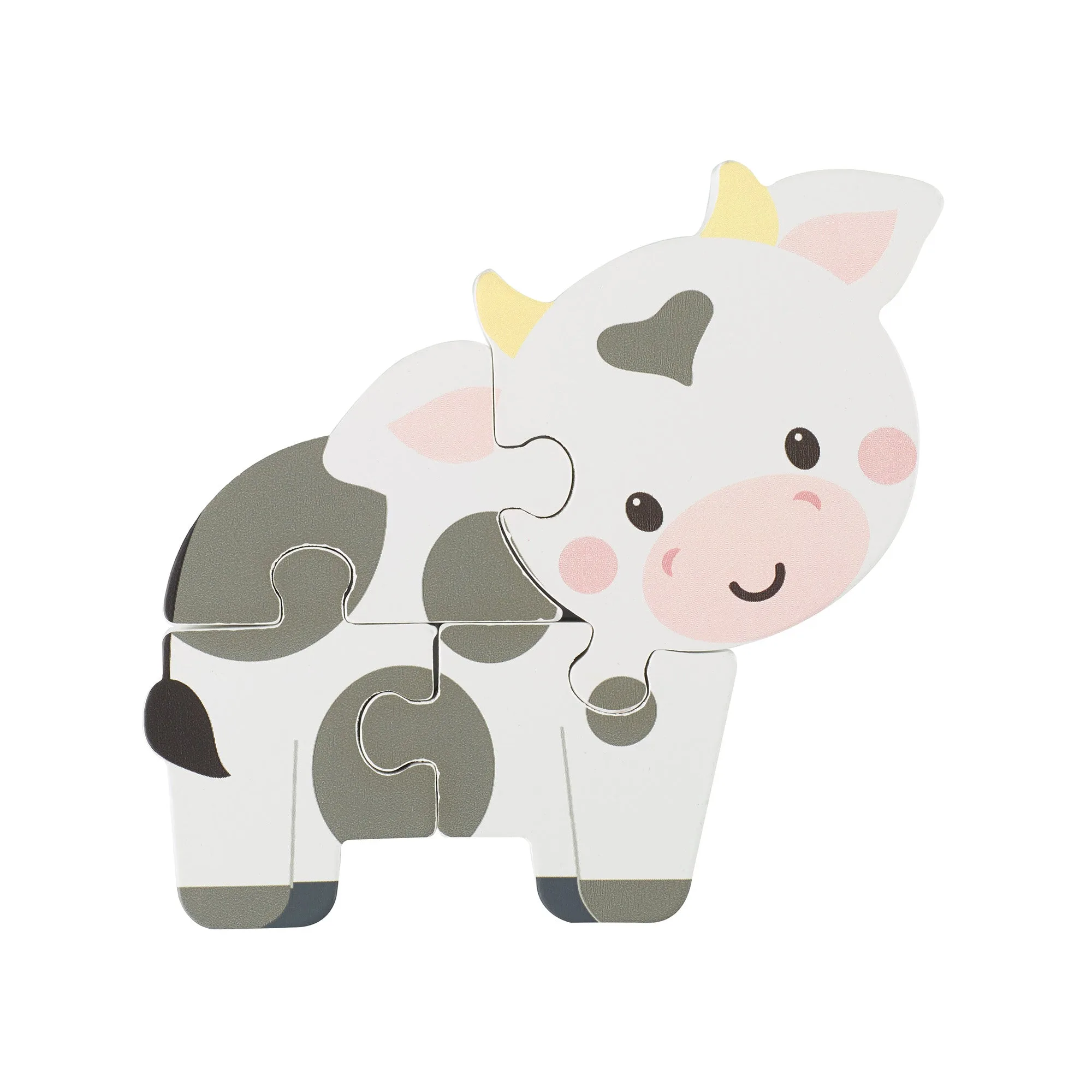
- Cow Wooden Puzzle: This chunky wooden puzzle is made entirely from FSC-certified wood and is designed for little hands to grasp. Chunky pieces are easy to wipe clean with a barely damp cloth, but their size means they can be tempting to dunk in water. Wipe, don't soak, and dry right away.
- London Bus Wooden Puzzle: This four-piece chunky wooden puzzle is made from FSC-certified wood and is painted for imaginative play. Painted surfaces benefit from gentle cleaning. Avoid abrasive cloths and harsh sprays so the paint stays bright and intact.
A little care goes a long way. Clean wooden puzzles with a barely damp cloth, dry them right away, and store them assembled in a tray or bag. Do that, and your wooden puzzles will stay smooth, bright, and ready for play for years.