Quick answer
For toddlers, wooden puzzles generally last longer than cardboard puzzles because they resist bending, peeling, and moisture. However, cardboard puzzles often cost less and come in a wider range of themes. If you want a puzzle that survives drops, chews, and repeated assembly, choose wood. If budget or variety is your priority, cardboard can work, but expect more wear.
When you're buying a puzzle for a toddler, the material matters as much as the picture. Wooden puzzles and cardboard puzzles each have strengths and weaknesses, and the right choice depends on how your child plays and what you value most.
This comparison looks at durability, safety, and long-term value using real product examples from Orange Tree Toys. We'll help you decide which material fits your toddler's habits and your household.
Durability: How Each Material Handles Toddler Life
Toddlers are tough on toys. They drop them, step on them, and sometimes chew them. Wooden puzzles are made from solid wood, so they resist bending, cracking, and peeling. A wooden puzzle like the Lion Wooden Puzzle can survive countless drops and still fit together smoothly. Cardboard puzzles, by contrast, have a layered paper construction that can delaminate if they get wet or are bent repeatedly. The surface can also scuff, making the picture harder to see.
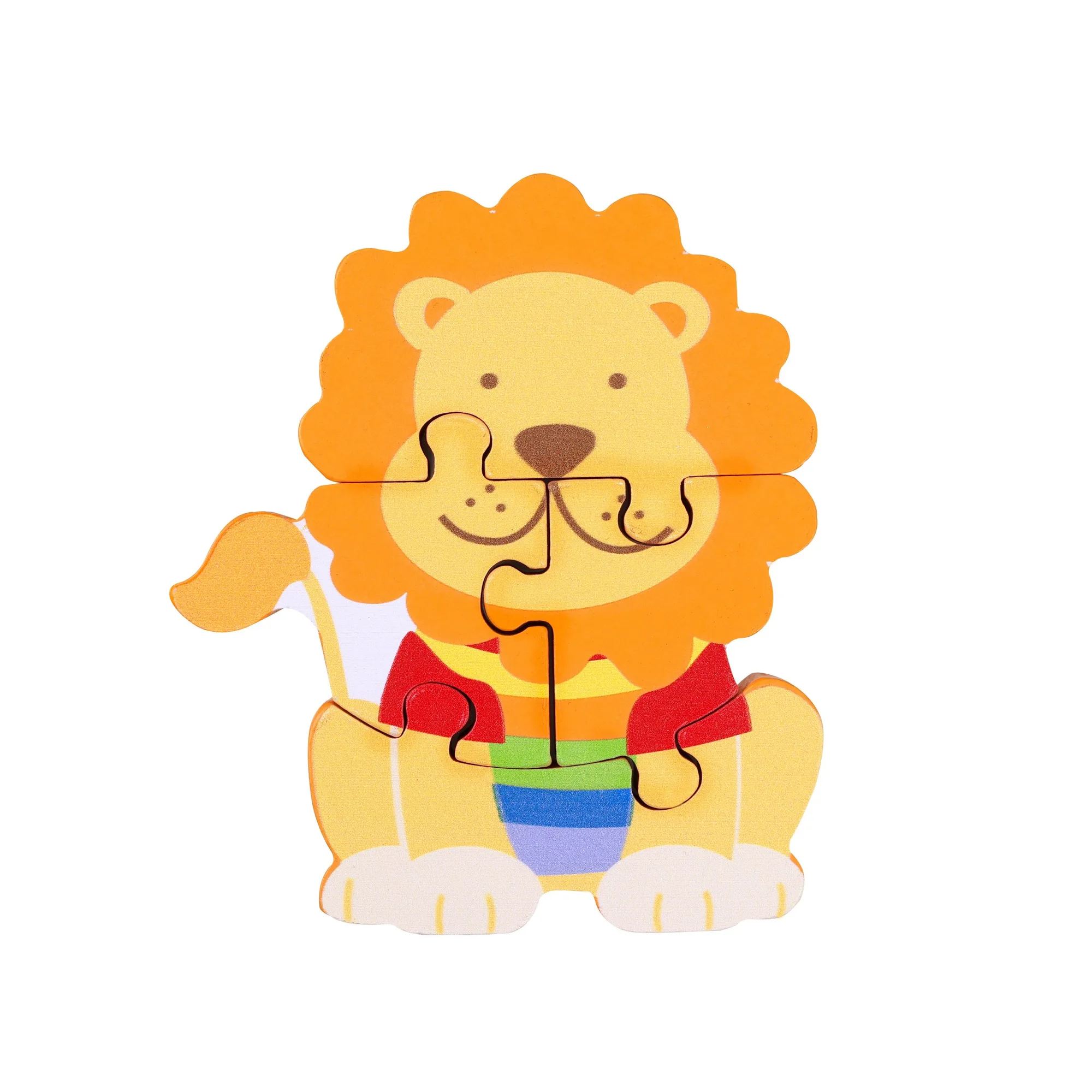
Lion Wooden Puzzle
That said, not all cardboard puzzles are fragile. Higher-quality cardboard puzzles with thick pieces and glossy finishes can last a few years if treated gently. But for a toddler who is still learning to be gentle, wood is more forgiving.
- Wooden puzzles resist moisture and bending better than cardboard.
- Cardboard puzzles may show wear on edges and corners after repeated use.
- Thicker cardboard pieces last longer but still can't match wood for toughness.
Safety and Sensory Experience
Safety is a top concern for parents. Wooden puzzles from reputable brands use non-toxic paints and have smooth, rounded edges. For example, the Crocodile Alphabet Puzzle is hand-painted and made from FSC®-certified wood, with pieces sized for little hands. Cardboard puzzles can also be safe, but cheaper versions might have rough edges or ink that wears off over time.
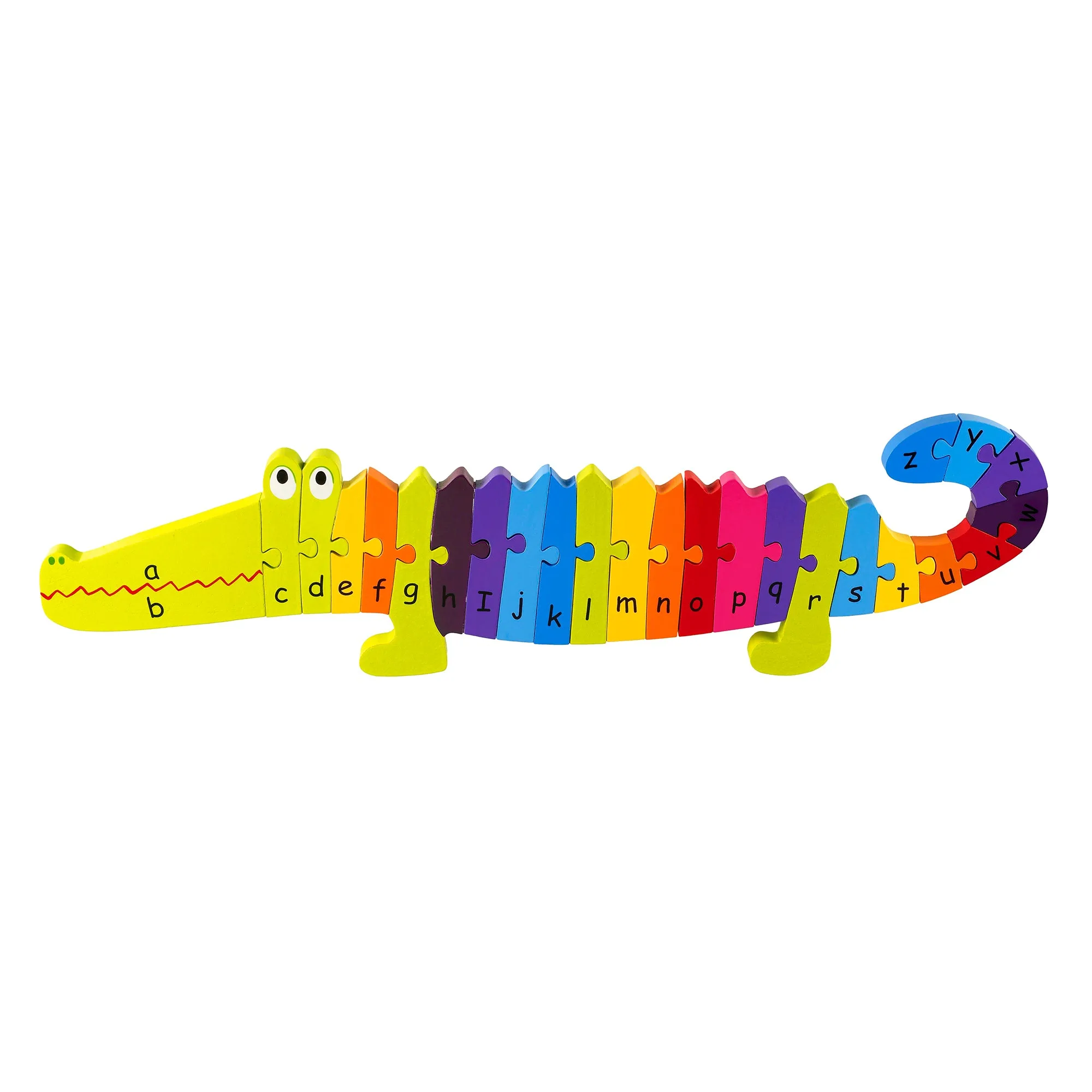
Crocodile Alphabet Puzzle
The sensory experience differs too. Wooden pieces feel solid and have a satisfying weight. Cardboard pieces are lighter and can be easier for small hands to grasp initially, but they may bend if your child gets frustrated. Wooden puzzles also tend to hold their shape, so pieces fit together with a satisfying click, which can be more rewarding for toddlers.
- Look for FSC®-certified wood and non-toxic finishes on wooden puzzles.
- Check cardboard puzzles for sharp edges and loose pieces.
- Wooden pieces are heavier and may be harder for very young toddlers to lift.
Long-Term Value and Cost
Wooden puzzles usually cost more upfront, but they often last through multiple children. A well-made wooden puzzle can be passed down or resold. Cardboard puzzles are cheaper, so you can buy more variety for the same budget. However, if a cardboard puzzle gets wet or chewed, it may need replacing sooner.
Consider the cost per year of use. A wooden puzzle that lasts five years might cost less per year than a cardboard puzzle that lasts one. But if your child craves novelty, cardboard puzzles let you rotate themes without a big investment.
- Wooden puzzles have a higher upfront cost but better resale value.
- Cardboard puzzles are budget-friendly for trying new themes.
- If your toddler is destructive, wood may save money in the long run.
Which Material Fits Your Toddler?
Your child's temperament and play style should guide your choice. If your toddler is gentle and loves variety, cardboard puzzles can be a great, affordable option. If your toddler is rough, puts things in their mouth, or plays independently, wooden puzzles are more likely to survive.
Also think about storage. Wooden puzzles often come with a board or frame, which keeps pieces together and makes cleanup easy. Cardboard puzzles may come in a box, but pieces can get lost. For small spaces, wooden puzzles with chunky pieces are easier to manage.
- Rough players and chewers: choose wood.
- Gentle players and puzzle lovers: cardboard offers more themes.
- Small spaces: wooden puzzles with frames store neatly.
Trade-offs: Wooden vs Cardboard Puzzles
- Durability: Wooden puzzles resist bending, peeling, and moisture; cardboard puzzles can delaminate and scuff. If you want a puzzle that lasts years, choose wood.
- Cost: Cardboard puzzles are generally cheaper, allowing you to buy more variety; wooden puzzles cost more upfront but last longer. If budget is tight and your child is gentle, cardboard is fine.
- Safety: Both can be safe, but wooden puzzles from reputable brands use non-toxic paints and have smooth edges; cheaper cardboard may have rough edges. Check for quality certifications and smooth finishes on any puzzle.
Product facts that matter
- Lion Wooden Puzzle: This chunky wooden lion puzzle is ideal for little hands to grasp, and fun to put together. The completed character is also great for imaginative play. The puzzle encourages key motor skills such as hand-eye coordination and shape recognition. Made from FSC®-certified wood. Chunky pieces are easier for toddlers to handle, and FSC®-certified wood means it's made from responsibly sourced materials. The durability of wood means it can withstand rough play.
- Crocodile Alphabet Puzzle: This colourful Alphabet Crocodile Puzzle is the ideal toy to help teach kids the letters of the alphabet in an exciting and engaging way. Designed to give hours of fun whilst stimulating key motor skills and promoting letter recognition. Beautifully hand painted in bright colours, the wooden pieces are the perfect size for little hands to pull apart and reassemble, whilst learning their ABC's. Made from FSC®-certified wood. Combines learning with durable wooden construction. Hand-painted pieces are less likely to chip than printed cardboard, and the size is safe for toddlers.
Which should you choose?
Best for
- Toddlers who are rough with toys, drop them, or chew on pieces
- Families who want a puzzle that can be passed down or resold
- Parents who prefer natural, FSC®-certified wood materials
Not for
- Parents on a very tight budget who need multiple puzzles
- Toddlers who crave constant novelty and new themes
- Families with limited storage space for bulky wooden boards
For most toddlers, a wooden puzzle like the Lion Wooden Puzzle or Crocodile Alphabet Puzzle offers better durability and long-term value. But if your child is gentle and you want variety, cardboard puzzles can be a smart, affordable choice. Whichever you pick, match the material to your child's play style.