Quick answer
Choose the wooden silicone flashlight when you want a portable, child-friendly light that a toddler can hold, click and shake during bedtime routines. Choose a fixed night light instead when the room needs constant background light all night. For most families, the flashlight handles the routine and the night light handles the dark hours.
Bedtime light is really two jobs in one: a light your child can hold during the wind-down routine, and a light that keeps the room calm once the door closes. The wooden silicone flashlight is built for the first job, and it does it well. It is small enough for little hands, and the silicone details double as something to chew, which matters more than most parents expect.
This guide gives you decision rules rather than a sales pitch. You will see where a kids flashlight fits, where a fixed safe night light for kids fits better, and how to judge fit before you buy. If you want the short version, the flashlight wins for portability and hands-on comfort; a night light wins for all-night ambient glow.
What the wooden silicone flashlight actually is
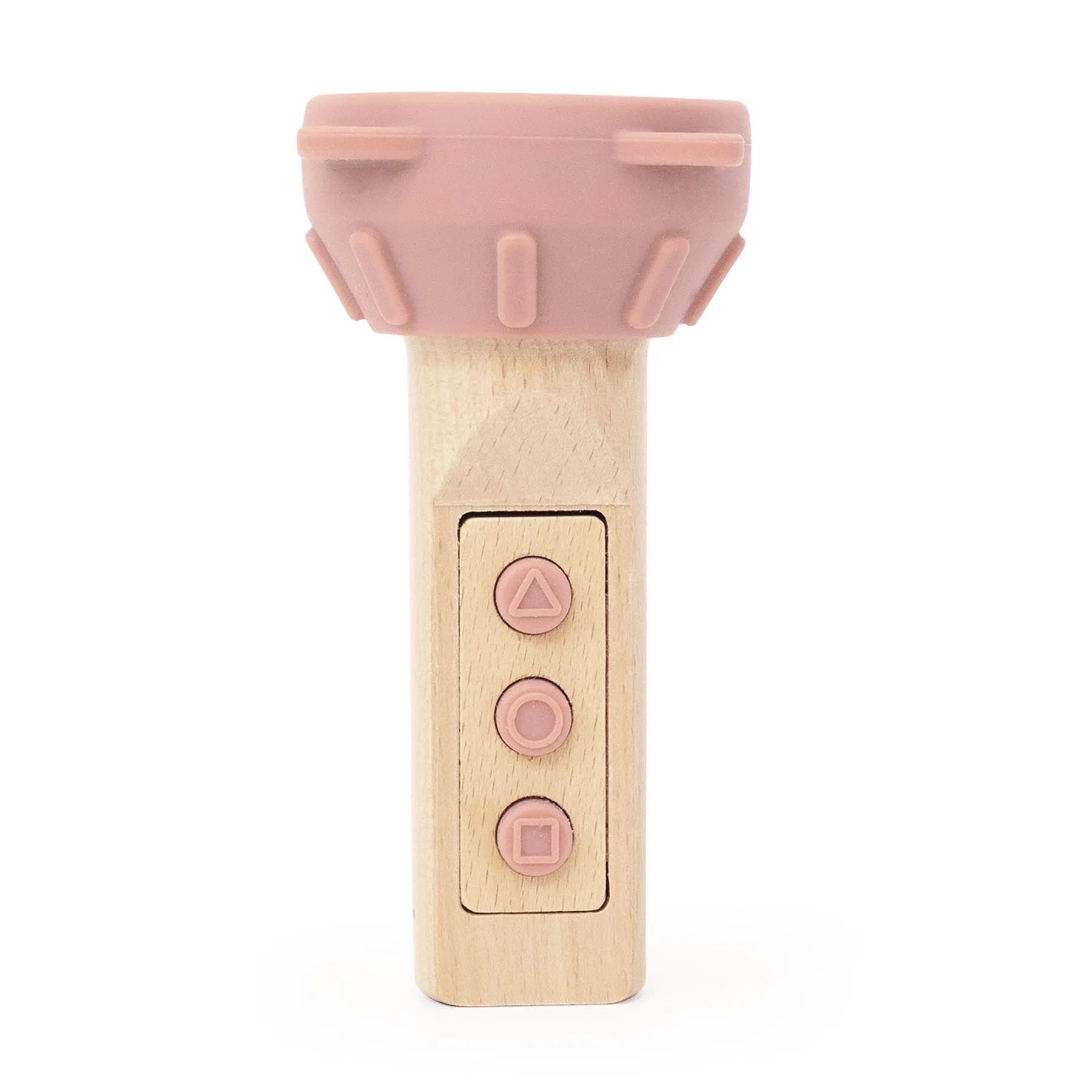
This is a handheld toy light, not a room lamp. It is designed for curious little hands and is easy to grab and hold. Press the colourful silicone buttons to hear a gentle click, or shake the toy to discover the rattle sound from the balls inside. That combination of click and rattle is why it works as a bedtime flashlight: it gives a child something to do with their hands while the room gets quieter.
The playful silicone details are fun for babies to feel and chew on. That matters at bedtime because teething discomfort often shows up right when a child is asked to lie still. A light they can also mouth is more useful than a light they can only look at.
- Best treated as a handheld routine light, not a replacement for a fixed night light.
- The click and rattle give tactile feedback, which helps a child settle rather than wind up.
Materials and safety: what to check before you buy
The body is made from FSC-certified wood and 100% food-grade silicone. It is lightweight, safe and made to last through many bedtimes. Those two materials are a sensible pairing for a toddler torch: wood gives it a solid, familiar feel, while silicone softens the parts that end up near a mouth. The silicone is also the part that survives being dropped, chewed and wiped.
One honest limitation: the catalog does not list a battery type, brightness level, or runtime, so you should not assume any specific output or battery life. If you need a guaranteed all-night glow, treat that missing information as a reason to pair this with a fixed night light rather than relying on it alone.
- FSC-certified wood and food-grade silicone are the two materials to look for.
- No brightness or battery specification is supplied, so plan around that gap.
Fit for small hands and bedtime routines
Fit is the difference between a light your child uses and a light you end up holding. The wooden silicone flashlight is sized for little hands and easy to grab and hold, which means a toddler can carry it from the bathroom to the bed without help. That independence is the point: a bedtime flashlight a child controls does more for settling than a light you switch on for them.
For a child who is still learning to grip, look at the silicone teething ring as a companion rather than a substitute. It is specially designed for tiny hands and sore gums, with soft beads and varied textures. Used together, the ring builds the grip and the flashlight rewards it. If your child cannot yet hold a small object through a whole routine, start with the ring and add the flashlight later.
- If your child can carry a small toy across a room, they can manage this flashlight.
- If they cannot yet hold a small object steadily, build grip first with a teething ring.
Flashlight or fixed night light? The real trade-off
A handheld flashlight is portable, interactive and easy to redirect. It travels to the bathroom, the car and grandma's house, and it gives a child a sense of control at a moment when they have very little. The trade-off is that it only works while someone is holding or near it, and it depends on a battery you cannot verify from the catalog.
A fixed night light stays in one place and does one job: keep the room softly lit without anyone touching it. It is the better choice if your child wakes in the dark and needs the room to already be lit, or if you want zero involvement after lights-out. Many families end up with both, and that is not overbuying. It is matching two different jobs to two different tools.
- Portable and interactive: handheld flashlight.
- Unattended and constant: fixed night light.
- Both: routine light plus background light.
Where it fits beyond bedtime
The same qualities that make it a bedtime flashlight make it useful elsewhere. It is a good first torch for shadow play, for checking under the bed, and for keeping a child occupied during a nappy change or a long car ride after dark. The rattle sound gives it a second life as a sensory toy, which is worth knowing if you are choosing between this and a plain plastic torch.
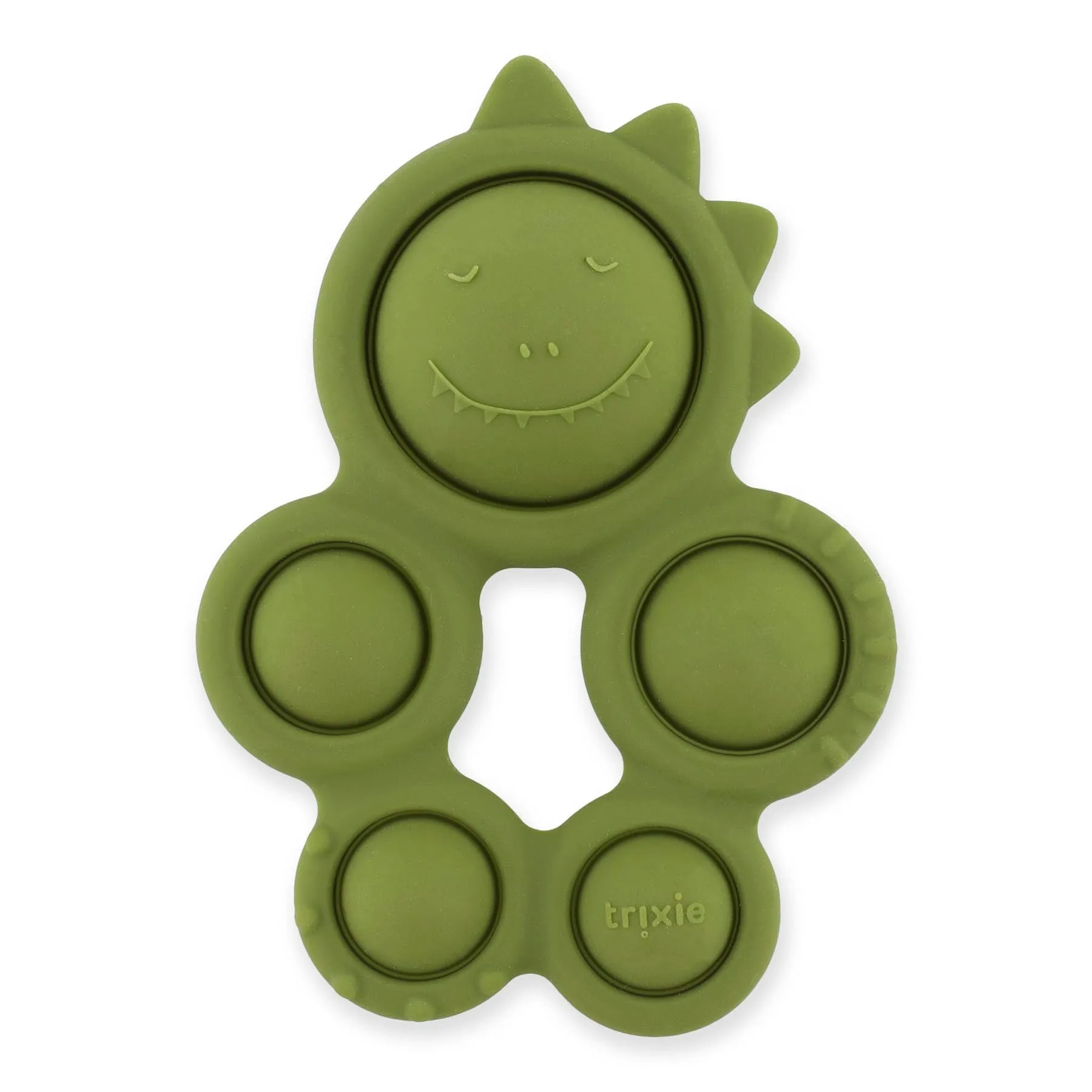
If your child is already drawn to press-and-pop sensory play, the silicone pop-it toy uses the same instinct: little fingers press, a gentle sound follows, and fine motor skills get practice along the way. The difference is that the pop-it toy is a daytime toy, while the flashlight is the one that earns its place in the bedtime routine.
- Use it for shadow play and dark-corner exploring, not just sleep.
- Pair it with a daytime sensory toy if your child likes press-and-sound feedback.
Decision rules for your bedtime light
- If your child wakes in the dark and needs the room already lit: Choose a fixed night light. A handheld flashlight only helps while someone is holding it or nearby, and the catalog does not specify battery life. Fixed light for the dark hours, flashlight for the routine.
- If bedtime is a struggle with hands that will not settle: Choose the wooden silicone flashlight. The click and rattle give a child something to do with their hands, and the silicone details are safe to chew. Hands-on settling beats a light they can only look at.
- If your child cannot yet hold a small object steadily: Start with the silicone teething ring to build grip and comfort, then add the flashlight once holding is reliable. Build the grip first, then hand over the torch.
- If you need a verified brightness or battery specification: The catalog does not supply brightness, battery type or runtime. Treat that as a real limitation and plan a fixed night light alongside it. Do not assume specifications that are not listed.
Product facts worth knowing
- Wooden silicone flashlight - Mrs. Cat: Designed for curious little hands and easy to grab and hold; press the colourful silicone buttons for a gentle click or shake the toy to discover the rattle sound from the balls inside. Made from FSC-certified wood and 100% food-grade silicone. The grip, click and rattle are what make it usable as a bedtime flashlight rather than a decorative object, and the two materials cover both durability and chewing.
- Silicone teething ring - Mrs. Cat & Mrs. Butterfly: Specially designed for tiny hands and sore gums, with soft beads, playful animal shapes and varied textures that little ones can chew, feel and explore. If your child cannot yet hold a small object through a whole routine, this builds the grip and comfort first so the flashlight becomes usable later.
- Silicone pop-it toy - Mr. Dino: Its shape makes it easy for babies to grasp, hold and press, and each pop makes a gentle sound; made from 100% food-grade silicone and safe for teething. A daytime alternative for the same press-and-sound instinct, so you can keep the flashlight as the bedtime-specific tool.
Who this light suits
Best for
- Toddlers who can hold and carry a small toy and want to control their own light
- Families who want a portable light for bedtime routines, travel and dark car rides
- Children who settle better with something to click, shake and chew
Not for
- Children who need a room to stay lit all night without anyone touching a light
- Buyers who need a verified brightness rating or battery specification before purchasing
- Babies who cannot yet hold a small object steadily on their own
The wooden silicone flashlight earns its place as the routine light: portable, easy for small hands, and useful for clicking, shaking and chewing when a child needs to settle. Pair it with a fixed night light if the room has to stay lit, and build grip with a teething ring first if your child is not yet holding small objects. Match the tool to the job and bedtime gets simpler.