Quick answer
Wooden blocks generally develop better fine motor skills and spatial reasoning due to their weight, texture, and stability, while plastic blocks can offer more variety in shapes and colors that may engage some toddlers differently. The best choice depends on your child's age and play style.
Why weight and texture matter for motor development
Wooden blocks provide natural weight and a grippy surface that challenges small hands to coordinate grip strength and precision. Plastic blocks are often lighter and smoother, which can be easier for very young toddlers but may offer less sensory feedback for refining motor control.
The irregular shapes in sets like Crooked Towers Wooden Blocks force children to adjust their grip and balance, promoting dexterity and problem-solving. Plastic blocks tend to be more uniform, which can simplify stacking but reduce the need for fine adjustments.
Open-ended play and creativity
Wooden blocks naturally encourage open-ended play because their simple forms invite children to imagine and create without preset limitations. Plastic blocks often come with themed pieces or connectors that guide play toward specific outcomes, which can limit creative problem-solving.
Both types support STEM learning, but wooden blocks emphasize balance and physics through trial and error, while plastic blocks may focus more on construction and symmetry.
Wooden vs. Plastic: Motor Skill Trade-offs
- Grip and strength: Wooden blocks require more hand strength to lift and place, building fine motor muscles. Plastic blocks are lighter and easier for beginners but provide less resistance training. Choose wooden blocks if your toddler needs to strengthen grip; plastic blocks may work better for early exploration.
- Sensory feedback: Natural wood texture and weight give clear tactile feedback when stacked or dropped, helping children understand cause and effect. Plastic blocks offer less sensory variety.
- Stability and frustration: Wooden blocks stack more stably due to weight and flat surfaces, reducing frustration for young builders. Plastic blocks can be lighter and may tip more easily, which can be discouraging for some children. If your child gets frustrated easily, wooden blocks may offer a more rewarding building experience.
Product facts
-
Crooked Towers Wooden Blocks: Crooked Towers Wooden Blocks include interesting geometric shapes like triangles and steps, plus template cards for matching challenges. The varied shapes and templates encourage children to plan and adjust their grip, building fine motor control and spatial awareness.
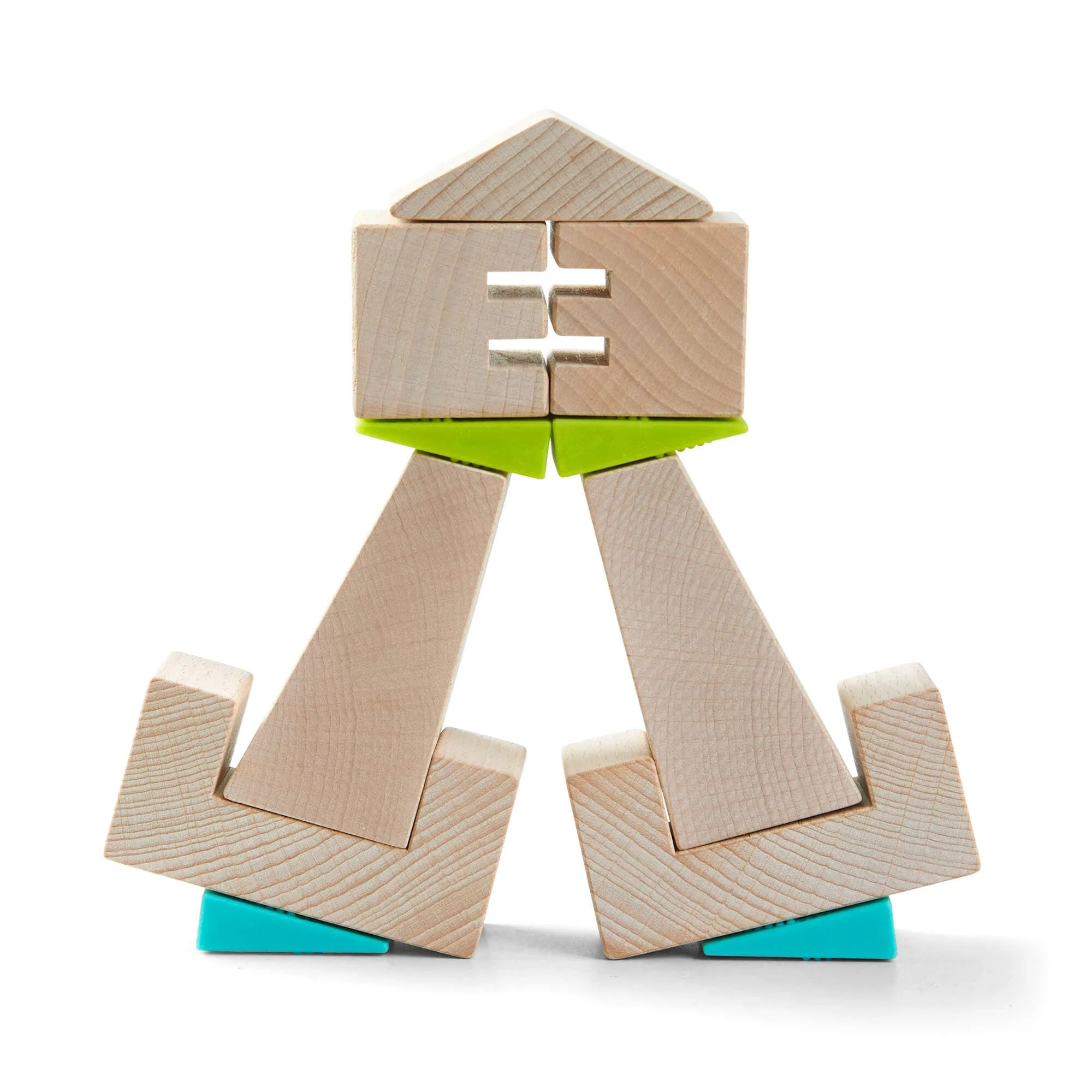
Crooked Towers Wooden Blocks
-
Teetering Towers Wooden Blocks: Teetering Towers Wooden Blocks use colorful round blocks, bridge blocks, and grippy silicone wedges for stacking and balancing challenges. The silicone wedges add a unique tactile element that helps children learn to balance while developing hand strength and coordination.
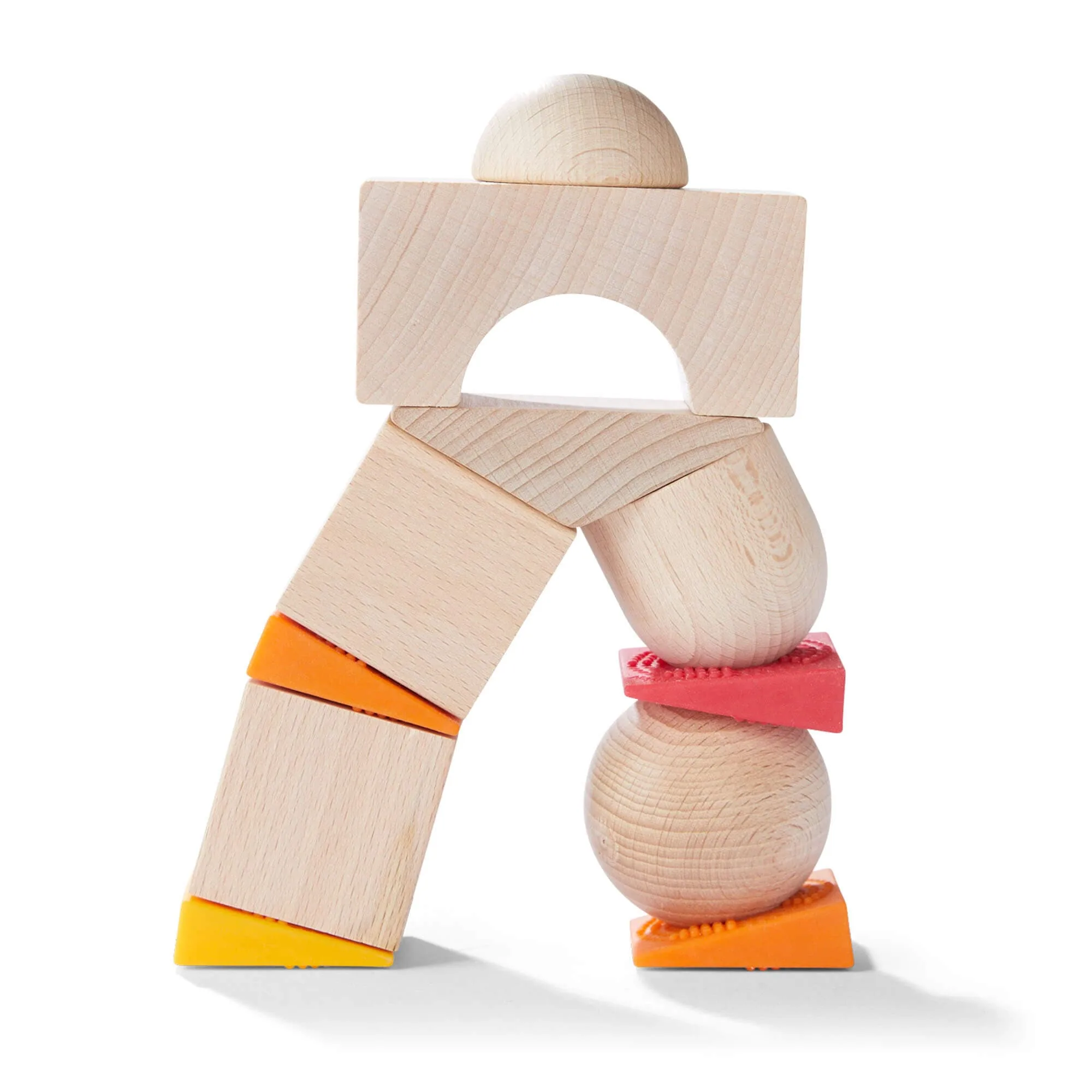
Teetering Towers Wooden Blocks
Which blocks fit your child?
Best for
- Toddlers who need to develop hand strength and precision
- Children who enjoy open-ended, imaginative play
- Eco-conscious families seeking sustainable toys
Not ideal for
- Very young toddlers (under 18 months) who may struggle with heavier blocks
- Children who prefer bright, themed playsets with specific building instructions