Quick answer
Choose a wooden rattle for durable, natural sensory exploration and a plush rattle for soft, comforting cuddles. Both have a place in baby’s toy box, depending on the moment and your baby’s stage.
Safety and materials: what to look for
When comparing wooden and plush rattles, safety starts with the materials. The Bannor Toys Classic Organic Baby Rattle is finished with natural beeswax and flax seed oil, making it smooth and safe for babies who are still exploring with their mouths. In contrast, the Estella Baby Dog Rattle Toy is made from organic cotton in Peru with poly fill, offering a soft, chewable surface that’s gentle on gums.
Both options avoid harsh chemicals, but they serve different safety needs. Wooden rattles are solid and free of small parts, while plush rattles are soft and flexible, reducing the risk of bumps during active play.
Sensory development: sound, texture, and grip
Wooden rattles produce a crisp, natural sound that helps babies connect cause and effect. The smooth wood surface also provides a firm grip that supports fine motor skill development. Plush rattles, on the other hand, offer a softer crinkle or shake sound and a fluffy texture that invites tactile exploration and comfort.
Consider your baby’s age and play style. A wooden rattle is ideal for babies who are learning to grasp and shake, while a plush rattle may be more soothing for younger infants who enjoy snuggling.
Care and durability: how they hold up
Care routines differ significantly. The wooden rattle can be wiped clean with a damp cloth and should be kept away from prolonged moisture. The plush dog rattle is machine washable and can be laid flat to dry, making it easier to keep fresh and hygienic.
Durability also varies. Wooden rattles are built to last and can become keepsakes, while plush rattles may show wear after frequent washing but are easier to replace.
Trade-offs at a glance
- Wooden rattle: pros: Durable, natural materials, smooth for teething, and produces a classic rattle sound. Wipe clean only.
- Wooden rattle: cons: Not soft for cuddling, and may be too firm for very young babies who prefer soft textures.
- Plush rattle: pros: Soft, cuddly, machine washable, and gentle on gums. Great for comfort and sensory play.
- Plush rattle: cons: May wear out faster with washing, and the sound is softer, which might not appeal to babies who prefer louder rattles.
Featured rattles
-
Wooden Rattle: Bannor Toys Classic Organic Baby Rattle is handcrafted in Iowa and finished with natural beeswax and flax seed oil. The natural finish makes it smooth and safe for baby’s mouth, and the solid wood construction offers a durable, classic toy.

Wooden Rattle
-
Baby Dog Rattle Toy: Estella Baby Dog Rattle Toy is made from organic cotton in Peru with poly fill and measures about 7 inches long. The soft, huggable design is perfect for babies who love to cuddle, and it’s machine washable for easy care.
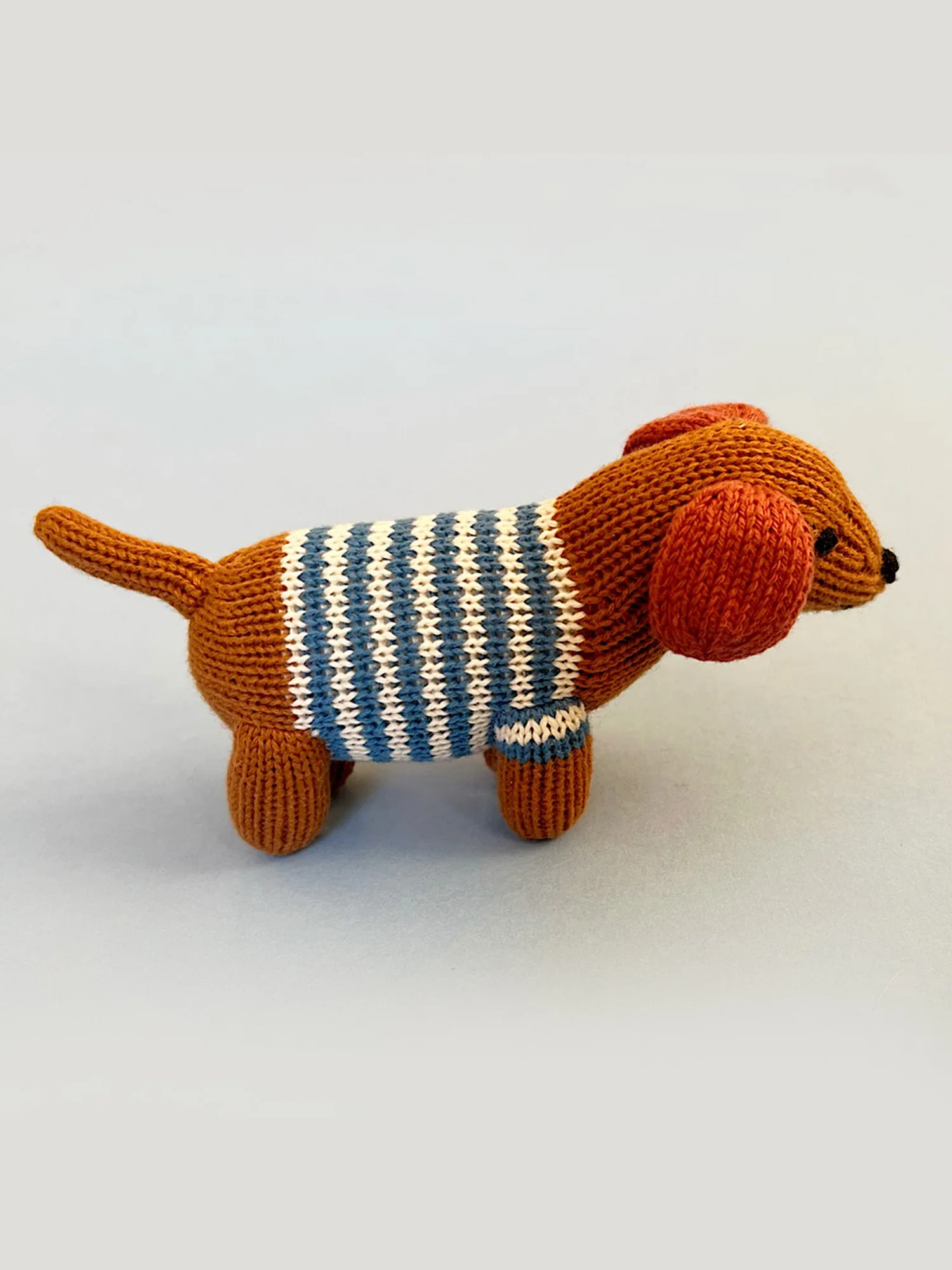
Baby Dog Rattle Toy
Which rattle fits your baby?
Best for
- Babies who are learning to grasp and shake, and who enjoy natural, durable toys
- Parents looking for a long-lasting, heirloom-quality toy that can be passed down
Not for
- Babies who need a soft, cuddly companion for sleep or comfort
- Parents who prefer machine-washable toys for easy cleaning