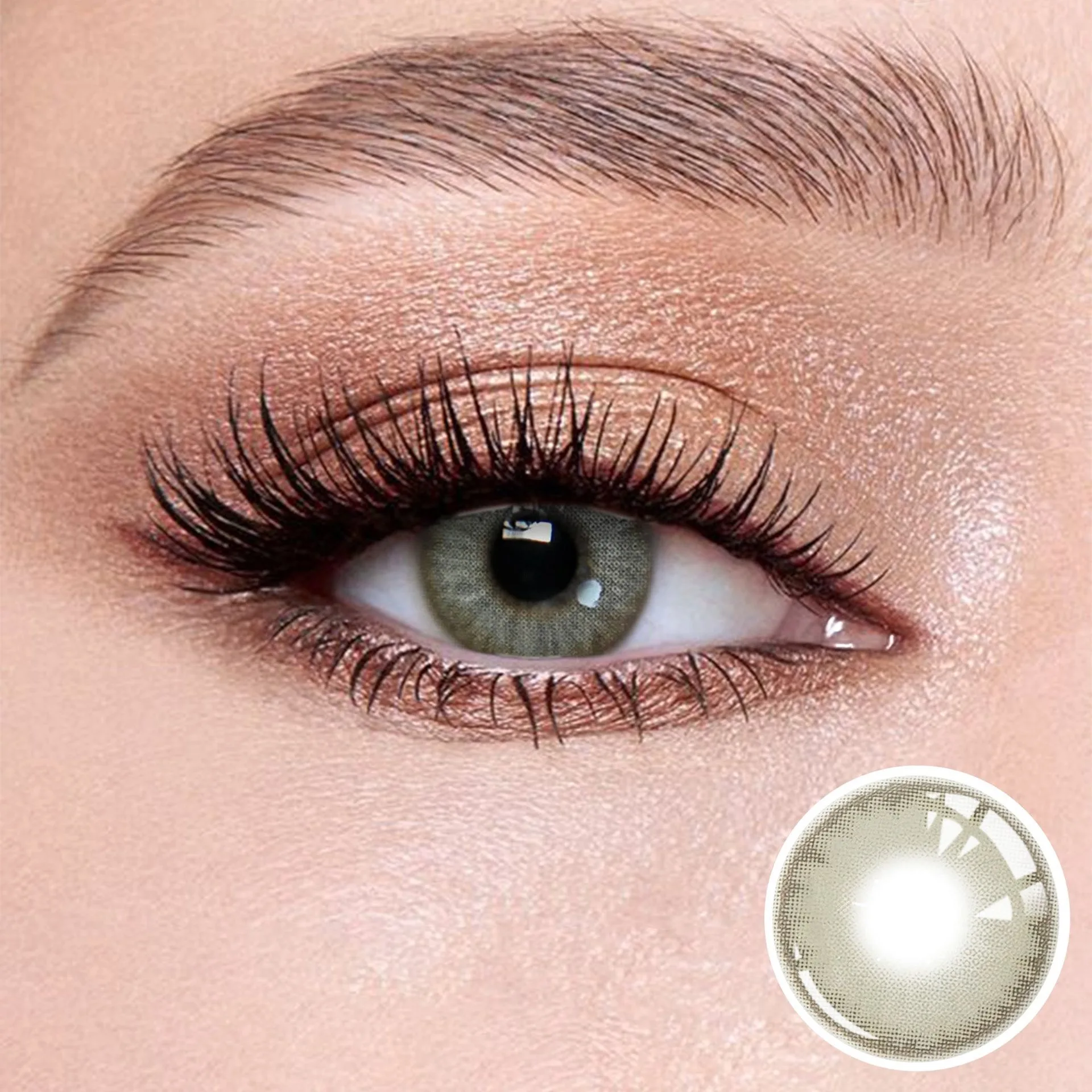
The gray lens myths worth testing
Gray colored contacts carry a lot of assumptions. Some say they always look fake, others claim a yearly lens is a free pass to wear for 12 months straight, and a few suggest a high water content guarantees comfort. If you are considering Wooeye Queen Gray I 1-year lenses, it helps to separate what the supplied record actually confirms from what gets repeated online.
Below, we test four common claims against the product evidence for Wooeye Queen Gray I. Where the record is silent, we say so rather than filling the gap with guesswork.
Myth 1: Gray contacts always look unnatural
The record does not include before-and-after photos or a shade chart, so it cannot prove how Queen Gray I will look on your eyes. What it does confirm is the design intent: a super soft and smooth color contacts edge design, plus a three-layer color-embedding process that keeps the pigment layer from touching the cornea directly. Those features suggest the lens is built to feel and sit naturally, but natural-looking color is a separate question that depends on your eye color, lighting, and expectations.
- What the record supports: A smooth edge design and a three-layer pigment system are described in the product details.
- What it does not settle: Whether the gray reads as subtle or dramatic on your specific eye color is not confirmed by the supplied information.
Myth 2: A 1-year lens means wear it for a full year
The label says 12 months after opening, but the care tips in the record add a practical ceiling: replace lenses after 8–10 months to avoid exceeding the recommended usage period. That is not a contradiction so much as a safety margin. The 12-month figure is the maximum stated period, while the replacement advice gives you a buffer for daily wear, cleaning, and storage. If you wear the lenses often, planning to replace them closer to the 8–10 month mark is the more conservative reading of the same evidence.
Queen Gray I specs that affect the fit decision
-
Wooeye Queen Gray I Contact Lenses | 1 Year: Diameter: 14.2mm A mid-size diameter that sits within common soft lens ranges, though the record does not state a recommended fit range.
-
Wooeye Queen Gray I Contact Lenses | 1 Year: Base curvature: 8.6 This is the only base curve listed; the record does not confirm suitability for other curvatures.
-
Wooeye Queen Gray I Contact Lenses | 1 Year: Water content: 40% A moderate water content; the record does not claim this percentage guarantees comfort or dryness resistance.
-
Wooeye Queen Gray I Contact Lenses | 1 Year: Material: HEMA A common soft lens material; the record notes polyhema materials are described as helping avoid protein precipitation, but individual tolerance is not confirmed.
-
Wooeye Queen Gray I Contact Lenses | 1 Year: Thickness: 0.07 mm A thin profile that may affect handling for new wearers; the record calls the lens soft and suitable for novices but does not provide a handling guarantee.
Myth 3: A soft HEMA lens guarantees all-day comfort
The record describes the lens as soft and smooth with a design meant to avoid foreign body sensation, and it lists certifications including ISO/CE/FDA. Those are relevant quality signals, but they are not a personal comfort guarantee. Comfort depends on fit, tear film, wearing time, and how carefully you clean and store the lenses. The supplied record does not include a wear schedule, maximum daily hours, or a comfort rating, so any claim that Queen Gray I will feel comfortable for a specific number of hours is not supported by the evidence here.
Myth 4: Yearly lenses need less daily care
A longer replacement interval can make care feel less urgent, but the record’s care tips point the other way. Because you are keeping the same pair for months, cleaning and storage habits carry more weight, not less.
- Hand hygiene: The record lists “Clean your hands” as a care tip before handling lenses.
- Solution changes: Change contact lens solution every 3 days when lenses are not in use.
- Case replacement: Replace your contact lens case every 3 months to maintain cleanliness and hygiene.
- Cleaning step: Rinse gently with contact lens solution as part of the supplied care instructions.
What the record does not confirm about gray contacts and safety
The product details mention UV and blue light blocking, a three-layer pigment process, and certifications. Those are useful features, but the supplied record does not provide specific UV blockage percentages, a clinical study, or a manufacturer’s wearing schedule. It also does not state whether the lens is suitable for overnight wear, swimming, or extended continuous wear. If you need those specifics, treat them as unconfirmed by this evidence and seek advice from an eye care professional rather than assuming the lens is approved for those uses.
Trial terms that lower the risk of trying gray
Wooeye offers a 40-day trial guarantee that applies to one pair of Wooeye brand lenses. If you open a new pair and do not like them, the record says you can receive another pair of a different style for free but pay a $9 shipping fee, and you do not need to return the original lenses. For orders with multiple pairs, the record recommends opening one pair first so the rest remain eligible for standard return or exchange. Returns generally require unopened, undamaged products in original packaging, so the trial is the main path for testing a shade you are unsure about.