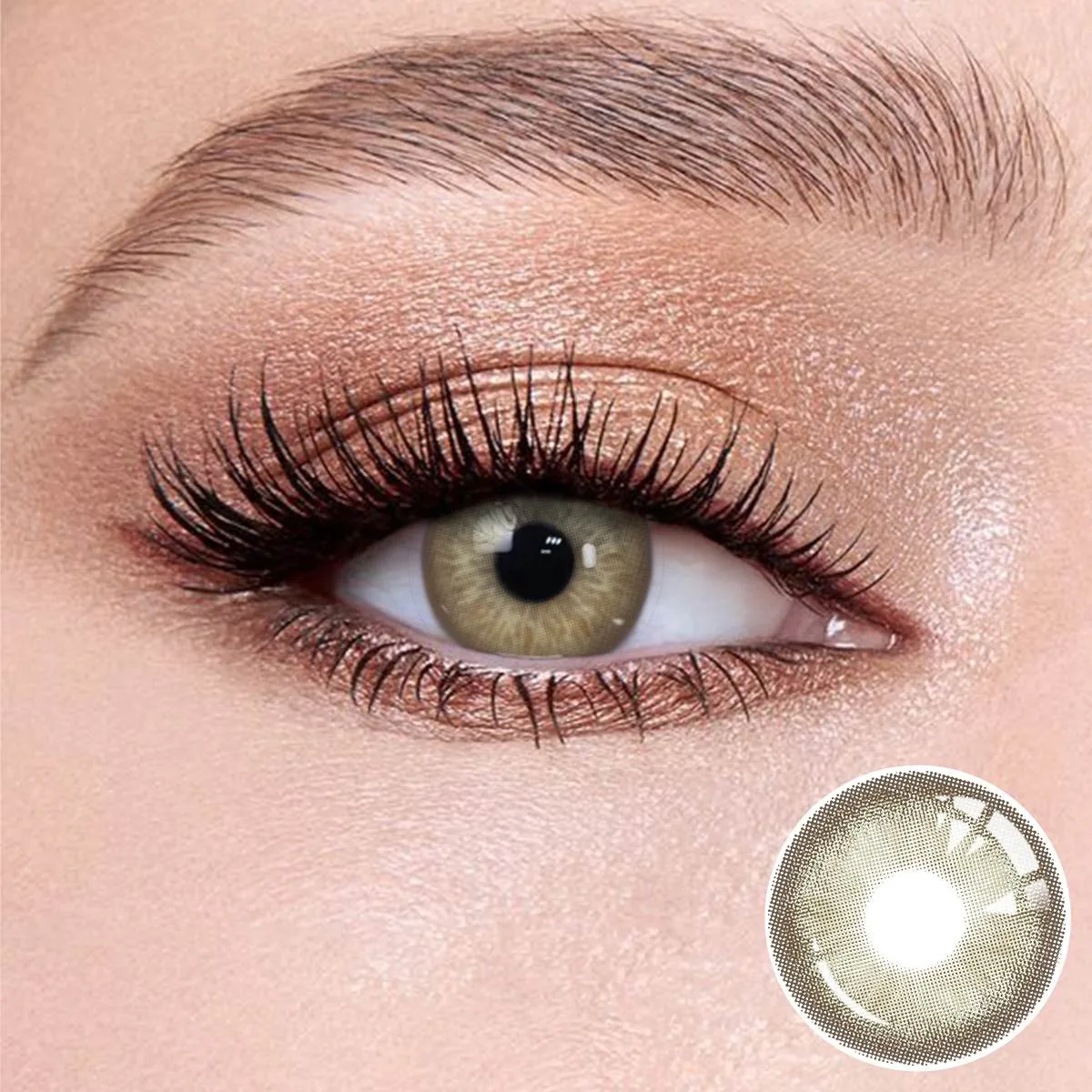
Fit and feel questions
What do the base curve and diameter mean for fit?
The supplied record lists a base curvature of 8.6 and a diameter of 14.5mm. Base curve describes how the lens sits on the eye; diameter is the full width. These numbers are the starting point for a fit conversation, not a guarantee. If you already know a lens that feels comfortable, compare its base curve and diameter to these figures.
Will the 0.07mm thickness make the lens hard to handle?
At 0.07mm thick, Sydney Brown is a thin lens. The record also describes a soft HEMA build and a smooth edge design. Thin, soft lenses can fold or turn during handling, so work over a clean surface and keep your hands dry before touching the lens.
Is 40% water content good for my eyes?
Water content affects how the lens feels and how it interacts with tears, but the record does not state a recommended wearing time or a suitability profile for dry eyes. Treat 40% as one specification among several and judge comfort only after a proper fit check with an eye care professional.
What material are these lenses made from?
The record lists HEMA (polyhema) as the main material and says the material is intended to help avoid protein precipitation. It does not provide a cleaning schedule beyond general care tips, so follow the routine in the care section below and any instructions from your eye care professional.
Sydney Brown specifications behind the fit answers
-
Wooeye Sydney Brown Contact Lenses | 1 Year: Base curvature: 8.6 The base curve is the number to compare against a lens you already wear comfortably.
-
Wooeye Sydney Brown Contact Lenses | 1 Year: Diameter: 14.5mm Diameter affects how the lens sits and how much iris coverage you see.
-
Wooeye Sydney Brown Contact Lenses | 1 Year: Thickness: 0.07 mm A thin lens can be more delicate to handle, especially for new wearers.
-
Wooeye Sydney Brown Contact Lenses | 1 Year: Water content: 40% Water content is part of the comfort profile, though the record does not set a wear-time limit.
-
Wooeye Sydney Brown Contact Lenses | 1 Year: Material: HEMA HEMA is the stated lens material; the record says it is intended to help avoid protein precipitation.
How to insert yearly colored contacts cleanly
The record lists basic care tips: clean your hands, rinse the lens gently with contact lens solution, and replace the lens case every three months. It does not provide a full insertion protocol, so the steps below are general handling guidance, not a manufacturer instruction. Your eye care professional can confirm what is right for your eyes.
- Wash and dry your hands: Use soap and water, then dry with a lint-free towel. Avoid oily or scented soaps that can transfer to the lens.
- Rinse the lens with contact lens solution: The record says to rinse gently with contact lens solution. Do not use tap water or saliva on the lens.
- Check the lens shape: Place the lens on your fingertip and look at the profile. A lens that flares outward like a bowl is likely inside out; a smooth dome is correct.
- Hold the upper lid and look up: Use one hand to lift the upper lid and the other to pull down the lower lid. Look upward and place the lens on the lower white part of the eye, then release the lids and blink gently.
- Center and blink: Close your eye and gently massage the lid to center the lens. If it feels uncomfortable, remove it, rinse with solution, and try again.
Cleaning and storage questions
How often should I clean yearly contact lenses?
The record does not give a specific cleaning frequency beyond the general tips. A common practice is to clean and disinfect lenses after each wear using fresh contact lens solution, but confirm the routine with your eye care professional. Never reuse old solution.
What should I do with the lenses when I am not wearing them?
Store them in a clean lens case filled with fresh contact lens solution. The record says to change the solution every three days when lenses are not in use and to replace the case every three months.
Can I use tap water to rinse the lenses or case?
The record does not mention tap water for rinsing. Contact lens solution is the stated rinse. Avoid tap water, which can introduce microorganisms.
Replacement timing and the 12-month label
Do these lenses really last a full year?
The record lists a period of use of 12 months after opening, but also includes a care tip to replace lenses after 8–10 months to avoid exceeding the recommended usage period. Treat 12 months as a ceiling, not a target, and replace earlier if the lens becomes uncomfortable or damaged.
When should I throw away a pair before the 12-month mark?
Replace the lens if it develops a tear, feels persistently uncomfortable, or if your eye care professional advises it. The record does not list specific signs of wear beyond the 8–10 month tip, so use your own comfort and vision as a guide.
Trial, returns, and ordering
What does the 40-day trial cover?
The record states a 40-day warranty and trial for Wooeye colored contact lenses. If you open a new pair and do not like them, you can request another style for a $9 shipping fee and you do not need to return the original lenses. Only one pair can be exchanged under this terms. If you ordered multiple pairs, open one first so the rest stay eligible for standard return.
Can I return opened lenses?
Standard returns require unopened, undamaged products in original packaging. Opened lenses are not accepted for standard return, but the trial exchange above may apply. If you ordered the wrong prescription or color and want a replacement, the record says you must return the product and pay $17.99 for shipping.
How should I store the lenses if I plan to exchange them?
Keep unopened pairs in their original packaging until you have tested one pair. That keeps the rest eligible for standard return or exchange under the supplied terms.
What the supplied record does not confirm
The record does not provide a recommended daily wearing time, a replacement schedule beyond the 8–10 month tip, or guidance for specific eye conditions. It also does not confirm suitability for everyone. Use these lenses only under the guidance of an eye care professional who can assess your fit and eye health.