Quick answer
Choose Word Fluxx if your group enjoys word puzzles, spelling, and flexible player counts up to six. Choose Chemistry Fluxx if you want a science-themed deck that teaches element symbols and compound building with no prior chemistry knowledge required. Both are standalone Fluxx decks, so the real decision is whether your table prefers letters or elements.
What actually changes between these two decks
Both games use the same Fluxx core: draw a card, play a card, and follow the current rules and Goal. The difference is what the Keepers represent and what the Goals ask you to assemble. In Word Fluxx, Keepers are letters and Goals ask for words of various types. In Chemistry Fluxx, Keepers are elements and Goals ask for compounds such as water, salt, sugar, rust, or sand.
That single design choice changes table talk. Word Fluxx rewards players who spot anagrams and letter combinations quickly. Chemistry Fluxx rewards players who recognize element symbols and remember which atoms form common compounds. Neither deck requires outside study to start playing, but each rewards a different kind of attention.
Player count, age, and session length
The supplied catalog facts list Word Fluxx at 1-6 players and Chemistry Fluxx does not list a player count in the provided record, so treat Chemistry Fluxx as a game to check on the box or product page before buying for a specific group size. Word Fluxx also lists twice the typical number of Keepers, which matters because more Keepers means more letter options on the table and more ways to complete a word Goal.
Chemistry Fluxx is described as a basic introduction to chemistry that requires no previous knowledge, which makes it the safer pick for mixed-age tables where someone may be meeting the periodic table for the first time. Word Fluxx leans toward players comfortable reading and spelling aloud, since the Goals involve making nouns, verbs, palindromes, three-letter acronyms, and Roman numerals.
Learning value without the lecture
Chemistry Fluxx sneaks in real content: the makeup of atoms that form the sun or metals such as cast iron, plus compounds like water, salt, sugar, rust, and sand. It also includes a Helium Effect bonus if you remember to talk in a high-pitched voice when you play the helium Keeper, which keeps the tone playful rather than academic.
Word Fluxx builds a different skill set. Palindromes, three-letter acronyms, and Roman numerals push players to think about word structure, not just vocabulary. If you want a deck that supports classroom word study or family spelling practice, Word Fluxx is the more direct fit. If you want a deck that supports a science unit or a museum gift shop table, Chemistry Fluxx is the more direct fit.
Price and availability trade-offs
At the supplied catalog prices, Word Fluxx is listed at USD 12.00 against a comparison price of USD 20.00, and Chemistry Fluxx is listed at USD 14.20 against a comparison price of USD 20.00. Both are discounted from the comparison price in the catalog, so the gap between them is small enough that theme and player count should decide the purchase, not the two-dollar difference.
If you are buying for a store demo or a classroom set, note that the Hundred Acre Wood Fluxx Demo Copy is a separate retail-only option with a pink DEMO COPY sticker and a 70% off MSRP offer limited to one per store. It is not a substitute for either deck in this comparison, but it is worth knowing if you run a shop and want a display copy.
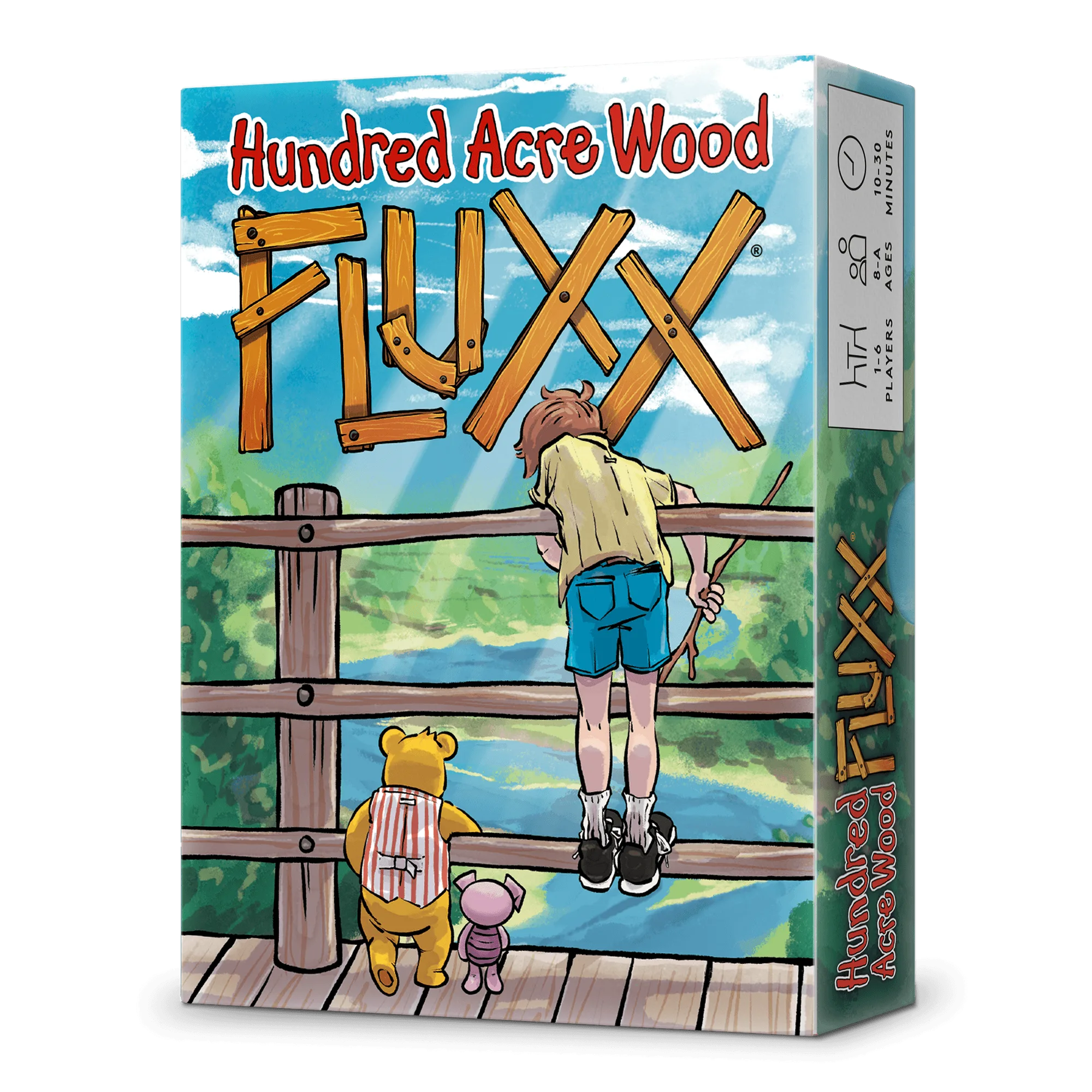
Hundred Acre Wood Fluxx
Trade-offs to weigh before you buy
- Word Fluxx: more Keepers, more table space: Twice the typical number of Keepers means more cards in front of each player and more possible letter combinations, which can slow down players who prefer a leaner table. Great for word-puzzle fans; less ideal if your group dislikes scanning a wide spread of cards.
- Chemistry Fluxx: science theme, lighter word play: The deck teaches element symbols and compound building, but it will not scratch the spelling and vocabulary itch that Word Fluxx targets. Pick this for science-curious tables, not for players who want a word game.
- Player count clarity: Word Fluxx lists 1-6 players in the supplied facts; Chemistry Fluxx does not list a player count in the provided record, so confirm the box or product page before buying for a large group. If exact player count matters, verify Chemistry Fluxx before checkout.
Product facts at a glance
- Word Fluxx: Word Fluxx lists 1-6 players, twice the typical number of Keepers, and Goals for nouns, verbs, palindromes, three-letter acronyms, and Roman numerals. Supports solo play and larger groups, and gives word-minded players more letter combinations to work with.
- Chemistry Fluxx: Chemistry Fluxx asks players to collect elements of the periodic table to form compounds such as water, salt, sugar, rust, and sand, and requires no previous chemistry knowledge. Works as a low-pressure science introduction for mixed-age tables without turning game night into a lesson.
- Hundred Acre Wood Fluxx Demo Copy: The Hundred Acre Wood Fluxx Demo Copy is identical to the regular game except for a pink DEMO COPY sticker and is offered to retailers at 70% off MSRP, one per store. Useful for shops that want a display copy, but not a replacement for a personal copy of Word Fluxx or Chemistry Fluxx.
Which deck fits your table?
Best for
- Families and classrooms that want spelling, vocabulary, and word-structure practice in a card game
- Groups of up to six players who want a standalone Fluxx deck with a large letter pool
- Solo players, since Word Fluxx lists 1-6 players in the supplied facts
Not for
- Players who want a science theme and element symbols instead of letters
- Tables that prefer a smaller number of Keepers in play
- Buyers who need a confirmed player count for Chemistry Fluxx without checking the box or product page first