What the Pivot Sharpener Does Before You Start
The Work Sharp Pivot Knife Sharpener is a compact, pull-through tool designed to get a knife back to cutting with ease in a few strokes. It combines three sharpening elements in one unit: a Convex-Carbide sharpening stage, a ceramic honing rod, and a small diamond plate. Before you use it for the first time, it helps to understand what each part is for so you can choose the right stage for your blade.
This guide walks through the setup and first-use steps supported by the product information. Because the supplied record does not include detailed operating instructions, angle specifications, or care requirements, this article sticks to what is confirmed and flags where you will need to make your own judgment.
The Pivot is not a full sharpening system for restoring a neglected edge from scratch. It is a quick touch-up tool for maintaining an edge that is already in reasonable shape. If your knife is severely dull or damaged, the diamond plate can help with nicked edges, but the overall design is aimed at fast, simple maintenance rather than reprofiling.
Pivot Sharpener Components at a Glance
-
Work Sharp Pivot™ Knife Sharpener: Convex-Carbide® sharpening stage quickly sharpens knives to a robust, long-lasting convex cutting edge. This is the primary sharpening stage. Use it when your edge needs more than a light hone and you want a durable convex edge.
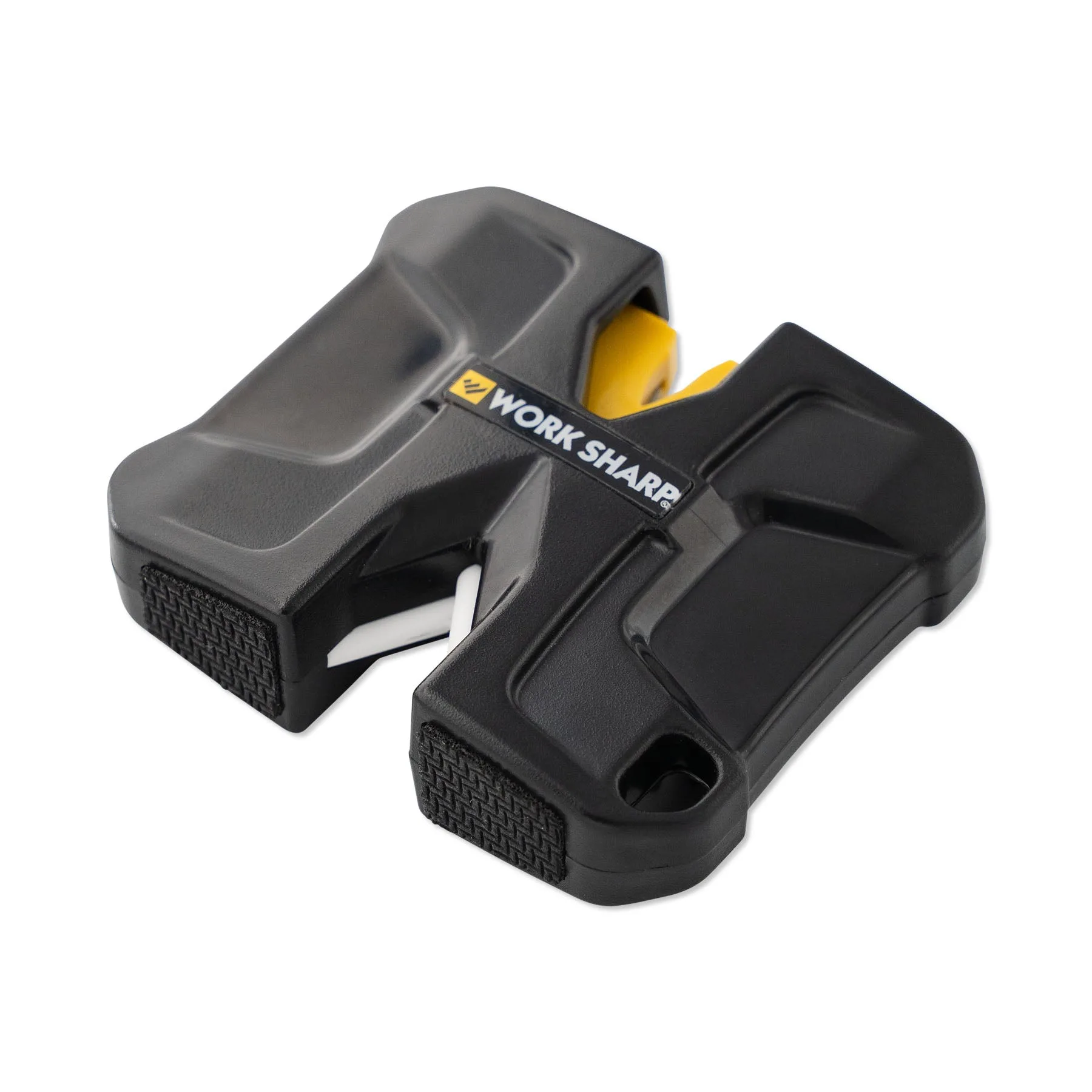
Work Sharp Pivot™ Knife Sharpener
-
Work Sharp Pivot™ Knife Sharpener: Ceramic honing rod refines and re-sharpens any knife quickly with a pull-through hone. This is your go-to for routine maintenance between sharpenings. It realigns and lightly refreshes the edge without removing much material.
-
Work Sharp Pivot™ Knife Sharpener: Small diamond plate can touch up edge tools, repair nicked edges, and sharpen fish hooks, with a groove for fish hooks. This gives the Pivot extra versatility beyond knives. Use it for small edge tools or to address minor nicks before honing.
How to Set Up and Use the Pivot for the First Time
The Pivot is designed to be simple: place your knife in the slot and pull. The steps below reflect that straightforward operation, with practical checkpoints to help you get a feel for the tool.
- Inspect your edge and choose a stage: Look at your knife edge under good light. If it is only slightly dull and needs a quick refresh, start with the ceramic hone. If it needs more work, start with the Convex-Carbide stage. If there is a visible nick, the diamond plate can help address it before you move to sharpening.
- Set the sharpener on a stable surface: Place the Pivot on a flat, non-slip surface at a comfortable height. The product record does not specify a mounting method, so use your judgment to keep it steady while you pull the knife through.
- Position the knife in the slot: Hold your knife by the handle with the edge facing down or as directed by the slot design. The Pivot uses a pull-through action: simply place your knife in the slot and pull. Keep the blade perpendicular to the slot and pull smoothly.
- Pull through with light, even pressure: Draw the knife through the slot in one smooth motion. Avoid twisting or forcing the blade. The Convex-Carbide stage is designed to sharpen quickly, so a few strokes may be all you need. Check the edge after a few pulls before continuing.
- Hone with the ceramic rod: After sharpening, or for routine maintenance, use the ceramic honing rod. Pull the knife through the hone a few times to refine and re-sharpen the edge. This step helps maintain a keen edge between full sharpenings.
- Use the diamond plate for nicks or tools: If your edge has a small nick, or you want to touch up a small edge tool or fish hook, use the diamond plate. The groove is designed for fish hooks. Work carefully and check your progress often.
- Clean up and store: The product record does not include specific cleaning or storage instructions. Wipe the sharpener with a dry cloth if needed and store it in a dry place. Avoid washing it under running water unless you have confirmed it is safe to do so.
What to Expect on Your First Try
The Pivot is marketed as a fast, easy, and affordable way to get a knife back into service. On your first use, expect to spend only a few minutes. The Convex-Carbide stage removes material quickly, so start with a light touch and check the edge after every few strokes. It is easier to take off a little more than to undo too much sharpening.
Because the record does not specify sharpening angles or stroke counts, you will need to develop a feel for your particular knife. Different blade steels and geometries may respond differently. Pay attention to how the knife cuts after each stage and adjust your approach accordingly.
The ceramic hone is the gentlest option and is ideal for keeping an edge sharp between deeper sharpening sessions. The diamond plate is more aggressive and best reserved for damaged edges or non-knife tools. Using the right stage for the job will help your knives last longer.
Where the Pivot Fits in Your Sharpening Routine
- Work Sharp Pivot™ Knife Sharpener: Within a few strokes you can get your knife back to cutting with ease. This sets a realistic expectation: the Pivot is for quick touch-ups, not extended sharpening sessions.
- Work Sharp Pivot™ Knife Sharpener: For those looking for a fast and easy way to sharpen knives this is a great starting point. If you are new to sharpening, the Pivot offers a low-risk entry point before investing in a more complex system.
Limitations to Keep in Mind
The supplied product information does not include detailed instructions, angle guidance, or care requirements. This means you should treat the Pivot as a simple pull-through tool and rely on your own observation of the edge. If you need precise angle control or want to reprofile an edge, a different sharpening system may be more appropriate.
The Pivot is also not confirmed to be dishwasher-safe or waterproof, so avoid submerging it. Keep it dry and store it safely away from moisture. As with any sharpening tool, keep it out of reach of children and use caution when handling sharp blades.
Finally, remember that the Pivot is a maintenance tool. It will keep a healthy edge cutting, but it is not designed to restore a completely dull or damaged blade to like-new condition. For heavy restoration, consider professional sharpening or a more comprehensive sharpening kit.