Start with the anchor piece and its real footprint
A gallery wall works best when one piece sets the scale for everything around it. The Worthman Wall Decor measures 40''W x 2''D x 20''H and weighs 8 lbs., so it reads as a wide, horizontal anchor. Before you buy frames or smaller decor, measure the wall area you want to fill and sketch the Worthman's rectangle to scale. That rectangle becomes the reference point for every other piece in the arrangement.
The 2'' depth also matters. It means the piece projects from the wall rather than sitting flush, so give it a little breathing room from doorways, curtains, or furniture that people walk past. The supplied record does not specify a recommended clearance, so use your own walkway measurements rather than a fixed rule.
Worthman Wall Decor: facts that shape the layout
-
Worthman Wall Decor: Measures 40''W x 2''D x 20''H and weighs 8 lbs. The wide, low profile makes it a natural horizontal anchor; the 8 lb. weight is the figure to check against your wall fasteners.
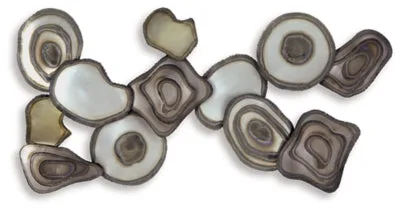
Worthman Wall Decor
-
Worthman Wall Decor: Has an I-ring bracket for hanging and hangs 4 ways. You can choose the orientation that best fits your wall, then build the rest of the gallery around that decision.
-
Worthman Wall Decor: Made with metal and finished in goldtone, brown and silvertone. The mixed metallic finish lets you repeat those tones in frames or nearby decor without matching exactly.
-
Worthman Wall Decor: Assembly is not required. You can go straight to planning placement and hanging, with no build step before installation.
Plan the gallery wall around the Worthman, step by step
These steps assume the Worthman is the anchor. Adjust the order if you already own other pieces you want to include.
- Decide the orientation first: Because the bracket hangs four ways, choose whether the Worthman will run wide or tall before you plan anything else. Its 40''W x 20''H proportions make the wide orientation the obvious horizontal anchor, but the final choice depends on your wall shape.
- Tape the footprint on the wall: Use painter's tape to mark a 40''W x 20''H rectangle at the height you're considering. This shows how much wall the anchor will occupy before you commit to nails or hooks.
- Choose a hanging height you can live with: Hanging art at eye level is a common starting point, but the supplied record does not give a specific height. Stand back and check the taped rectangle from the main viewing spot in the room—seated if it's a living room, standing if it's a hallway or office.
- Build outward with a consistent gap: Place smaller frames or decor around the Worthman using one gap size throughout. The record does not prescribe a spacing figure, so pick a gap that looks balanced to you and repeat it rather than mixing several distances.
- Check the weight and fastener: The Worthman weighs 8 lbs. Confirm your wall fastener is rated for that load and suits your wall type. If you are unsure, ask a hardware specialist; the supplied record does not include a fastener recommendation.
- Hang the anchor, then fill in: Install the Worthman first using the I-ring bracket, then position the surrounding pieces against the real thing rather than the tape outline.
Gallery wall layout ideas for a wide anchor
- Symmetrical frame: Center the Worthman and arrange matching frames or decor at equal distances on both sides. This suits a living room wall where calm and order matter more than variety.
- Asymmetric balance: Offset the Worthman slightly and group several smaller pieces on the opposite side. The mixed metallic finish gives you permission to vary frame tones—goldtone, brown, and silvertone all connect back to the anchor.
- Horizontal band: Keep the arrangement low and wide by placing smaller pieces in a row above or below the Worthman. This works well over a sofa or console where vertical space is limited.
- Shelf-assisted gallery: Hang the Worthman above a console or shelf and lean or place smaller decor below. This reduces the number of holes in the wall and lets you rearrange without rehanging.
Where the Worthman works best in a living room
The supplied record names the dining room, home office, and living room as suitable settings. In a living room, the 40''W x 20''H size suits a wall above a sofa or a wide console, where a horizontal anchor helps tie the seating area together. The metallic finishes catch light, so consider how nearby lamps or windows will hit the piece—the interplay of light and dimension is part of the design.
If your living room wall is narrow, the four-way hanging bracket lets you turn the piece tall instead of wide. That changes the gallery wall's shape, so re-tape the footprint before you move any other piece.
Anchor-first vs. collection-first: which approach fits you
- Anchor-first (Worthman as the starting point): Best if you want a defined layout quickly. You plan around one known 40''W x 20''H footprint and add pieces that support it. Less risk of a scattered look.
- Collection-first (gather pieces, then arrange): Best if you already own frames and decor you love. The Worthman then becomes the largest piece in an existing group. Expect more trial and error before the layout settles.
What the supplied record does not tell you
The record does not include a recommended hanging height, a spacing measurement between pieces, a maximum load for the I-ring bracket, or wall-type compatibility. Treat any specific number you see elsewhere as a general guideline, not a manufacturer instruction for this piece. Measure your own wall, check your fastener rating against the 8 lb. weight, and adjust the layout to your room rather than forcing a formula.
The record also does not list care instructions for the metallic finish. Avoid guessing at cleaners; a dry or slightly damp cloth is a common default for metal decor, but confirm with the retailer if you are unsure.