The German belt buckle of World War II is one of the most recognizable pieces of military insignia from the era. Worn by millions of soldiers across all branches of the Wehrmacht, Waffen-SS, Luftwaffe, and Kriegsmarine, these buckles were more than functional hardware—they were symbols of duty, allegiance, and identity. For collectors and reenactors alike, understanding the nuances of German belt buckles is essential for building an authentic impression or a meaningful collection.
From the iconic "Gott mit uns" motto on Heer buckles to the stark SS runes, each variant tells a story of a different branch, time period, or manufacturer. In this guide, we will walk through the major types of WWII German belt buckles, how to spot fakes, and how to choose the right reproduction buckle for your uniform. Whether you are assembling a complete German infantry kit or just starting your collection, knowing what to look for will save you time and money.
A Brief History of the German Belt Buckle
The German belt buckle evolved significantly from the Imperial era through the Weimar Republic and into the Third Reich. Under the Nazi regime, the buckle became a canvas for political and military messaging. The standard Heer (Army) buckle featured a central oak-leaf wreath surrounding a swastika, with the words "Gott mit uns" (God with us) inscribed on the belt plate. This design was adopted in 1936 and remained in use throughout the war.
Other branches had distinct designs. The Luftwaffe buckle displayed a flying eagle clutching a swastika, while the Kriegsmarine buckle featured an anchor and eagle. The Waffen-SS buckles were simpler, often bearing only the SS runes or a plain face with a motto. These differences are crucial for identification and for ensuring your reproduction matches the correct branch of service.
- Heer buckles: Oak-leaf wreath, swastika, "Gott mit uns"
- Luftwaffe buckles: Flying eagle with swastika
- Kriegsmarine buckles: Anchor and eagle
- Waffen-SS buckles: SS runes or plain with motto
Key Variants and Materials
WWII German belt buckles were typically made from steel, aluminum, or brass. Early war buckles were often made of brass or high-quality steel with a painted or chemically darkened finish. As the war progressed and resources became scarce, manufacturers switched to cheaper materials like zinc and lower-grade steel. The finish also changed from glossy to matte or field-gray. Knowing the material can help you date a buckle and assess its authenticity.
For reenactors, choosing a reproduction buckle that matches the correct era and branch is vital. Many reproduction buckles are made from cast zinc alloy or steel and come with either a painted or nickel-plated finish. Look for details like crisp stamping of the motto, accurate prong placement, and proper belt catch shape. A high-quality reproduction will have the correct weight and patina, not a shiny modern finish. Pair your buckle with a proper belt, such as the Standard EM Black Belt, to complete the look.
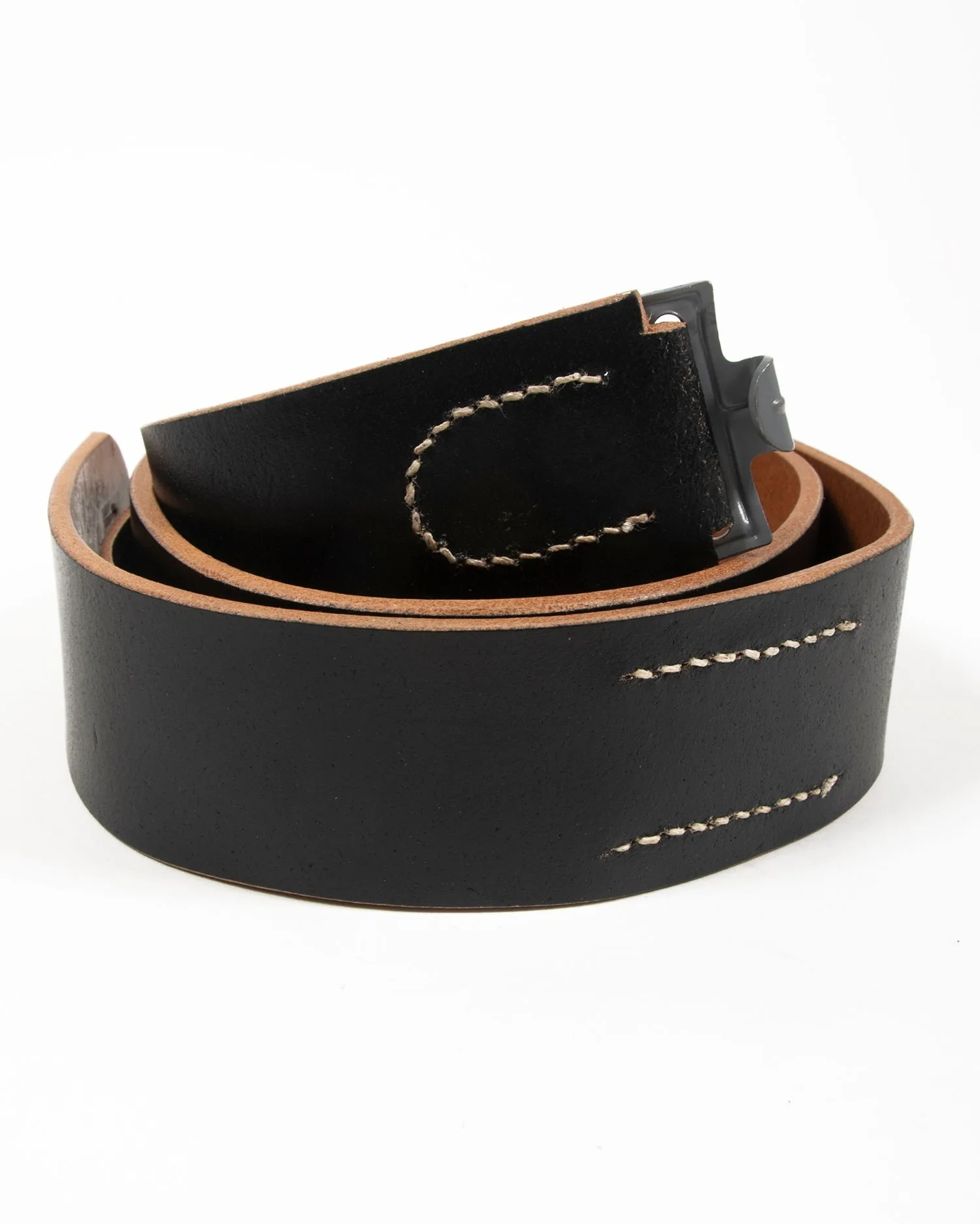
Standard EM Black Belt
- Early war: brass or steel, glossy finish
- Mid war: steel with matte field-gray paint
- Late war: zinc or low-grade steel, rough finish
Authenticity: How to Spot Original vs. Reproduction
Collectors often struggle to distinguish original WWII buckles from high-quality reproductions. Original buckles will show signs of age, such as patina, wear on the prongs, and a dulled finish. The markings on the reverse—manufacturer codes and date stamps—are a key indicator. Common manufacturers include Overhoff & Cie., Assmann & Söhne, and Steinhauer & Lück. Reproductions often lack these markings or have them poorly rendered.
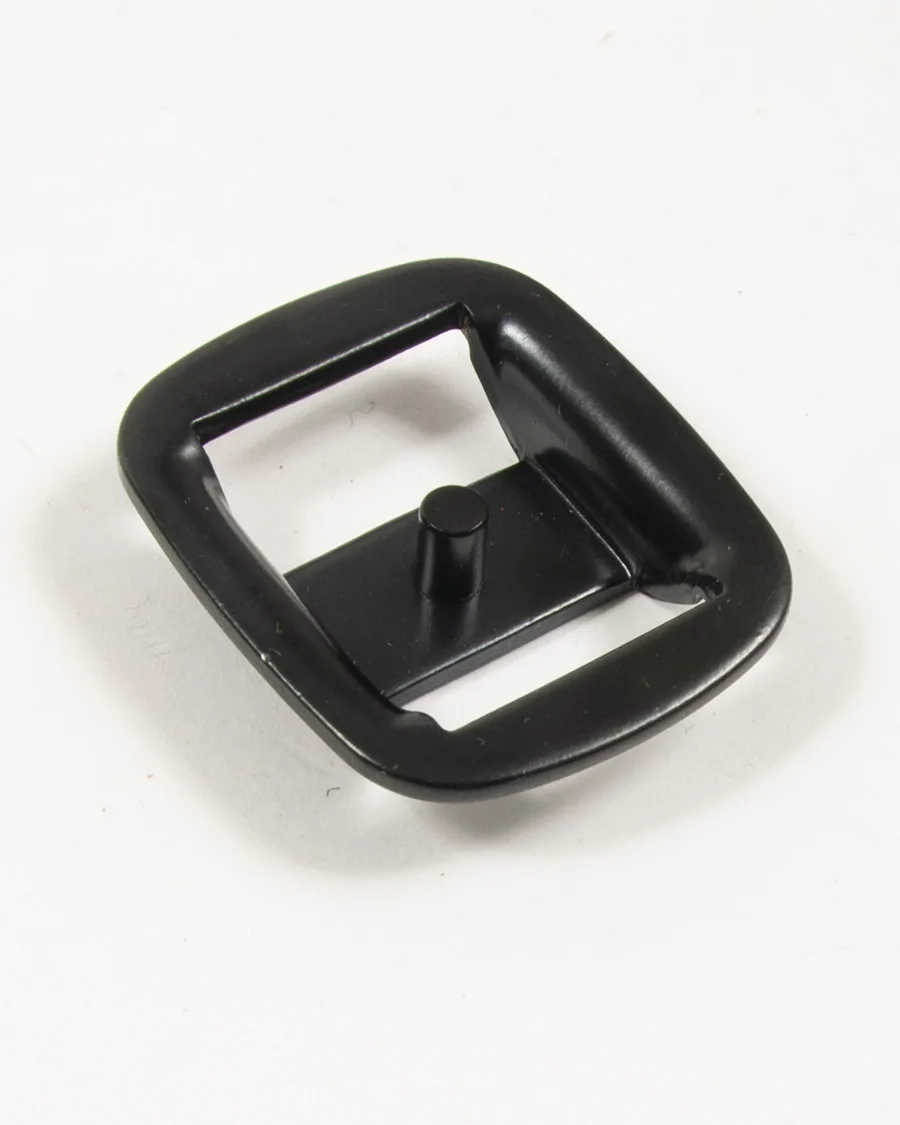
Another telltale sign is the belt catch. Original buckles have a distinct shape and thickness to the catch that holds the belt prong. Reproductions may have a slightly different angle or be made of thinner metal. Additionally, the swastika on original buckles is crisp and well-defined, while fakes often have soft or uneven details. If you are buying a reproduction for reenactment, look for one that mimics these details closely. For a complete German infantry loadout, consider pairing your buckle with https://wildernessworks.shop/products/k98-pouches-black-pair-99354K98 Pouches, Black (pair) for an authentic field appearance.
- Check for manufacturer marks and date stamps on reverse
- Examine the belt catch shape and thickness
- Look for crisp, well-defined swastika and motto details
Choosing the Right Reproduction Buckle for Your Impression
When selecting a reproduction buckle, first determine which branch and time period you are portraying. A Heer buckle from 1936 is appropriate for most German army impressions, while a late-war buckle with a rough finish is better for a 1944-45 impression. Waffen-SS buckles should only be used for SS impressions, as they are anachronistic for Heer uniforms. Also consider the belt width—standard German belts are 45mm wide, and the buckle must match.
Quality reproductions are available from several makers, but not all are created equal. Look for buckles that use a steel or brass base with proper paint or chemical blackening. Avoid buckles that are too shiny or have a plastic-like feel. A good reproduction will have a solid weight and a slightly worn appearance out of the box. For a budget-friendly option, many reenactors start with a basic steel buckle and upgrade later. Don't forget to also pick up a proper belt and other accessories like the https://wildernessworks.shop/products/standard-m1942-paratrooper-jacket-99166Standard M1942 Paratrooper Jacket if you are building a Fallschirmjäger impression.
- Match buckle branch to your uniform (Heer, SS, Luftwaffe, Navy)
- Choose steel or brass over zinc for durability
- Avoid overly shiny or lightweight buckles
Care and Maintenance of Your Buckle
Whether you own an original or a reproduction, proper care will extend the life of your belt buckle. For original buckles, avoid harsh cleaning that could remove the patina. A gentle wipe with a dry cloth is usually sufficient. If you must remove dirt, use a soft brush and mild soap, then dry thoroughly. Never use metal polish on a painted or chemically darkened finish, as it will strip the color.
For reproduction buckles, you can apply a thin coat of wax to protect the finish from rust. Store your buckle in a dry environment, away from humidity. If you wear it for reenactments, wipe it down after each event to remove sweat and dirt. With proper care, a good reproduction buckle can last for years and develop a natural patina that adds to its authenticity.
- Use a dry cloth for original buckles; avoid polish
- Apply wax to reproduction buckles for rust protection
- Store in a dry, cool place away from moisture
Understanding the history, variants, and authenticity markers of WWII German belt buckles will greatly enhance your collecting or reenactment experience. Whether you are starting a new impression or adding to a collection, investing in a quality buckle is a small but essential step. For a complete and authentic German uniform, explore our selection of reproduction belts and accessories to pair with your buckle.