Quick answer
Choose Wyvern Green when you need a deep shadow green for recesses, basecoats on dark schemes, or shading orc skin; choose Griffon Claw when you need a bright highlight green for edge work or lighter layers. They are designed for different stages of the same paint job, so the real decision is whether you are shading or highlighting.
Why shadow and highlight greens are not interchangeable
Two Thin Coats organizes its range into shadow, midtone, highlight, and wash categories. Wyvern Green sits in the shadow range, while Griffon Claw is a highlight. That means they are formulated for different jobs: shadows go into recesses or act as a dark base, while highlights catch raised edges and add brightness. Swapping one for the other usually leads to either a flat, muddy result or a chalky, over-bright finish.
For 28mm miniatures, the scale makes this distinction more important than on larger models. A shadow green that is too light will not read as depth at arm's length, and a highlight green that is too dark will not separate details. Using each paint where it belongs keeps the contrast readable without extra work.
Coverage and opacity trade-offs
Shadow paints often need less opacity because they are applied into recesses or over a dark base, while highlight paints usually need to cover a midtone cleanly on raised areas. The catalog does not list opacity ratings for either paint, so test both on a spare surface before committing to a full unit. If you are painting a large batch, a quick swatch test will tell you whether you need more than one thin coat to get even coverage.
Wyvern Green's darker tone can help hide minor imperfections in recesses, but it may require more layers if you use it as a basecoat on a light undercoat. Griffon Claw, being a highlight, is more likely to show brushstrokes if applied too thickly, so keep it to thin layers on edges.
Mixing and layering across the two greens
You can mix Wyvern Green and Griffon Claw to create intermediate tones, but do so on a palette rather than in the pot. A 50/50 mix gives a mid-green that can bridge the two stages, though it may not match a dedicated midtone from the range. For consistent results across a unit, mix a batch large enough for the whole squad and note the ratio.
When layering, apply Wyvern Green first in the deepest areas, then build up with a midtone if you have one, and finish with Griffon Claw on the sharpest edges. If you only own these two greens, you can still get a decent result by glazing thinned Griffon Claw over the upper areas, but expect a starker transition than with a full triad.
Trade-offs to weigh
- Depth vs brightness: Wyvern Green gives you depth for shading and dark basecoats, but it will not brighten a model on its own. Griffon Claw gives you brightness for highlights, but it will not create shadows. Decide whether your current painting step is shading or highlighting before you pick up either pot.
- Batch painting vs single miniatures: For batch painting, Wyvern Green can be applied quickly into recesses, while Griffon Claw requires a more controlled brush for edges. If you are painting a whole unit, plan to use Wyvern Green first across all models, then come back with Griffon Claw. Group your painting by stage to save time and keep results consistent.
- Mixing vs buying a midtone: Mixing the two greens can create a midtone, but it adds a step and may not match a dedicated midtone. If you paint greens often, a separate midtone may be more efficient. Consider how often you paint green armies before relying on mixes.
Product facts
-
Griffon Claw - Two Thin Coats: Griffon Claw is categorized as a Highlight in the Two Thin Coats range and comes in a 15ml pot. Its highlight role makes it best suited to edge work and bright accents rather than shading recesses.
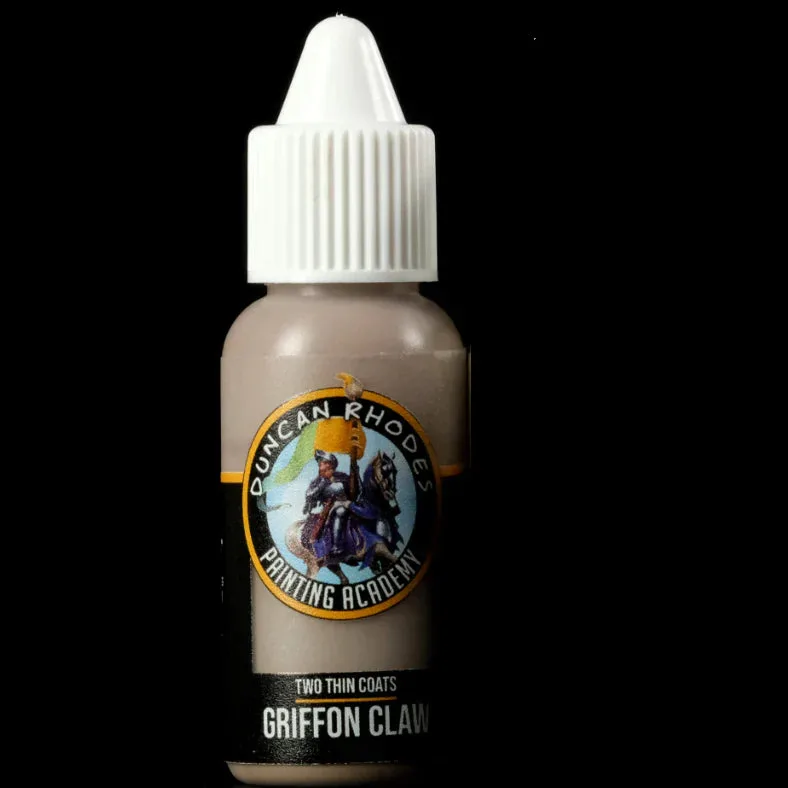
Griffon Claw - Two Thin Coats
-
Wyvern Green - Two Thin Coats: Wyvern Green is categorized as a Shadow in the Two Thin Coats range and comes in a 15ml pot. Its shadow role makes it a natural choice for deepening recesses and building dark green schemes.
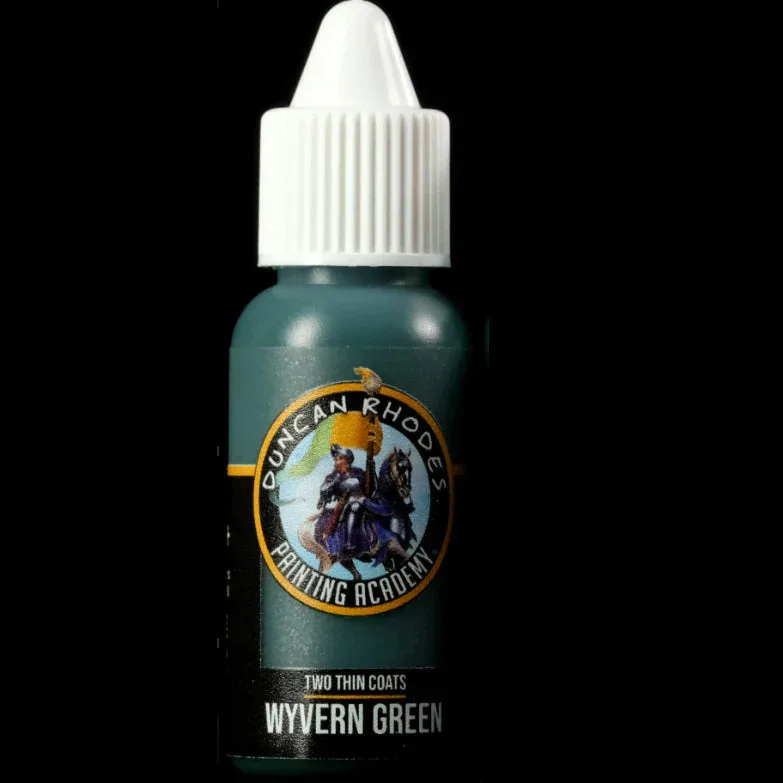
Wyvern Green - Two Thin Coats
Which green fits your project?
Best for
- Orc and goblin skin that needs deep shadows and a bright edge highlight
- Historical figures with green uniforms where you want to build contrast from dark to light
- Painters who already have a midtone green and need dedicated shadow and highlight pots
Not for
- Anyone looking for a single green that covers basecoat, shade, and highlight in one pot
- Painting large flat areas where you need a midtone green straight from the pot
- Beginners who prefer a pre-mixed triad over blending two extremes