Quick answer
Assemble the Yaiba Kusanagi in this order: clean and test-fit the resin parts, pin the heaviest joints, prime and paint the rider and bike separately, then attach both to a weighted base. Work in subassemblies so you can reach the frame, wheels, and fairing without repainting tight corners.
Why the order of work matters on a motorcycle miniature
A bike miniature has more open, visible structure than a typical infantry figure: wheels, forks, handlebars, and a rider all sit close together. If you glue everything first, your brush cannot reach the inside of the fairing or the gap between the rider's leg and the fuel tank. Planning subassemblies before you touch glue saves both repair time and repainting.
The Yaiba Kusanagi is designed to weave across the table without eating actions, so it will be handled and moved often. That makes joint strength and a stable base more important than a display-only finish. Build for play first, then paint to a standard you are happy with.
When to skip pinning or simplify the base
Pinning is not mandatory on every joint. Small, well-fitted parts with a large contact area can be glued without a pin if you are gentle with the model. Skip pinning only when the joint is hidden, the part is light, and the fit is tight enough that glue alone holds under normal handling.
You can also simplify the base. A plain weighted base is easier to paint and store than a detailed diorama base, and it keeps the miniature stable during play. Add scenic detail only after the bike and rider are permanently attached and you have checked the center of gravity.
Step-by-step assembly and painting process
- Wash and inspect the resin parts: Wash the parts in lukewarm water with a drop of dish soap, rinse, and let them dry fully. Inspect for mold release, flash, and thin areas before any glue or primer goes on. Checkpoint: if the parts still feel slick or show shiny patches, wash again before priming.
- Test-fit and plan subassemblies: Dry-fit the wheels, fork, fairing, and rider to the frame. Decide which parts you will paint separately, usually the rider, wheels, and any fairing that blocks the frame. Checkpoint: mark hidden contact points with a pencil so you do not paint surfaces that need glue.
- Pin the load-bearing joints: Drill a hole in each side of the joint, insert a short piece of paper clip or brass rod, and dry-fit again. Pin the fork-to-frame and rider-to-seat connections first, since these take the most handling stress. Checkpoint: if the pin binds and opens a gap, shorten it rather than forcing the joint closed.
- Glue subassemblies, not the whole bike: Use cyanoacrylate glue on the pinned joints and keep the rider, wheels, and fairing separate. Let each subassembly cure fully before handling it. Checkpoint: a joint that still rocks after curing needs a second pin, not more glue.
- Prime the subassemblies: Prime the bike frame, rider, and loose parts separately with a thin coat. Hold the can or airbrush at a distance that gives full coverage without filling detail. Checkpoint: stop before the primer looks wet and glossy; two thin coats beat one heavy coat.
- Paint the rider before the bike: Paint the rider first, since the figure is easier to reach while off the bike. Then paint the frame, wheels, and fairing, keeping the contact points clean for final gluing. Checkpoint: scrape paint from any joint surface before final assembly so glue bonds to resin, not paint.
- Attach the rider and wheels to the frame: Glue the painted rider and wheels to the frame using the pinned joints. Support the bike upside down or on a stand while the glue cures so the wheels do not sag. Checkpoint: set the bike on a flat surface and check that both wheels touch before the glue fully sets.
Product facts
-
Yaiba Kusanagi: Motorcycles in Combat Zone are described as agile and quick to turn, suited to moving melee monsters or fragile support pieces into position. Because the model is meant to be repositioned often, pin the fork and rider joints and weight the base so handling does not snap glue-only joints.
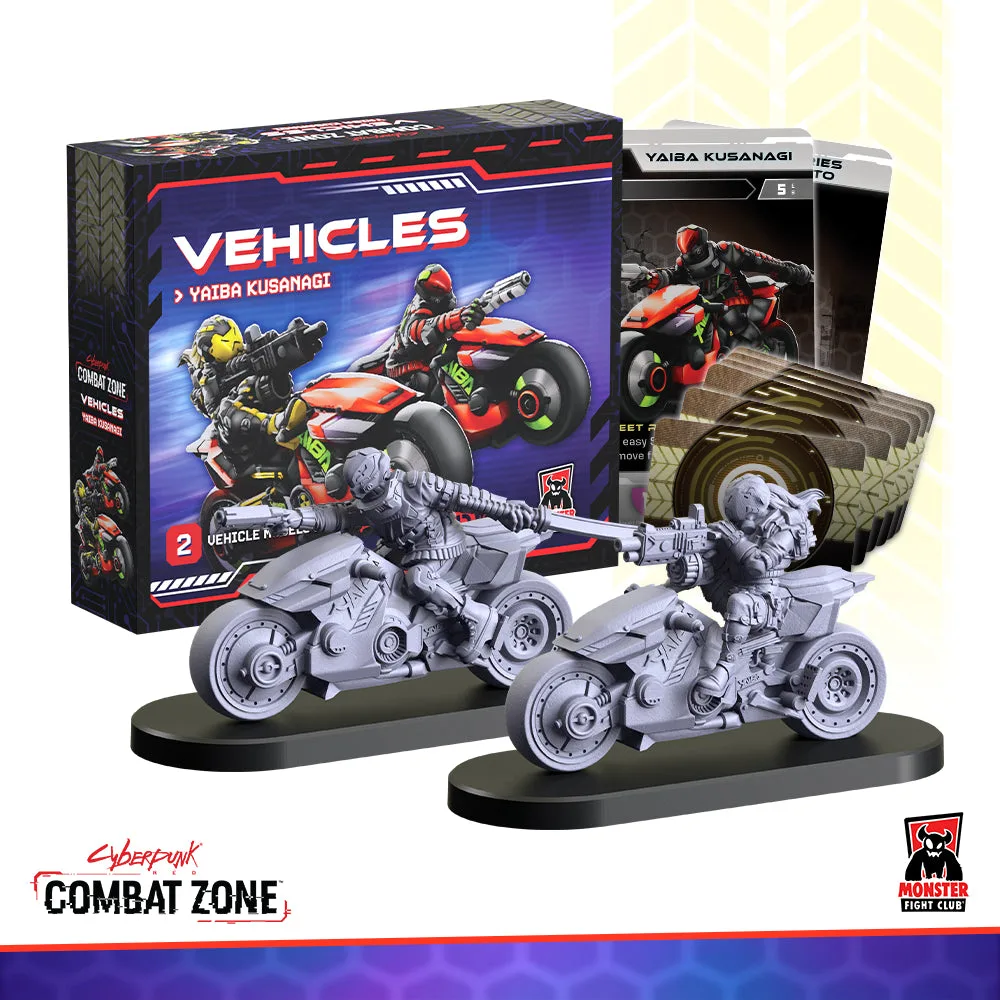
Yaiba Kusanagi