Quick answer
Choose Yes I Can! Talk About My Feelings when the goal is building feeling vocabulary and general emotional expression; choose Yes I Can! Handle My Anger when the focus is specifically on anger triggers, behaviors, and thoughts. Both are card-based tools, but they target different conversations.
What each deck is designed to do
The Yes I Can! Talk About My Feelings card game is built to improve feeling word vocabulary and expression of emotions, and to enhance self-awareness and understanding of how one’s behavior affects others. It was developed by child psychologist Gary Yorke, Ph.D., and is suitable for families, classrooms, counselors, and therapists.
The Yes I Can! Handle My Anger game is an activity designed to help participants understand and appreciate various aspects of being angry. It uses three types of cards to help participants identify triggers for anger, identify positive and negative behaviors associated with anger, and identify thoughts associated with anger. Developing anger management skills is aided by discussion and role playing.
The trade-off: breadth vs. anger-specific depth
The feelings deck gives you a broad emotional vocabulary and conversation starters that can apply to many situations, but it does not provide a structured anger-management sequence. The anger deck gives you a focused structure for anger work, but it is not a general feelings-vocabulary tool. If you need both, you may need both decks rather than expecting one to cover the other’s ground.
Key trade-offs to weigh
- Scope of emotional work: The feelings deck covers a wide range of emotions and expression; the anger deck narrows in on anger triggers, behaviors, and thoughts. Choose based on whether you need general emotional literacy or anger-specific intervention. If your client or child struggles with naming many emotions, start with the feelings deck.
- Structure for anger management: The anger deck includes three card types and role-play discussion to build anger management skills. The feelings deck does not supply that step-by-step anger framework. For a structured anger-management session, the anger deck is the more direct fit.
- Audience and setting: The feelings deck is explicitly suitable for families, classrooms, counselors, and therapists. The anger deck is described as an activity for participants, with discussion and role playing, which suits guided group or individual work. Confirm who will lead the discussion, because the anger deck relies more on facilitation.
Product facts
-
Yes I Can! Talk About My Feelings: Developed by licensed psychologist Gary Yorke, Ph.D., and suitable for families, classrooms, counselors, and therapists. This makes it a flexible choice for both home and professional settings when the goal is emotional expression.
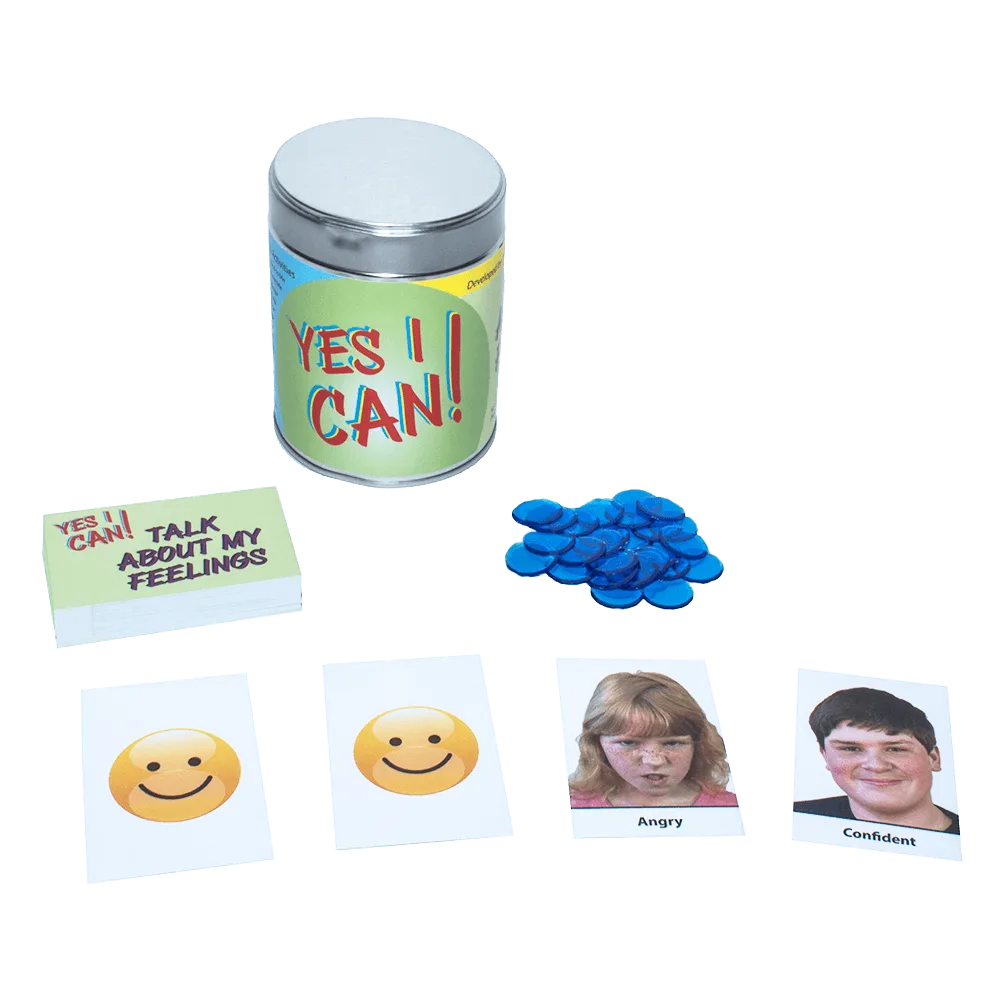
Yes I Can! Talk About My Feelings
-
Yes I Can! Handle My Anger: Three card types help participants identify anger triggers, positive and negative behaviors, and thoughts associated with anger. This structure supports a focused anger-management conversation rather than open-ended feelings talk.
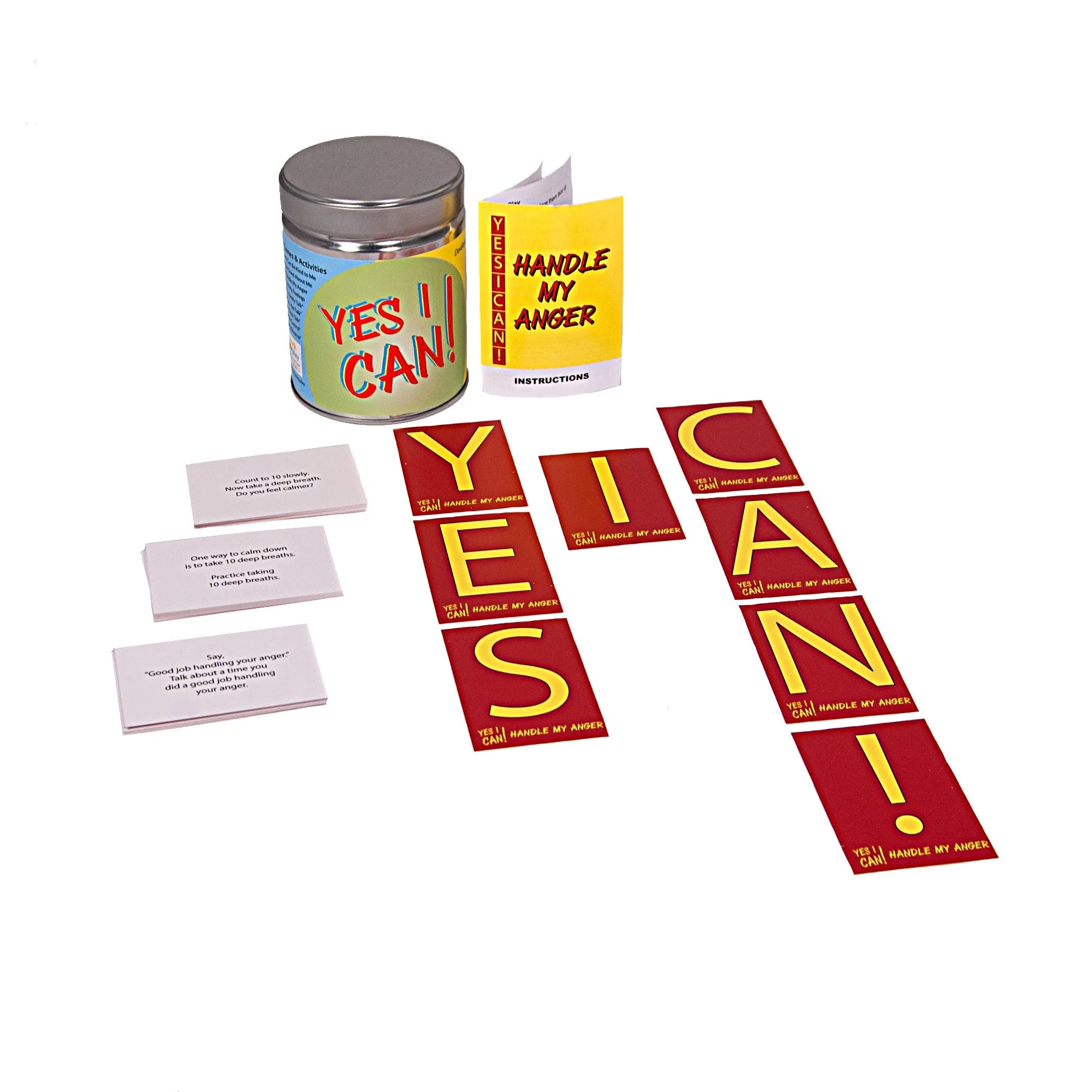
Yes I Can! Handle My Anger
Which deck fits your situation?
Best for
- Parents, teachers, or counselors who want to build feeling-word vocabulary and general emotional expression.
- Professionals who need a flexible tool for families, classrooms, or therapy settings.
Not for
- Someone seeking a structured, anger-specific protocol with trigger and behavior cards.
- A setting where no adult can guide discussion or role play for anger work.