Quick answer
Choose a yoga bolster if you want reclined support for restorative poses, backbends, or supported Savasana. Choose a meditation cushion if your main goal is upright seated meditation with lifted hips. Many practitioners eventually own both because the shapes solve different problems.
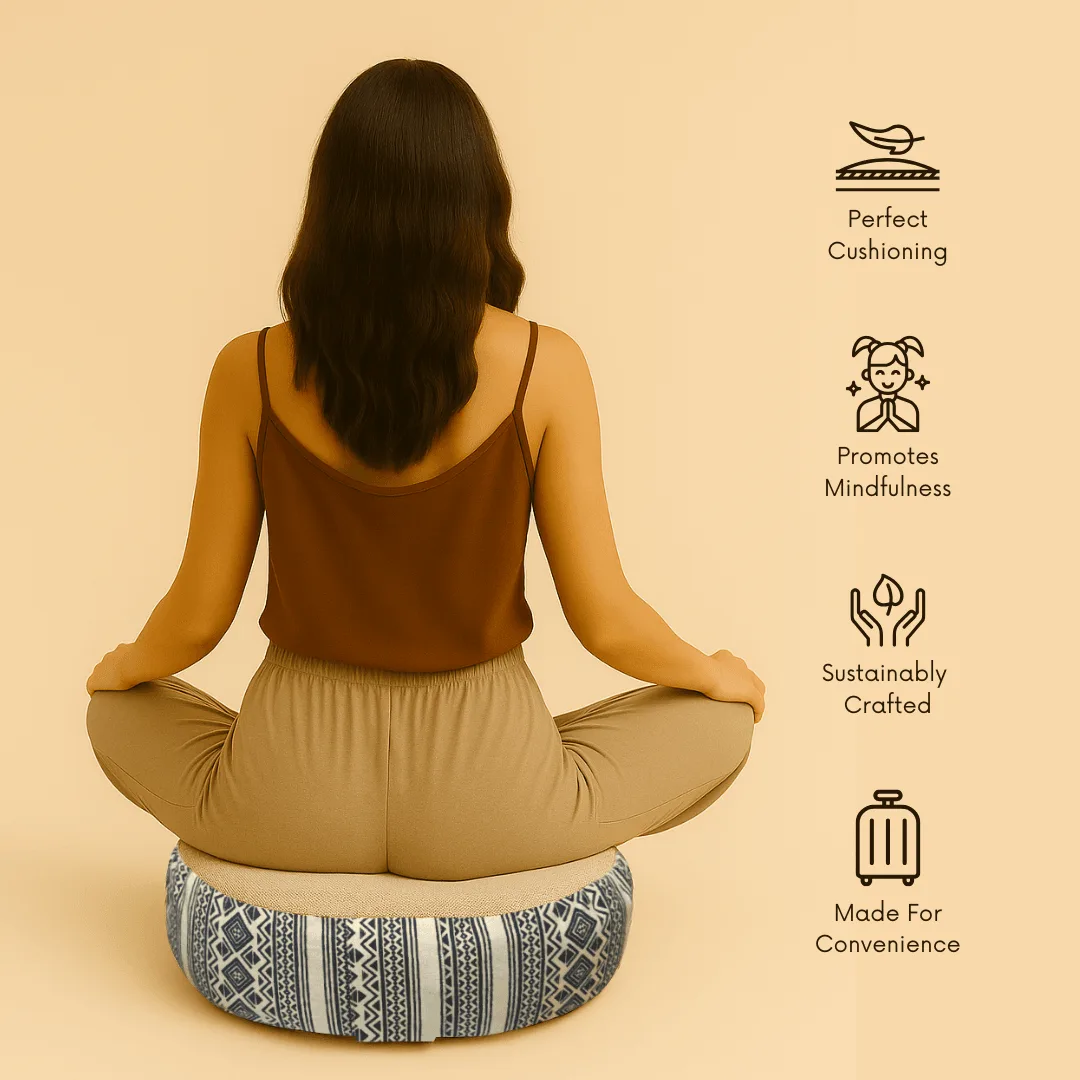
meditation cushion
Shape and firmness: what each prop actually does
A yoga bolster is a long, firm cylinder or rectangular cushion designed to support the torso, legs, or back in reclined and restorative positions. Its length lets you lie over it or place it under the knees, and its firmness keeps its shape under body weight. A meditation cushion is smaller and thicker, usually round or crescent-shaped, and its job is to tilt the pelvis slightly forward so the spine can stack naturally during seated practice. The key difference is direction of support: a bolster supports you when lying back or folding forward, while a cushion supports you when sitting upright.
How to test which one your practice needs
Lie on your back and notice whether your lower back or neck feels strained without support. If reclined rest is where you feel unsupported, a bolster is the more useful first purchase. Next, sit cross-legged on the floor for five minutes. If your hips ache or your knees lift far above your hips, a meditation cushion will likely help more than a bolster. If both tests reveal discomfort, start with the prop that matches the position you practice most often.
Using a bolster and cushion together
The two props are not mutually exclusive. A common restorative setup places a bolster under the knees while you sit on a cushion for supported breathing or meditation. In seated forward folds, a cushion under the hips and a bolster under the forehead or shins can reduce strain. If you already own one, you can often substitute temporarily: a firm folded blanket can stand in for a bolster, and a stack of blankets can raise your seat. But a dedicated cushion holds its loft better than folded bedding, and a bolster's length is hard to replicate.
Trade-offs to weigh before buying
- Yoga bolster: size and storage: A bolster takes up significantly more floor or shelf space than a cushion, and its length makes it awkward to carry to class. Best if you practice restorative yoga mainly at home and have room to store it.
- Meditation cushion: limited reclined support: A cushion is not designed to support your full torso in a reclined backbend or supported Savasana; using it that way can feel unstable. Choose a bolster instead if lying-back poses are your priority.
- Firmness versus comfort: A bolster needs to be firm enough to hold your weight without collapsing, while a meditation cushion needs enough height to tilt the pelvis but enough give to sit comfortably for longer periods. Match firmness to your body weight and the length of your typical session.
Teacher-led sessions that include prop guidance
- Teju Dhoot: Yoga, Prenatal & Postnatal Yoga, Meditation: Teju is a certified yogini whose practice combines yoga asanas and meditation techniques, creating balance in body and mind. If you want live guidance on when to use a bolster versus a cushion, a teacher who integrates asana and meditation can show you both in one session.
- Sahiba: Family Yoga, Meditation & Yoga For Beginners: Sahiba J. Singh focuses on the spiritual side of practice, including the connection between body, mind, and breath, and specializes in breathing techniques and alignment corrections. Alignment-focused teaching helps you position a cushion or bolster correctly so the prop supports your spine instead of masking poor posture.
Which should you choose?
Best for
- Restorative yoga, supported backbends, and reclined Savasana
- Anyone who feels lower back or neck strain when lying flat without support
- Practitioners who want one prop for multiple reclined and folded positions
Not for
- Upright seated meditation where hip height is the main issue
- Travel or studio commuting where portability matters
- Anyone who primarily needs pelvic tilt rather than torso support