Quick Answer
Pick one spot you can leave mostly clear, roll out a mat with a grippy base, and test it with your hands and feet before you commit. On carpet, choose a denser mat so it does not sink; on wood or tile, a mat with a natural rubber base grips better than a soft foam one. Keep the space simple and repeatable so rolling out your mat becomes the start of your practice.
A home yoga setup does not need a spare room. It needs a surface you trust, a mat that stays put, and a way to reset the space in under a minute. Most people already have the room; what is missing is a repeatable spot.
This guide walks through setting up that spot step by step, including what changes when your yoga mat sits on carpet, wood or tile, and how to make small space yoga work when the room has to do other jobs.
Choose the spot before you choose the mat
Walk through your home and look for a flat area roughly the length of your mat plus arm reach. You want enough room to lie down with arms overhead and to step forward without hitting furniture. Light and ventilation matter more than size, but a wall or sturdy chair nearby helps for balance work.
Check the floor itself. Carpet, wood, tile and concrete all change how a mat behaves. Carpet compresses under weight, so thin mats can feel unstable. Hard floors show dust and can be slippery if the mat base is smooth. Once you know your floor type, you can choose a mat that suits it rather than fighting the surface every session.
- Measure your mat length plus about 60cm at each end before clearing the space.
- Avoid spots directly under air conditioning vents, which dry out grip and make you cold in savasana.
Match your mat to the floor surface
On carpet, a thicker mat with a dense base stops your hands and feet from sinking. A 4mm mat with a natural rubber base is a practical middle ground because it cushions joints without turning into a wobbly platform. Very thick foam mats on soft carpet can feel like standing on a mattress.
On wood or tile, grip is the priority. A natural rubber base holds better than a smooth PVC or foam base, especially once you start to sweat. If your floor is polished, test the mat with downward dog before you trust it in a faster flow. For travel or a second space, a lightweight mat with a suede towel top can work on hard floors, but check it does not slide when dry.
- Test grip with dry hands first, then with slightly damp hands, to see how the mat behaves mid-practice.
- If the mat still slides on a hard floor, a thin non-slip rug pad underneath is a simple fix.
Set up the space so it is easy to repeat
The best home yoga studio ideas are the boring ones: a mat that lives in the same place, a small basket for props, and a clear path to roll it out. If you have to move furniture every time, you will practise less. A corner with a wall for balance and a shelf for a block and strap is enough.
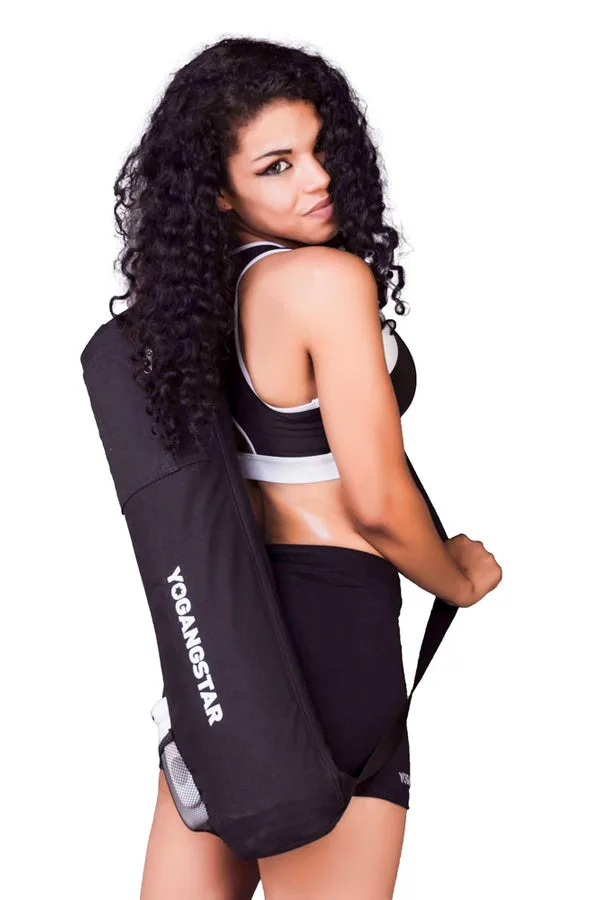
For small space yoga, think vertically. Hang your mat on a wall hook or keep it rolled in a cotton bag beside a sofa or bed. A bag with a carry strap and a side pocket keeps the mat, a towel and a water bottle together, so setup is one motion. Keep the floor around the mat clear of hard objects, especially if you practise early or late when light is low.
- Put a hook or bag at the height you can reach without stretching, so putting the mat away is effortless.
- Leave a 30cm buffer around the mat for your hands in wide poses and for a water bottle.
Check comfort, then adjust
Once your mat is down, do a two-minute test: stand in mountain pose, step back to downward dog, kneel, and lie down. Notice whether your knees feel supported, whether your hands slip, and whether your heels find the floor. These small signals tell you if the mat thickness and surface are right for your joints and your practice style.
If your knees feel pressure on a hard floor, a 4mm mat with a suede towel top gives cushioning without much bulk. If your wrists complain in plank, check that your hands are not sinking into carpet. If the mat curls at the edges, roll it in the opposite direction and leave it flat for a few hours before your next session.
- Kneel on the mat and shift your weight side to side to feel where cushioning is missing.
- If the mat moves, fix the surface before you blame your balance.
Your Home Yoga Setup in 5 Steps
- 1. Clear and measure the spot: Pick a flat area with room for your mat plus arm reach, away from hard furniture and direct air vents. Checkpoint: you can lie down with arms overhead without touching anything.
- 2. Identify your floor type: Note whether the surface is carpet, wood, tile or concrete, because each one changes how a mat grips and cushions. Common mistake: choosing a mat by colour before checking how it behaves on your floor.
- 3. Choose a mat for that surface: On carpet, choose a denser 4mm mat so hands and feet do not sink. On wood or tile, prioritise a natural rubber base for grip. If you travel or move rooms, a lightweight 1.5mm mat is easier to carry but gives less cushioning.
- 4. Store it so setup is one motion: Use a wall hook or a cotton mat bag with a strap and side pocket so your mat, towel and bottle stay together. Checkpoint: you can start practice in under a minute without moving furniture.
- 5. Test and adjust: Run through mountain pose, downward dog, kneeling and lying down. Fix slipping, pressure points or curling edges before your next session. Common mistake: ignoring a sliding mat and assuming your balance will improve with practice.
Products That Suit a Home Setup
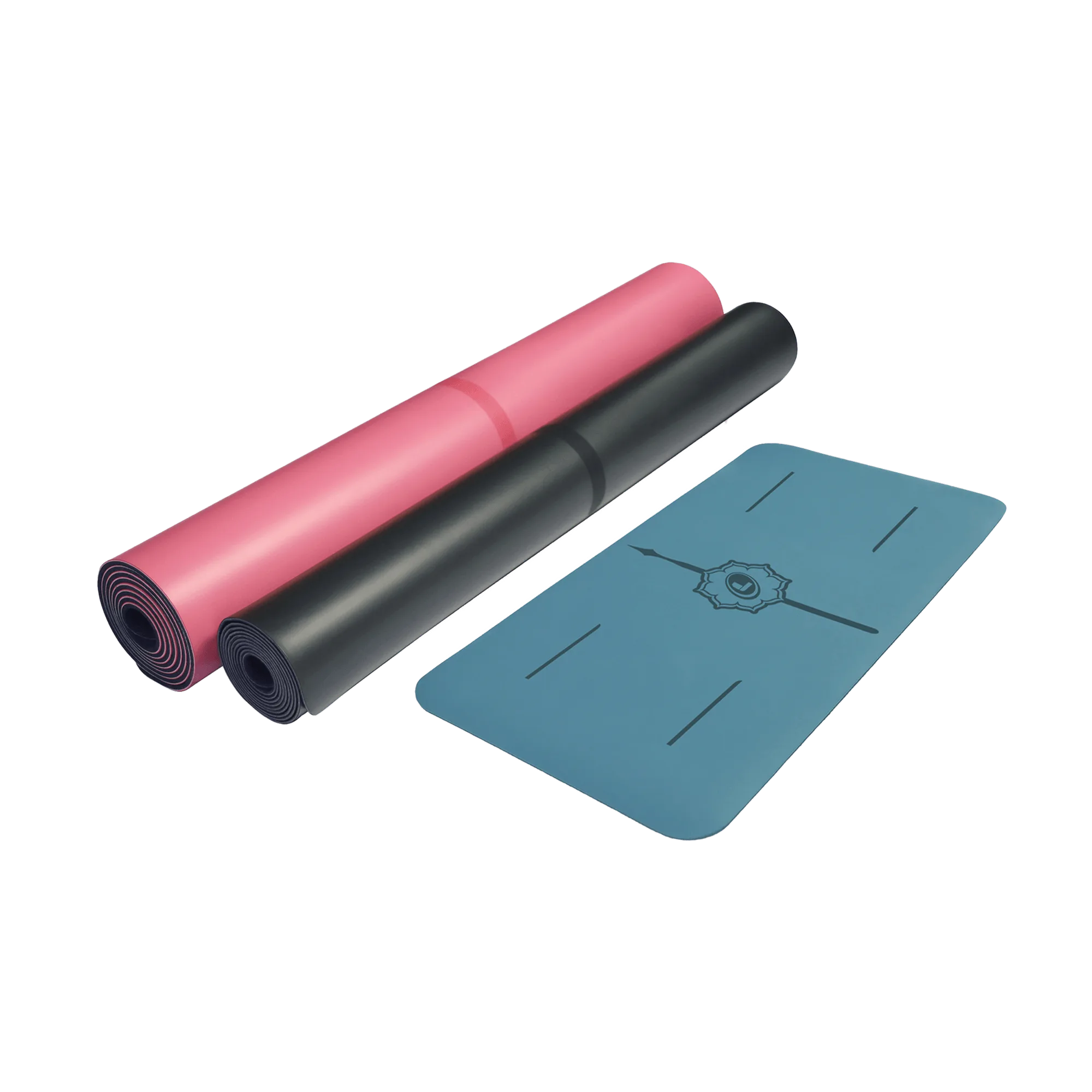
- Black Yogangstar Yoga Mat + Free Yoga Bag: Luxurious suede towel top, 4mm thick base, 100% natural tree rubber, simple to wipe down clean and machine washable. The 4mm rubber base gives cushioning and grip on wood or tile, while the suede top and machine-washable care suit regular home practice.
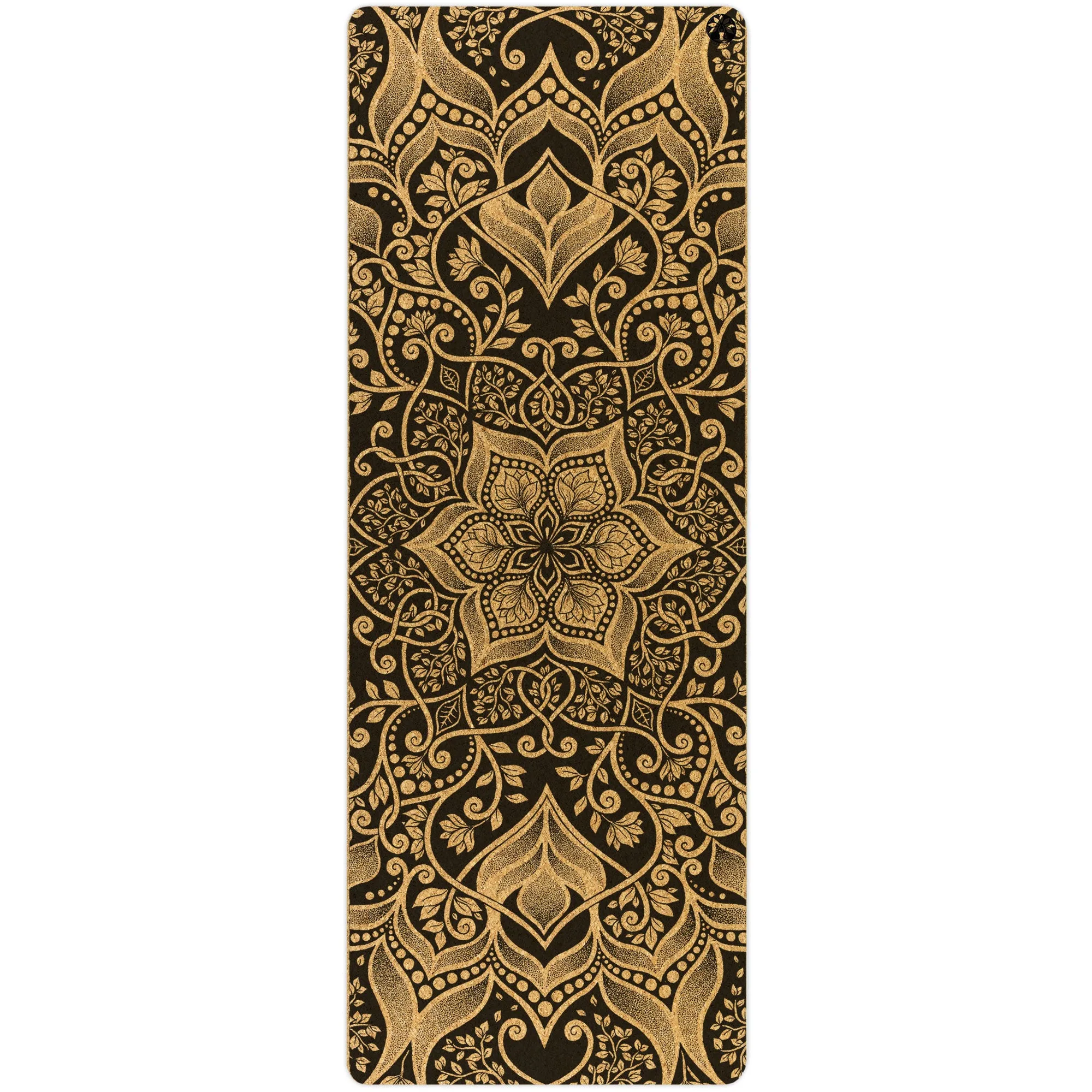
- Cosmic Goddess Yoga Travel Mat + Free Yoga Bag: Weighs only 1.75kg, has a luxurious suede towel top which is also non-slip, and a 1.5mm base made from eco-friendly 100% natural tree rubber. At 1.75kg and 1.5mm thick, it is easy to move between rooms or take to class, and it suits hot yoga or Pilates on a hard floor.
- Studio / Home Yoga Mat Bags: 100% natural cotton yoga bag with side pocket, water bottle holder and carry strap, designed for 3 or 4mm yoga mats. Keeps a 4mm mat, a towel and a water bottle together so small space yoga setup and pack-down take seconds.
A home yoga setup works when the surface, the mat and the storage all support the same habit. Choose one spot, match your mat to the floor, and keep the pack-down simple. Then the only decision left is when to step on.