What Mat Thickness Means for Your Practice
Yoga mat thickness directly affects how much cushion you feel under your joints and how stable you feel in balancing poses. A thicker mat provides more padding for knees, wrists, and hips, but can make you feel less connected to the floor. A thinner mat improves stability and portability but offers less shock absorption. There is no universal "best" thickness — the right choice depends on your body, your style of practice, and where you practice.
What 3.5 mm Offers: A Balanced Middle Ground
-
"Seventh Chakra" Yoga Mat: 3.5 mm thick, 5.5 lbs, 72" long, 26.25" wide. This thickness sits between ultra-thin travel mats and thick cushion mats. It provides noticeable joint protection without feeling unstable underfoot.

"Seventh Chakra" Yoga Mat
-
"Fire Element" Yoga Mat: 3.5 mm thick, with a surface layer that distributes weight to a 3 mm natural tree-based rubber base. The layered construction means the mat compresses just enough to cushion joints while keeping you grounded. This works well for most vinyasa, hatha, and yin practices.

"Fire Element" Yoga Mat
-
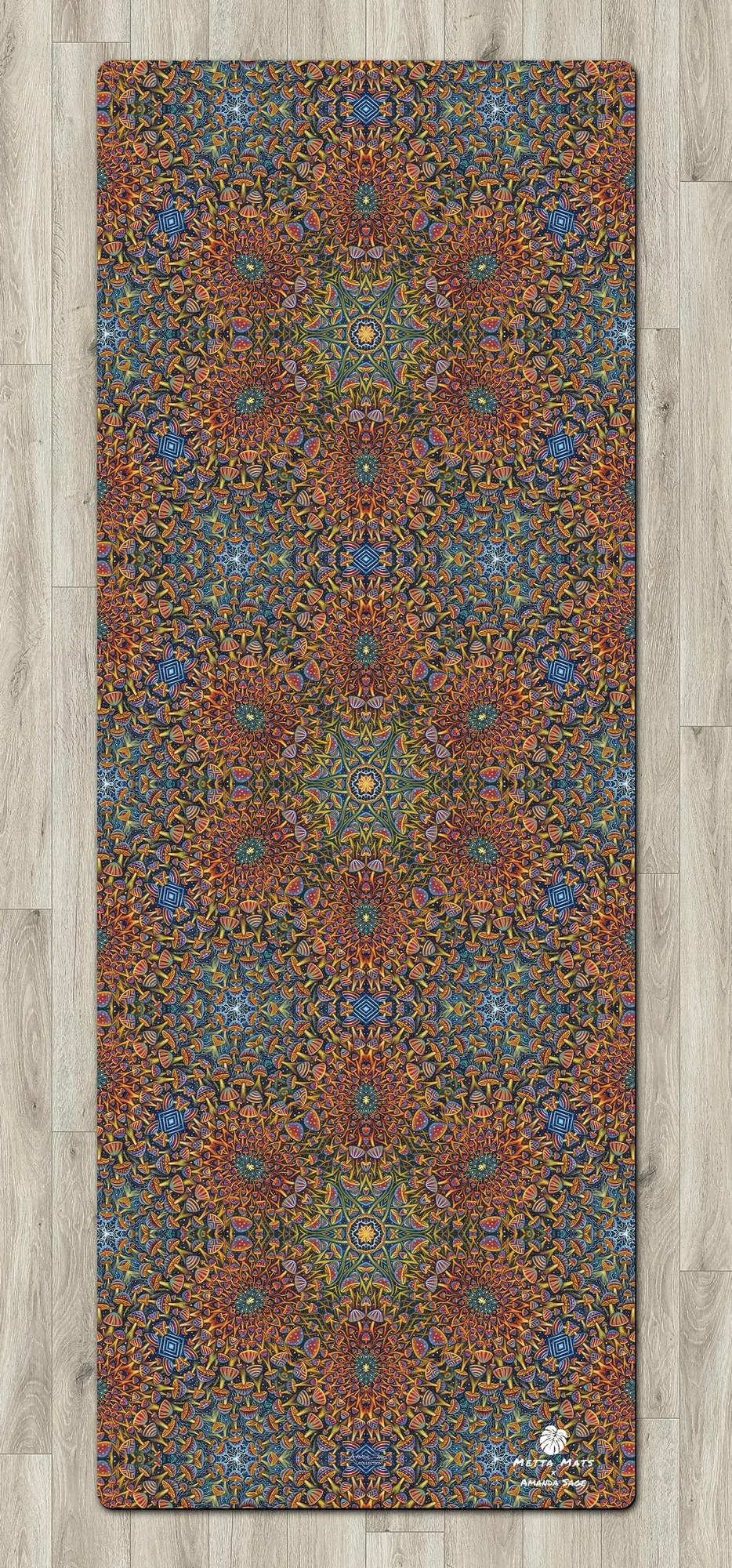
"Mushroom Bloom" Yoga Mat: 3.5 mm thick, 5.5 lbs, 72" long, 26.25" wide. At 5.5 lbs, it is light enough to carry to the studio but substantial enough to stay put on carpet or hardwood.
When Thicker Is Better
If you have sensitive knees, wrists, or hips, or if you practice on hard floors without carpet, a thicker mat can make a big difference. The 3.5 mm mats from Metta Mats use a 3 mm natural rubber base topped with a polymer print layer that distributes weight across the surface. This design provides joint protection without the wobbliness of very thick foam mats. For restorative or yin yoga, where you hold poses for longer periods, the extra cushioning helps prevent discomfort.
When Thinner Makes Sense
If you practice mostly standing and balancing poses, a thinner mat gives you better proprioception — the feel of the floor beneath you. Thinner mats also roll up smaller and weigh less, making them easier to carry to class. But the supplied information does not include a thinner option from this brand. If portability is your main concern, the 5.5 lb weight of these 3.5 mm mats is still manageable for most practitioners.
Thickness Trade-offs at a Glance
- Joint Comfort: Thicker mats (3.5 mm and above) provide more padding for knees and wrists. The 3 mm rubber base in these mats adds cushion without excessive sink.
- Stability in Standing Poses: Thinner mats feel more stable for balances. At 3.5 mm, these mats offer a good compromise — enough grip to stay put, but not so thick that you feel unstable.
- Portability: Thicker mats are heavier. At 5.5 lbs, these mats are mid-weight — easy to carry to the studio but not ultralight for travel.
- Surface Versatility: The mat works on carpet, cement, or hardwood floors, thanks to the rubber base that grips without slipping.
Choosing the Right Thickness for Your Practice
Start by considering your most common practice type. For gentle, floor-based styles like yin or restorative, prioritize cushioning. For dynamic, standing-heavy practices like vinyasa or Ashtanga, prioritize stability. If you practice on carpet, a slightly thicker mat helps prevent your knees from pressing into the carpet fibers. On hardwood, a mat that grips well (like the rubber-based Metta Mats) is more important than thickness alone. No single thickness works for everyone, but 3.5 mm is a versatile starting point that suits most practitioners.