Quick answer
Your ideal yoga mat thickness depends on your practice style and where you use it. Thin mats (1.5 mm) are best for travel and balancing poses, while thicker mats (4 mm+) offer more cushion for joint-sensitive practices like Hatha or restorative yoga.
Why thickness matters for comfort and stability
Yoga mat thickness directly affects both cushioning and stability. A very thick mat (5 mm or more) feels soft under your joints but can make standing poses feel wobbly because your feet sink in. A very thin mat (1.5 mm) gives you a firm connection to the floor, which helps with balance, but offers little padding for knees, wrists, or hips. The right thickness balances these two needs based on your body and practice.
How to match thickness to your yoga style
For dynamic practices like Vinyasa or Ashtanga, a mat around 4 mm thick is a good middle ground. It provides enough cushion for transitions while keeping you stable in standing poses. For slower, floor-based styles such as Yin or restorative yoga, a thicker mat (5 mm or more) helps protect sensitive joints during longer holds. If you primarily travel with your mat, a lightweight 1.5 mm option is practical, but you may want to layer it over a studio mat for extra padding.
Frequently asked questions about yoga mat thickness
Is a thicker yoga mat always better?
Not necessarily. Thicker mats (5 mm or more) feel plush but can reduce stability in standing poses. They are best for restorative, Yin, or gentle Hatha practices where you spend more time on the floor. For active styles, a 4 mm mat is usually more stable. Choose thickness based on your practice, not just comfort.
Can I use a thin travel mat for everyday practice?
Yes, but only if you are comfortable with minimal padding. A 1.5 mm mat gives you a firm grip and is easy to carry, but it offers little joint protection. Many practitioners layer a thin mat over a thicker studio mat for the best of both worlds. Thin mats work well for travel or as a top layer.
What thickness is best for beginners?
A 4 mm mat is a safe starting point for most beginners. It provides enough cushion to make floor poses comfortable without being so thick that it affects balance. As you discover your preferred style, you can adjust thickness accordingly. 4 mm is a versatile thickness for new practitioners.
Mat thickness in practice
- Sacred Geo Yoga Travel Mat + Free Yoga Bag: The Sacred Geo Yoga Travel Mat weighs only 1.75kg, has a 1.5 mm base made from 100% natural tree rubber, and a suede towel top that is non-slip. At 1.5 mm, this is a thin travel mat that packs light and dries fast. It gives you a stable, non-slip surface for balancing poses, but you will feel the floor underneath. If you need more padding, consider using it on top of a thicker studio mat.
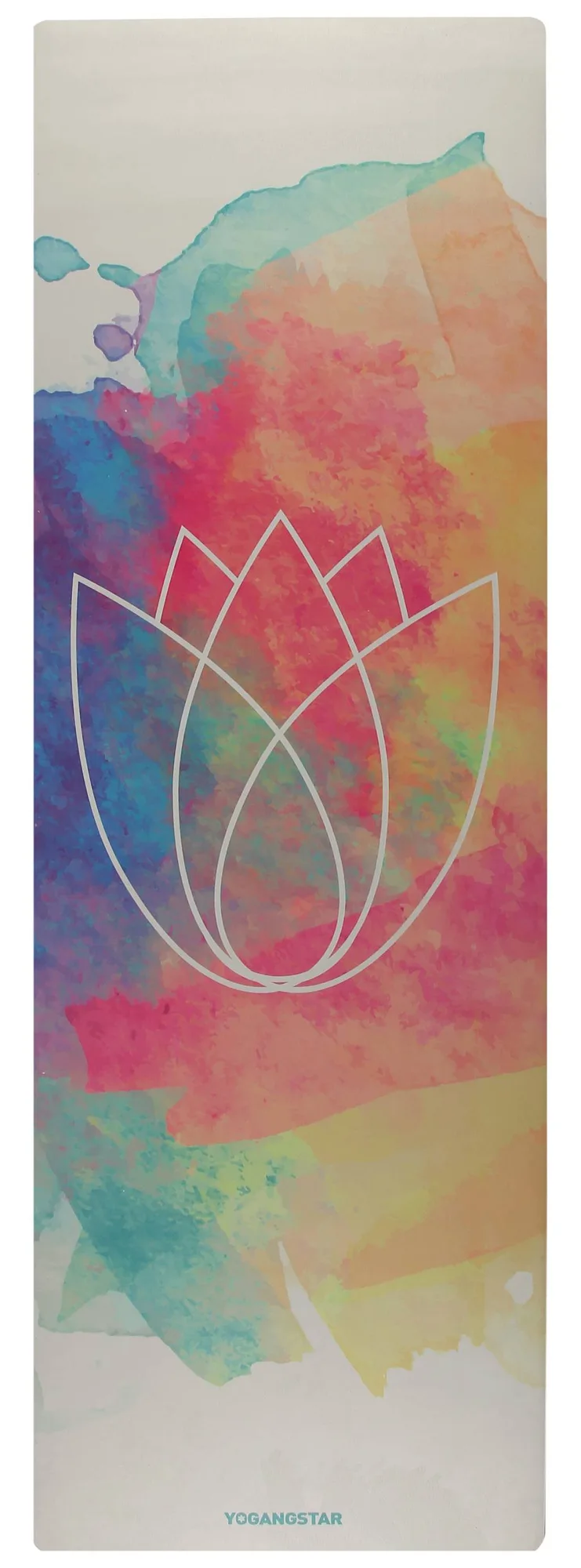
- Lotus Pastel Yoga Mat + Free Yoga Bag: The Lotus Pastel Yoga Mat has a 4 mm thick base made from 100% natural tree rubber and a suede towel top that is machine washable. At 4 mm, this mat offers a standard cushion level that suits most yoga styles. It provides enough padding for kneeling poses and transitions without sacrificing stability in standing postures. A practical choice if you practice a mix of styles.