Quick answer
A thicker mat does not automatically give you better balance. Stability comes from how firmly the mat surface responds under your hands and feet, how much usable width you have, and whether the material grips when you sweat. If balance poses feel wobbly, the fix is usually a firmer or wider surface, not simply more foam under your feet.
Walk down any mat aisle and the numbers get loud fast: 1/8 inch, 1/4 inch, half inch, one inch. It is easy to read those numbers as a ladder, where more thickness means more support, more comfort, and better balance. In practice, the relationship is not that simple.
The yoga mat thickness myths below are the ones that send people home with the wrong mat. Each one gets a plain verdict, and each explanation sticks to what a mat actually does under your body: how it compresses, how wide it is, and how it behaves when your palms get damp.
Myth 1: A thicker mat is always more stable
Verdict: false. Thickness and stability are not the same property. A mat can be thick and still feel vague under a standing balance pose if the surface gives way under pressure. What steadies you is a surface that pushes back consistently, so your foot does not keep sinking and correcting.
This is why yoga mat density vs thickness matters more than either number alone. A dense mat at a moderate thickness can feel more grounded than a soft, airy mat that is twice as thick. When you test a mat, press one palm down and shift your weight. If your hand keeps traveling downward, that same movement will happen under your standing leg.
- Press a palm into the mat and hold for a few seconds. A surface that stops compressing early tends to feel steadier in balance poses.
- If you already own a very soft mat, try it on a hard floor before replacing it. Carpet exaggerates the sinking feeling.
Myth 2: Thickness is the only number that matters
Verdict: false. Width changes your experience just as much, and it is often overlooked. A standard mat is about 24 inches wide. The 1/4'' Extra Wide Deluxe Yoga Mat by YOGA Accessories is a full three feet wide (36 inches), which the catalog describes as 50% larger than a standard yoga mat, giving you an extra foot of surface.
That extra width does something thickness cannot: it keeps your hands and feet on the mat when you widen your stance. If your balance poses fail because a hand lands on the floor beside the mat, no amount of cushioning will fix it. Extra width also reduces the small corrections you make when you feel the edge approaching.
- Measure your current mat at its widest point before assuming it is standard width.
- If you have wide shoulders or like a wide stance, prioritize width over added thickness.
Myth 3: Cushioning is the same as support
Verdict: false. Cushioning absorbs pressure; support resists it. Those are opposite jobs, and a mat that does one well may do the other poorly. A thick, plush mat can feel wonderful in seated forward folds and still feel unstable in a one-legged stance.
This is the core of the yoga mat cushioning myths: people buy cushioning for knee comfort and then expect it to deliver balance. Use the two needs separately. If your knees need padding, a thicker mat or a folded blanket under the joint can help. If your balance needs steadiness, look for a firmer surface and a wider footprint.
- Decide which problem you are solving before you shop: joint comfort or standing stability.
- A firm mat plus a small folded towel under the knee can serve both needs without a wobbly surface.
Myth 4: Material does not affect grip or steadiness
Verdict: false. Material determines how the surface behaves when your hands and feet get sweaty, and sweat is one of the most common reasons a balance pose suddenly feels slippery. The Gaia ECO Yoga Mat by YOGA Accessories is made from eco-friendly foam with a toxic-free composition and manufacturing process, and the catalog notes it is phthalate and PVC-free with no ozone-depleting CFCs released during manufacturing.
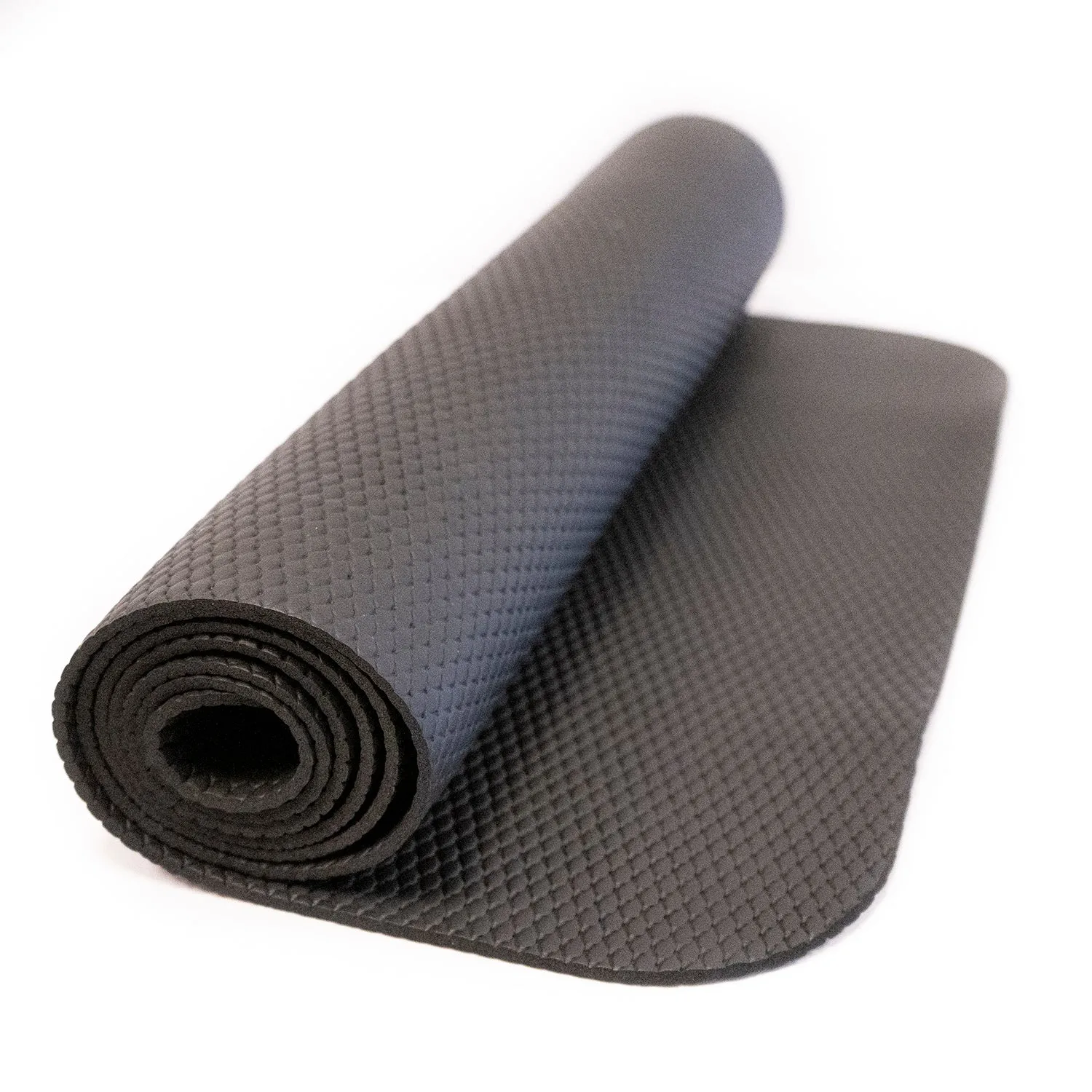
Gaia ECO Yoga Mat by YOGA Accessories
More relevant to stability, the catalog describes its newly engineered rubber and PVC-alternative construction as open-cell, which is highly resistant to sweaty hands and feet. That open-cell structure is a grip feature, not a thickness feature. It shows why two mats of identical thickness can feel completely different in a hot room.
- If your hands slip mid-practice, treat grip as a material question, not a thickness question.
- Wipe your mat after class. Surface residue reduces grip regardless of how the mat is built.
Myth 5: One mat should handle every practice
Verdict: false, and this is one of the most common yoga mat buying mistakes. Travel, hot classes, restorative work, and standing balance all ask different things from a mat. Trying to force one surface to do everything usually means compromising on the thing you care about most.
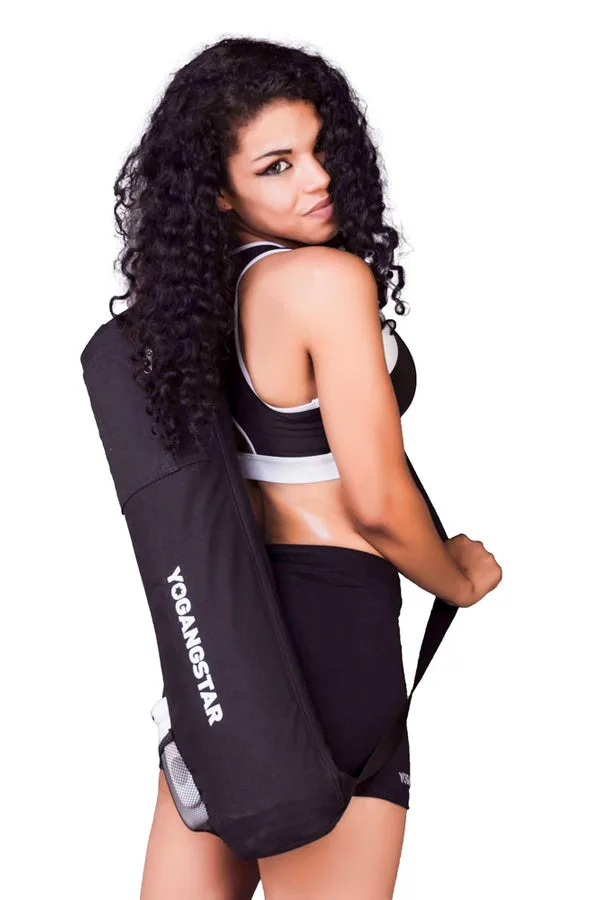
A practical approach is to name your primary practice and buy for that, then add a second mat only if a real gap appears. If you travel with a mat, a bag matters too: the Embroidered Yoga Mat Bag is a generous 30 inches long and 9 inches wide, sized in the catalog to fit both 1/8 inch and 1/4 inch sticky yoga mats, plus a strap, water bottle, or a change of clothes. It is made of 100% organic cotton with low-impact dyes.
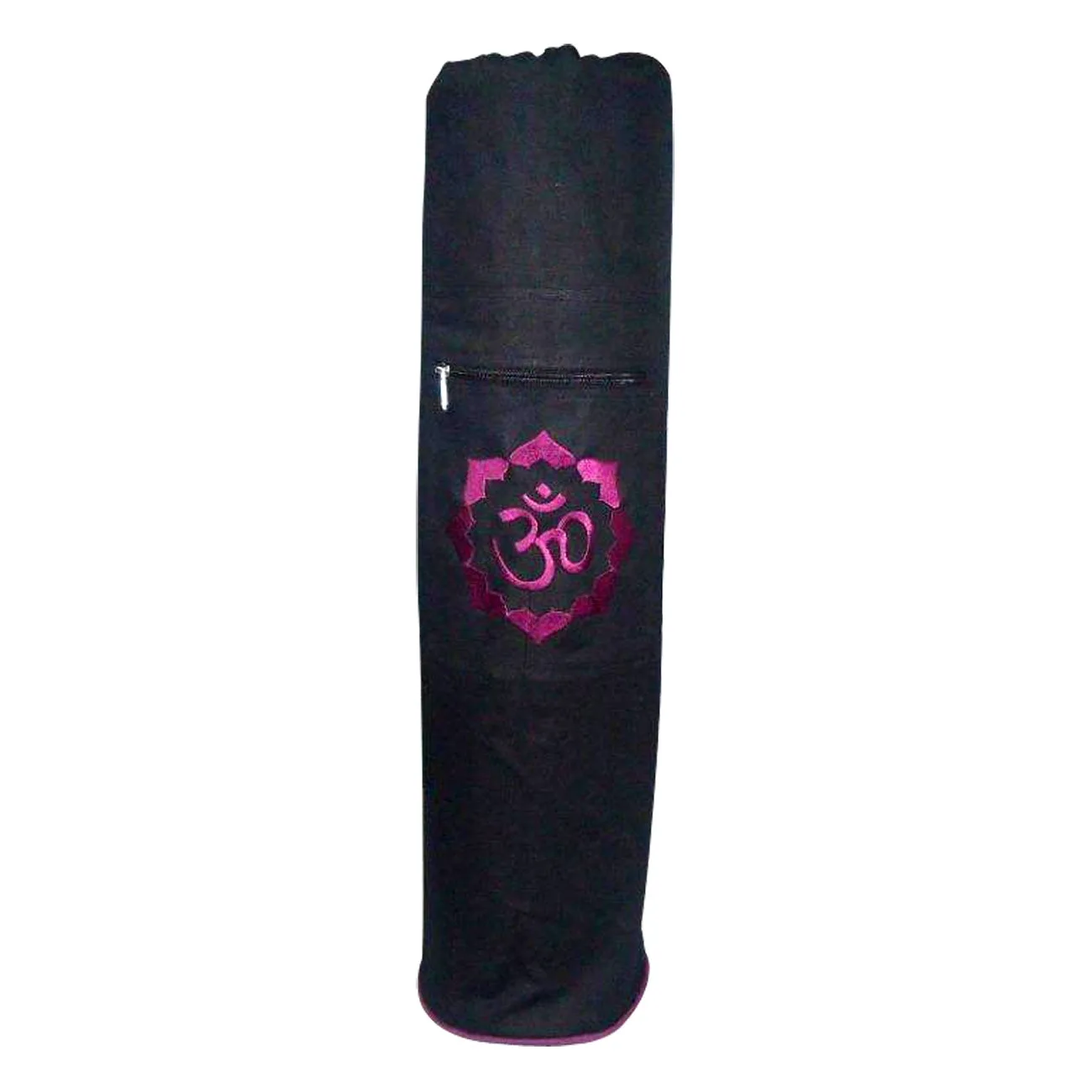
Embroidered Yoga Mat Bag
- Write down your two most frequent practices before choosing a mat.
- If you carry a strap or water bottle to class, check bag dimensions rather than assuming a mat will fit.
Verdicts at a glance
- Thicker equals more stable: A thick mat can compress under a standing leg and feel vague. Density and surface response determine steadiness more than the thickness number. Verdict: myth. Test compression with your palm before buying.
- Thickness is the only spec that matters: Width changes how much usable surface you have. The 1/4'' Extra Wide Deluxe Yoga Mat by YOGA Accessories is 36 inches wide, described as 50% larger than a standard 24-inch mat. Verdict: myth. Measure width alongside thickness.
- Cushioning equals support: Cushioning absorbs pressure and support resists it. Buying plush foam for balance poses usually makes the wobble worse, not better. Verdict: myth. Match the surface to the problem you actually have.
- Material is irrelevant to grip: The Gaia ECO Yoga Mat by YOGA Accessories uses an open-cell construction described as highly resistant to sweaty hands and feet, a grip trait independent of thickness. Verdict: myth. Sweat grip is a material question.
- One mat covers every practice: Travel, hot classes, and standing balance ask different things of a mat. The Embroidered Yoga Mat Bag fits both 1/8 inch and 1/4 inch sticky mats, so rotating mats stays simple. Verdict: myth. Buy for your primary practice first.
Catalog facts that matter for stability
- 1/4'' Extra Wide Deluxe Yoga Mat by YOGA Accessories: At a full three feet wide (36 inches), this mat is described in the catalog as 50% larger than the standard 24-inch yoga mat, and it is non-skid and super durable. Extra width keeps hands and feet on the mat during wide stances, which addresses balance problems that thickness cannot solve.
- Gaia ECO Yoga Mat by YOGA Accessories: Made from eco-friendly foam with a toxic-free composition and manufacturing process, phthalate and PVC-free, with an open-cell construction described as highly resistant to sweaty hands and feet. Open-cell grip is a material property, so it can improve steadiness in sweaty practices even when thickness is unchanged.
- Embroidered Yoga Mat Bag: A 30-inch long, 9-inch wide bag made of 100% organic cotton and low-impact dyes, sized in the catalog to fit both 1/8 inch and 1/4 inch sticky yoga mats. If you rotate between a thin travel mat and a thicker everyday mat, one correctly sized bag covers both.
Stop shopping for the thickest mat and start shopping for the right surface. Check how firmly it compresses, how wide it is, and how it grips when your hands get damp. Get those three right and balance poses stop feeling like a negotiation with your mat.