How to use Yoni Oil day to day
How much Yoni Oil should I apply, and how often?
The product record gives a simple measure: a few drops, two to three times daily, applied to the perineum for moisturizing. That is the only application frequency stated in the supplied information, so treat it as your starting point rather than layering on extra product.
When in my routine should I apply it?
The record notes it is best after bathing or a sitz bath. If you already have a bath or sitz routine, applying afterward keeps the step tied to something you already do, which makes a daily habit easier to keep.
Can I use it for prenatal massage and postpartum healing?
Yes, both uses are named in the product record. It is described as key for perineal massage from 36 weeks and as a postpartum option for soothing dryness from changing hormones. Those are the two use cases the supplied information supports.
What does a beginner's daily routine look like?
Keep it plain: bathe or take a sitz bath, then apply a few drops to the perineum two to three times daily as the record directs. There is no need to build a multi-step ritual around it. A simple, repeatable sequence is easier to maintain than an elaborate one.
What is actually in the bottle
-
Yoni Oil: Ingredients: extra virgin olive oil, organic coconut oil, almond oil, aloe extract, calendula, chickweed, comfrey, marshmallow root, plantain, neem, vitamin E, lavender, helichrysum, geranium, peppermint. If you are scanning for a specific oil or herb before you buy, this is the full list from the product record, not a marketing summary.
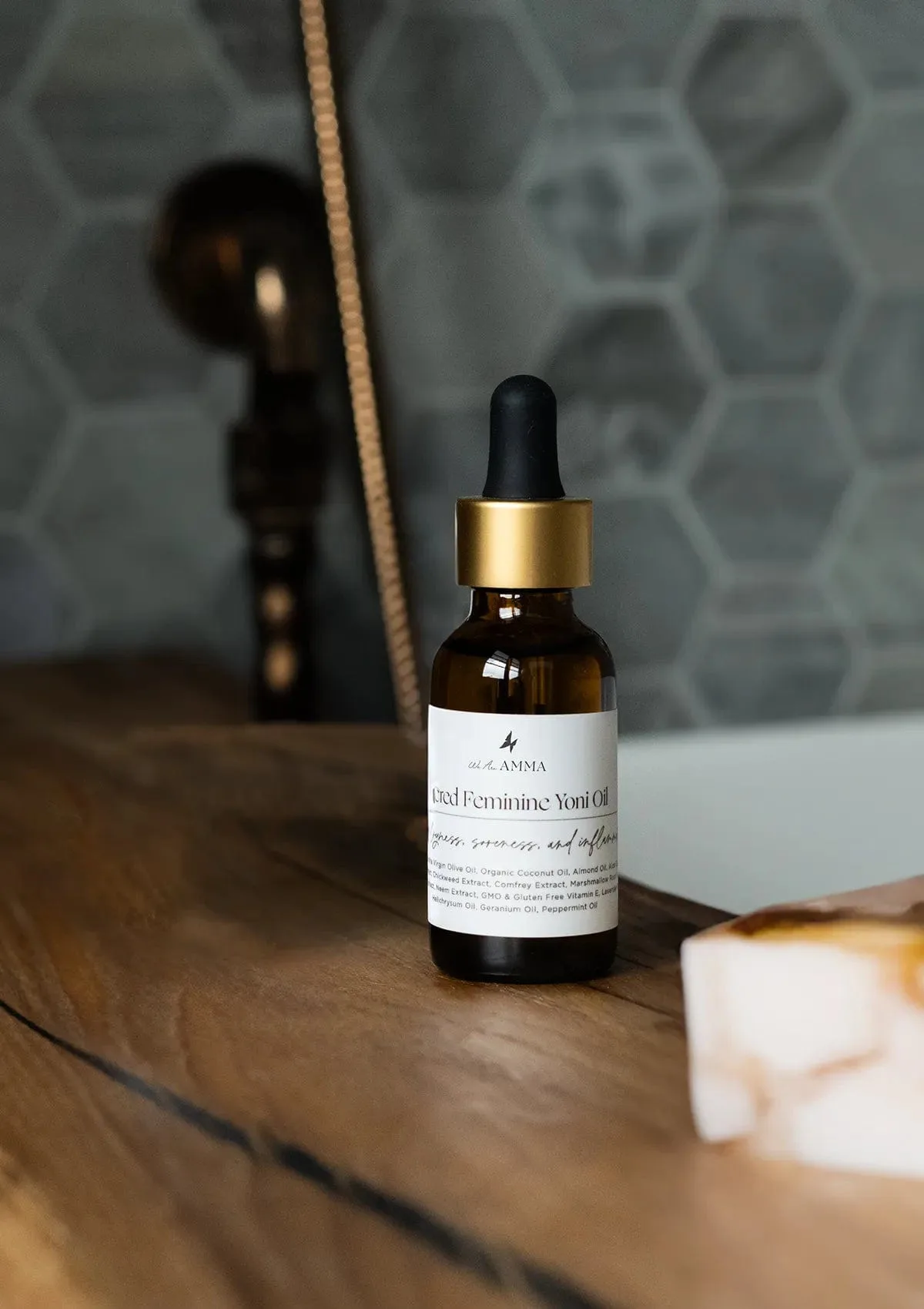
Yoni Oil
-
Yoni Oil: Organic Ingredients The record flags organic ingredients, which matters if sourcing is part of how you choose body care.
-
Yoni Oil: Handmade with a blend of herbs, plant oils, and essential oils, it soothes, balances, and moisturizes the delicate skin of your vulva and perineum. This is the stated purpose of the blend, so you can judge whether it matches what you want the product to do.
Ingredients and sensitivity questions
The ingredient list is long. How do I check it against my own sensitivities?
Read the full list in the facts block above and compare it with anything you already know you react to. The formula includes several plant oils, herbs, and essential oils, including peppermint and lavender. The supplied record does not include allergy testing, dermatologist review, or a patch-test instruction, so if you have known sensitivities, ask a clinician before use rather than assuming it will suit you.
Is it scented?
The formula includes essential oils such as lavender, helichrysum, geranium, and peppermint, so it is not an unscented product. The record does not describe how strong the scent is.
Is Yoni Oil safe?
The supplied information describes intended uses and an application amount but does not include safety warnings, contraindications, or guidance for pregnancy complications or sensitive skin conditions. That means the record alone cannot answer a personal safety question. If you are pregnant, recently gave birth, or have a medical condition, confirm with your healthcare provider before starting.
Buying and storage questions
How much comes in a bottle?
The product record lists 1 fl oz. At a few drops two to three times daily, that is a small bottle meant for regular, measured use rather than heavy application.
Where is it made?
The record states it is made in California.
How should I store it?
The supplied information does not include storage instructions such as temperature or light exposure. Follow the label on your bottle when it arrives, and do not assume a storage method the record does not state.
What is not confirmed in the product information?
The record does not include patch-test instructions, a full safety warning list, storage guidance, or clinician approval. It also does not state suitability for internal use. Those gaps are decision limits, not claims that the product lacks a feature.