Quick answer
Apply Your Skin Foundation Stick in thin, buildable layers with a damp sponge or dense brush, starting at the center of your face and blending outward. Warm the stick on the back of your hand first, and avoid applying it directly over heavy skincare or powder.
Why foundation stick can turn cakey — and how to prevent it
Cakiness usually comes from too much product in one spot, applying over skincare that hasn't fully absorbed, or using a dry tool that drags the formula. Stick foundations are concentrated, so a little goes a long way.
Your Skin Foundation Stick is designed to be lightweight and buildable, but it still needs a light hand. The creamy formula glides on, yet piling it up before blending can emphasize texture. Let each layer settle before adding more.
Tools and prep that make a difference
A damp makeup sponge gives the most seamless, skin-like finish; a dense synthetic brush offers more coverage but requires a lighter touch. Fingers work in a pinch but can leave streaks if you don't blend thoroughly.
For dry skin, prep with a hydrating primer or moisturizer and wait a minute or two before applying foundation. If you use powder, keep it minimal and focused only where you need it — excessive powder is a common cause of cakiness.
Step-by-step application for a cake-free finish
- Start with a smooth, hydrated base: Apply your moisturizer or primer and wait 1–2 minutes until it's fully absorbed. If skin feels tacky, blot gently with a tissue. Skipping the wait can cause the foundation to slide or pill — give skincare time to set.
- Warm the stick on the back of your hand: Swirl the top of the stick on clean skin for a second or two. This softens the formula so it glides on more evenly. Don't apply cold stick directly to your face — warming it first prevents dragging.
- Dot on thin layers, starting at the center: Apply small dots on one area at a time (cheeks, forehead, chin), starting where you want the most coverage. Use light pressure. Resist the urge to draw stripes across your whole face — work section by section to avoid uneven buildup.
- Blend immediately with a damp sponge or dense brush: Bounce or buff in circular motions, moving outward from the center. Use a stippling motion with a sponge for a seamless finish. Don't let the dots sit — blend each section before moving to the next to prevent setting in place.
- Build only where needed: If you need more coverage, add another thin layer only on specific areas. Wait a few seconds between layers. Adding a second full layer all over is the fastest route to cakiness — spot-build instead.
- Set selectively and check in natural light: Lightly powder only the areas that tend to shine (T-zone, under eyes if needed). Step into daylight to check for any patchiness. Heavy powdering all over can make the finish look dry — use a fluffy brush and a light hand.
Product facts
-
Your Skin Foundation Stick: Medium-to-full buildable coverage with a smooth, natural finish that never looks cakey or heavy. You can customize coverage without sacrificing a skin-like look, but building in thin layers is key to avoiding cakiness.
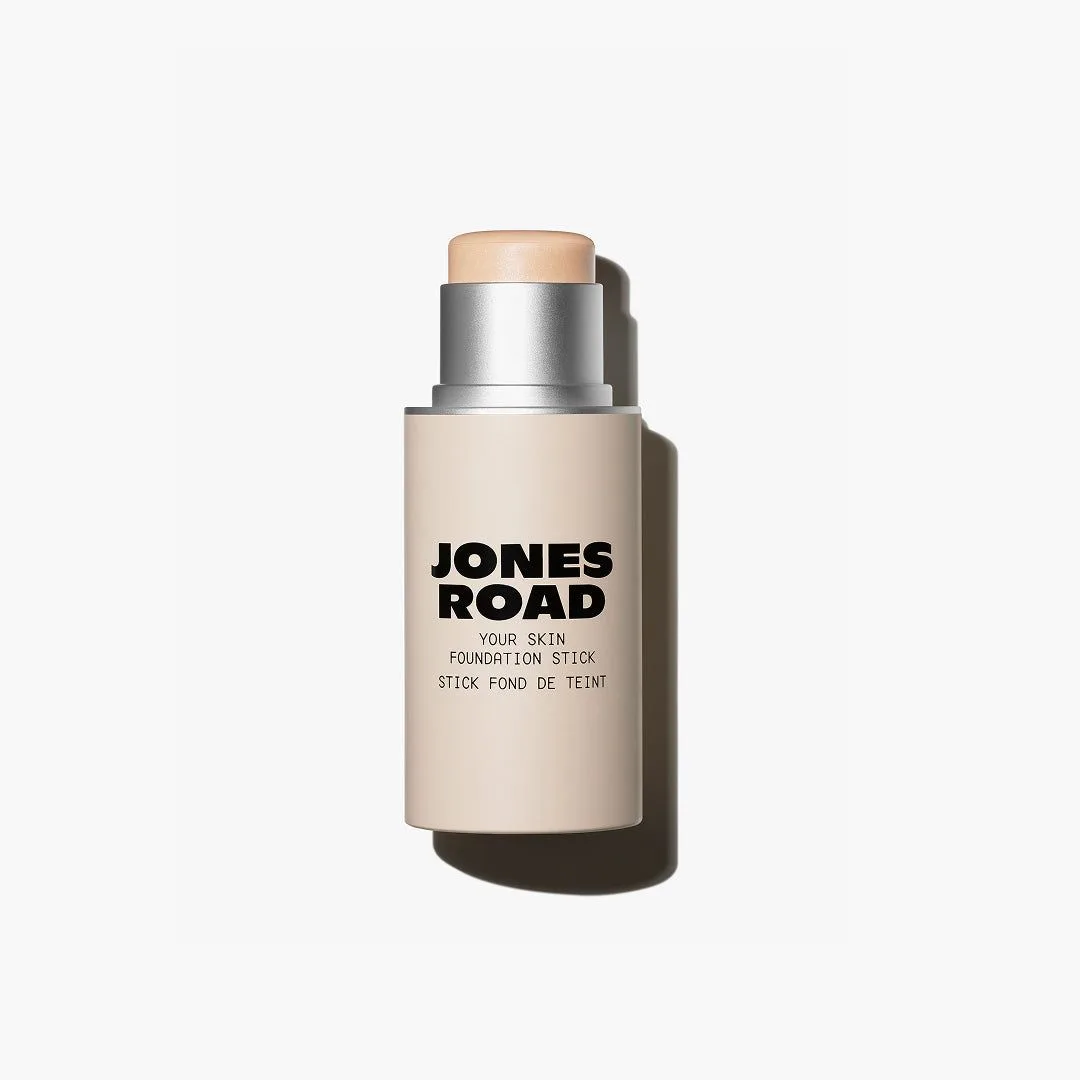
Your Skin Foundation Stick
-
Your Skin Foundation Stick: Contains ceramides, squalane, and sodium hyaluronate. These ingredients help the formula feel comfortable on dry skin, so it's less likely to cling to dry patches when applied correctly.