Start with the Brain harness's two adjustment zones
The Zee.Dog Brain Adjustable Air Mesh Harness is built around two fit points: the neck and the girth. Both are fully adjustable, so you can shape the harness to your dog before you fasten the buckle. The lightweight, breathable mesh is designed to be soft on fur, which makes it a reasonable choice for everyday walks rather than a specialty harness for extreme conditions.
Before you put it on your dog, loosen both adjustment zones so the harness opens wide enough to slip over the head or chest without tugging. The exact method for putting it on depends on how your dog accepts a chest harness, but starting loose avoids fighting the mesh and gives you room to fine-tune.
What the Brain harness gives you to work with
-
Breathable Mesh Chest Dog Harness - Fully Adjustable - Zee.Dog - Brain: Lightweight, breathable mesh chest harness that is soft on fur and fully adjustable around the neck and girth. These are the two adjustment zones you will use to fit the harness, and the mesh construction is why it suits daily walks in mild weather.
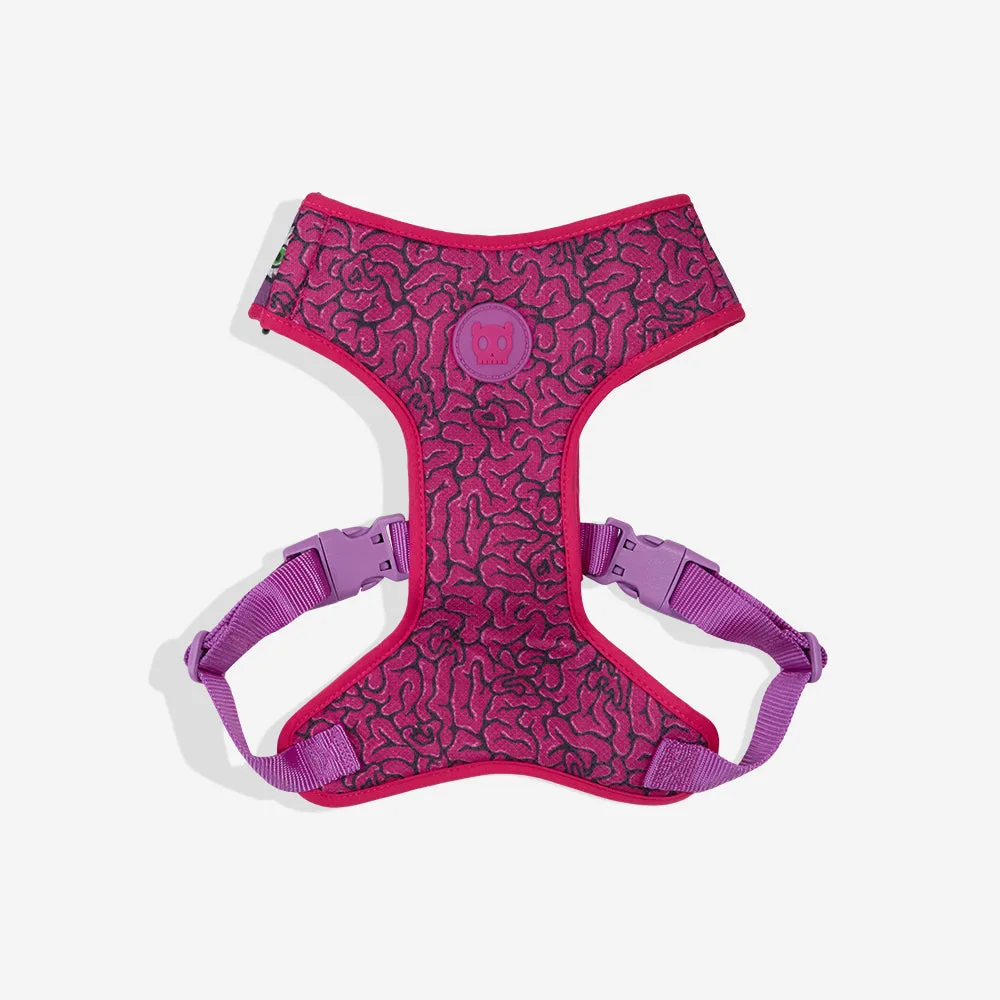
Breathable Mesh Chest Dog Harness - Fully Adjustable - Zee.Dog - Brain
-
Breathable Mesh Chest Dog Harness - Fully Adjustable - Zee.Dog - Brain: Strong, sturdy buckle and a D-ring for a leash. The buckle is your primary closure point, and the D-ring is where you attach the leash after fitting.
How to put on and adjust the Brain harness
Work through these steps in order. The goal is a harness that stays in place without being tight enough to restrict movement.
- Loosen the neck and girth straps: Open both adjustment zones fully so the harness can pass over your dog's head or chest without pulling on fur.
- Slide the harness into position: Guide the chest panel onto your dog's chest and bring the neck opening into place. The mesh should sit flat rather than twisted.
- Fasten the buckle: Close the sturdy buckle and check that it clicks or seats fully. The buckle is the main closure, so it should feel secure before you adjust tension.
- Tighten the neck adjustment: Take up slack around the neck until the harness feels snug but still allows you to slide a finger underneath. Do not overtighten; the mesh is soft, but pressure is still pressure.
- Tighten the girth adjustment: Adjust the girth strap so the harness stays in place when your dog moves. A common mistake is leaving the girth loose, which lets the chest panel shift during walks.
- Attach the leash to the D-ring: Clip your leash to the metal D-ring, not to the mesh or the buckle. Give a gentle test pull to confirm the D-ring is secure before heading out.
Fit checkpoints before you leave the house
The supplied product information does not include a measurement chart or a recommended finger-gap rule, so use these observational checkpoints rather than a specific number.
- Two-finger comfort check: You should be able to slide a finger under the neck and girth straps without forcing. If the mesh digs in, loosen slightly.
- No twisting or bunching: The mesh should lie flat against the chest. Twisted straps can create pressure points and make the harness feel uneven.
- Buckle stays closed: After a short walk, check that the buckle is still fully engaged. A sturdy buckle should not pop open on its own, but verifying it is a sensible habit.
- D-ring stays upright: The leash attachment point should sit where the leash can move freely without rubbing against your dog's back or neck.
- Watch the first few steps: Observe your dog walking, trotting, and sitting. If the harness shifts dramatically or your dog paws at it, recheck both adjustment zones.
Adjusting for daily walks and different coat types
For everyday walks, the Brain harness's breathable mesh is a practical choice because it is lightweight and soft on fur. If your dog has a thick coat, you may need to loosen the girth slightly to avoid compressing the fur, then recheck the neck adjustment so the harness does not slide forward. For short-coated dogs, the mesh sits closer to the skin, so pay attention to any redness or rubbing after the first few walks.
The harness is fully adjustable at the neck and girth, but the supplied information does not include a size chart or breed recommendations. That means you cannot confirm fit from the listing alone; you will need to adjust on your dog and observe. If you are between sizes or unsure, treat the adjustment range as your guide and check the return policy before ordering.
Why the mesh and buckle matter for everyday use
- Breathable Mesh Chest Dog Harness - Fully Adjustable - Zee.Dog - Brain: Part of the Lords of Zee.Town collection, with a lightweight, breathable mesh construction. The collection and mesh build are the design context; the practical takeaway is that this is a light daily harness rather than a heavy-duty working harness.
- Breathable Mesh Chest Dog Harness - Fully Adjustable - Zee.Dog - Brain: Fully adjustable around the neck and girth with a strong, sturdy buckle and a leash D-ring. These are the only fit and hardware details supplied, so they should anchor your adjustment routine rather than assumptions about padding or reflective trim.
What the supplied information does not cover
The product record does not include a sizing chart, weight range, breed recommendations, or care instructions. It also does not confirm reflective elements, handle loops, or padding beyond the mesh itself. If any of those features are essential for your walks, check the product page or contact the store before buying. For fit, the absence of measurements means your adjustment should be based on observing your dog in the harness, not on a number from the listing.