Quick answer
If your zipper closes and then creeps open on its own, the top stop or the slider is the usual culprit, not the teeth. On a closed-end zipper, the top stop is the small metal or molded bump that blocks the slider at the top of the tape. When it wears down or pulls off, the slider runs past it and the zipper reopens. Replace the stop with a metal top stop, or replace the whole zipper if the slider itself is loose. If the teeth are bent, split, or missing, stop repairing and swap the zipper.
Symptom check: which part is actually failing
A zipper that will not stay closed looks like one problem but behaves like three. Pull the slider to the top and watch what happens. If the slider reaches the end of the tape and simply slides back down, the top stop is gone or worn flat. If the slider stops where it should but the teeth behind it separate, the slider is not pressing the teeth together and needs replacement. If the slider jams partway up and the fabric puckers beside it, the tape or teeth are distorted and repair will not hold.
Do this test with the garment flat on a table, not on your body. Tension from wearing a skirt or pair of slacks can mask a weak stop and make a good stop look broken. Close the zipper, then run a fingernail along the top edge of the tape on both sides. You are feeling for a raised bump. No bump means no stop.
Replacing a top stop on a closed-end zipper
Top stops are sold as small metal crimp-on pieces or as molded plastic bumps already formed on the tape. If your zipper has molded stops and one has broken off, you can crimp a metal replacement stop just below the damaged area, on both sides of the tape, so the slider meets a matched pair. Crimp with flat-nose pliers and squeeze firmly but not so hard that you cut through the tape.
Place the new stop at the same height as the surviving stop on the opposite side. A mismatched pair lets the slider tilt and reopen. After crimping, zip and unzip the zipper five or six times to seat the stop. If the slider still rides over it, the stop is too small for the slider gauge, and you need a stop sized to that zipper number.
When the slider, not the stop, is the problem
A slider that has lost its grip will let a perfectly good top stop do nothing, because the teeth separate behind it the moment you let go. Test this by closing the zipper and gently pressing the two rows of teeth together with your fingers as you pull the slider down. If the zipper stays closed under that light pressure but reopens without it, the slider is the failed part.
On most closed-end garment zippers, a loose slider is not worth repairing at home. Replacing the slider means removing the top stop, sliding the old slider off, threading a new slider on, and crimping a fresh stop. If you have the right slider gauge and a stop, that is a ten-minute job. If you do not, replacing the entire zipper is faster and more reliable.
Choosing a replacement zipper instead of repairing
Repair makes sense when the tape is intact, the teeth are uniform, and only the stop or slider failed. Replace the zipper when the teeth are bent, when the tape is frayed at the top where the stop sat, or when the zipper is an invisible style and the stop has pulled through the tape. Invisible zippers hide their teeth, so a failed stop is harder to replace cleanly and a new zipper usually gives a better finish.
Match the replacement to the garment, not to the old zipper's brand. A concealed zipper for slacks, skirts, and dresses needs a closed-end invisible style with nylon teeth that match the tape, so the hardware disappears into the seam. A jacket, duffel bag, purse, or backpack needs a closed-end zipper with a heavier tooth, and gear that opens from either end needs a two-way separating zipper. Length matters too: buy the length the pattern or garment calls for, because shortening a metal-tooth zipper at home is difficult.
Diagnosis: stop repairing when one of these is true
- Slider rides past the top stop: The stop is worn flat or missing, and the slider has nothing to block it. Crimp a matched pair of metal top stops at the same height on both tape sides, or replace the zipper if the tape is frayed where the old stop sat. Repair is worthwhile when the tape and teeth are intact.
- Zipper closes but reopens behind the slider: The slider has lost its grip on the teeth, so no stop will help. Test by pressing the teeth together as you pull the slider down; if it stays closed under pressure, the slider is the failed part. Replace the slider or the whole zipper rather than adding a stop.
- Teeth are bent, split, or missing: A damaged tooth row cannot be fixed with a stopper or a new slider, and any repair will fail again within a few wears. This is the point to stop repairing. Choose a replacement zipper that matches the garment type, tooth size, and length.
Parts and replacements that fit this repair
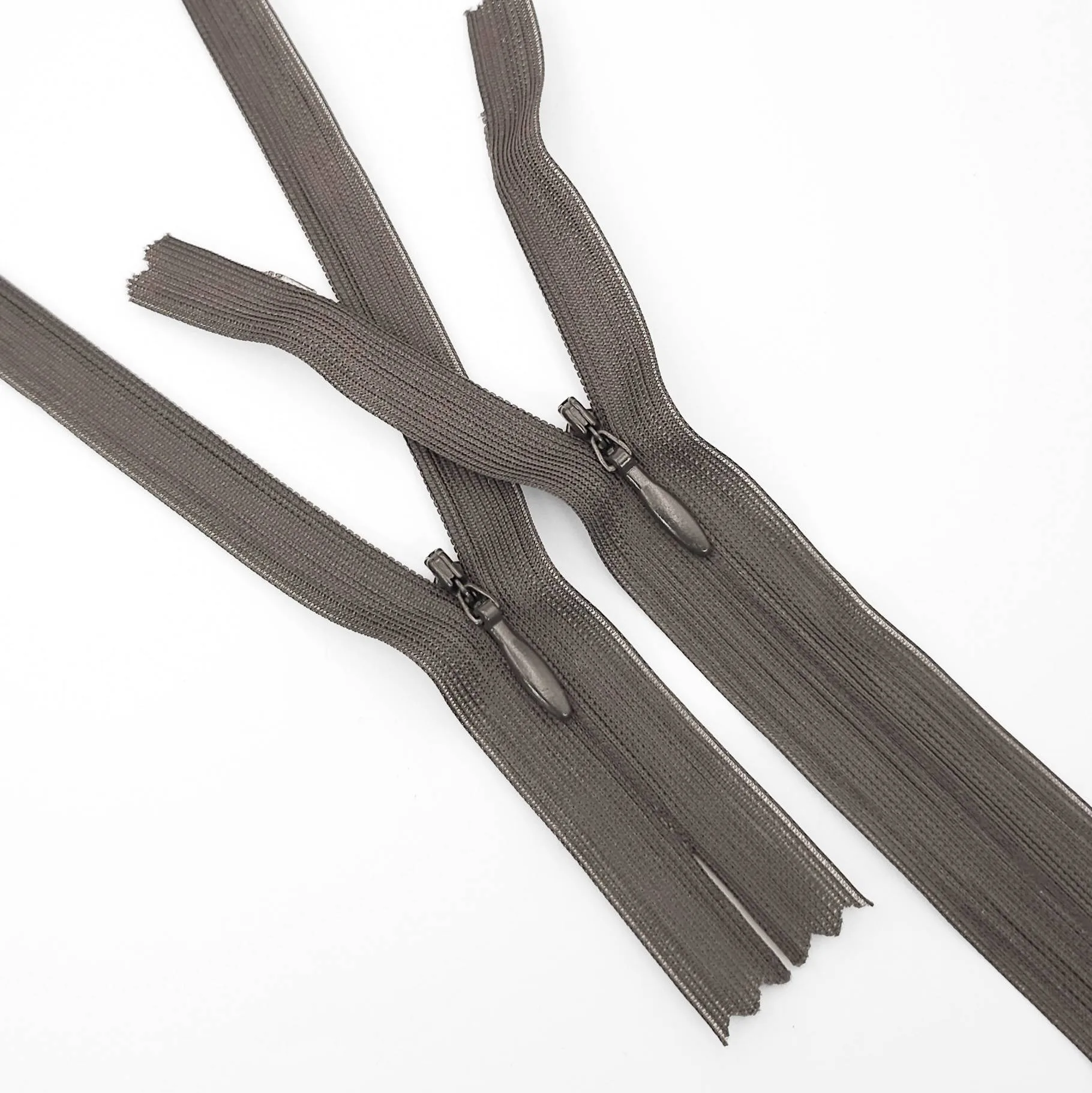
- KKF | Closed End Invisible Zipper | #3 | Gray | 13'' - 33 cm | ZIP1104: KKF | Closed End Invisible Zipper | #3 | Gray | 13'' - 33 cm | ZIP1104 is a non-separating, closed-end invisible zipper with nylon teeth that match the zipper tape, sized #3. This is the correct replacement when an invisible zipper in slacks, a skirt, or a dress has a failed top stop or a pulled-through tape, because the concealed teeth and matched tape keep the repair invisible in the seam.
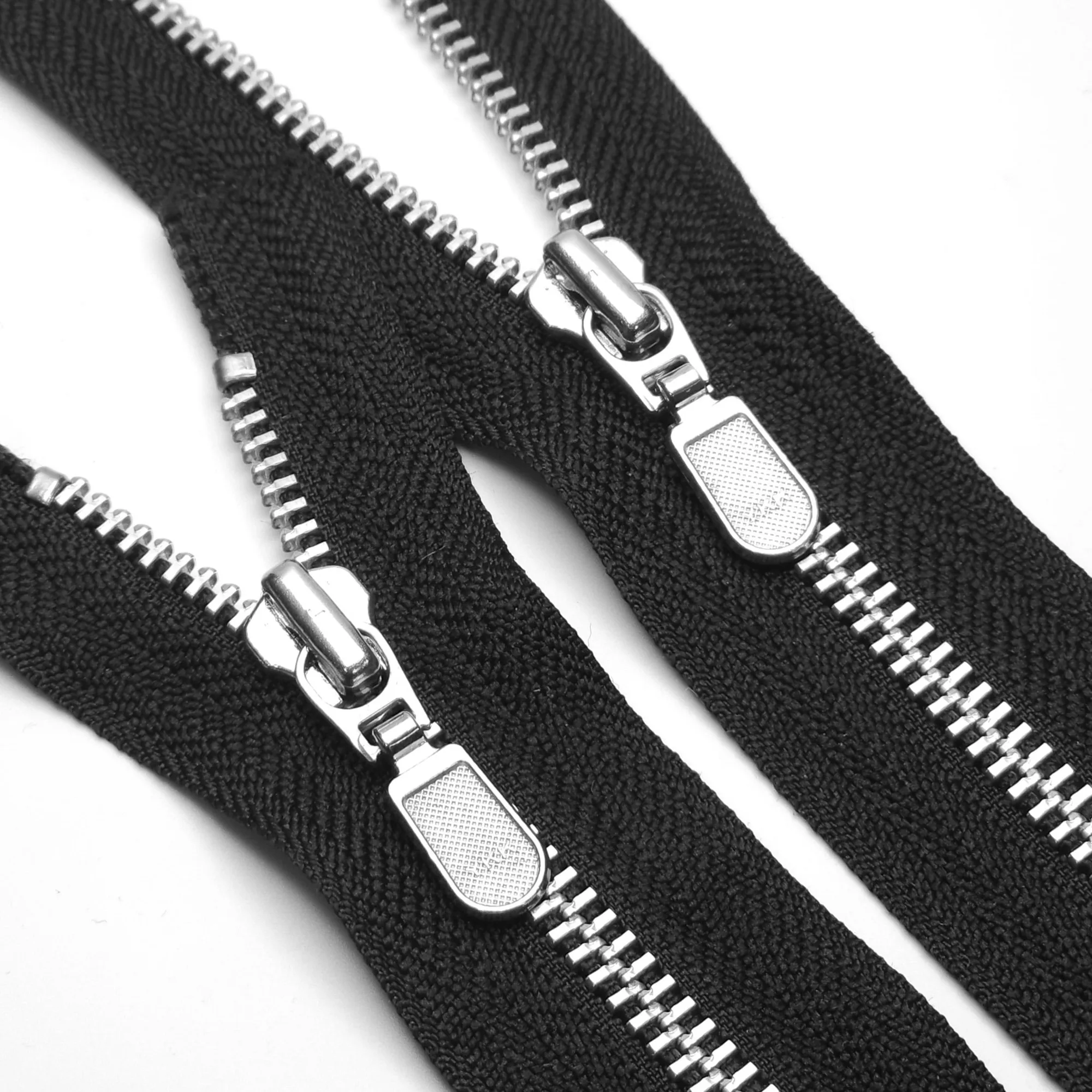
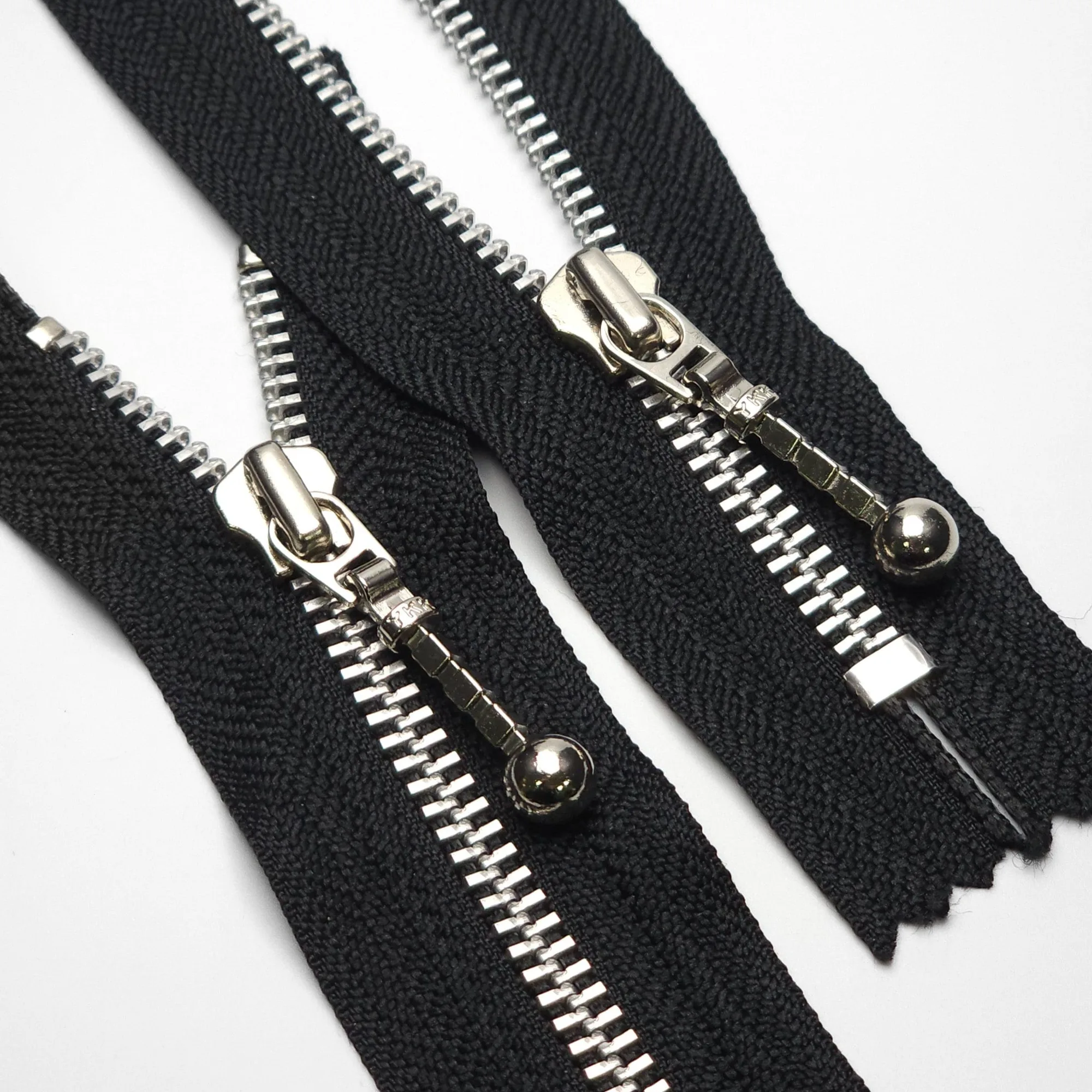
- YKK | Closed End Zipper | Metal | Black | #5: YKK | Closed End Zipper | Metal | Black | #5 is a one-way, non-separating closed-end zipper with #5 teeth, listed for jackets, duffel bags, purses, and backpacks. Use this when the failed zipper is on heavier fabric or gear rather than a dress seam, since the larger #5 metal teeth and closed-end format match that kind of opening.
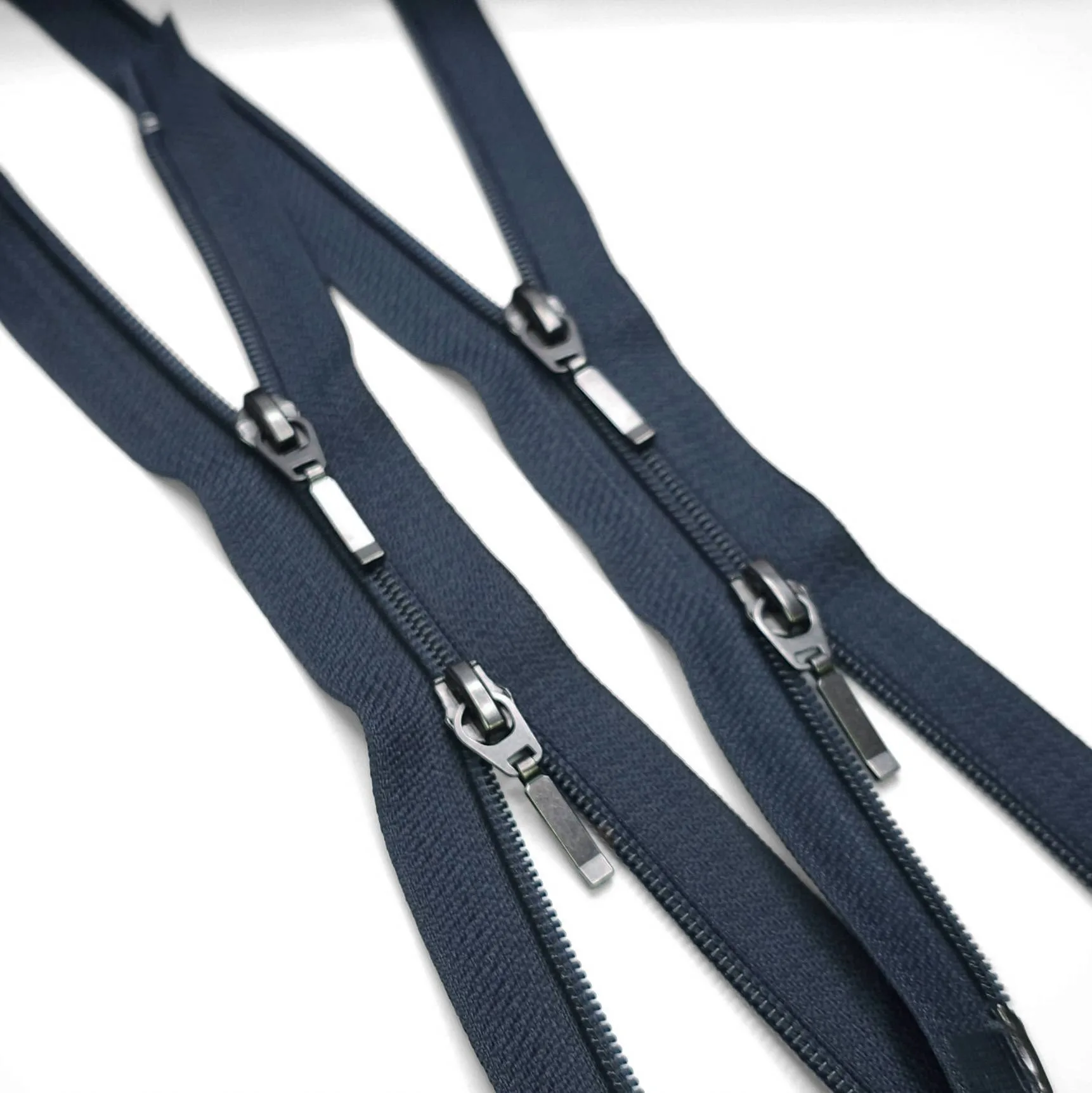
- KKF | 2 Ways Open-End Zipper | Nylon Coil | Navy | #5 | 24'' - 61 cm: KKF | 2 Ways Open-End Zipper | Nylon Coil | Navy | #5 | 24'' - 61 cm is a separating, open-end zipper with two sliders and #5 nylon coil teeth, allowing opening or closing from either end. If the garment or bag needs to open from both ends, a two-way separating zipper replaces the whole opening rather than repairing a single stop, and the two sliders change how you install the top and bottom stops.