快速解答
大多數胸罩合身問題都出在胸圍尺寸,而不是罩杯尺寸。如果肩帶滑落、有空隙或勒進皮膚,請先調整肩帶,再檢查罩杯和肩帶。一件在鬆鉤上保持水平且貼合的胸罩通常是正確的起點。
胸罩合身問題之所以重複出現,是因為答案取決於肩帶、罩杯和肩帶如何配合。本 FAQ 以簡短、獨立的段落回答最常見的問題,方便您直接跳到正在處理的問題。
每個答案都提供具體的檢查或調整方法,您可以在家嘗試。若需要產品示例,則取自 Forever and a Day Intimates 目錄,讓您了解特定結構細節如何影響合身度。
為什麼我的胸罩背帶會往上跑?
背帶往上跑通常表示背帶相對於您的胸圍來說太鬆了。背帶應在整個身體周圍保持水平,並提供大部分支撐。如果背帶往上跑,試著扣到更緊的鉤子,或選擇背帶尺寸較小、同時視需要調整罩杯的款式。
新胸罩應扣在最外側的鉤子上檢查。如果在那裡已經感覺鬆了,隨著鬆緊帶鬆弛,胸罩只會越來越鬆。背帶在最外側鉤子上能固定不動,日後布料鬆弛時才有空間可以調緊。
- 測試:扣在最外側鉤子上,然後舉起雙臂。如果背帶上移超過一根手指寬度,請考慮換小一號的背帶。
什麼原因導致罩杯頂部空杯?
罩杯頂部空杯,通常是罩杯太大、太高,或杯型與胸部組織形狀不符。也可能是背帶太鬆,罩杯無法貼合身體。收緊背帶或嘗試較低罩杯的款式可以改善。
如果只有一側出現空隙,這是正常的。許多人都有輕微的不對稱。以較大一側為準,並使用可調式肩帶調整較小一側的鬆緊。
- 如果全罩杯款式在頂部一直有空隙,可以試試半杯或低覆蓋杯型。
肩帶應該要多緊?
肩帶應保持在原位,不會勒進皮膚或留下壓痕。它們不應該承擔主要的支撐工作;那是胸帶的職責。如果你需要把肩帶調到最緊才能感到支撐,胸帶很可能太鬆了。
先扣好胸帶,再調整肩帶。先放鬆肩帶,再逐步收緊每一側,直到罩杯平貼身體。如果肩帶還是滑落,較厚或較靠近的肩帶設計可能更適合你的身形。
- 肩帶留下紅痕或造成肩膀疼痛,代表太緊,而不是支撐良好的跡象。
我需要有鋼圈的胸罩嗎?
不一定。鋼圈提供塑形和分離效果,有些人喜歡在貼身衣物下使用。無鋼圈款式在日常穿着中也能提供足夠支撐,尤其是在較小的罩杯尺寸或背帶貼合時。
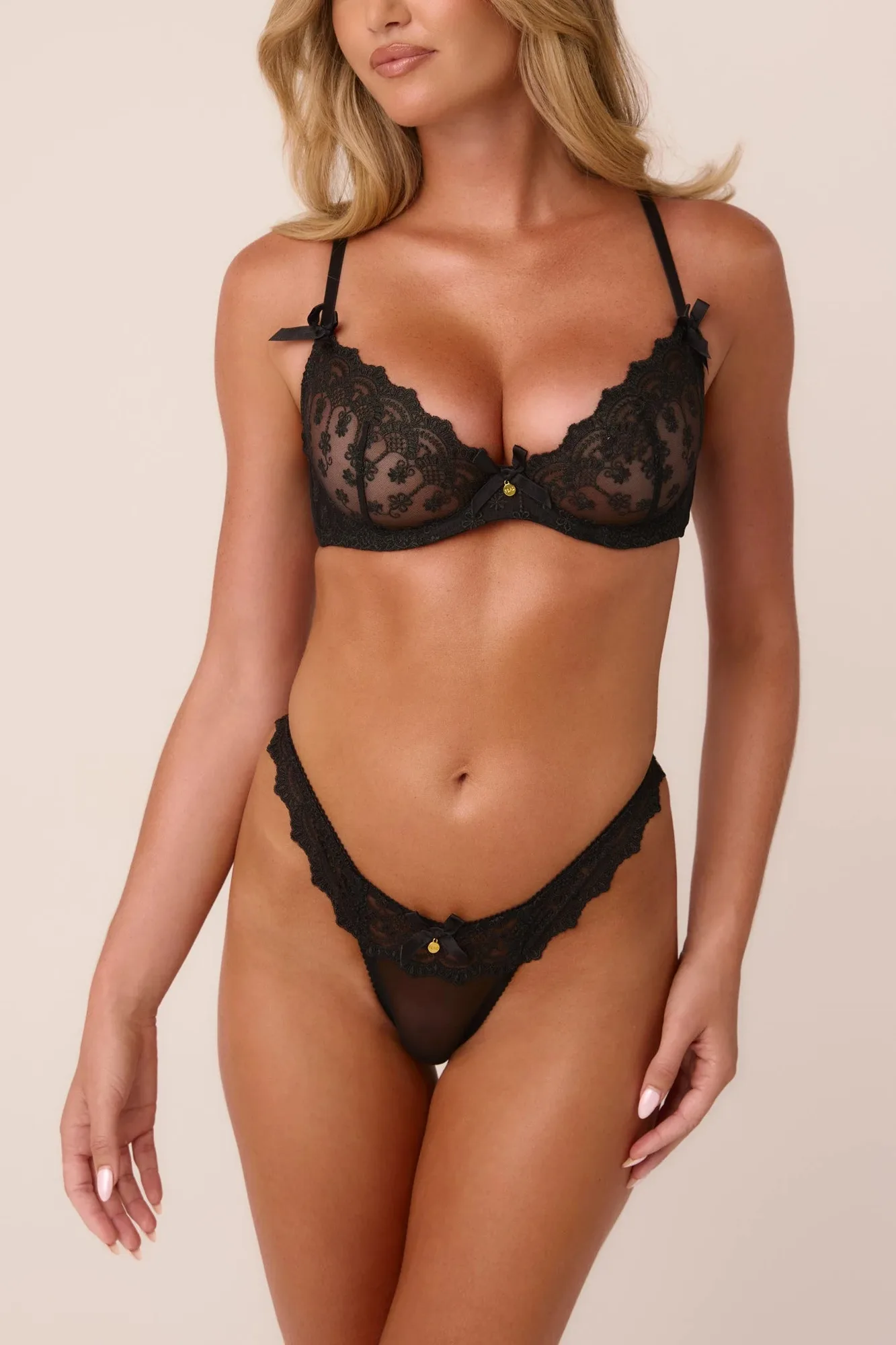
如果不確定,可以先從可以調整的鋼圈款式開始。 Pamela Bra - Black 採用鋼圈結構,搭配可調肩帶和透氣網眼布,方便你調整到最合身的狀態,看看鋼圈是否適合你的日常穿搭。

Pamela Bra - Black
- 鋼圈應平貼肋骨,不應壓在胸部組織上。
我怎麼知道我的胸罩尺寸是否改變了?
最明顯的跡象是背帶不再水平、罩杯空杯或溢出,以及肩帶需要不斷重新調整。體重變化、荷爾蒙波動,甚至新的運動習慣都可能改變尺寸。每六到十二個月重新測量一次。
如果你介於兩個尺寸之間,優先考慮背帶的貼合度。稍微太緊的背帶可以用延長扣解決,但太鬆的背帶無法在不修改胸罩的情況下修正。
- 測量你的下胸圍(貼合)和胸部最豐滿處的胸圍,然後與品牌的尺寸對照表比較。
我應該買成套內衣還是分開買?
成套購買保證顏色和五金配件一致,如果你打算搭配可見的內褲線或穿在薄透衣物下,這點很重要。分開購買則可以分別微調每個部位的合身度,如果你的上下身尺碼不同,這會很有用。
The Riley Set Black 將低胸鋼圈半杯胸罩與同款丁字褲和吊襪帶搭配,全部採用金色五金配件和可調節肩帶。如果你想要協調的外觀,又不想猜測單品是否匹配,成套購買可以省去這個決定。
Riley Set Black
- 如果購買成套內衣,請確認內褲款式符合你平時的偏好,因為成套內衣的內褲通常是固定剪裁。
日常舒適內衣應該注意什麼?
尋找在鬆開鉤扣時保持水平的背帶、平滑貼合且不空杯或溢出的罩杯,以及不會滑落且不壓迫的肩帶。材質也很重要:彈性蕾絲和網紗會隨身體動作伸展,而較硬的面料可能需要更精確的尺寸。
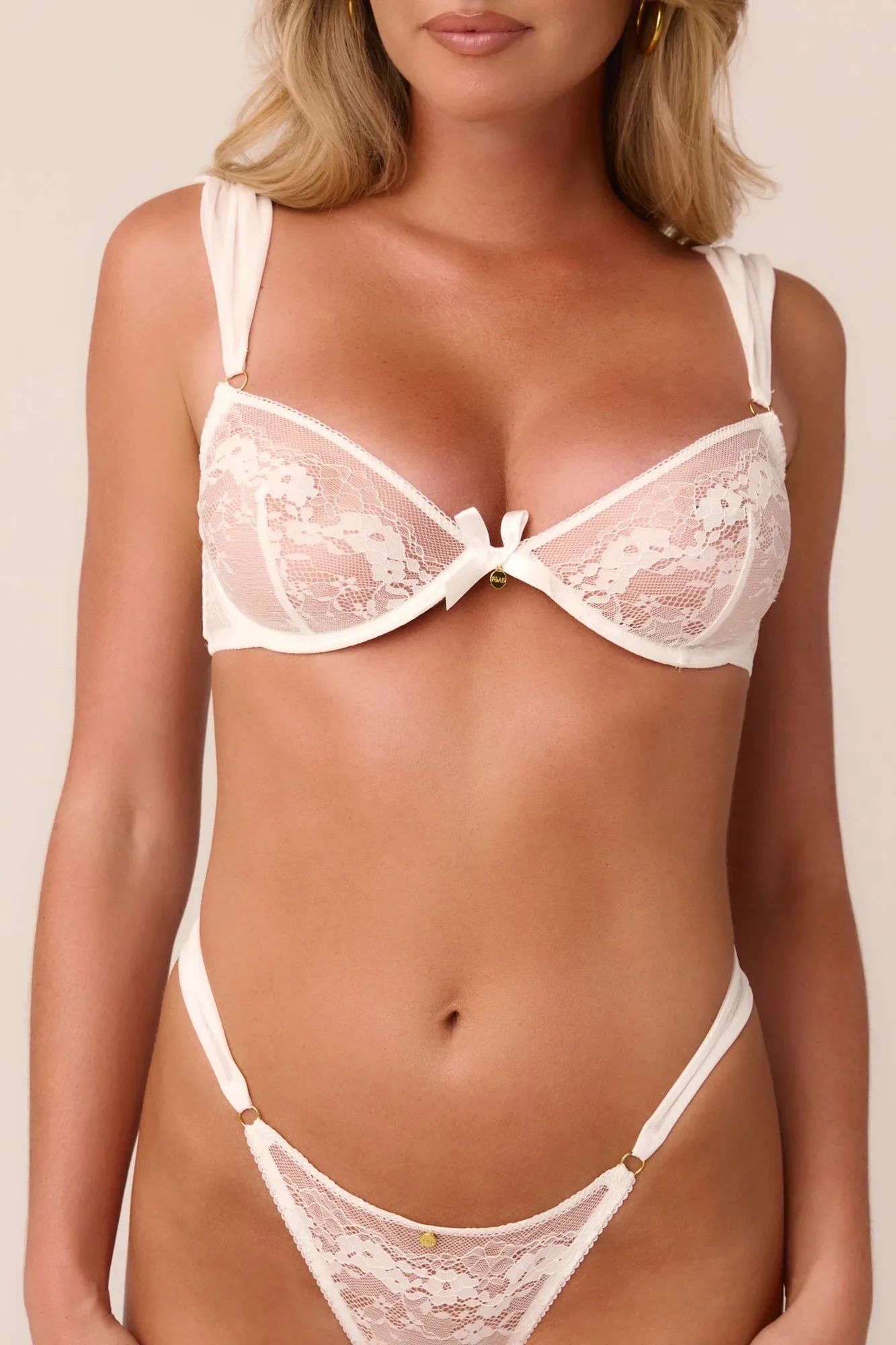
The Esme Bra - White uses thick mesh shoulder straps, stretch lace, and a fully adjustable back with no lining. That combination is a good option if you want light support and easy adjustability for all-day wear.
- Wear a new bra for a full day before deciding it fits; some fabrics relax slightly with body heat.
How should a bra feel when it fits correctly?
A well-fitting bra feels snug but not restrictive. The band stays level, the center gore sits flat against your chest, and the cups contain your breast tissue without cutting in. You should be able to take a deep breath and move your arms without the bra shifting.
If you are constantly aware of your bra during the day, something is off. Start by adjusting the band and straps, then reassess the cup size or style.
- The center gore should touch your sternum; if it floats, the cups may be too small.
Bra fit troubleshooting checklist
Band rides up
Fasten on the loosest hook and check if the band sits level. If it climbs, try a smaller band size. A level band on the loosest hook gives you room to tighten later.
Cups gap at the top
Check if the band is too loose or the cup is too tall. Try a lower cup style or tighten the band. Fit the larger side and adjust straps to balance asymmetry.
Straps dig in or fall down
Loosen straps and rely on the band for support. If straps still fall, look for thicker or closer-set straps. Straps should stay in place without leaving marks.
Center gore floats
The gore should touch your sternum. If it does not, the cups may be too small or the band too loose. A floating gore often means sizing up in the cup.
Fit details from our catalog
- Pamela Bra - Black: Underwire construction with adjustable straps and sheer mesh panels. Underwire gives shape and separation, while adjustable straps let you fine-tune the fit if you are between sizes.
- Esme Bra - White: Thick mesh shoulder straps, stretch lace, and a fully adjustable back with no lining. No lining keeps it light for everyday wear, and the adjustable back helps you dial in band tension.
- Riley Set Black: Low-cut underwired demi-bra with matching thong and garter, gold hardware, and adjustable back and shoulder straps. A demi cup suits lower necklines, and the set removes the guesswork of matching pieces.
Most bra fit issues have a simple fix: start with the band, then adjust cups and straps. Use the checklist above to troubleshoot at home, and recheck your size every few months so your bras keep doing their job.