Schnellantwort
Wählen Sie eine Nähmaschine fürs Quilten zuerst nach dem Nähraum: Messen Sie Ihre größte Quiltgröße und addieren Sie mindestens 10 cm Arbeitsraum. Stellen Sie dann sicher, dass die Maschine die von Ihnen vernähten Lagen bewältigt, über eine einstellbare Geschwindigkeitsregelung verfügt und die Nähfüße aufnimmt, auf die Sie sich verlassen. Wenn Sie hauptsächlich Teile nähen und gelegentlich quilten, reicht eine Mittelklasse-Maschine mit großem Nähraum und starkem Stofftransport; wenn Sie regelmäßig Bettdecken in Bettgröße quilten, priorisieren Sie Nähraum und Stichkonsistenz vor der Anzahl der Zierstiche.
Die meiste Frustration beim Quilten kommt von der Maschine, nicht von der Quilterin oder dem Quilter. Wenn Sie jemals eine Queen-Size-Decke durch eine kleine Öffnung gequetscht haben oder zusehen mussten, wie Stiche über dicke Nähte überspringen, liegt das Problem meist am Nähraum, am Stofftransport oder am falschen Nähfuß. Dieser Leitfaden behandelt die Entscheidungen, die Ihre Ergebnisse tatsächlich verändern.
Sie brauchen nicht die teuerste Maschine. Sie brauchen eine, die zur Größe Ihrer Projekte, zur Dicke Ihrer Lagen und zu Ihrer Arbeitsweise passt. Im Folgenden finden Sie konkrete Entscheidungsregeln und ehrliche Abwägungen, damit Sie Maschinen vergleichen können, ohne sich in Feature-Listen zu verlieren.
Beginnen Sie mit dem Nähraum, nicht mit der Stichanzahl
Der Nähraum ist der Abstand von der Nadel zur rechten Seite der Maschine. Er bestimmt, wie viel Quilt Sie beim Nähen zusammenraffen können. Für Babyquilts sind 15 bis 18 cm brauchbar. Für Tagesdecken streben Sie 20 bis 25 cm an. Für Queen- und King-Quilts machen 25 bis 30 cm oder mehr die Arbeit deutlich einfacher. Messen Sie die fertige Quiltbreite, addieren Sie 10 cm und behandeln Sie das als Ihr Minimum.
Die Stichanzahl ist die am meisten beworbene Zahl und beim Quilten am wenigsten nützlich. Eine Maschine mit 200 Zierstichen, aber schmalem Nähbereich, wird Sie bei jedem großen Projekt bekämpfen. Eine Maschine mit 30 Stichen und einem breiten Nähbereich lässt Sie fertig werden. Wenn Sie Ihre Quilt-Tops selbst nähen und quilten, ist der Nähbereich das Merkmal, das Sie bei jeder Naht spüren.
- Messen Sie Ihre größte geplante Decke, bevor Sie einkaufen, nicht danach.
- Wenn Sie Quilts zu einem Longarmer schicken, können Sie weniger Nähbereich akzeptieren und stattdessen in Nähgenauigkeit investieren.
Passen Sie die Maschine an Ihre Lagen und Materialien an
Quilten bedeutet, gleichzeitig durch ein Top, Vlies und Rückseite zu nähen. Die Maschine braucht genug Durchstichkraft und Transportstärke, um diesen Stapel ohne übersprungene Stiche zu bewegen. Achten Sie auf eine Maschine mit einstellbarem Nähfußdruck und einem Transporteursystem, das Sie für Freihandarbeiten absenken können. Diese beiden Funktionen sind wichtiger als eine lange Liste dekorativer Optionen.
Wenn Sie auch Kleidung oder Taschen nähen, brauchen Sie eine Maschine, die feine Baumwolle und schwerere Lagen gleichermaßen verarbeitet. Eine Maschine, die nur auf Quilten abgestimmt ist, kann sich auf empfindlichen Stoffen unhandlich anfühlen, und eine leichte Maschine kann bei dicken Nähten Probleme bekommen. Entscheiden Sie, was Sie häufiger tun, und gewichten Sie Ihr Budget entsprechend.
- Test with a folded seam allowance and batting if the store allows a demo.
- Adjustable presser foot pressure helps you switch between quilting and garment sewing without re-tuning everything.
Presser feet and accessories change what you can sew
The feet that come with a machine often decide how quickly you can work. A walking foot feeds layers evenly and is the standard choice for straight-line quilting. A free-motion or darning foot gives you control for stippling and meandering. A quarter-inch foot with a guide helps you keep consistent seam allowances when piecing. If your machine uses a proprietary foot system, check that these feet exist for it before you buy.
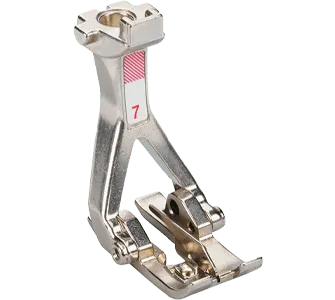
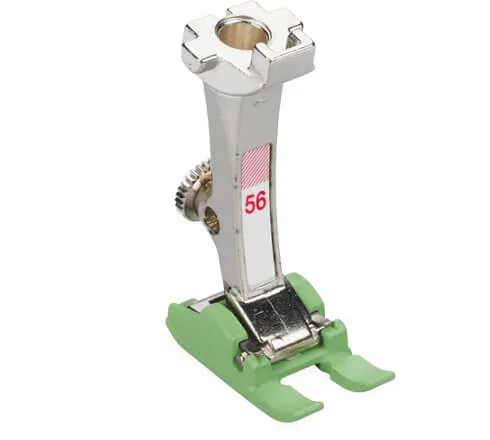
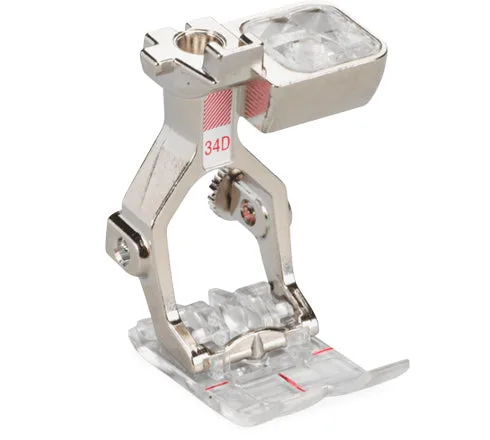
Specialty feet solve specific problems. The BERNINA #34D Reverse-pattern Foot with Clear Sole combines a clear sole with an adjustable guide for consistent decorative and reverse-pattern stitching, which helps when you want evenly spaced rows. The BERNINA #7 Tailor-tack Foot creates loose, loopy tailor's tacks by machine for transferring pattern markings, which is useful if you also sew garments. The BERNINA #56 Open Embroidery Foot with Non-Stick Sole has an open shape for a clear view and a non-stick coating that slides smoothly on plastic, vinyl, or leather.
- Confirm the machine's foot system before buying a collection of feet.
- A clear sole improves visibility when you stitch decorative or reverse patterns.
Speed control, lighting, and workspace
Variable speed control lets you slow down for free-motion quilting and speed up for piecing. Without it, you control speed only with the foot pedal, which is harder on long seams. Good lighting matters because you need to see stitch quality and fabric edges clearly. An extension table or a large flat bed supports the weight of a quilt so it does not drag and pull your stitches off course.
Consider where the machine will live. A heavier machine vibrates less and stays put, which improves stitch consistency. If you need to store it between sessions, weight becomes a trade-off. Decide whether stability or portability matters more before you commit.
- Variable speed control is more useful for quilting than a high top speed.
- An extension table reduces drag on large quilts and is often sold separately.
Budget: where to spend and where to save
Spend on throat space, feed quality, and adjustable pressure. Save on decorative stitch count and bundled accessories you will not use. A mid-range machine with a wide throat and reliable feed will outperform a feature-heavy machine with a narrow throat for most quilters. If your budget is tight, buy a solid machine and add feet and an extension table over time.
The BERNINA 540 sits in BERNINA's mid-range lineup and is built for garment construction, quilting, and decorative techniques, with a large display and a broad feature set. It is a reasonable target if you want one machine for multiple sewing types and can invest at that level. If you only piece quilt tops and send them out for quilting, you can spend far less and put the savings into fabric.
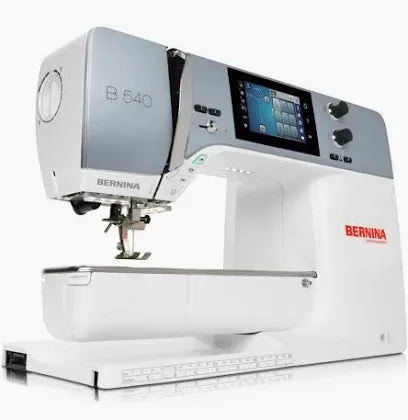
BERNINA 540
- Buy the widest throat your budget allows before adding decorative features.
- Add a walking foot and quarter-inch foot early; they change results more than stitch count.
Decision rules for quilting machine buyers
- If your largest quilt is a throw or smaller: A machine with 8 to 10 inches of throat space and adjustable presser foot pressure covers piecing and straight-line quilting comfortably. You can prioritize stitch quality and foot compatibility over maximum throat size.
- If you quilt queen or king quilts yourself: Prioritize 10 to 12 inches of throat space, a strong feed system, and an extension table before decorative stitch count. Throat space is the feature you will notice on every large project.
- If you also sew garments or bags: Choose a machine with adjustable presser foot pressure and a foot system that includes a walking foot, quarter-inch foot, and free-motion foot. One machine can do both, but only if the feet and pressure adjustment exist for it.
- If you send quilts to a longarmer: Spend on piecing accuracy instead: a reliable quarter-inch foot, consistent feed, and good lighting matter more than a wide throat. You can buy a smaller, less expensive machine and put the difference into fabric.
Products that support these decisions
- BERNINA 540: The BERNINA 540 is described as the pinnacle of BERNINA's mid-range sewing lineup, delivering exceptional stitch quality, an expansive feature set, and Swiss precision for garment construction, quilting, and decorative techniques. A single machine that covers piecing, quilting, and decorative work suits sewists who do not want separate machines for each task.
- #34D BERNINA Reverse-pattern Foot with Clear Sole: The BERNINA #34D Reverse-pattern Foot combines a clear sole with an adjustable guide for precision decorative and reverse-pattern stitching, and its wide groove underneath accommodates dense stitching. The adjustable guide helps keep rows evenly spaced, which is useful when you stitch decorative bands or reverse patterns on quilted surfaces.
- #7 BERNINA Tailor-tack Foot: The BERNINA #7 Tailor-tack Foot creates loose, loopy tailor's tacks by machine for transferring pattern markings, producing stitches that are easy to clip and remove. If you also sew garments or mark quilt layouts, this foot replaces hand-sewn tailor's tacks and saves time.
- #56 BERNINA Open Embroidery Foot Non-Stick Sole: The BERNINA #56 Open Embroidery Foot has an open shape for a clear view of the sewing area and a non-stick coating on the sole that slides smoothly on plastic, vinyl, leather, or similar materials. The open shape improves visibility for appliqué and decorative stitches, and the non-stick sole prevents dragging on specialty materials.
Who this advice fits
Best for
- Quilters who piece and quilt their own crib, throw, or lap-size projects
- Sewists who want one machine for quilting, garment construction, and decorative stitching
- Buyers who want to compare throat space and presser feet before choosing a machine
Not for
- Quilters who only need a dedicated longarm machine for bed-size quilting
- Shoppers looking for the lowest-cost machine and willing to accept a narrow throat
- Buyers who never plan to use a walking foot, free-motion foot, or extension table
Choose your machine by the size of your quilts and the layers you sew, then confirm the feet and accessories you need exist for it. Throat space and feed quality will shape your results more than any decorative stitch count, so decide those first and let the rest of the feature list follow.