Réponse rapide
Choisissez une machine à coudre pour quilting en commençant par l'espace de gorge : mesurez la taille de votre plus grand quilt et ajoutez au moins 10 cm d'espace de travail. Ensuite, vérifiez que la machine gère les épaisseurs que vous cousez, offre un contrôle de vitesse réglable et accepte les pieds-de-biche dont vous dépendez. Si vous assemblez principalement et quiltez occasionnellement, une machine de gamme moyenne avec une gorge large et une bonne alimentation suffit ; si vous quiltez régulièrement des projets de taille lit, privilégiez l'espace de gorge et la régularité des points plutôt que le nombre de points décoratifs.
La plupart des frustrations en quilting viennent de la machine, pas du quilteur. Si vous avez déjà dû faire passer un quilt queen-size par une petite ouverture ou vu des points sauter sur des coutures épaisses, le problème est généralement l'espace de gorge, le contrôle de l'alimentation ou le mauvais pied pour la tâche. Ce guide passe en revue les décisions qui changent réellement vos résultats.
Vous n'avez pas besoin de la machine la plus chère. Vous avez besoin d'une machine qui correspond à la taille de vos projets, à l'épaisseur de vos couches et à votre façon de travailler. Voici des règles de décision concrètes et des compromis honnêtes pour comparer les machines sans vous perdre dans les listes de caractéristiques.
Commencez par l'espace de gorge, pas par le nombre de points
L'espace de gorge est la distance entre l'aiguille et le côté droit de la machine. Il détermine la quantité de quilt que vous pouvez entasser pendant la couture. Pour les quilts de berceau, 6 à 7 pouces suffisent. Pour les quilts jetés, visez 8 à 10 pouces. Pour les quilts queen et king, 10 à 12 pouces ou plus rendent la tâche nettement plus facile. Mesurez la largeur de votre quilt fini, ajoutez 4 pouces et considérez cela comme votre minimum.
Stitch count is the most advertised number and the least useful for quilting. A machine with 200 decorative stitches but a narrow throat will fight you on every large project. A machine with 30 stitches and a wide throat will let you finish. If you piece and quilt your own tops, throat space is the feature you will feel on every seam.
- Measure your largest planned quilt before you shop, not after.
- If you send quilts to a longarmer, you can accept less throat space and invest in piecing accuracy instead.
Match the machine to your layers and materials
Quilting means sewing through a top, batting, and backing at once. The machine needs enough piercing power and feed strength to move that stack without skipped stitches. Look for a machine with adjustable presser foot pressure and a feed dog system you can lower for free-motion work. These two features matter more than a long list of decorative options.
If you also sew garments or bags, you will want a machine that handles both fine cotton and heavier layers. A machine tuned only for quilting can feel clumsy on delicate fabric, and a lightweight machine can struggle with thick seams. Decide which you do more often, then weight your budget toward that use.
- Test with a folded seam allowance and batting if the store allows a demo.
- Adjustable presser foot pressure helps you switch between quilting and garment sewing without re-tuning everything.
Presser feet and accessories change what you can sew
The feet that come with a machine often decide how quickly you can work. A walking foot feeds layers evenly and is the standard choice for straight-line quilting. A free-motion or darning foot gives you control for stippling and meandering. A quarter-inch foot with a guide helps you keep consistent seam allowances when piecing. If your machine uses a proprietary foot system, check that these feet exist for it before you buy.
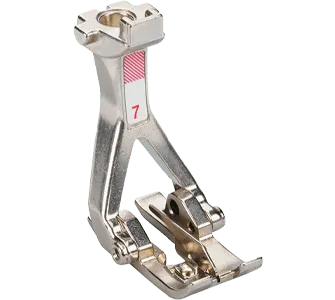
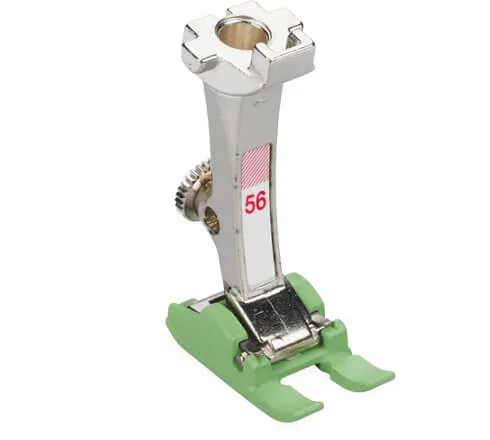
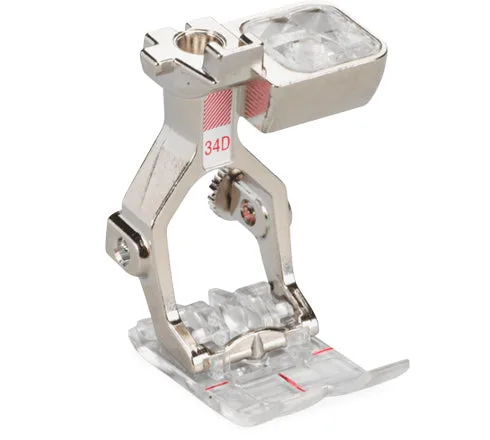
Specialty feet solve specific problems. The BERNINA #34D Reverse-pattern Foot with Clear Sole combines a clear sole with an adjustable guide for consistent decorative and reverse-pattern stitching, which helps when you want evenly spaced rows. The BERNINA #7 Tailor-tack Foot creates loose, loopy tailor's tacks by machine for transferring pattern markings, which is useful if you also sew garments. The BERNINA #56 Open Embroidery Foot with Non-Stick Sole has an open shape for a clear view and a non-stick coating that slides smoothly on plastic, vinyl, or leather.
- Confirm the machine's foot system before buying a collection of feet.
- A clear sole improves visibility when you stitch decorative or reverse patterns.
Speed control, lighting, and workspace
Variable speed control lets you slow down for free-motion quilting and speed up for piecing. Without it, you control speed only with the foot pedal, which is harder on long seams. Good lighting matters because you need to see stitch quality and fabric edges clearly. An extension table or a large flat bed supports the weight of a quilt so it does not drag and pull your stitches off course.
Consider where the machine will live. A heavier machine vibrates less and stays put, which improves stitch consistency. If you need to store it between sessions, weight becomes a trade-off. Decide whether stability or portability matters more before you commit.
- Variable speed control is more useful for quilting than a high top speed.
- An extension table reduces drag on large quilts and is often sold separately.
Budget: where to spend and where to save
Spend on throat space, feed quality, and adjustable pressure. Save on decorative stitch count and bundled accessories you will not use. A mid-range machine with a wide throat and reliable feed will outperform a feature-heavy machine with a narrow throat for most quilters. If your budget is tight, buy a solid machine and add feet and an extension table over time.
The BERNINA 540 sits in BERNINA's mid-range lineup and is built for garment construction, quilting, and decorative techniques, with a large display and a broad feature set. It is a reasonable target if you want one machine for multiple sewing types and can invest at that level. If you only piece quilt tops and send them out for quilting, you can spend far less and put the savings into fabric.
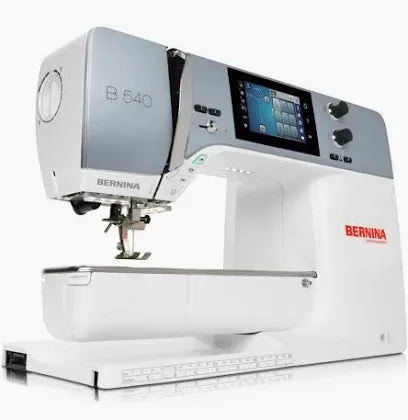
BERNINA 540
- Buy the widest throat your budget allows before adding decorative features.
- Add a walking foot and quarter-inch foot early; they change results more than stitch count.
Decision rules for quilting machine buyers
- If your largest quilt is a throw or smaller: A machine with 8 to 10 inches of throat space and adjustable presser foot pressure covers piecing and straight-line quilting comfortably. You can prioritize stitch quality and foot compatibility over maximum throat size.
- If you quilt queen or king quilts yourself: Prioritize 10 to 12 inches of throat space, a strong feed system, and an extension table before decorative stitch count. Throat space is the feature you will notice on every large project.
- If you also sew garments or bags: Choose a machine with adjustable presser foot pressure and a foot system that includes a walking foot, quarter-inch foot, and free-motion foot. One machine can do both, but only if the feet and pressure adjustment exist for it.
- If you send quilts to a longarmer: Spend on piecing accuracy instead: a reliable quarter-inch foot, consistent feed, and good lighting matter more than a wide throat. You can buy a smaller, less expensive machine and put the difference into fabric.
Products that support these decisions
- BERNINA 540: The BERNINA 540 is described as the pinnacle of BERNINA's mid-range sewing lineup, delivering exceptional stitch quality, an expansive feature set, and Swiss precision for garment construction, quilting, and decorative techniques. A single machine that covers piecing, quilting, and decorative work suits sewists who do not want separate machines for each task.
- #34D BERNINA Reverse-pattern Foot with Clear Sole: The BERNINA #34D Reverse-pattern Foot combines a clear sole with an adjustable guide for precision decorative and reverse-pattern stitching, and its wide groove underneath accommodates dense stitching. The adjustable guide helps keep rows evenly spaced, which is useful when you stitch decorative bands or reverse patterns on quilted surfaces.
- #7 BERNINA Tailor-tack Foot: The BERNINA #7 Tailor-tack Foot creates loose, loopy tailor's tacks by machine for transferring pattern markings, producing stitches that are easy to clip and remove. If you also sew garments or mark quilt layouts, this foot replaces hand-sewn tailor's tacks and saves time.
- #56 BERNINA Open Embroidery Foot Non-Stick Sole: The BERNINA #56 Open Embroidery Foot has an open shape for a clear view of the sewing area and a non-stick coating on the sole that slides smoothly on plastic, vinyl, leather, or similar materials. The open shape improves visibility for appliqué and decorative stitches, and the non-stick sole prevents dragging on specialty materials.
Who this advice fits
Best for
- Quilters who piece and quilt their own crib, throw, or lap-size projects
- Sewists who want one machine for quilting, garment construction, and decorative stitching
- Buyers who want to compare throat space and presser feet before choosing a machine
Not for
- Quilters who only need a dedicated longarm machine for bed-size quilting
- Shoppers looking for the lowest-cost machine and willing to accept a narrow throat
- Buyers who never plan to use a walking foot, free-motion foot, or extension table
Choose your machine by the size of your quilts and the layers you sew, then confirm the feet and accessories you need exist for it. Throat space and feed quality will shape your results more than any decorative stitch count, so decide those first and let the rest of the feature list follow.