Schnelle Antwort
Kaufen Sie ein Tag, das aus der Ferne gut sichtbar ist, robust genug, um Gepäckabfertigung zu überstehen, und so befestigt ist, dass es nicht hängen bleibt oder abreißt. Ein starkes Gummietikett plus ein kontrastierender Gepäckgurt hilft bei der Gepäckidentifizierung mehr als ein dekoratives Etikett allein. Wenn Sie einen einfachen Ausgangspunkt möchten, ist das Gepäckanhänger in Indigoblau eine langlebige, kostengünstige Option, die zu fast jedem Koffer passt.
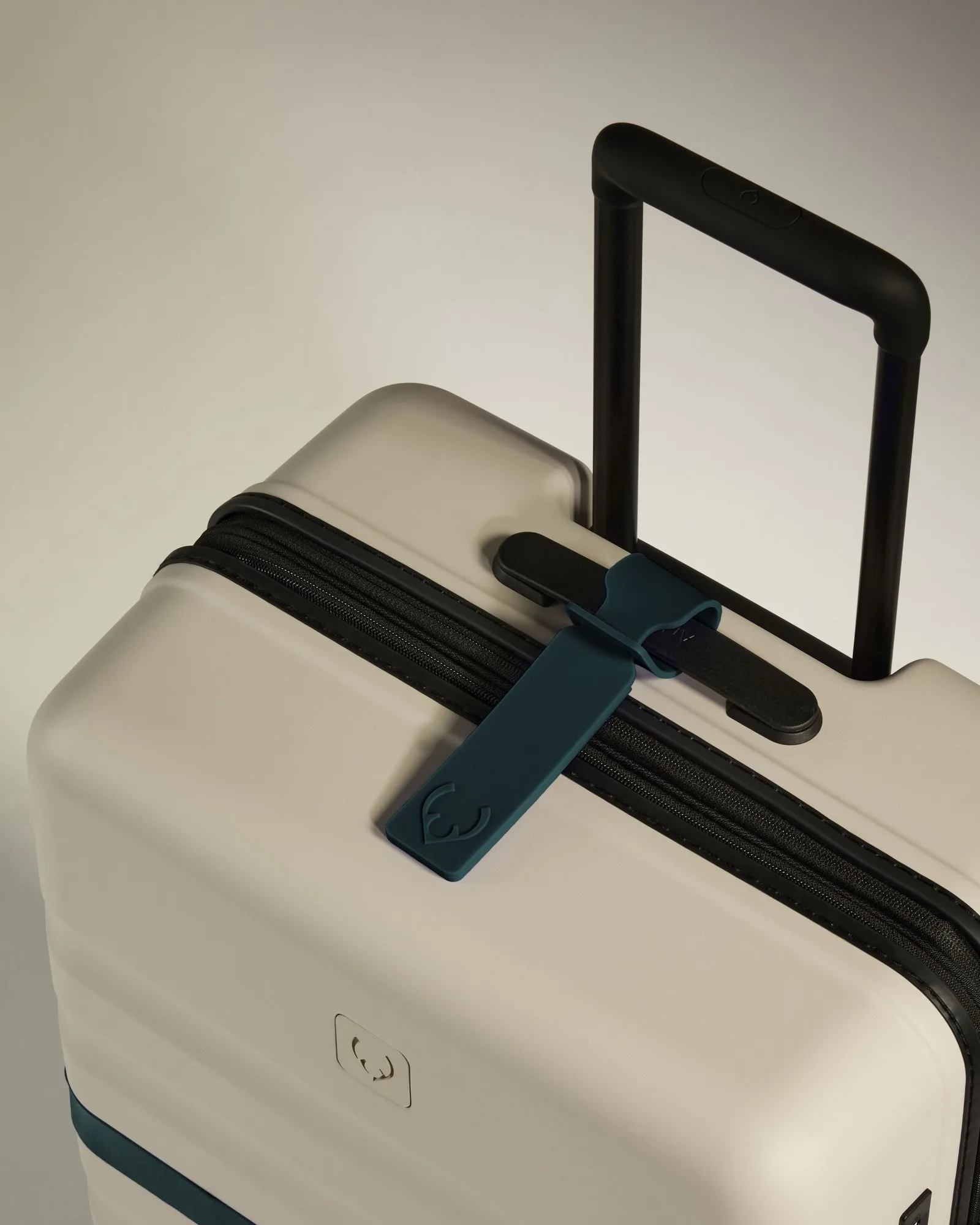
Gepäckanhänger in Indigoblau
Die meisten Panikmomente wegen verlorener Koffer entstehen am Gepäckband, nicht am Flughafen. Sie sind müde, das Band ist voll, und jeder schwarze Koffer sieht gleich aus. Ein guter Anhänger, ein Gurt oder ein Schlüsselring löst das in Sekunden – und kostet weit weniger als ein neuer Koffer.
Dieser Leitfaden behandelt, worauf es bei kleinen Reiseaccessoires wirklich ankommt: Material, Befestigung, Farbkontrast und Passform. Er erklärt auch, wo ein Anhänger hilft und wo nicht, damit Sie wenig ausgeben und das eigentliche Problem lösen können.
Was ein Gepäckanhänger tatsächlich leisten muss
Ein Anhänger hat drei Aufgaben: Ihren Koffer erkennbar machen, Ihre Kontaktdaten tragen und durch Förderbänder, Gepäckfächer und Taxi-Kofferräume sicher befestigt bleiben. Dekorative Anhänger scheitern oft an mindestens einer dieser Aufgaben. Die zuverlässigsten Designs verwenden ein flexibles, aber robustes Material, eine geschlossene Schlaufe statt eines offenen Hakens und eine Farbe, die mit der Kofferhülle kontrastiert.
Kontrast ist wichtiger als Muster. Ein dunkler Anhänger auf einer dunklen Hartschale verschwindet auf zehn Schritte, während ein heller Anhänger auf einem neutralen Koffer quer durch die Gepäckhalle sichtbar ist. Wenn Ihr Koffer bereits eine kräftige Farbe hat, wählen Sie einen Anhänger, der leicht kontrastiert, statt sich anzupassen. Das ist der ganze Sinn.
- Prüfen Sie, dass die Befestigungsschlaufe geschlossen und flexibel ist, nicht ein steifer offener Clip, der aufgebogen werden kann.
- Schreiben Sie die Kontaktdaten auf die innere Karte, nicht nur auf die äußere, falls die Außenseite abgeschabt wird.
- Hängen Sie einen Anhänger nicht an einen Reißverschlusszug, der stark belastet wird, wie etwa den Reißverschluss des Hauptfachs.
Materialien: Gummi, Leder und alles andere
Gummianhänger sind der praktische Standard für aufgegebenes Gepäck. Sie biegen sich, statt zu brechen, lassen sich abwischen und überleben das Zerquetschen zwischen Gepäckstücken. Leder sieht besser aus und altert gut, kann aber bei Regen Flecken bekommen und braucht gelegentlich Pflege. Stoffanhänger sind leicht, fransen aber mit der Zeit an den Kanten aus. Metallanhänger sind robust, aber schwerer und können eine Polycarbonat-Schale zerkratzen.
Für einen aufgegebenen Koffer sind Flexibilität und Wetterbeständigkeit am wichtigsten. Für ein Handgepäckstück, das bei dir bleibt, kannst du etwas Robustheit gegen Optik eintauschen. Der Luggage Tag in Indigo Blue ist aus starkem, langlebigem Gummi gefertigt – genau das Profil, das zu einem Koffer passt, der herumgeworfen wird.
- Gummi: beste Allround-Haltbarkeit für aufgegebenes Gepäck.
- Leder: gut für Handgepäck und Arbeitstaschen, aber nicht dauerhaftem Regen aussetzen.
- Stoff: leichteste Option, aber die Nähte um die Schlaufe prüfen.
Gurte, Schlüsselanhänger und das Identifikationssystem
Ein Anhänger allein identifiziert Ihren Koffer, sobald Sie in der Nähe sind. Ein Gurt hilft Ihnen, ihn früher zu erkennen, weil er sich um den Koffer legt und ein Farbband über die Schale zieht. Der Luggage Strap in Mustard Yellow ist verstellbar, sodass er an verschiedene Koffertiefen angepasst werden kann, und ist so gestaltet, dass er mit dem eingelegten Streifen der Icon Stripe Koffer harmoniert. Er bietet dem Koffer außerdem eine zusätzliche Schutzschicht.
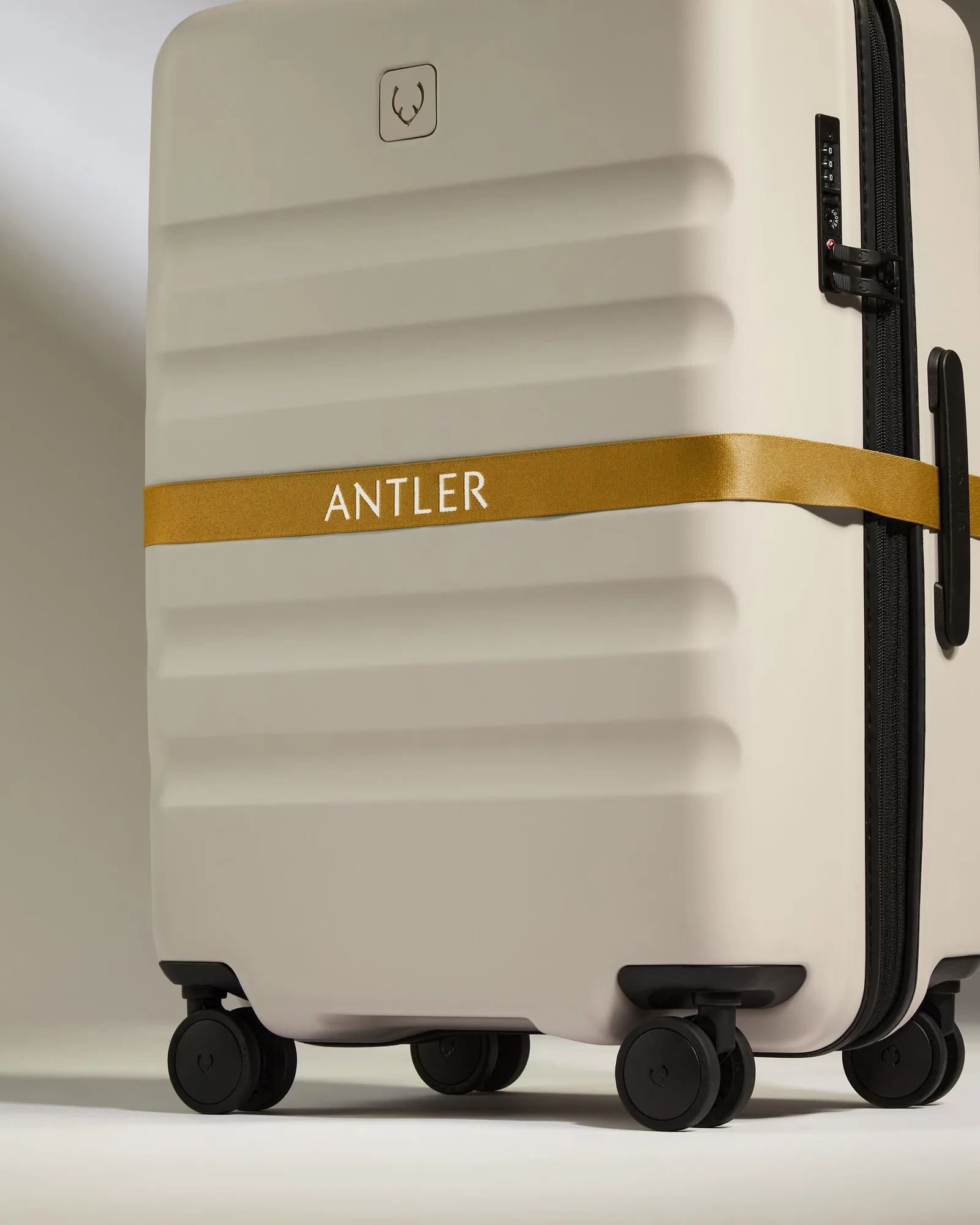
Luggage Strap in Mustard Yellow
Ein Schlüsselband für Reisen funktioniert anders. Es hält kleine wichtige Dinge in deiner Tasche zusammen, wie einen Vorhängeschloss-Schlüssel, ein SIM-Werkzeug oder einen Hotelzimmerschlüssel, sodass du am Check-in-Schalter nicht in Packwürfeln wühlen musst. Nutze ein Schlüsselband für die innere Organisation und ein Tag oder einen Gurt für die äußere Identifikation. Beide Aufgaben in einem Accessoire zu vermischen, führt meist dazu, dass keines von beiden gut funktioniert.
- Strap for external visibility, keyring for internal order, tag for contact details.
- Match the strap colour to your tag if you want a coordinated look, or contrast it if visibility is the priority.
- Keep keys on a keyring that clips inside a pocket, not dangling outside where they can catch.
Fit guidance: matching tags and straps to your suitcase
Tag loops are usually one size, but strap length is not. An adjustable strap is the safer buy because it can be shortened for a cabin case and lengthened for a large checked suitcase. If you use a hard shell with a smooth finish, check that the strap has enough grip to stay in place; smooth polycarbonate offers less friction than a soft fabric case.
For cabin bags, keep the tag small and tuck the strap ends so nothing dangles into the overhead bin mechanism. For large cases, a wider strap distributes pressure better and is easier to see on a crowded belt. If your suitcase has an inlaid stripe, a strap designed to align with it will look intentional rather than added on.
- Measure around the widest part of your closed case before buying a strap.
- On cabin bags, choose a compact tag and avoid long dangling loops.
- On large cases, a wider, adjustable strap is easier to spot and less likely to slip.
Where small accessories do not help
A tag will not stop a bag being taken by mistake if the tag carries no contact details, and it will not survive if it is attached to a weak point. It also will not compensate for a suitcase that is already falling apart. If a zip pull is loose or a handle is fraying, fix that first.
Colour alone is not a guarantee either. Two travellers can own the same bright tag. The reliable approach is contrast plus a strap plus a contact card inside. That combination gives you a visual cue from a distance and a way for someone to reach you if the bag goes astray.
- Do not rely on a tag as your only identifier; add a strap for distance visibility.
- Replace a tag as soon as the loop shows cracks or the card holder stops sealing.
- If you check a bag, put your details inside the case as well as on the tag.
Decision rules for buying tags, straps and keyrings
- If you check a bag: Choose a rubber tag with a closed loop and add an adjustable strap in a contrasting colour. Put a contact card inside the case as well. Durability and distance visibility matter more than style here.
- If you only carry on: A compact tag and a small internal keyring are enough. Skip the wide strap if it adds bulk or dangles near bin mechanisms. Keep the profile low and the essentials organised inside.
- If your suitcase is a neutral colour: Pick a tag and strap that contrast with the shell rather than match it. Taupe, black and grey cases are the hardest to spot at a distance. Contrast is the single biggest upgrade you can make.
- If you travel with a family or group: Use the same tag colour for every bag in the group, or one distinct colour per person. Consistency speeds up counting bags at the carousel. Agree the system before you fly, not at the belt.
- If you are buying as a gift: A tag in a bright colour is a safe choice because it suits almost any suitcase and does not depend on knowing the recipient's case size. Skip straps as gifts unless you know the case dimensions.
Product facts worth knowing
- Luggage Tag in Indigo Blue: Crafted from strong and durable rubber, these luggage tags are a practical way to personalise your travel goods and come in a variety of colours. Rubber flexes rather than cracks, so it survives being crushed between bags on a conveyor belt. The colour range lets you pick a tag that contrasts with your suitcase shell.
- Luggage Strap in Mustard Yellow: Adjustable design so the size can be easily changed, designed to fit seamlessly with the inlaid stripe in Icon Stripe suitcases, and provides an extra layer of protection. One strap can move between a cabin case and a large checked suitcase. The bright colour helps you identify your suitcase from further away, and the strap is designed to sit with the inlaid stripe on Icon Stripe suitcases.
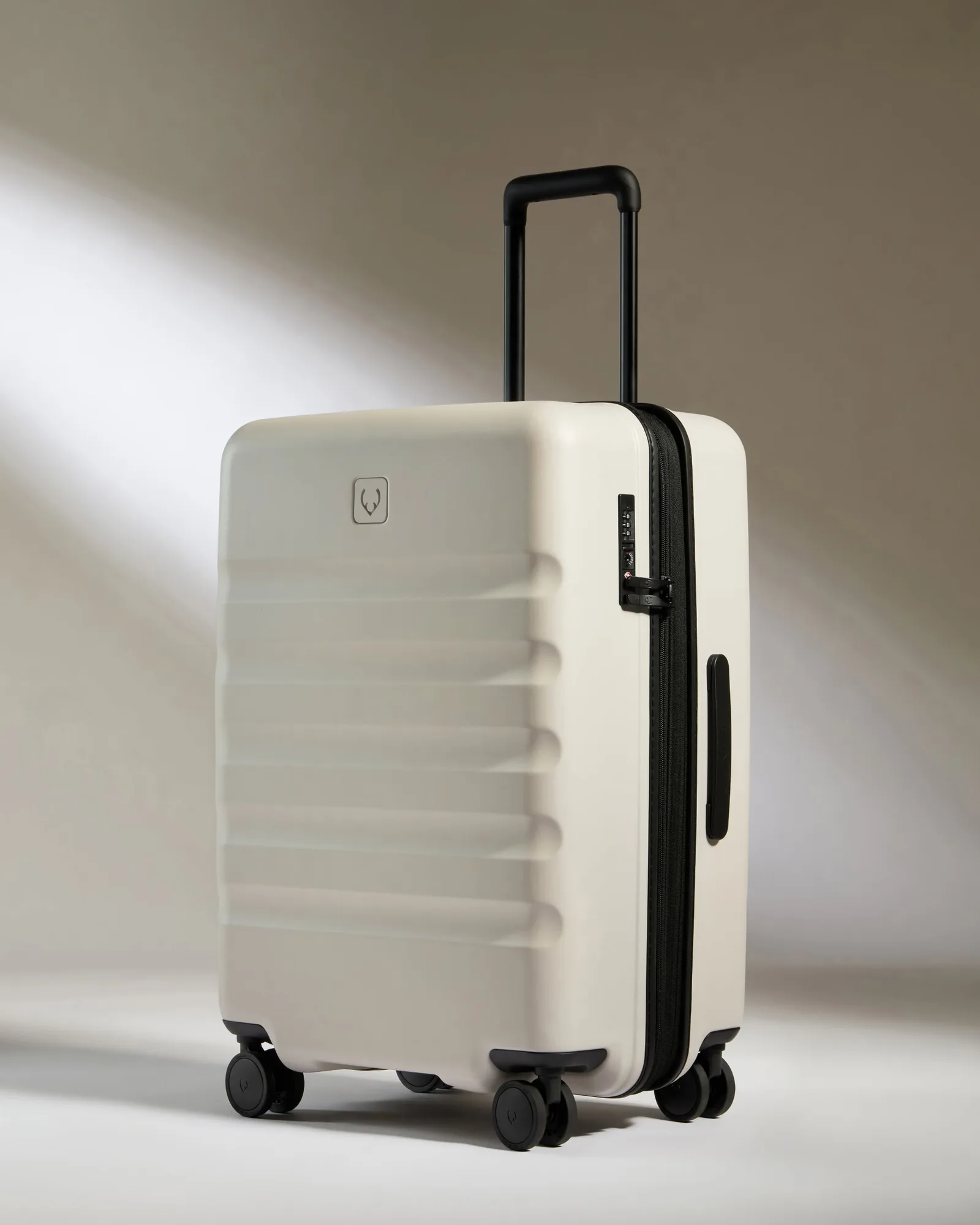
- Medium Luggage in Taupe - Icon Stripe: Made using recycled polycarbonate with a hardwearing shell, sized for trips ranging from 2-7 days. A neutral taupe shell is exactly the case that benefits from a contrasting tag and strap, because it is easy to confuse with other neutral bags on a crowded belt.
Who these accessories suit
Best for
- Travellers with a neutral or black suitcase who keep losing sight of it at the carousel
- Anyone who checks a bag and wants a low-cost way to make it easier to identify
- Frequent flyers who want a tag and strap that survive repeated handling
Not for
- Travellers looking for a tracking device, since a tag only carries written contact details
- People who never check a bag and carry everything in a personal item
- Anyone who wants a single accessory to handle identification, security and internal organisation at once
Small accessories fix a real travel problem for very little money. Pick a durable tag, add a contrasting adjustable strap if you check a bag, and keep a keyring for the small things inside. That is enough to make your suitcase easy to spot and easy to claim.