Réponse rapide
Achetez la taille que votre enfant mesure aujourd'hui, pas celle que vous espérez qu'il fera — un ensemble robe d'automne trop grand glisse des épaules, bouffe à la taille et sera refusé. Privilégiez une couche de base douce et respirante, une coupe ample au niveau de la poitrine et des hanches, et un ourlet qui dégage le genou pour qu'il fonctionne avec des leggings maintenant et des collants plus tard. Si vous hésitez entre deux tailles, prenez la plus grande uniquement si l'ensemble a des ceintures ajustables ou des poignets à revers.
L'automne est la saison la plus délicate pour habiller un enfant. Les matins sont froids, les après-midis doux, et les salles de classe oscillent entre les deux. Un ensemble robe qui ne fonctionne qu'à une seule température finit au fond du tiroir dès octobre.
Ce guide passe en revue les décisions qui comptent vraiment quand vous choisissez un ensemble automnal pour enfant : quelle coupe acheter, quels tissus méritent leur place, comment superposer sans volume, et où dépenser versus économiser. Il est écrit pour les parents qui achètent en ligne et ne peuvent pas tenir le vêtement en main — les règles reposent donc sur des mesures et des détails de construction que vous pouvez vérifier sur une page produit.
Commencez par les mesures, pas par les étiquettes d'âge
Les étiquettes d'âge sur les vêtements pour enfants sont une moyenne approximative, pas une spécification. Un enfant de 4 ans peut porter confortablement n'importe quelle taille de 3 à 5 selon sa taille et sa corpulence. Avant de comparer les tailles d'un ensemble robe, mesurez trois choses : le tour de poitrine au point le plus fort, la taille totale et la longueur épaule-genou. Notez-les et gardez-les dans les notes de votre téléphone — vous les réutiliserez pour chaque achat d'automne.
The most common fit failure in autumn dress sets is a bodice that's long enough but too narrow, or wide enough but too short. If the product page lists only one measurement, treat it as a starting point and check the return window before ordering. When a brand publishes chest and length together, trust those numbers over the age tag.
- Measure over a light t-shirt, not a thick sweater, so the numbers reflect what the set will actually layer over.
- Re-measure every 8–10 weeks during a growth spurt; autumn sizing decisions go stale fast.
- If only one size is left and it's at the edge of your measurements, decide based on the return policy, not hope.
Fabric choices that survive real autumn days
For the base layer of an autumn dress set for kids, look for cotton, cotton-blend jersey, or a soft brushed knit. These breathe during indoor play and don't trap sweat the way synthetic lining does. Corduroy and heavier woven cottons work well as the outer dress because they hold shape and block wind, but they need a smooth lining or a base layer underneath to avoid itching.
Wool blends add warmth but demand more careful washing, and some children find them prickly at the neck and wrists. If your child is sensory-sensitive, choose a smooth cotton outer with a jersey lining and add warmth through tights or leggings instead. There's no single right fabric — the trade-off is warmth and durability versus ease of care and comfort.
- Check the care label before buying: machine-washable at 30°C is a realistic baseline for autumn pieces worn several times a week.
- Avoid heavily embellished fronts on everyday sets; sequins and glued-on trim are the first things to fail.
- If the fabric composition isn't listed, ask before ordering — it's a legitimate gap, not a detail you should guess at.
Layering rules that keep the set wearable from September to November
The most useful autumn dress set is one that works across three temperatures: alone on a mild day, over a long-sleeve tee on a cool day, and under a cardigan or lightweight jacket on a cold one. That means the bodice should have a little ease — roughly a finger's width of room at the chest — so a base layer doesn't pull the seams.
Sleeve length is the detail parents overlook most. A sleeve that ends exactly at the wrist leaves no room for a long-sleeve tee underneath, and it rides up the moment your child reaches for something. Look for sleeves that finish just past the wrist bone, or a cut that's designed to be worn over another layer.
- Test the layer plan before you buy: if you can't name the two pieces you'd add underneath, the set may only work for a narrow window.
- Choose darker hems and cuffs if your child plays outdoors daily — they hide mud far better than pale trim.
- A slightly A-line skirt layers over leggings more easily than a straight cut.
Construction details worth paying for
Two features justify a higher price in kids' autumn clothing: a lined bodice and a properly finished hem. A lined bodice prevents the scratchy feel of exposed seams and helps the dress hold its shape after washing. A deep hem — around 5 cm or more — can be let down once, which effectively extends the set by a season during a growth spurt.
Adjustable waistbands, elasticated backs, and generous armholes are the other markers of a set that will still fit in six weeks. If a product page doesn't mention any of these, assume a standard straight cut and buy to your current measurements rather than sizing up.
- Check whether buttons or zips are on the back or front; back closures are harder for children to manage independently at preschool.
- Reinforced side seams matter if the set will be worn for climbing and crawling.
- If you're comparing two similar sets, the one with more fit adjustment is usually the better long-term buy.
Where a dress set fits into a play-and-toy routine
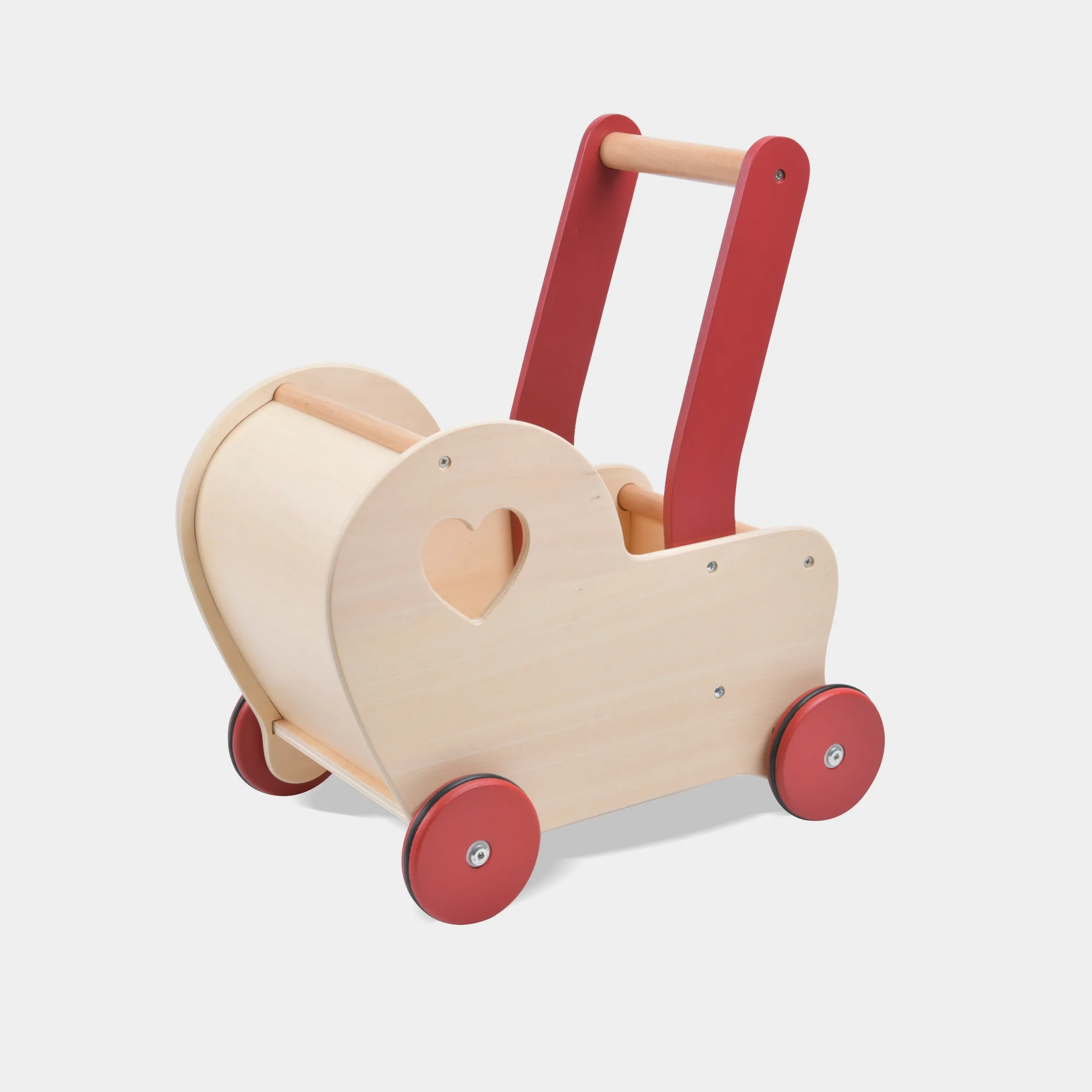
Autumn clothing gets tested by play, not by standing still. If your child spends afternoons pushing a dolls stroller around the garden or setting up small-world scenes on the floor, a dress that restricts kneeling or squatting will be abandoned within minutes. Look for a skirt that clears the knee and a bodice that doesn't ride up when arms are raised.
The same principle applies indoors. A set that's comfortable enough for floor play is more likely to stay on through the whole afternoon, which means fewer changes and less laundry. Practicality and style aren't in conflict here — the best autumn dress sets are the ones children forget they're wearing.
- Squat test: if the hem touches the floor when your child crouches, it's too long for active play.
- Choose a set with pockets if your child likes carrying small toys around.
- Keep one 'good' set aside for occasions and let the everyday set take the wear.
Decision rules for buying an autumn dress set
- If your child is between two sizes: Choose the smaller size when the set has no adjustable waist or deep hem, because an oversized bodice slips off shoulders and gets refused. Choose the larger size only when the product page confirms an adjustable waistband or a hem you can let down. Adjustability is the deciding factor, not the age label.
- If your child plays on the floor every day: Prioritize a hem that clears the knee and a bodice with a finger's width of ease at the chest. Longer, fitted silhouettes look neat but restrict kneeling and squatting, which is how most autumn play actually happens. The most common fit failure in autumn dress sets is a bodice that's long enough but too narrow, or wide enough but too short. If the product page lists only one measurement, treat it as a starting point and check the return window before ordering. When a brand publishes chest and length together, trust those numbers over the age tag.
- Measure over a light t-shirt, not a thick sweater, so the numbers reflect what the set will actually layer over. Re-measure every 8–10 weeks during a growth spurt; autumn sizing decisions go stale fast. If only one size is left and it's at the edge of your measurements, decide based on the return policy, not hope.
- Fabric choices that survive real autumn days For the base layer of an autumn dress set for kids, look for cotton, cotton-blend jersey, or a soft brushed knit. These breathe during indoor play and don't trap sweat the way synthetic lining does. Corduroy and heavier woven cottons work well as the outer dress because they hold shape and block wind, but they need a smooth lining or a base layer underneath to avoid itching. Wool blends add warmth but demand more careful washing, and some children find them prickly at the neck and wrists. If your child is sensory-sensitive, choose a smooth cotton outer with a jersey lining and add warmth through tights or leggings instead. There's no single right fabric — the trade-off is warmth and durability versus ease of care and comfort.
- Check the care label before buying: machine-washable at 30°C is a realistic baseline for autumn pieces worn several times a week. Avoid heavily embellished fronts on everyday sets; sequins and glued-on trim are the first things to fail. If the fabric composition isn't listed, ask before ordering — it's a legitimate gap, not a detail you should guess at.
Layering rules that keep the set wearable from September to November
- The most useful autumn dress set is one that works across three temperatures: alone on a mild day, over a long-sleeve tee on a cool day, and under a cardigan or lightweight jacket on a cold one. That means the bodice should have a little ease — roughly a finger's width of room at the chest — so a base layer doesn't pull the seams.: Sleeve length is the detail parents overlook most. A sleeve that ends exactly at the wrist leaves no room for a long-sleeve tee underneath, and it rides up the moment your child reaches for something. Look for sleeves that finish just past the wrist bone, or a cut that's designed to be worn over another layer.
- Test the layer plan before you buy: if you can't name the two pieces you'd add underneath, the set may only work for a narrow window.: Choose darker hems and cuffs if your child plays outdoors daily — they hide mud far better than pale trim.
- A slightly A-line skirt layers over leggings more easily than a straight cut.: Construction details worth paying for
- Two features justify a higher price in kids' autumn clothing: a lined bodice and a properly finished hem. A lined bodice prevents the scratchy feel of exposed seams and helps the dress hold its shape after washing. A deep hem — around 5 cm or more — can be let down once, which effectively extends the set by a season during a growth spurt.: Adjustable waistbands, elasticated backs, and generous armholes are the other markers of a set that will still fit in six weeks. If a product page doesn't mention any of these, assume a standard straight cut and buy to your current measurements rather than sizing up.
Check whether buttons or zips are on the back or front; back closures are harder for children to manage independently at preschool.
Reinforced side seams matter if the set will be worn for climbing and crawling.
- If you're comparing two similar sets, the one with more fit adjustment is usually the better long-term buy.
- Where a dress set fits into a play-and-toy routine
- Autumn clothing gets tested by play, not by standing still. If your child spends afternoons pushing a dolls stroller around the garden or setting up small-world scenes on the floor, a dress that restricts kneeling or squatting will be abandoned within minutes. Look for a skirt that clears the knee and a bodice that doesn't ride up when arms are raised.
The same principle applies indoors. A set that's comfortable enough for floor play is more likely to stay on through the whole afternoon, which means fewer changes and less laundry. Practicality and style aren't in conflict here — the best autumn dress sets are the ones children forget they're wearing.
- Squat test: if the hem touches the floor when your child crouches, it's too long for active play.
- Choose a set with pockets if your child likes carrying small toys around.
- Keep one 'good' set aside for occasions and let the everyday set take the wear.
Decision rules for buying an autumn dress set