Risposta rapida
Una statuetta di vitello Holstein che non sta in piedi dritta ha quasi sempre una di tre cause: una zampa piegata, una base non perfettamente piana o una superficie di appoggio non livellata. Controlla prima la superficie, poi le zampe, poi la base. La maggior parte delle statuette di vitello inclinate può essere corretta con una leggera rimodellazione o un piccolo spessore, ma una zampa incrinata o spezzata va lasciata stare.
Una statuetta di vitello che si inclina in avanti, pende da un lato o traballa al tocco è frustrante, soprattutto quando il resto del modello sembra perfetto. La buona notizia è che la causa è di solito meccanica, non un difetto di fabbricazione, e spesso puoi sistemarla in pochi minuti senza toccare la vernice.
Questa guida spiega la diagnosi passo dopo passo: come si presenta l'inclinazione, cosa l'ha probabilmente causata, cosa fare e quando fermarsi e accettare la figura così com'è. Vale per qualsiasi figura animale in piedi, ma il vitello Holstein è un esempio utile perché le sue quattro zampe sottili e la posizione stretta lo rendono più sensibile a piccoli cambiamenti rispetto a un modello dal corpo largo.
Inizia dalla superficie, non dalla figura
Prima di dare la colpa al modello, posizionalo su una superficie nota per essere piana, come un tavolo di vetro, un piano in pietra o un righello di metallo. Molti ripiani e scrivanie in legno presentano una leggera curvatura o una venatura rialzata che una figura a quattro zampe nota subito. Se il vitello sta dritto sulla superficie piana ma si inclina sullo scaffale, il problema è lo scaffale, non la statuetta.
Se la figura continua a inclinarsi su una superficie piana, osserva quale zampa sostiene il peso. Un problema di stabilità in una statuetta di vitello di solito si manifesta con uno zoccolo che resta leggermente sospeso sopra la superficie mentre lo zoccolo opposto preme con forza. Questo indica che le zampe non sono sullo stesso piano, quindi il problema è nella zampa o nella base, non nella superficie.
- Prima di qualsiasi regolazione, fai la prova su vetro o pietra.
- Segna lo zoccolo sospeso con un pezzetto di nastro rimovibile per monitorare i cambiamenti.
- Controlla il ripiano con una livella a bolla se prevedi di esporre più figure insieme.
Controlla se le zampe sono piegate o divaricate
Le zampe traballanti sono un problema comune nelle figure in piedi, perché le zampe sono sottili e il materiale ha una certa flessibilità. Una zampa può piegarsi leggermente durante la spedizione, durante il gioco o per il peso della figura riposta in magazzino. Tieni il vitello per il corpo, non per le zampe, e guarda la fila di zoccoli dal davanti e dal lato. Se una zampa forma un angolo verso l'esterno o verso l'interno rispetto alle altre, quella è la causa.
Gentle correction works on slightly bent legs. Warm the leg briefly with a hair dryer on low, no closer than about six inches, then hold it in the correct position for a few seconds while it cools. Do not force it. If the leg does not move with light pressure, stop. Forcing a stiff leg is how paint cracks and hooves snap off.
- Warm, reshape, hold, cool. Never bend cold material hard.
- Support the body with your other hand so the leg is not carrying the figure's weight while you work.
- If the leg springs back immediately, the bend is set and repeated attempts will only stress the paint.
Look at the base and hooves
Some standing figures have a small molded base or slightly flattened hooves that act as contact points. If one hoof is not flat, or if a base plate is warped, the figure will rock no matter how straight the legs are. Set the calf on the flat test surface and press down lightly on each corner in turn. A figure that clicks or rocks has a base contact problem, not a leg problem.
For a minor base issue, a small shim under the short hoof can solve it. Use a thin piece of felt, cork, or museum putty, trimmed so it is barely visible. This is the same idea as animal figure base tips for display: you are not repairing the model, you are compensating for a small gap. Keep the shim under the hoof, not under the body, so the stance stays natural.
- Museum putty is removable and will not mark most painted surfaces.
- Trim the shim smaller than the hoof so it does not show from the front.
- If the base itself is cracked, do not shim it. Stabilize the figure and stop.
When to stop and choose another option
Stop if the leg is cracked, if the paint is lifting around the joint, or if the figure has already snapped and been glued once. Further bending will make the damage worse, and a repaired leg rarely holds a natural stance. At that point, the honest choice is to display the calf lying down, place it in a diorama where the lean is hidden, or replace it with a model whose stance suits your shelf.
If you want a standing farm animal that is less fussy about surfaces, a wider-stance figure is a better fit than a thin-legged calf. The Jersey Calf laying down is a practical alternative because its lying pose removes the standing stability problem entirely, and it still reads clearly as a calf in a farm scene.
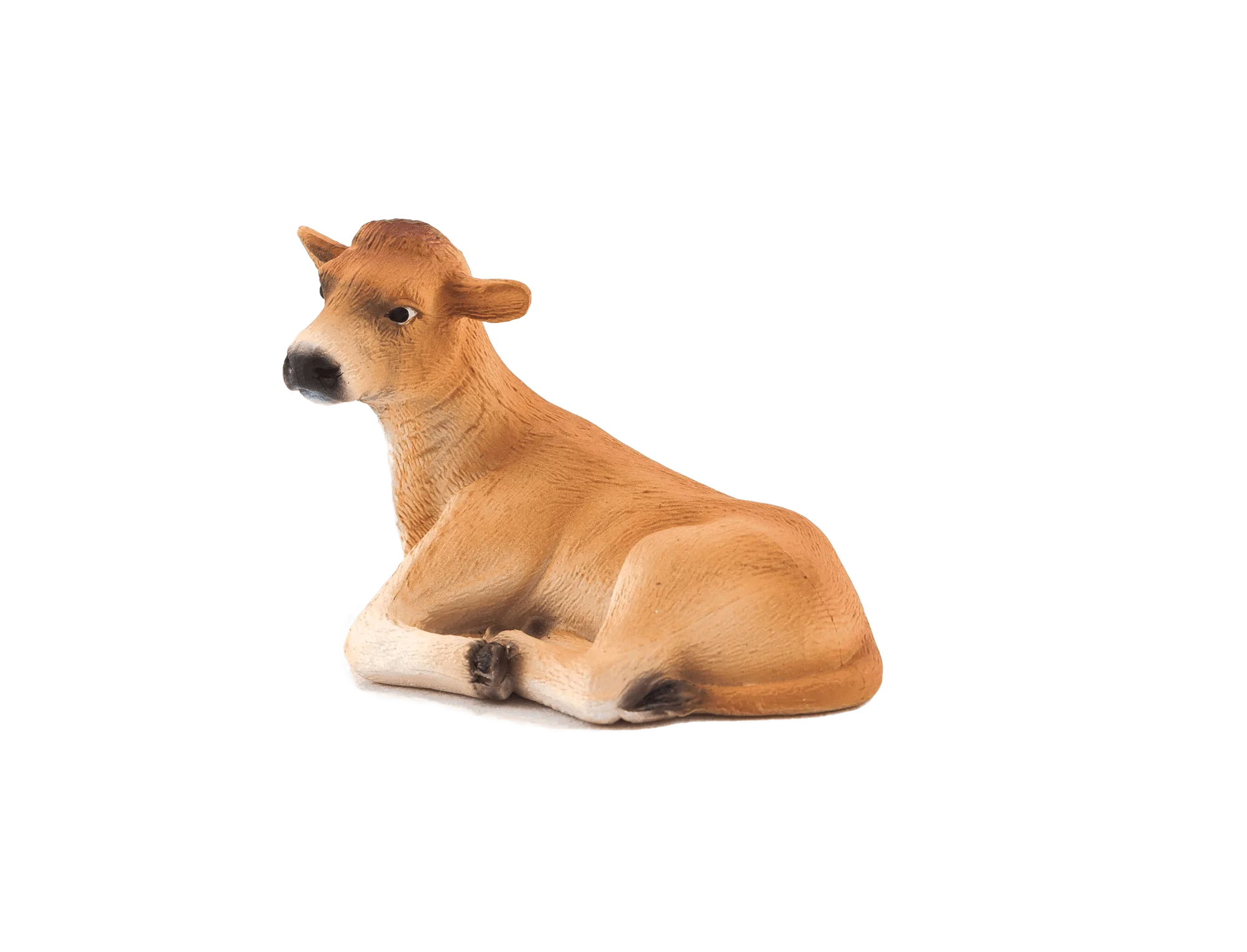
Jersey Calf laying down
- Cracked or previously glued legs: stop, do not bend.
- Heavy lean that returns after reshaping: display it in a scene instead of forcing it.
- Repeated wobble on every surface: choose a different pose or a wider-stance model.
Diagnosis: match the symptom to the fix
- Rocks or clicks on a flat surface: One hoof or base contact point is shorter than the others. Test each corner with light finger pressure to find the short point. Add a thin felt or museum-putty shim under the short hoof. If the rocking continues, the base is warped and you should stop.
- Leans to one side but does not rock: A leg is bent out of plane, usually from shipping or storage. Sight down the hooves from the front to confirm which leg is off. Warm the leg gently, reshape, and hold until cool. If it springs back, stop and display the figure in a scene.
- Stands on one surface but not another: The figure is fine; the shelf is not level. This is the most common false alarm with thin-legged calf figurines. Move the figure to a flat surface or level the shelf. No repair needed.
- Leg is cracked, snapped, or previously glued: The material has already failed at the joint. Bending it further will lift paint and widen the break. Stop. Display the figure lying down or in a diorama, or replace it with a wider-stance or lying model.
Models that help you compare stance and stability
- Jersey Calf laying down: The Jersey is named for its place of origin, Britain's Isle of Jersey in the English Channel, and has been a purebred animal for at least six centuries. A lying calf pose sidesteps the standing-stability problem completely, which makes it a sensible choice if your shelf is uneven or you want a farm scene without wobble.
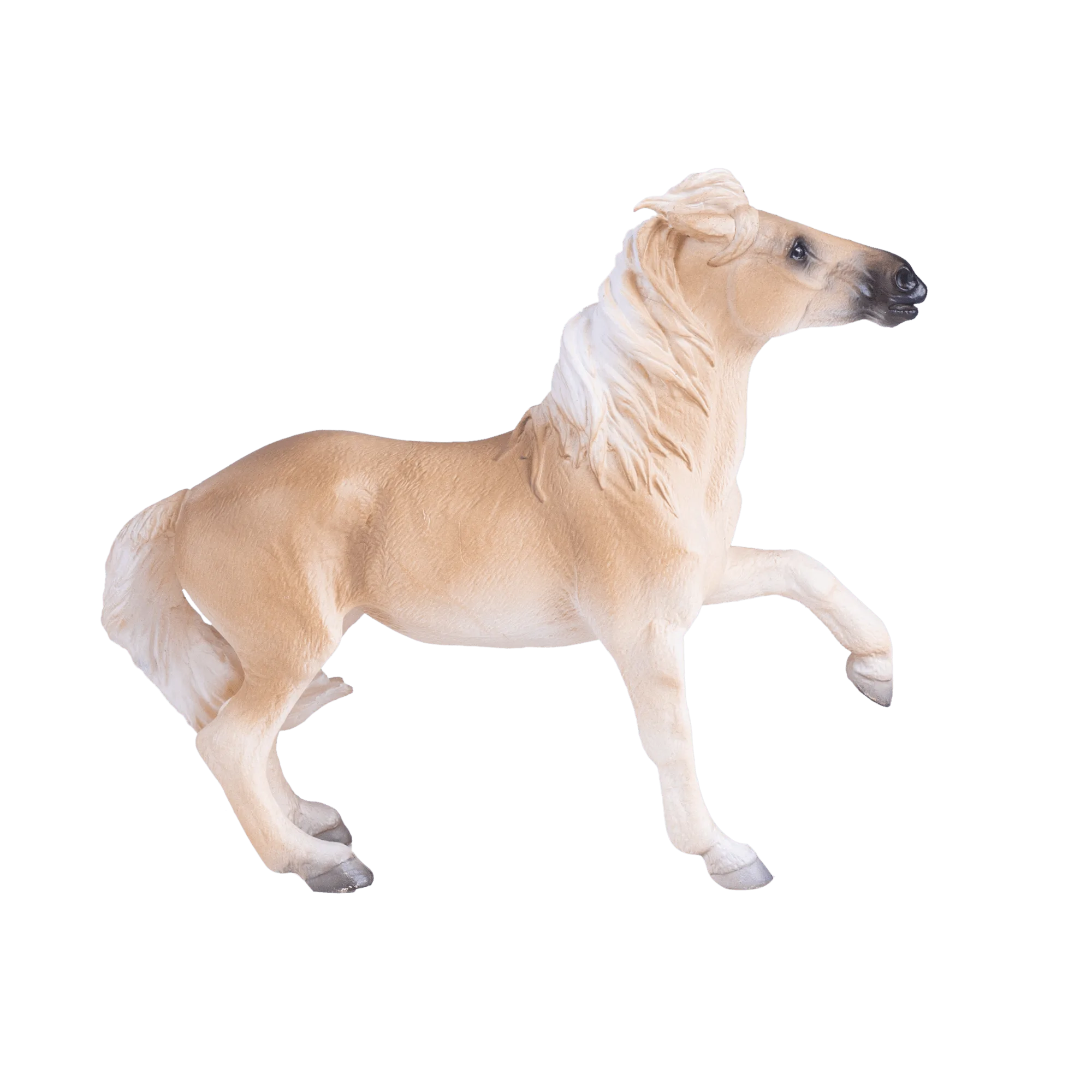
- Brumby Mare: The Brumby Mare figure is described as realistic and ready for imaginative wild rides, with a look meant to match the real animal. A larger, heavier figure like this gives you a useful size comparison: bigger models often sit more stably than small thin-legged calves, so it can help you judge whether a standing pose will work on your display surface.
Most leaning calf figurines are fixed by testing the surface, checking the legs, and shimming a single hoof. Work gently, stop at the first sign of cracking, and if the model keeps fighting you, a lying pose or a wider-stance figure will save you the trouble.