Quick answer
A Holstein calf figure that will not stand up straight almost always has one of three causes: a leg that has bent out of shape, a base that is not sitting flat, or a display surface that is not level. Check the surface first, then the legs, then the base. Most leaning calf figurines can be corrected with gentle reshaping or a small shim, but a cracked or snapped leg should be left alone.
A calf figurine that tips forward, leans to one side, or rocks when you touch it is frustrating, especially when the rest of the model looks perfect. The good news is that the cause is usually mechanical rather than a manufacturing defect, and you can often fix it in a few minutes without touching the paint.
This guide walks through the diagnosis step by step: what the lean looks like, what probably caused it, what to do, and when to stop and accept the figure as-is. It applies to any standing animal figure, but the Holstein calf is a useful example because its four thin legs and narrow stance make it more sensitive to small changes than a wide-bodied model.
Start with the surface, not the figure
Before you blame the model, put it on a known-flat surface such as a glass table, a stone countertop, or a metal ruler. Many shelves and wooden desks have a slight bow or a raised grain line that a four-legged figure will find immediately. If the calf stands correctly on the flat surface but leans on the shelf, the problem is the shelf, not the figurine.
If the figure still leans on a flat surface, look at which leg is carrying the weight. A calf figurine stability issue usually shows up as one hoof hovering just above the surface while the opposite hoof presses down hard. That tells you the legs are not sitting in the same plane, which is a leg or base problem rather than a surface problem.
- Test on glass or stone before making any adjustments.
- Mark the hovering hoof with a small piece of removable tape so you can track changes.
- Check the shelf with a spirit level if you plan to display several figures together.
Check for bent or splayed legs
Animal figure wobbly legs are common on standing models because the legs are thin and the material has some flexibility. A leg can bend slightly during shipping, during play, or from the weight of the figure sitting in storage. Hold the calf at the body, not the legs, and sight down the row of hooves from the front and from the side. If one leg angles outward or inward compared with the others, that is your culprit.
Gentle correction works on slightly bent legs. Warm the leg briefly with a hair dryer on low, no closer than about six inches, then hold it in the correct position for a few seconds while it cools. Do not force it. If the leg does not move with light pressure, stop. Forcing a stiff leg is how paint cracks and hooves snap off.
- Warm, reshape, hold, cool. Never bend cold material hard.
- Support the body with your other hand so the leg is not carrying the figure's weight while you work.
- If the leg springs back immediately, the bend is set and repeated attempts will only stress the paint.
Look at the base and hooves
Some standing figures have a small molded base or slightly flattened hooves that act as contact points. If one hoof is not flat, or if a base plate is warped, the figure will rock no matter how straight the legs are. Set the calf on the flat test surface and press down lightly on each corner in turn. A figure that clicks or rocks has a base contact problem, not a leg problem.
For a minor base issue, a small shim under the short hoof can solve it. Use a thin piece of felt, cork, or museum putty, trimmed so it is barely visible. This is the same idea as animal figure base tips for display: you are not repairing the model, you are compensating for a small gap. Keep the shim under the hoof, not under the body, so the stance stays natural.
- Museum putty is removable and will not mark most painted surfaces.
- Trim the shim smaller than the hoof so it does not show from the front.
- If the base itself is cracked, do not shim it. Stabilize the figure and stop.
When to stop and choose another option
Stop if the leg is cracked, if the paint is lifting around the joint, or if the figure has already snapped and been glued once. Further bending will make the damage worse, and a repaired leg rarely holds a natural stance. At that point, the honest choice is to display the calf lying down, place it in a diorama where the lean is hidden, or replace it with a model whose stance suits your shelf.
If you want a standing farm animal that is less fussy about surfaces, a wider-stance figure is a better fit than a thin-legged calf. The Jersey Calf laying down is a practical alternative because its lying pose removes the standing stability problem entirely, and it still reads clearly as a calf in a farm scene.
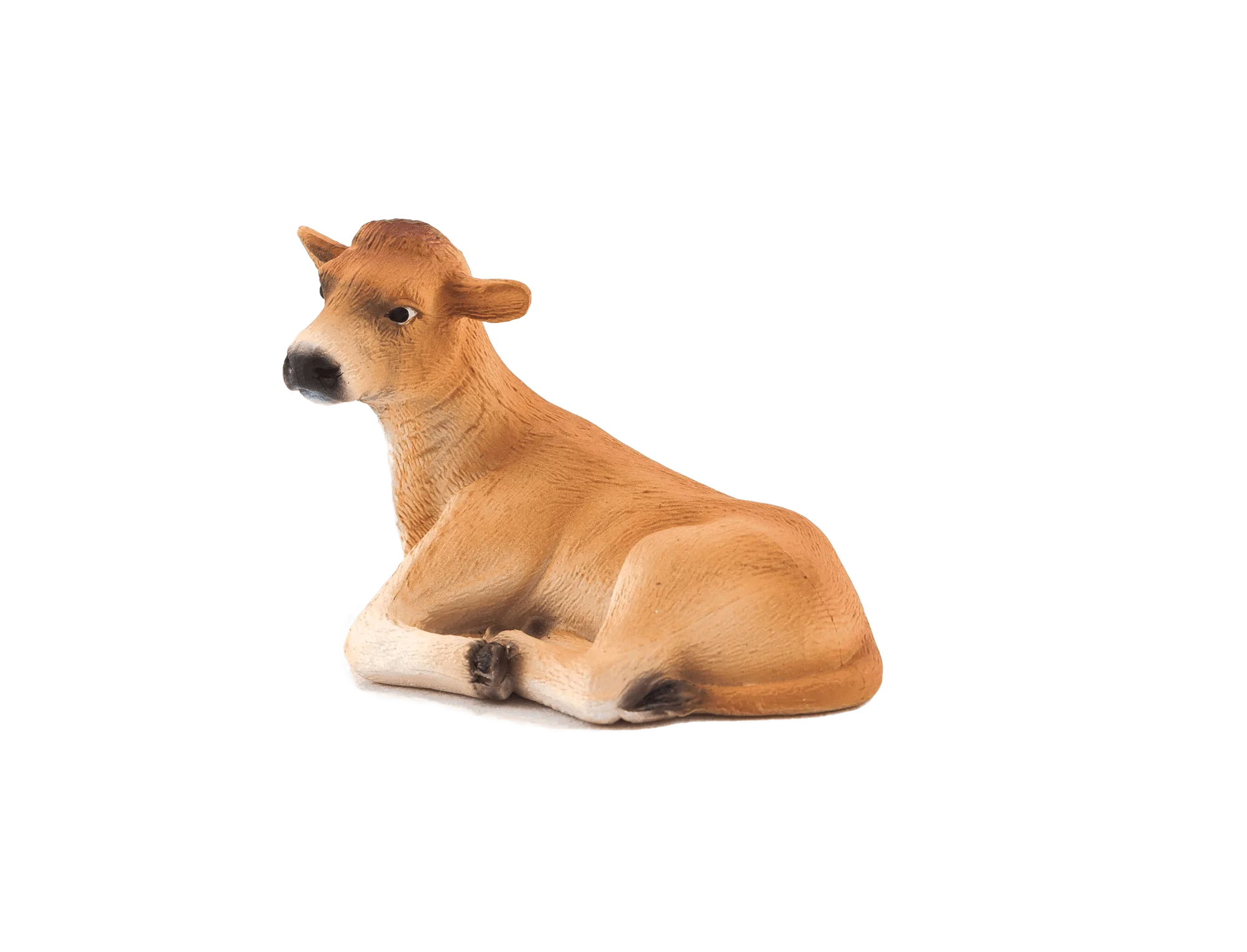
Jersey Calf laying down
- Cracked or previously glued legs: stop, do not bend.
- Heavy lean that returns after reshaping: display it in a scene instead of forcing it.
- Repeated wobble on every surface: choose a different pose or a wider-stance model.
Diagnosis: match the symptom to the fix
- Rocks or clicks on a flat surface: One hoof or base contact point is shorter than the others. Test each corner with light finger pressure to find the short point. Add a thin felt or museum-putty shim under the short hoof. If the rocking continues, the base is warped and you should stop.
- Leans to one side but does not rock: A leg is bent out of plane, usually from shipping or storage. Sight down the hooves from the front to confirm which leg is off. Warm the leg gently, reshape, and hold until cool. If it springs back, stop and display the figure in a scene.
- Stands on one surface but not another: The figure is fine; the shelf is not level. This is the most common false alarm with thin-legged calf figurines. Move the figure to a flat surface or level the shelf. No repair needed.
- Leg is cracked, snapped, or previously glued: The material has already failed at the joint. Bending it further will lift paint and widen the break. Stop. Display the figure lying down or in a diorama, or replace it with a wider-stance or lying model.
Models that help you compare stance and stability
- Jersey Calf laying down: The Jersey is named for its place of origin, Britain's Isle of Jersey in the English Channel, and has been a purebred animal for at least six centuries. A lying calf pose sidesteps the standing-stability problem completely, which makes it a sensible choice if your shelf is uneven or you want a farm scene without wobble.
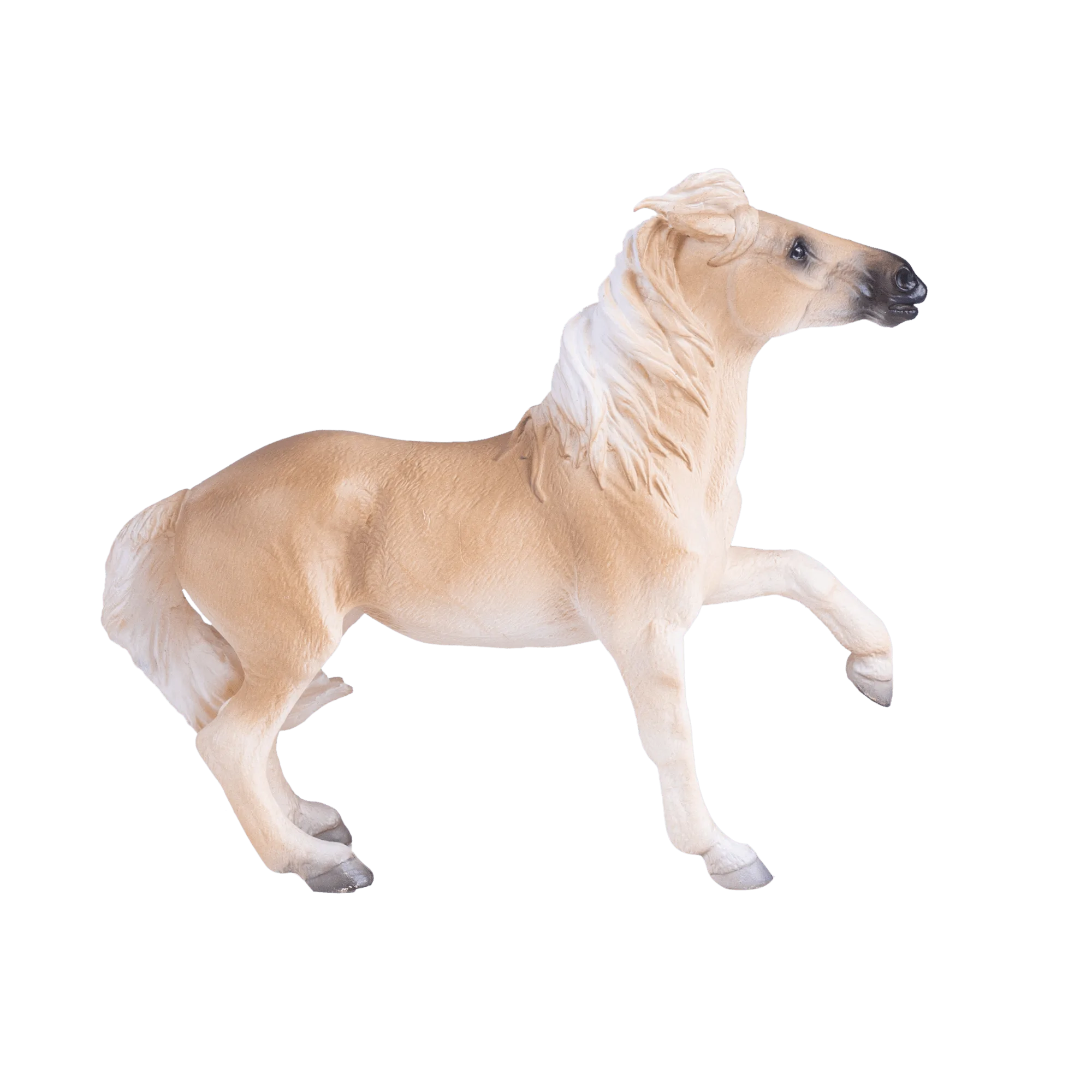
- Brumby Mare: The Brumby Mare figure is described as realistic and ready for imaginative wild rides, with a look meant to match the real animal. A larger, heavier figure like this gives you a useful size comparison: bigger models often sit more stably than small thin-legged calves, so it can help you judge whether a standing pose will work on your display surface.
Most leaning calf figurines are fixed by testing the surface, checking the legs, and shimming a single hoof. Work gently, stop at the first sign of cracking, and if the model keeps fighting you, a lying pose or a wider-stance figure will save you the trouble.