Snel antwoord
Begin met het vervangen van transparante 15-denier panty's door ondoorzichtige 50-denier panty's, en stap daarna over op warmere ondergoedstoffen zoals katoen en modal. Voeg één warmere lingerielaag toe, zoals een katoenen beha zonder beugel, en houd overgangsstukken binnen handbereik voor wisselvallig weer. Deze geleidelijke seizoenswissel van ondergoed houdt je comfortabel zonder dat je meteen je hele lade hoeft te vervangen.
De overgang van zomer naar herfst is zelden een duidelijke breuk. De ene week grijp je naar sheer mi-bas, de volgende wil je ondoorzichtige bedekking en een beha die minder flinterdun aanvoelt tegen koelere lucht. Wie de overgang overhaast, zweet zich in september of bibbert in oktober.
De slimmere aanpak is een gefaseerde seizoenswissel van ondergoed. Je schuift de lichtste stukken naar achter in de lade, brengt warmere lingerielagen naar voren en laat overgangskousen het zware werk doen terwijl de temperaturen schommelen. Deze gids doorloopt dat proces stap voor stap, met echte DIM-producten als voorbeeld, zodat je ziet hoe elke keuze past.
Waarom een geleidelijke overstap beter is dan een volledige garderobewissel
Het herfstweer slingert flink. Een ochtend die vraagt om 50-denier panty's kan overgaan in een warme middag waarop je ze betreurt. Als je alles in één keer wisselt, verlies je de flexibiliteit om je te kleden naar de dag van vandaag. Door een kleine overgangszone in je lade te houden — mid-weight hosiery, ademende katoenen bh's en lichte modalondergoed — kun je je aanpassen zonder door je opbergruimte te graven.
Think of it as two drawers instead of one. The front drawer holds what you will actually wear this month: transitional tights, cotton-rich bras, and modal boxers or briefs. The back drawer holds the purely summer pieces you are not ready to retire and the deep-winter pieces you do not need yet. Rotate items forward as the temperature drops.
- Checkpoint: if you are still wearing 15-denier tights by mid-autumn, you probably have not moved your warmer pieces forward yet.
Step 1: Move sheer hosiery back and bring opaque tights forward
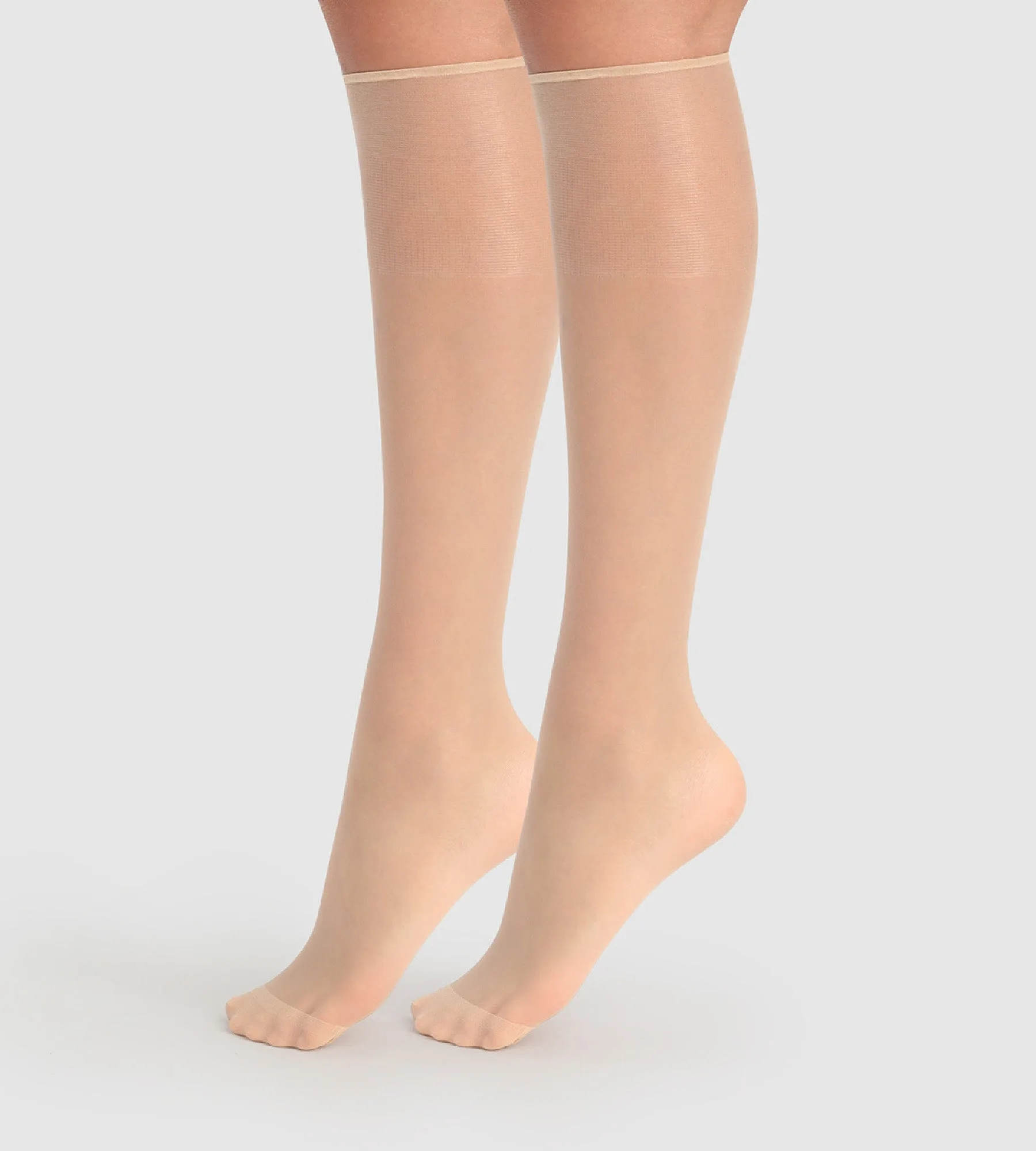
Sheer 15-denier styles like the Lot de 2 mi-bas capri Sublim Voile Brillant 15D are summer staples because they give a transparent, shiny finish with wide, non-compressing edges. As soon as mornings feel cool, those belong in the back drawer. In their place, bring forward an opaque option such as the Collant côte plate chocolat 50D DIM x Ines de La Fressange, which uses a soft, stretchy microfibre and a comfortable waistband that holds without squeezing.
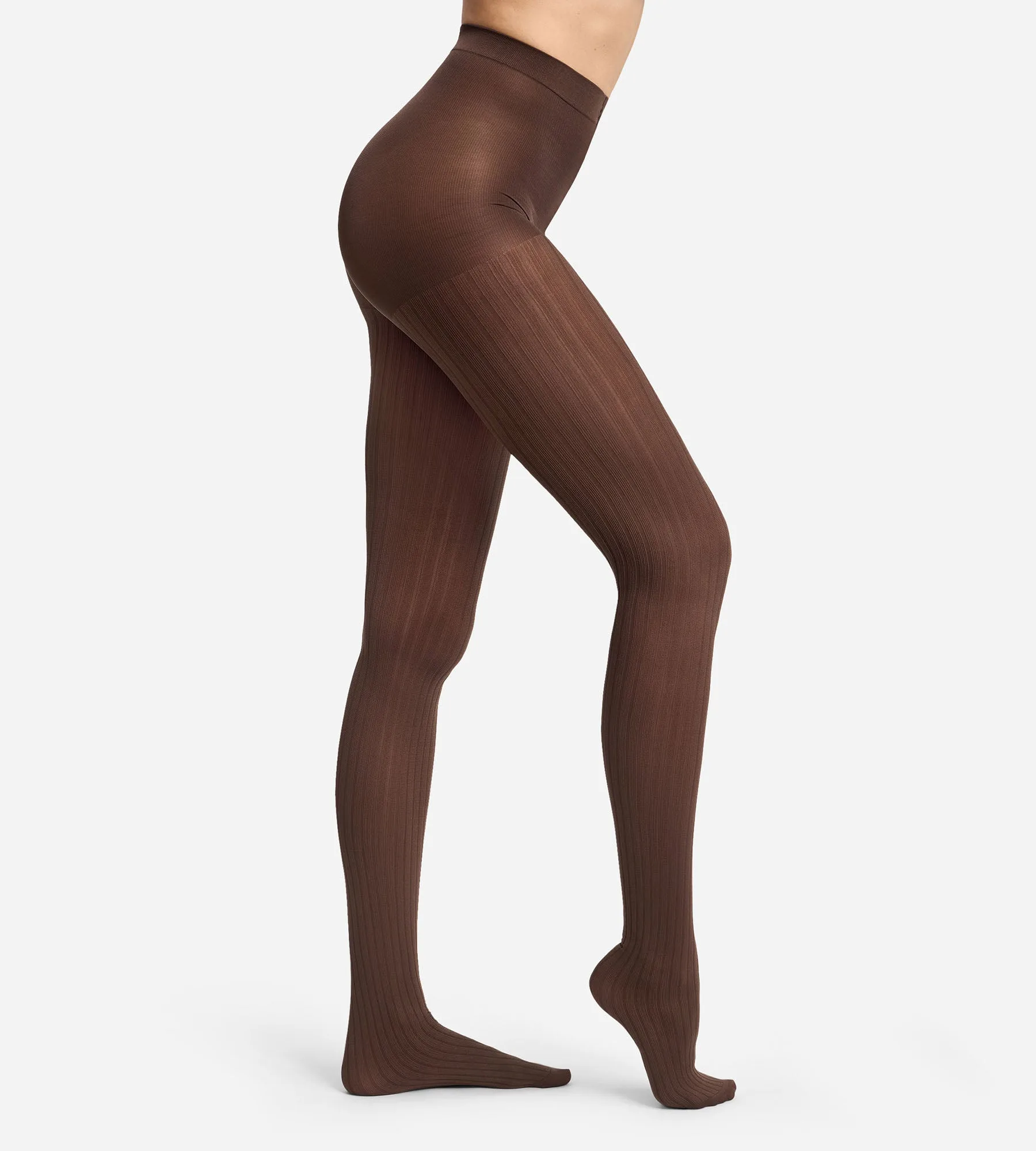
Collant côte plate chocolat 50D DIM x Ines de La Fressange
The 50-denier voile is matte and opaque, so it reads as autumn rather than summer. The discreet ribbed pattern also lengthens the leg, which matters when you start wearing heavier skirts and boots. Keep one pair of sheer tights accessible for warm afternoons, but make the opaque pair your default.
- Common mistake: switching to the heaviest opaque tights immediately. A 50-denier pair is usually enough for early autumn; save thicker styles for later.
Step 2: Choose underwear fabrics that handle cooler, drier air
Summer underwear tends to be ultra-light and moisture-wicking. In autumn, skin gets drier and indoor heating starts, so fabrics that feel soft rather than slick become more comfortable. Cotton and modal blends are the practical middle ground: breathable enough for warm rooms, but with a softer, less clingy handfeel than pure synthetics.
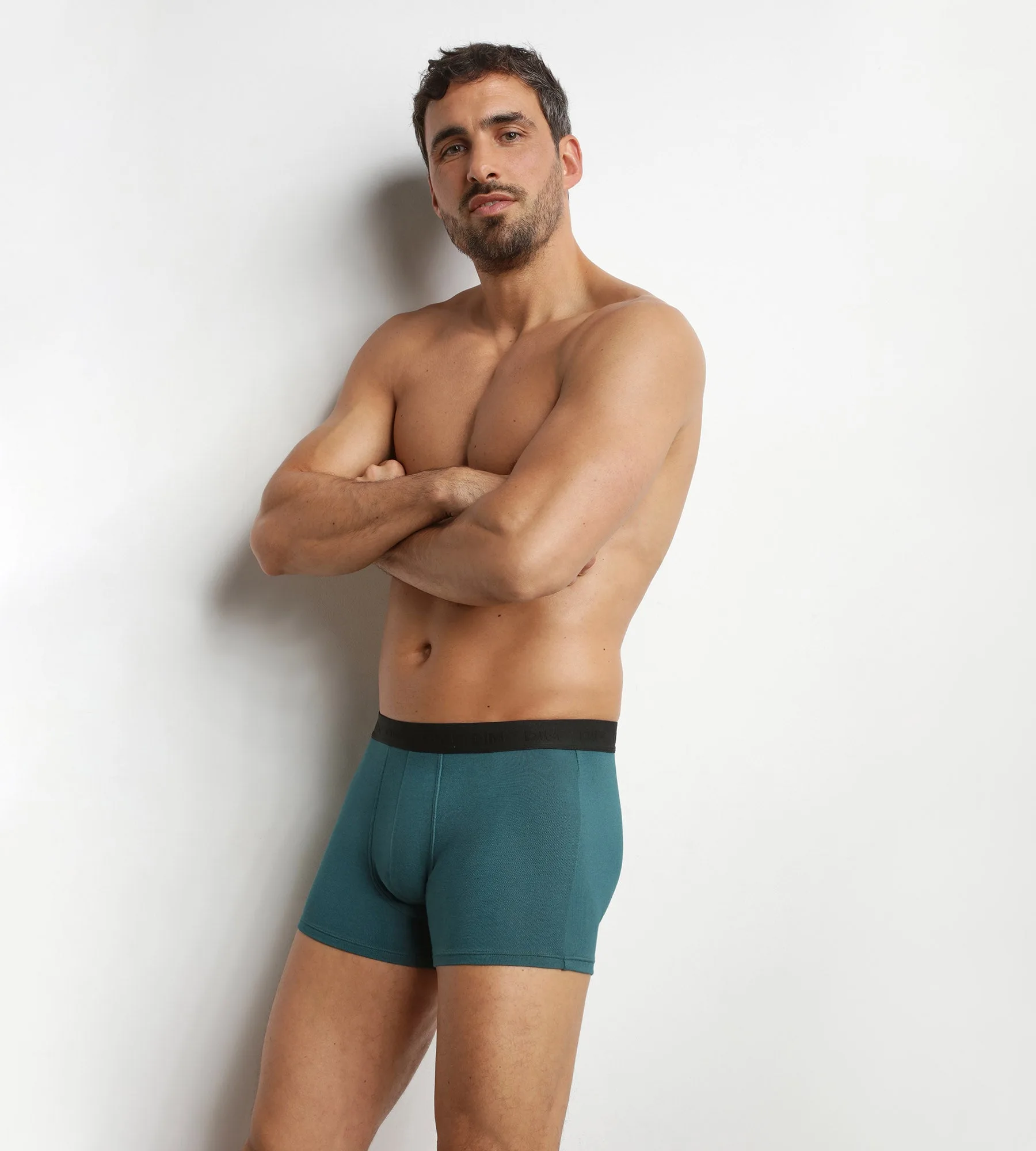
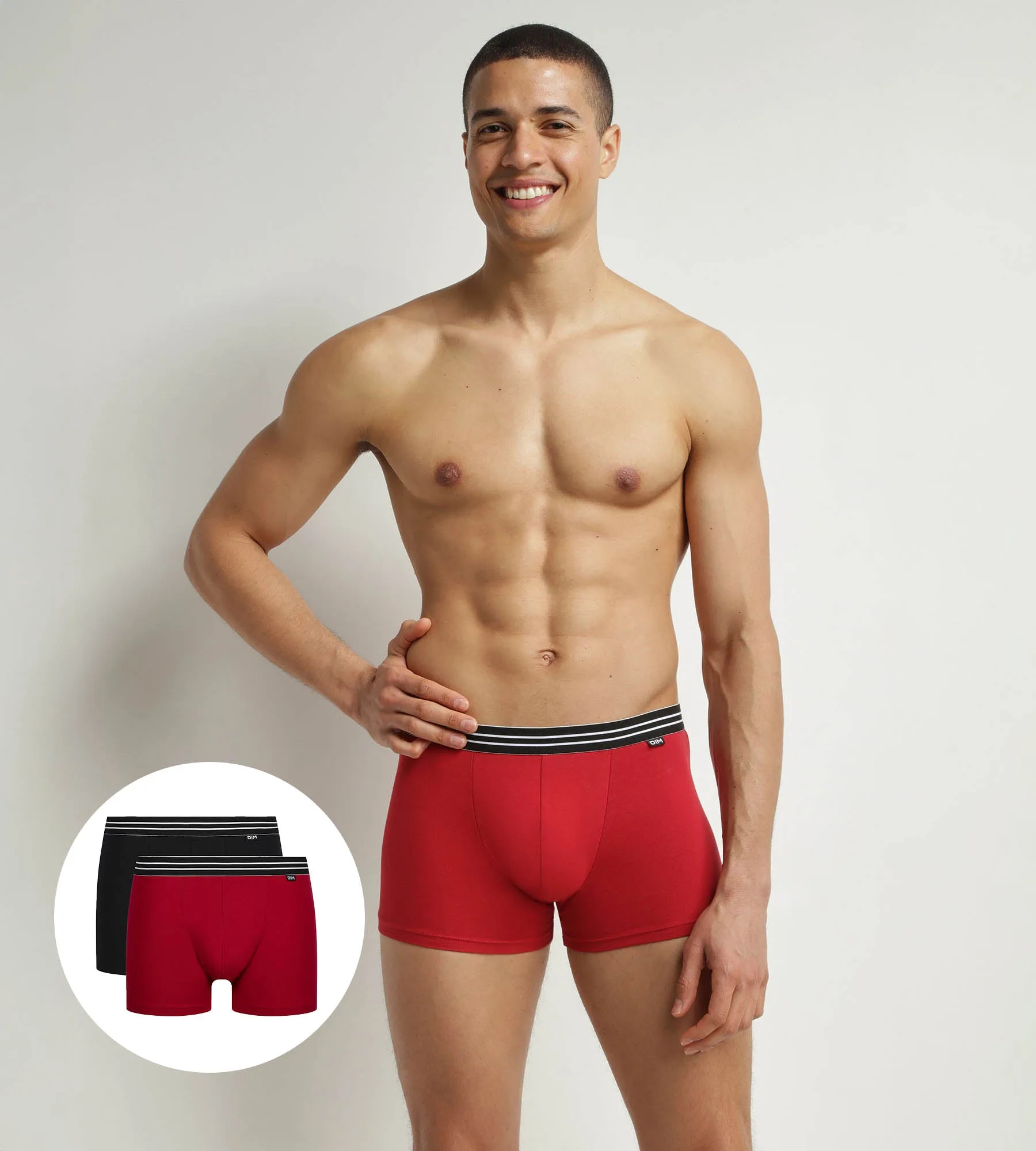
For men, the Boxer homme en coton modal piqué Bleu Méditerranée Dim Smart uses a lightly textured piqué modal knit and a body-hugging shape designed to sit without folds or discomfort, plus a front lining for all-day support. The Lot de 2 boxers homme en coton stretch Rouge Carmin Noir EcoDim offers a stretch cotton option with a reinforced front zone and a simple elastic waistband, which is a good everyday choice when you want more coverage than summer trunks.
- Checkpoint: if your underwear feels clammy under trousers by mid-morning, the fabric is too light for the season.
Step 3: Add one warmer lingerie layer, not three
The easiest autumn mistake is over-layering. You do not need a padded bra plus a camisole plus a heavy slip. Instead, add one layer that genuinely changes how warm you feel. A wireless cotton bra is a smart choice because it covers more skin than a lace bralette while staying breathable indoors.
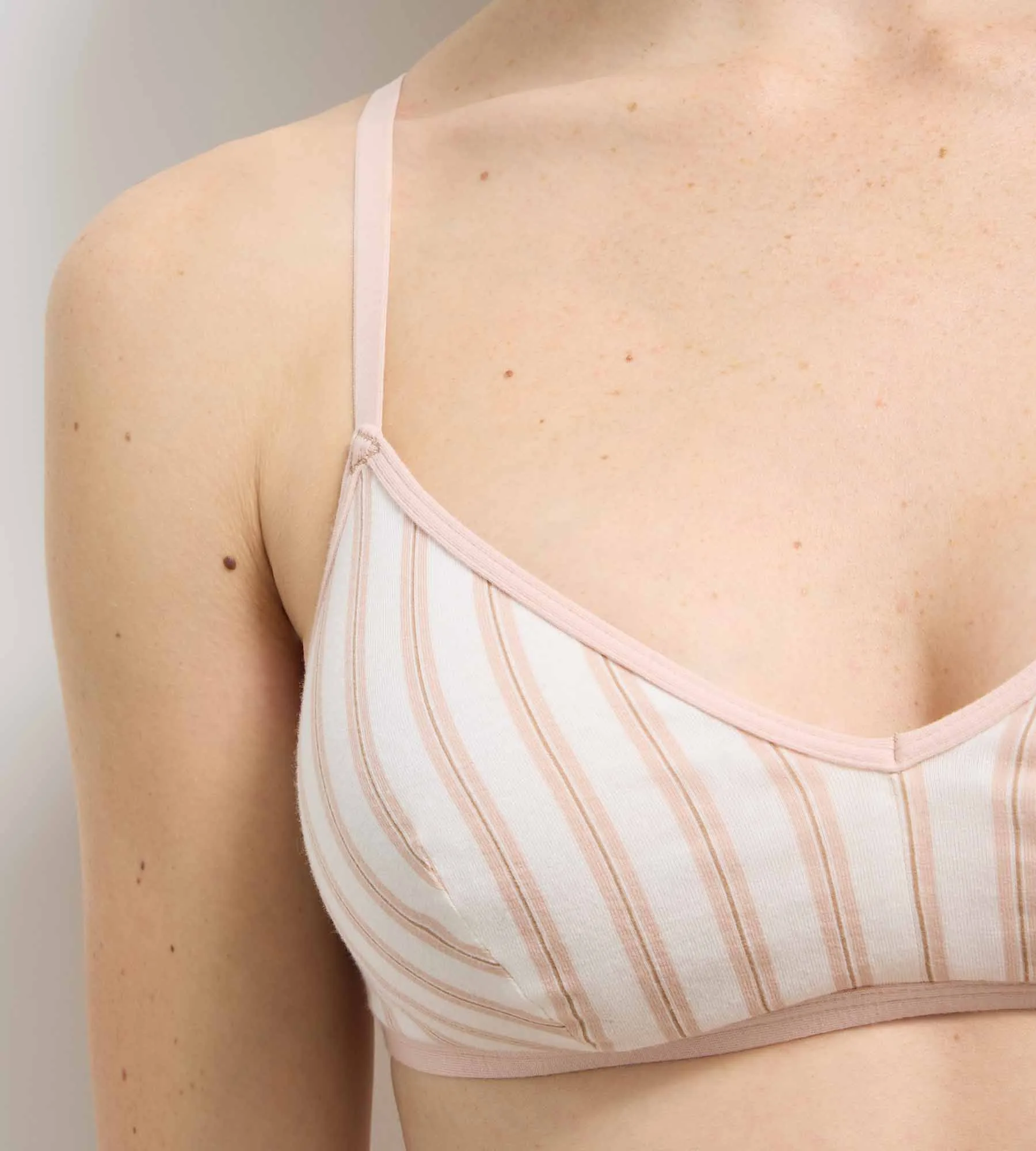
The Soutien-gorge sans armatures crème rose Dim x Ines de la Fressange is made from soft natural cotton with a wireless triangle cut and clean vertical stripes. Because it has no underwires, it layers smoothly under knits and does not dig in when you add a sweater. Pair it with a microfibre brief such as the Culotte femme bleue en microfibre et dentelle Generous Essentiel, which has floral lace inserts and a slightly high-cut shape that stays comfortable under thicker fabrics.
- Common mistake: treating autumn as a reason to size up in bands. A wireless cotton bra should fit the same as your summer size.
Step 4: Build a transitional hosiery plan for changeable days
Transitional hosiery is the single most useful autumn tool. Keep at least two deniers in rotation: a sheer 15-denier pair for warm afternoons and a 50-denier opaque pair for cool mornings. This is the core of any autumn tights guide, because it lets you match the day rather than the calendar.
Store them flat or rolled rather than stretched over a hanger, and keep the sheer pair separate so you are not hunting for it on an unseasonably warm day. If you wear boots, check that the opaque tights do not bunch at the ankle; a ribbed flat-knit style tends to stay smoother than a plain opaque one.
- Checkpoint: if you are only keeping one denier in the drawer, you will either overheat or underdress at some point this season.
Step 5: Rotate, wash, and store the pieces you are retiring
Before summer pieces go to the back of the drawer, wash and dry them fully. Storing anything with lingering body oils or deodorant residue shortens its life and can attract discoloration over the winter. Follow the care label, especially for lace and microfibre, and avoid hot dryers that damage elastane.
Label or group the retired items so you can find them again next spring. A simple approach is one storage box for sheer hosiery and light bras, and another for summer-weight briefs and boxers. When temperatures rise again, you reverse the process instead of rebuilding your drawer from scratch.
- Common mistake: storing damp or unwashed items. Even slightly damp hosiery can develop odour and weaken fibres over months in storage.
Your 5-step seasonal lingerie switch
- Rotate hosiery first: Move sheer 15-denier tights to the back drawer and bring 50-denier opaque tights forward, such as the Collant côte plate chocolat 50D DIM x Ines de La Fressange. Checkpoint: keep one sheer pair accessible for warm afternoons.
- Switch to cotton and modal fabrics: Replace ultra-light summer underwear with cotton-modal or stretch cotton pieces like the Boxer homme en coton modal piqué Bleu Méditerranée Dim Smart or the Lot de 2 boxers homme en coton stretch Rouge Carmin Noir EcoDim. Checkpoint: if you feel clammy by mid-morning, the fabric is too light.
- Add one warmer lingerie layer: Introduce a wireless cotton bra such as the Soutien-gorge sans armatures crème rose Dim x Ines de la Fressange, and pair it with a microfibre brief like the Culotte femme bleue en microfibre et dentelle Generous Essentiel. Checkpoint: no need for multiple layers; one warmer piece is usually enough.
- Keep two deniers in rotation: Store a sheer 15-denier pair and an opaque 50-denier pair side by side so you can match the day rather than the calendar. Checkpoint: if you only keep one denier, you will either overheat or underdress at some point.
- Rotate and store retired pieces properly: Wash and dry summer pieces fully before storing, and group them by type so you can reverse the process next spring. Checkpoint: never store damp or unwashed items.
Final checklist
- Sheer 15-denier tights moved to the back drawer, one pair kept accessible. Opaque 50-denier tights brought forward as the default.
- Cotton or modal underwear within reach for cooler days. One wireless cotton bra added as a warm layer.
- Two deniers stored side by side for changeable weather. Retired summer pieces washed, dried, and stored in labelled boxes.
- FAQ When should I switch from sheer to opaque tights?
Start when mornings feel cool enough that you reach for a jacket. For most regions, that is early to mid-autumn. Keep a sheer pair accessible for warm afternoons, but make the opaque pair your default.