Resposta rápida
Comece por trocar as meias de 15 deniers transparentes por collants opacos de 50 deniers e, em seguida, passe para tecidos de roupa interior mais quentes, como algodão e modal. Adicione uma camada de lingerie mais quente, como um sutiã de algodão sem aros, e mantenha peças de transição acessíveis para o tempo instável. Esta troca gradual de roupa interior sazonal mantém-te confortável sem substituir toda a gaveta de uma vez.
A mudança do verão para o outono raramente é uma rutura limpa. Numa semana, estás a usar meias finas; na seguinte, queres cobertura opaca e um sutiã que pareça menos frágil contra o ar mais fresco. Apressar a mudança normalmente significa ou transpirar em setembro ou tremer em outubro.
A abordagem mais inteligente é uma troca de roupa interior sazonal por etapas. Moves as peças mais leves para o fundo da gaveta, traz as peças de lingerie mais quentes para a frente e deixa as meias de transição fazerem o trabalho pesado enquanto as temperaturas flutuam. Este guia percorre esse processo passo a passo, usando peças reais da DIM como exemplos para que vejas como cada escolha se encaixa.
Porquê uma troca gradual é melhor do que substituir o guarda-roupa inteiro
O tempo de outono oscila muito. Uma manhã que pede meias de 50 deniers pode transformar-se numa tarde quente em que te arrependes delas. Se trocares tudo de uma vez, perdes a flexibilidade de te vestires para o dia real. Manter uma pequena zona de transição na gaveta — meias de peso médio, soutiens en coton respirants e roupa interior leve de modal — permite-te adaptar sem vasculhar o armazenamento.
Pense nisto como duas gavetas em vez de uma. A gaveta da frente guarda o que vais usar este mês: meias de transição, soutiens ricos em algodão e boxers ou cuecas de modal. A gaveta de trás guarda as peças puramente de verão que ainda não estás pronto para reformar e as peças de inverno profundo de que ainda não precisas. Rode os artigos para a frente à medida que a temperatura desce.
- Ponto de verificação: se ainda estiveres a usar meias de 15 deniers a meio do outono, provavelmente ainda não moveste as peças mais quentes para a frente.
Passo 1: Guarda as meias transparentes e traz as meias opacas para a frente
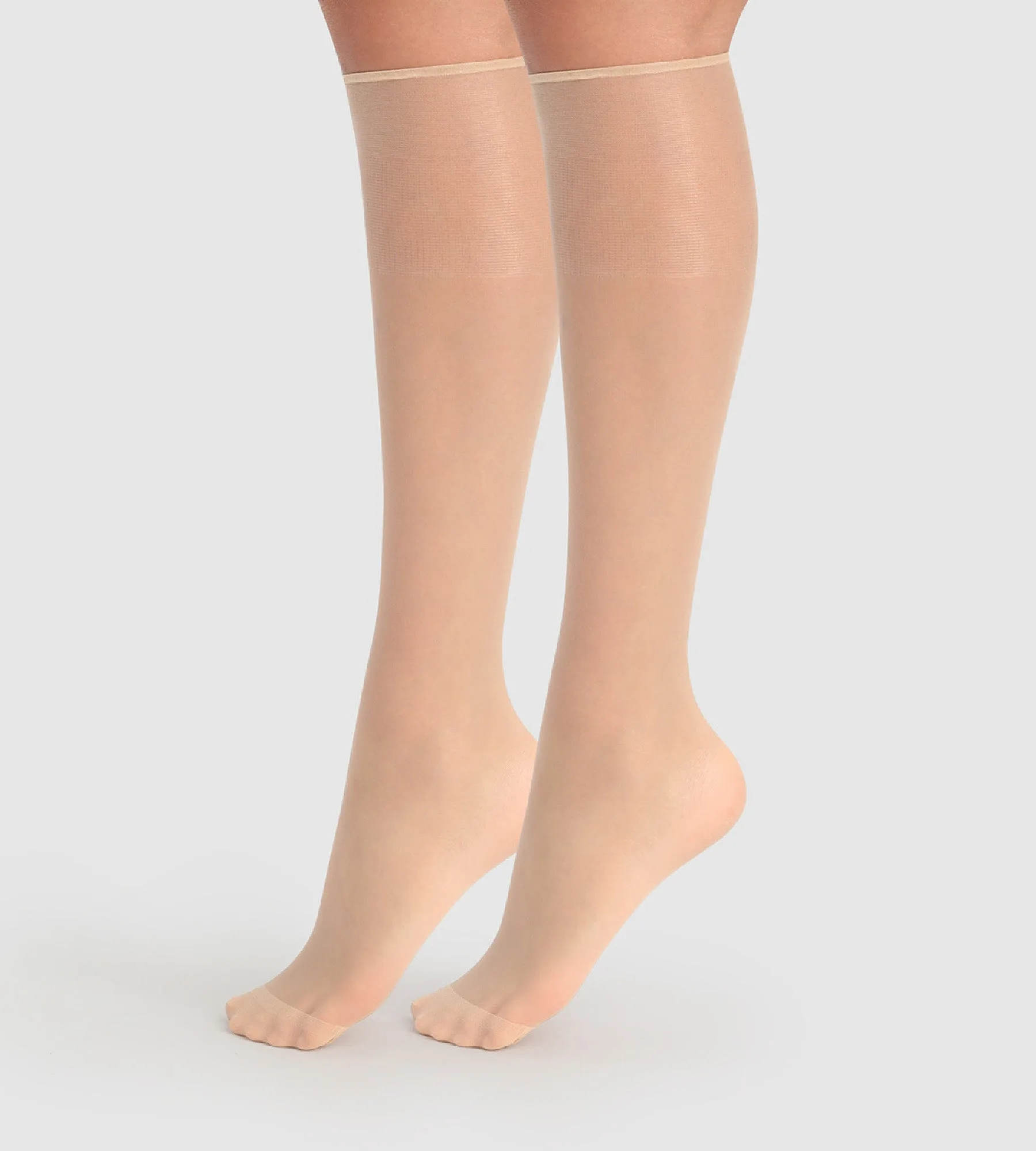
Os estilos transparentes de 15 deniers, como o Lot de 2 mi-bas capri Sublim Voile Brillant 15D são básicos de verão porque dão um acabamento transparente e brilhante com bordas largas e não compressivas. Assim que as manhãs ficam frescas, essas peças pertencem à gaveta de trás. No lugar delas, traga para a frente uma opção opaca como o Collant côte plate chocolat 50D DIM x Ines de La Fressange, que usa uma microfibra macia e elástica e uma cintura confortável que segura sem apertar.
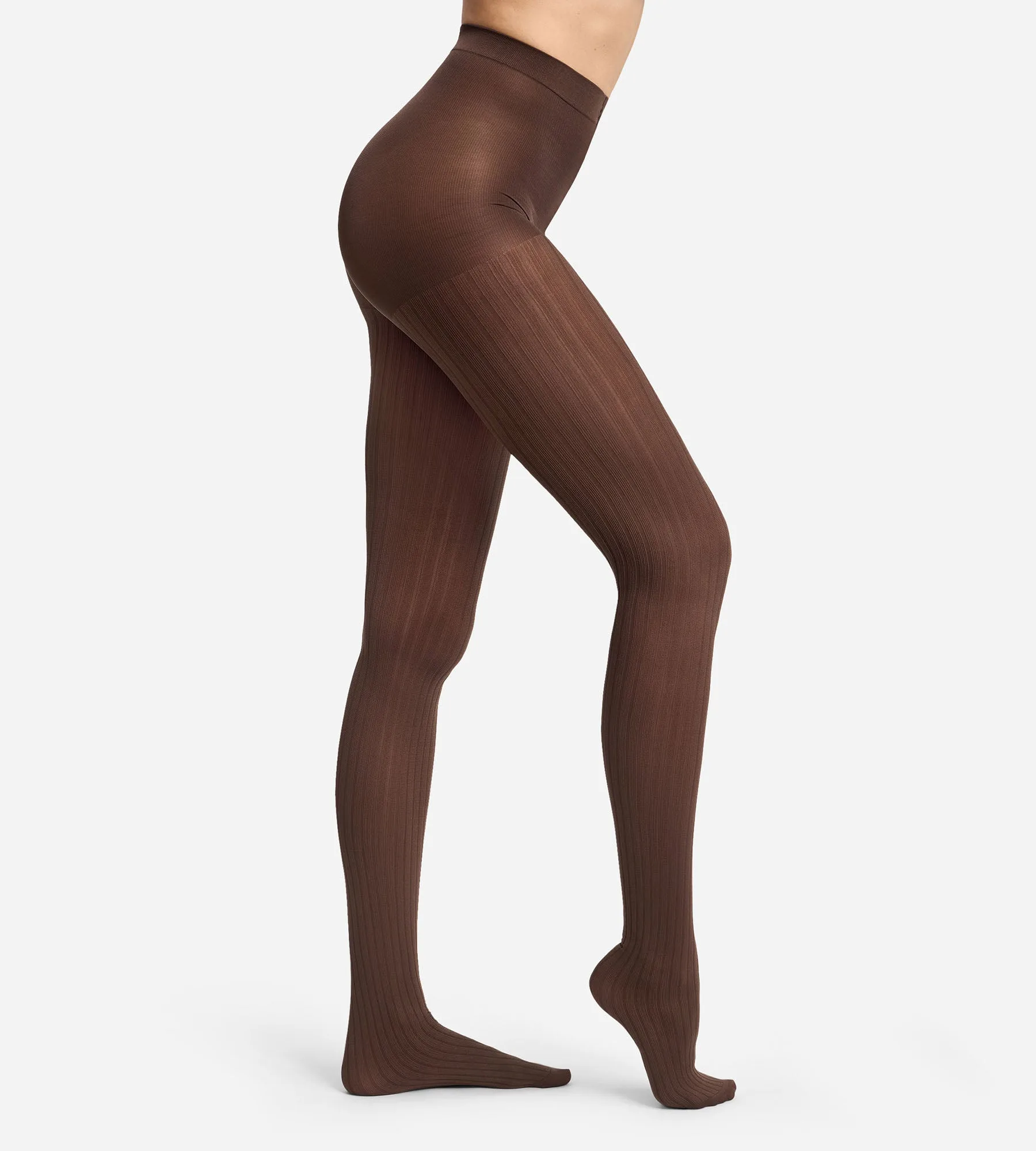
Collant côte plate chocolat 50D DIM x Ines de La Fressange
O voile 50 deniers é fosco e opaco, por isso parece outono em vez de verão. O discreto padrão canelado também alonga a perna, o que importa quando você começa a usar saias e botas mais pesadas. Mantenha um par de meias finas acessível para tardes quentes, mas faça do par opaco o seu padrão.
- Erro comum: mudar imediatamente para as meias opacas mais pesadas. Um par de 50 deniers costuma ser suficiente para o início do outono; guarde os estilos mais grossos para depois.
Passo 2: Escolha tecidos de roupa íntima que lidem com ar mais frio e seco
A roupa íntima de verão tende a ser ultraleve e de secagem rápida. No outono, a pele fica mais seca e o aquecimento interno começa, então tecidos macios ao toque, em vez de lisos, tornam-se mais confortáveis. Misturas de algodão e modal são o meio-termo prático: respiráveis o suficiente para ambientes quentes, mas com um toque mais macio e menos aderente do que sintéticos puros.
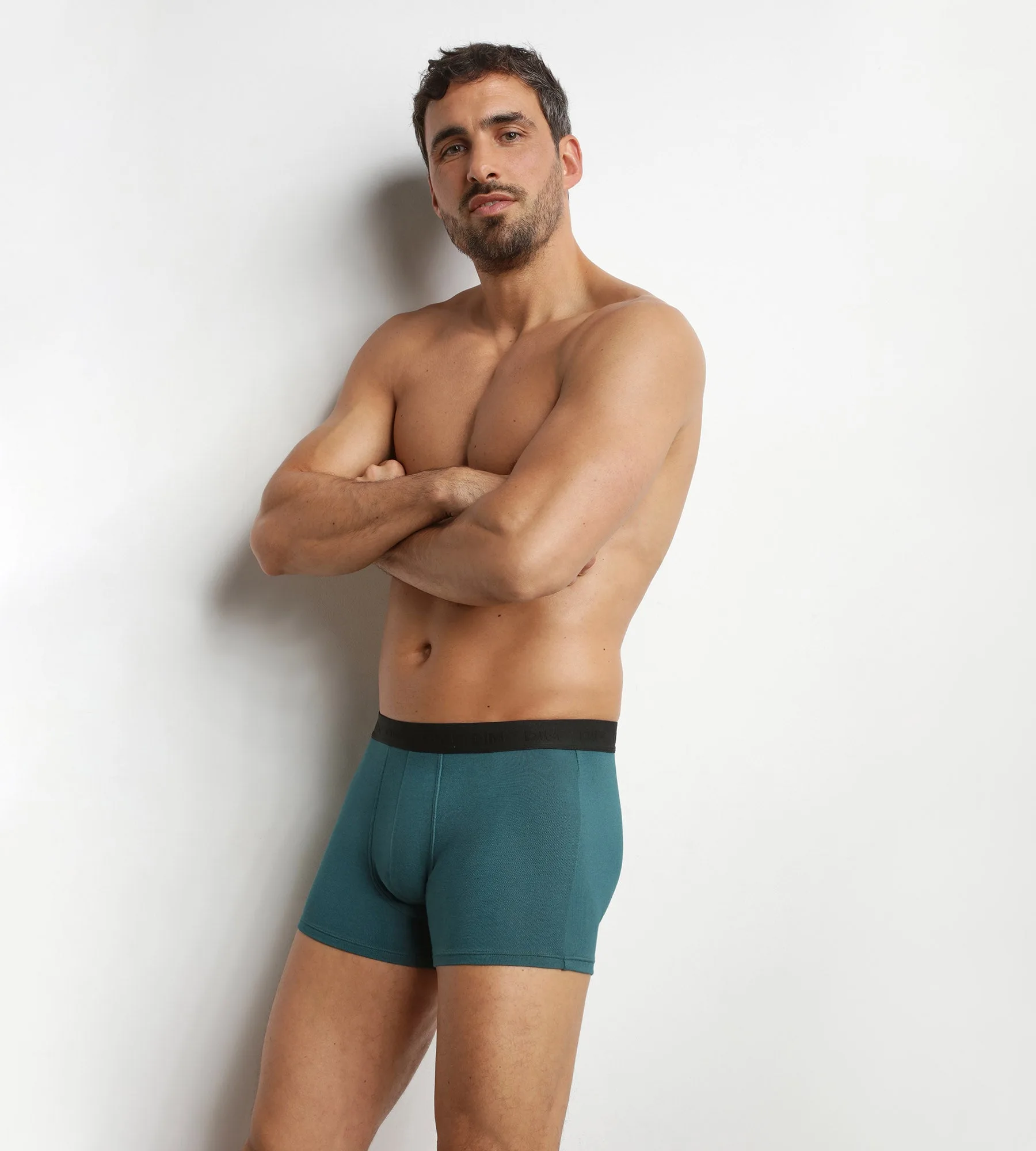
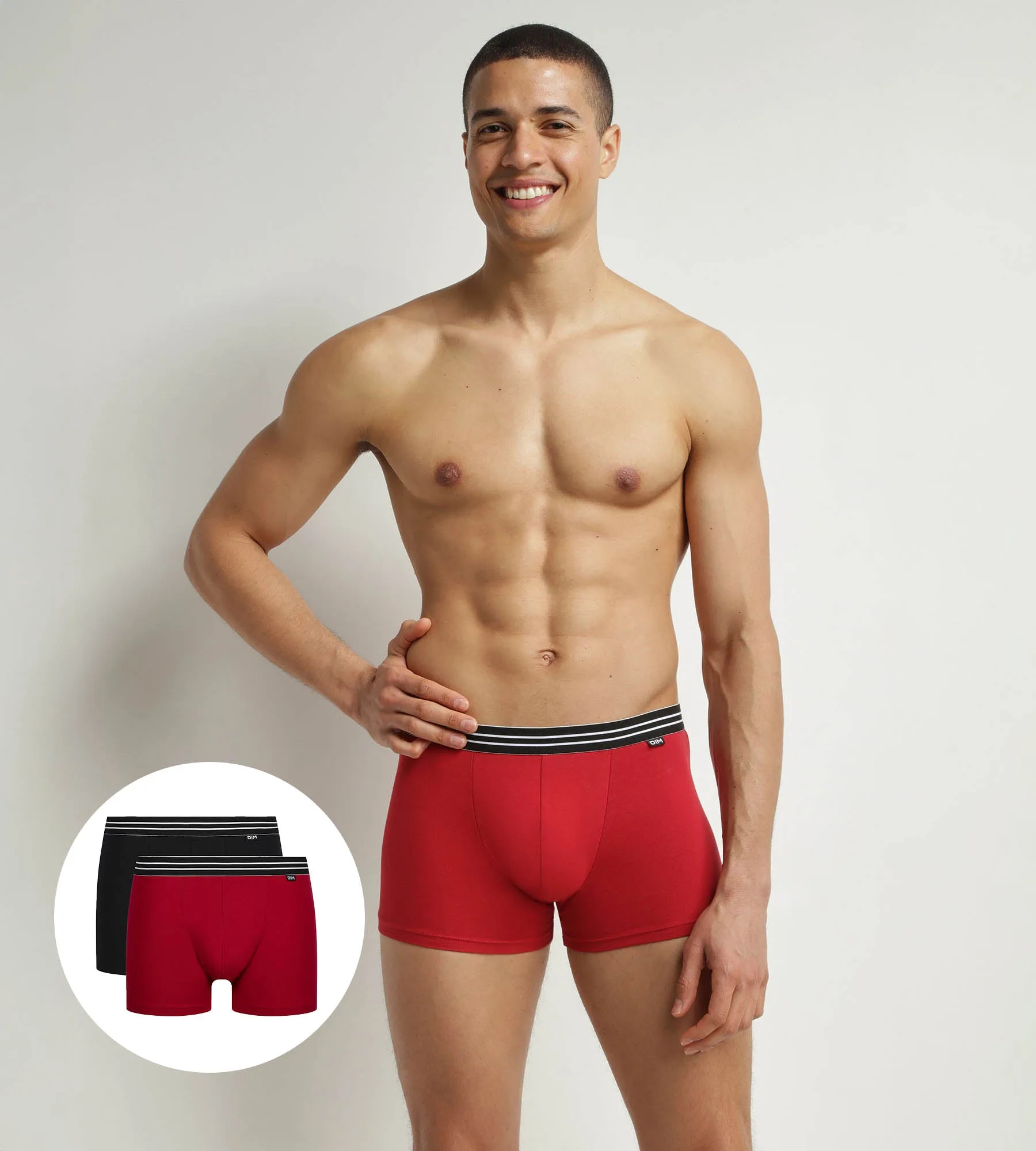
Para homens, o Boxer homme en coton modal piqué Bleu Méditerranée Dim Smart usa um tricô modal piqué levemente texturizado e um formato que abraça o corpo, desenhado para assentar sem dobras ou desconforto, além de uma frente forrada para suporte o dia todo. O Lot de 2 boxers homme en coton stretch Rouge Carmin Noir EcoDim oferece uma opção de algodão stretch com zona frontal reforçada e cós elástico simples, uma boa escolha para o dia a dia quando você quer mais cobertura do que as cuecas de verão.
- Checkpoint: if your underwear feels clammy under trousers by mid-morning, the fabric is too light for the season.
Step 3: Add one warmer lingerie layer, not three
The easiest autumn mistake is over-layering. You do not need a padded bra plus a camisole plus a heavy slip. Instead, add one layer that genuinely changes how warm you feel. A wireless cotton bra is a smart choice because it covers more skin than a lace bralette while staying breathable indoors.
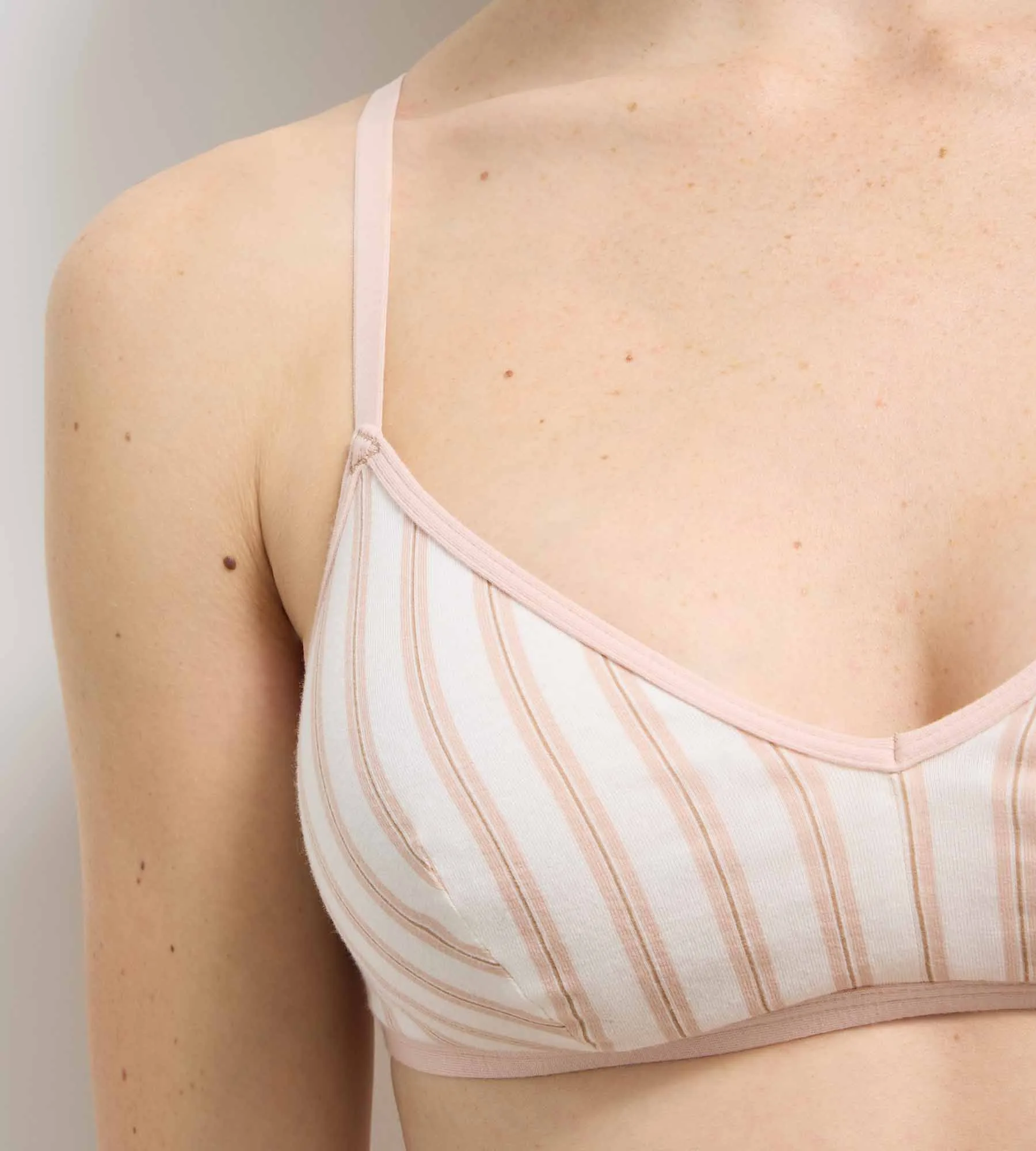
The Soutien-gorge sans armatures crème rose Dim x Ines de la Fressange is made from soft natural cotton with a wireless triangle cut and clean vertical stripes. Because it has no underwires, it layers smoothly under knits and does not dig in when you add a sweater. Pair it with a microfibre brief such as the Culotte femme bleue en microfibre et dentelle Generous Essentiel, which has floral lace inserts and a slightly high-cut shape that stays comfortable under thicker fabrics.
- Common mistake: treating autumn as a reason to size up in bands. A wireless cotton bra should fit the same as your summer size.
Step 4: Build a transitional hosiery plan for changeable days
Transitional hosiery is the single most useful autumn tool. Keep at least two deniers in rotation: a sheer 15-denier pair for warm afternoons and a 50-denier opaque pair for cool mornings. This is the core of any autumn tights guide, because it lets you match the day rather than the calendar.
Store them flat or rolled rather than stretched over a hanger, and keep the sheer pair separate so you are not hunting for it on an unseasonably warm day. If you wear boots, check that the opaque tights do not bunch at the ankle; a ribbed flat-knit style tends to stay smoother than a plain opaque one.
- Checkpoint: if you are only keeping one denier in the drawer, you will either overheat or underdress at some point this season.
Step 5: Rotate, wash, and store the pieces you are retiring
Before summer pieces go to the back of the drawer, wash and dry them fully. Storing anything with lingering body oils or deodorant residue shortens its life and can attract discoloration over the winter. Follow the care label, especially for lace and microfibre, and avoid hot dryers that damage elastane.
Label or group the retired items so you can find them again next spring. A simple approach is one storage box for sheer hosiery and light bras, and another for summer-weight briefs and boxers. When temperatures rise again, you reverse the process instead of rebuilding your drawer from scratch.
- Common mistake: storing damp or unwashed items. Even slightly damp hosiery can develop odour and weaken fibres over months in storage.
Your 5-step seasonal lingerie switch
- Rotate hosiery first: Move sheer 15-denier tights to the back drawer and bring 50-denier opaque tights forward, such as the Collant côte plate chocolat 50D DIM x Ines de La Fressange. Checkpoint: keep one sheer pair accessible for warm afternoons.
- Switch to cotton and modal fabrics: Replace ultra-light summer underwear with cotton-modal or stretch cotton pieces like the Boxer homme en coton modal piqué Bleu Méditerranée Dim Smart or the Lot de 2 boxers homme en coton stretch Rouge Carmin Noir EcoDim. Checkpoint: if you feel clammy by mid-morning, the fabric is too light.
- Add one warmer lingerie layer: Introduce a wireless cotton bra such as the Soutien-gorge sans armatures crème rose Dim x Ines de la Fressange, and pair it with a microfibre brief like the Culotte femme bleue en microfibre et dentelle Generous Essentiel. Checkpoint: no need for multiple layers; one warmer piece is usually enough.
- Keep two deniers in rotation: Store a sheer 15-denier pair and an opaque 50-denier pair side by side so you can match the day rather than the calendar. Checkpoint: if you only keep one denier, you will either overheat or underdress.
- Wash and store retired pieces: Wash and dry summer items fully before storing them flat or rolled, grouped by type, so they are ready to rotate back in spring. Next step: label your storage boxes so next season's switch takes minutes.
DIM pieces that make the autumn switch easier
- Collant côte plate chocolat 50D DIM x Ines de La Fressange: Opaque 50-denier flat-rib tights in soft stretch microfibre with a comfortable waistband that holds without compressing. A 50-denier matte finish is the right weight for early-to-mid autumn, and the ribbed pattern lengthens the leg under skirts and boots.
- Soutien-gorge sans armatures crème rose Dim x Ines de la Fressange: Wireless cotton bra with a triangle cut and clean vertical stripes in a soft crème rose shade. The natural cotton and no-wire structure add warmth and coverage without bulk, so it layers smoothly under autumn knits.
- Boxer homme en coton modal piqué Bleu Méditerranée Dim Smart: Cotton-modal piqué boxer with a lightly textured knit, a body-hugging shape designed to avoid folds, and a front lining. Modal piqué is breathable but softer than summer synthetics, making it a good transitional choice for cooler days that are not yet cold.
- Culotte femme bleue en microfibre et dentelle Generous Essentiel: Stretch microfibre brief with floral lace inserts and a slightly high-cut, flattering shape in Bleu Capitaine. The smooth microfibre sits comfortably under thicker autumn fabrics, while the lace keeps it from feeling purely functional.
A smooth summer-to-autumn lingerie transition is less about buying a whole new drawer and more about rotating what you already own. Move sheer hosiery back, bring opaque tights and cotton-rich bras forward, and keep one transitional layer within reach. Done in stages, the seasonal underwear switch takes an afternoon and keeps you comfortable through every unpredictable autumn day.