Raskt svar
De fleste standard plastflasker, inkludert isolerte, er ikke laget for varme væsker. For sikker bruk, hold væsker under 120°F (49°C) og sjekk flaskens temperaturklassifisering. For varme drikker er en isolert flaske i rustfritt stål et bedre valg.
Hvorfor plastflasker har temperaturgrenser
Plastflasker er laget av materialer som polypropylen (PP) eller Tritan, som har ulik varmetoleranse. Selv om mange er BPA-frie og mattrygge, kan de deformeres, lekke kjemikalier eller miste strukturell integritet når de utsettes for høy varme. Produsenter anbefaler vanligvis å unngå kokende vann eller varme drikker.
Isolerte plastflasker har ofte en dobbeltvegget design som holder utsiden kjølig, men det indre plastlaget er fortsatt i kontakt med væsken. Isolasjonen endrer ikke plastens varmetoleranse, så de samme temperaturgrensene gjelder.
Når en plastflaske er greit for varme væsker
Hvis du trenger å ha med deg varmt (ikke varmt) vann, kan en plastflaske fungere så lenge væsken er under 120°F (49°C). Dette er trygt for de fleste plasttyper som er godkjent for mat, og vil ikke forårsake skade. Test alltid temperaturen på håndleddet først – hvis den kjennes varm, er den for varm for flasken.
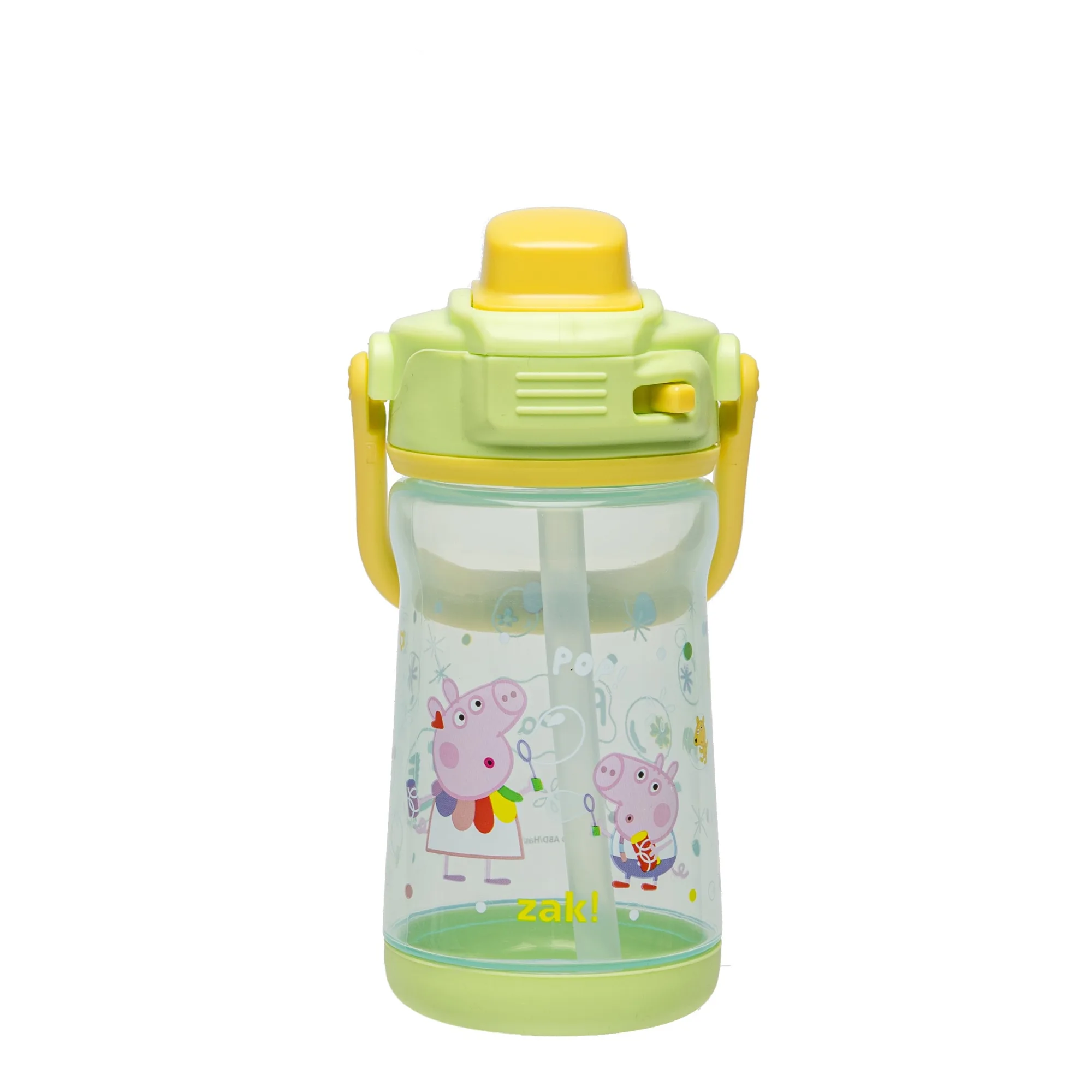
For children's bottles, like the Beacon 12 oz. Peppa Pig bottle, the soft silicone spout and plastic body are designed for cold or room-temperature drinks. Using hot liquid could damage the spout or create a burn risk.
Frequently asked questions about hot liquids in plastic bottles
Can I put boiling water in a plastic bottle?
No. Boiling water (212°F / 100°C) can warp, melt, or cause chemical leaching in most plastic bottles. Always use a stainless steel or glass container for boiling water. Never pour boiling water into a plastic bottle.
What temperature is safe for a plastic water bottle?
Most food-grade plastic bottles are safe up to 120°F (49°C). Check the bottom of the bottle for a temperature rating or recycling code. Polypropylene (PP, #5) handles higher heat than PET (#1) or HDPE (#2). Keep liquids below 120°F to be safe.
Is an insulated plastic bottle safe for hot coffee?
No. Even insulated plastic bottles have an inner plastic layer that contacts the liquid. Hot coffee (around 160-185°F) exceeds safe plastic temperatures. Choose a stainless steel insulated bottle for hot beverages. Use stainless steel for hot coffee or tea.
Can hot liquid damage the bottle's insulation?
Yes. Prolonged exposure to heat can degrade the insulation layer or the seals, reducing the bottle's ability to keep drinks cold. It may also cause the bottle to leak or lose vacuum seal integrity. Hot liquids can shorten the lifespan of an insulated plastic bottle.
What about warm milk or formula in a plastic bottle?
Warm milk or formula (around body temperature, 98-100°F) is generally safe in food-grade plastic bottles. Avoid microwaving plastic bottles, as it can create hot spots and damage the plastic. Use a bottle warmer or warm water bath instead. Warm (not hot) milk is fine; avoid microwaving plastic.
Product insights
-
Beacon Bottle, 12 oz.: The Beacon 12 oz. Peppa Pig bottle is made from durable, lightweight plastic with a soft silicone spout and a flip-up protective cover. This bottle is designed for everyday hydration with cold or room-temperature drinks, not hot liquids. The silicone spout and plastic body may not withstand high heat, and hot liquid could pose a burn risk for children.
Beacon Bottle, 12 oz.