Resposta rápida
Comece com três combinações de parte de cima e de baixo que possa alternar durante uma semana e, em seguida, adicione uma camada quente e uma camada leve para as variações de temperatura. Escolha tecidos que possa lavar em conjunto e mantenha a paleta em duas ou três cores para que tudo combine. Um guarda-roupa cápsula de pijama funciona quando cada peça tem pelo menos duas funções e nada exige cuidados especiais.
Um guarda-roupa cápsula de pijama não se trata de ter menos por ter. Trata-se de abrir a gaveta de pijamas e saber que cada peça serve, é confortável e combina com o resto. Isso elimina a busca noturna por algo limpo e confortável.
O segredo é construir em torno de rotinas reais: com que frequência você lava roupa, se você dorme quente ou frio, e se divide a cama com alguém que prefere outra temperatura no quarto. Este guia percorre sete etapas, com um checkpoint em cada uma, para você não comprar demais nem acabar com uma gaveta cheia de peças de uso único.
Etapa 1: Avalie o que você já usa para dormir
Esvazie a gaveta de pijamas na cama. Separe as peças que você usou nas últimas duas semanas e coloque-as em uma pilha. Todo o resto vai para uma segunda pilha. Seja honesto: se uma camisola torce, um cós aperta ou o tecido forma bolinhas, ela não faz parte do seu guarda-roupa cápsula, não importa quanto você pagou.
Conte as peças que ficaram. Se você tiver menos de quatro conjuntos utilizáveis, está começando do zero. Se tiver mais de dez, está editando, não construindo. De qualquer forma, anote os tecidos e modelagens que você realmente gosta. Essa lista vira o seu filtro de compras.
- Checkpoint: se você não lembra de ter usado uma peça no último mês, ela não é para ficar.
Passo 2: Decida quantas noites você precisa cobrir
Ajuste o tamanho do seu armário cápsula ao seu ritmo de lavanderia, não a um número que você viu online. Se você lava duas vezes por semana, cinco a seis conjuntos é suficiente. Se lava uma vez por semana, mire sete a oito. Adicione um conjunto extra para dias de doença ou viagens.
Este passo evita o erro mais comum: comprar um conjunto bonito que só funciona com uma parte de baixo específica e ficar sem opções limpas no terceiro dia. Um armário cápsula deve cobrir o maior intervalo entre lavagens sem pânico.
- Checkpoint: anote o número-alvo no celular antes de comprar.
Passo 3: Escolha uma paleta de duas ou três cores
Escolha um neutro escuro, um neutro claro e, opcionalmente, um tom de destaque. Preto, cinza, marinho, rosa suave ou nude funcionam. A ideia é que qualquer parte de cima combine com qualquer parte de baixo, para você nunca criar uma peça órfã. É isso que torna um guarda-roupa cápsula de pijamas sem esforço.
Estampas são aceitáveis se ficarem dentro da paleta. Uma estampa pequena ou listra funciona como neutro quando as cores combinam. Evite comprar um conjunto que só funciona com ele mesmo, a menos que você realmente precise de um look independente.
- Checkpoint: lay every candidate piece next to every other piece. If two items clash, one of them goes.
Step 4: Pick fabrics for your sleep temperature
If you sleep hot, prioritize cotton and modal. If you sleep cold, add a modal-cashmere blend or a light thermal knit. Microfibre is smooth and quick-drying but can feel less breathable, so test it on a warm night before committing to a full set.
Fabric choice also decides how you wash. Cotton and modal tolerate a normal warm wash. Delicate lace or tulle needs a mesh bag and cold water. Keeping your capsule to two easy-care fabrics means you can wash everything together.
- Checkpoint: if a fabric needs its own wash cycle, it is a specialty piece, not a capsule basic.
Step 5: Cover the three sleep scenarios
Most people sleep in three conditions: warm nights, cool nights, and in-between. Your capsule should have one option for each. A light cotton short set handles warm nights. A long pant and long-sleeve top handles cool nights. A modal tee with a soft short covers the middle.
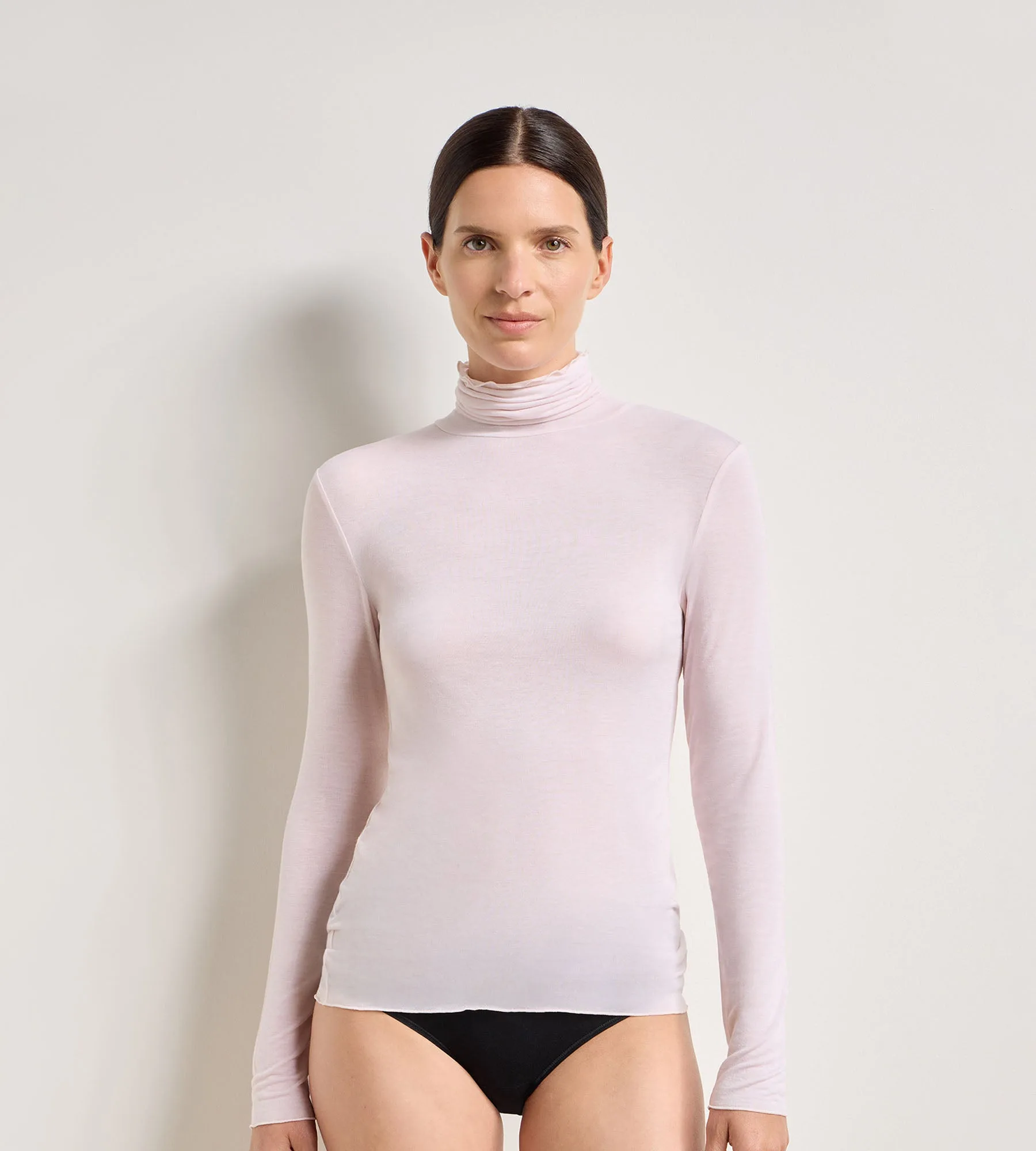
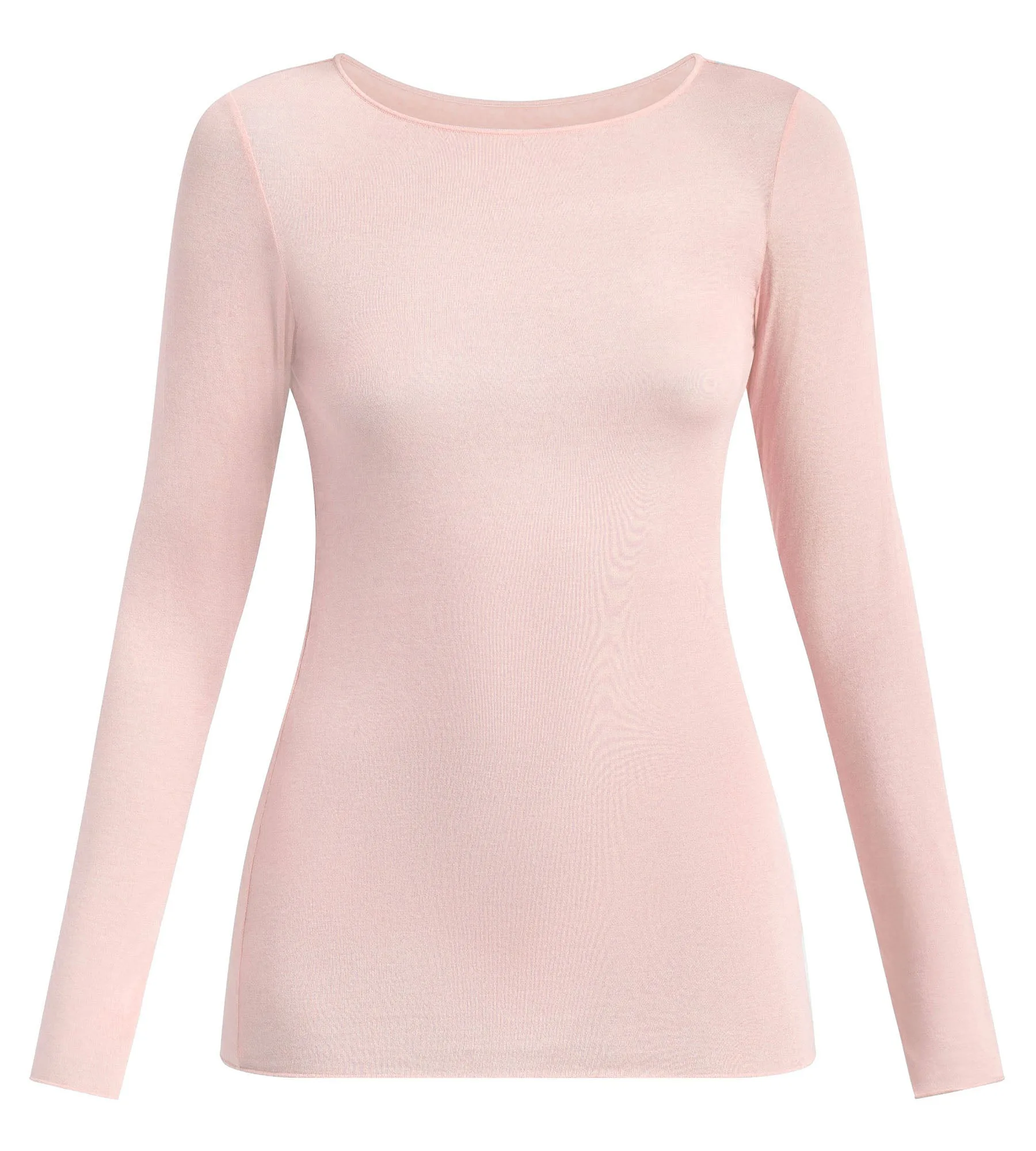
This is where a DIM nightwear basic like the https://dimegbn.com/products/t-shirt-col-rond-rose-doux-thermal-light-4f7273daafffdf3668173196-1412930T-shirt col rond rose doux Thermal Light earns its place. Its modal and cashmere blend gives moderate insulation without bulk, so it works as a base layer under a robe or on its own when the temperature is mild.
- Checkpoint: if all your sets are the same weight, you will be uncomfortable half the year.
Step 6: Add one robe or layer, not three
A single lightweight robe or cardigan extends the range of every set. It covers you for trips to the kitchen, early mornings, and guests. Choose a color from your palette so it works over everything.
Skip the heavy fleece robe unless you live in a cold climate. It takes up space, needs more washing, and rarely matches a summer capsule. One mid-weight layer is the sweet spot.
- Checkpoint: the layer must fit over your bulkiest set without pulling at the shoulders.
Step 7: Test the capsule for one week before buying more
Wear only your capsule pieces for seven days. Note what you reached for, what stayed folded, and what you wished you had. This test reveals gaps better than any checklist. It also shows whether your laundry plan actually works.
After the week, replace only what failed. If a waistband rolled or a strap slipped, fix that specific problem. Do not add a new category just because it is on sale. A capsule stays useful when every addition solves a real issue.
- Checkpoint: if you survived the week without borrowing from the reject pile, your capsule is complete.
Seven steps to a capsule nightwear wardrobe
- Audit your current sleepwear: Pull out every piece. Keep only what you wore in the last two weeks and what fits without adjusting. Checkpoint: if you would not pack it for a trip, it does not belong in the capsule.
- Set your target number: Count nights between laundry days and add one spare. Five to eight sets covers most routines. Checkpoint: write the number down before you shop so you do not overbuy.
- Lock a two- or three-color palette: Choose one dark, one light, and one optional accent. Every top must work with every bottom. Checkpoint: lay all pieces together. If two clash, remove one.
- Match fabric to your sleep temperature: Cotton and modal for hot sleepers, modal-cashmere or light thermal for cold sleepers. Keep to two easy-care fabrics. Checkpoint: if it needs a separate wash cycle, it is not a basic.
- Cover warm, cool, and in-between nights: One light set, one warm set, one mid-weight set. A modal tee like the Thermal Light handles the middle range. Checkpoint: if all sets are the same weight, you will be uncomfortable half the year.
- Add one layer, not three: A single mid-weight robe or cardigan in your palette extends every set. Skip heavy fleece unless you need it. Checkpoint: the layer must fit over your bulkiest set without pulling.
- Test for one week, then adjust: Wear only capsule pieces for seven days. Replace only what failed, and do not add new categories on impulse. Checkpoint: if you did not need the reject pile, your capsule works.
DIM pieces that fit a capsule nightwear wardrobe
- T-shirt col rond rose doux Thermal Light: Modal and cashmere blend with a fine knit, fitted cut, and classic round neck in soft pink. The fine knit stays invisible under other layers, and the moderate insulation makes it a strong in-between-season basic that pairs with shorts, long pants, or a robe.
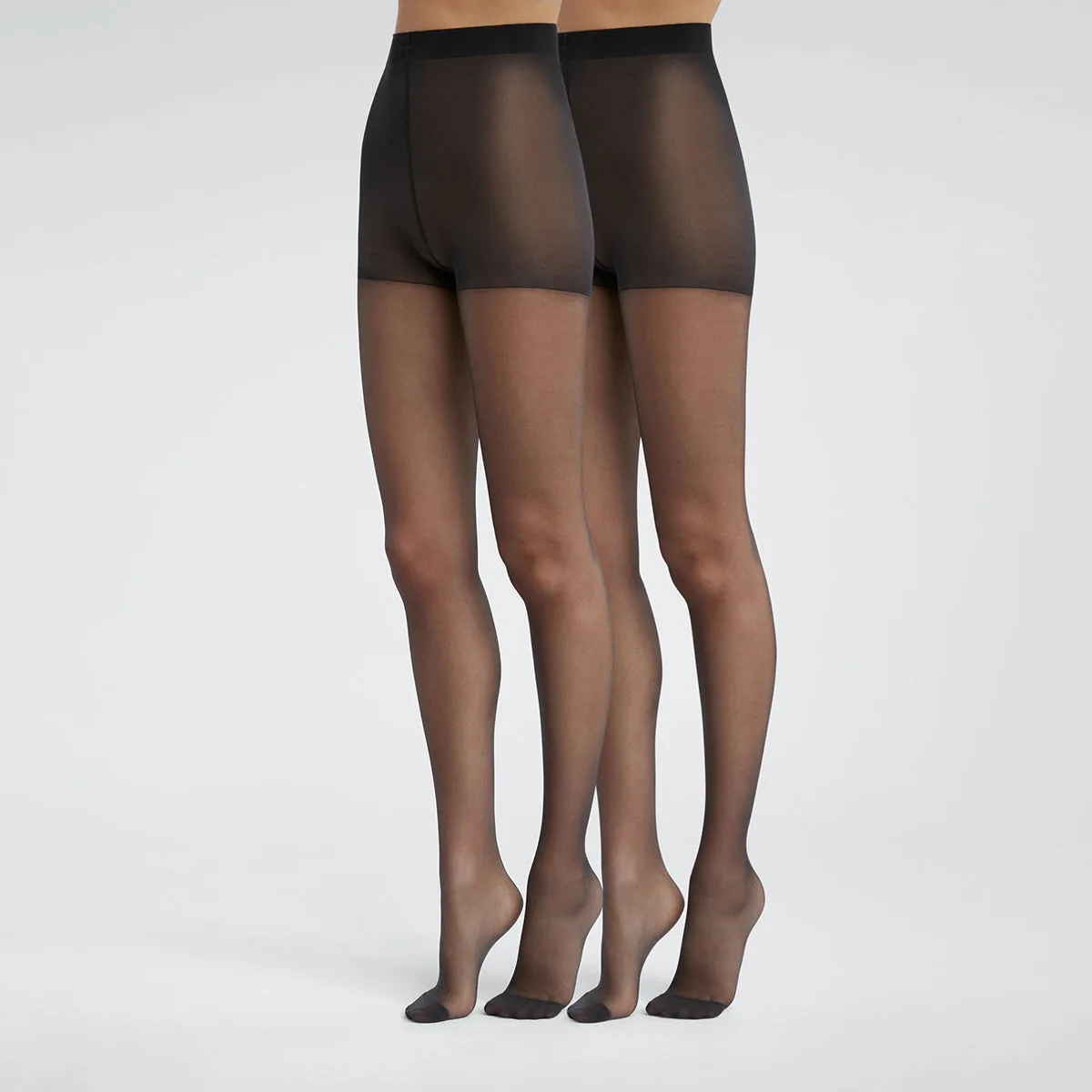
- Lot de 2 collants femme transparents en Lycra Noir Diam’s Voile Galbé: 22D sheer Lycra tights with a light veil, reinforced toes, and a built-in panty that supports and smooths. These are not sleepwear, but they belong in the same drawer logic: a two-pack of a single reliable style means you never have to think about which pair is clean.
- How to build a capsule nightwear wardrobe: the 7-step checklist: Audit what you wear to bed.
Set a target number based on your laundry rhythm.