Quick answer
Start with three bottom-and-top pairings you can rotate for a week, then add one warm layer and one light layer for temperature swings. Choose fabrics you can wash together, and keep the palette to two or three colors so everything mixes. A capsule nightwear wardrobe works when each piece has at least two jobs and nothing needs special care.
A capsule nightwear wardrobe is not about owning less for the sake of it. It is about opening your sleepwear drawer and knowing every piece will fit, feel good, and work with the rest. That removes the nightly hunt for something clean and comfortable.
The trick is to build around real routines: how often you do laundry, whether you sleep hot or cold, and whether you share a bed with someone who likes a different room temperature. This guide walks through seven steps, with a checkpoint at each one so you do not overbuy or end up with a drawer full of single-use pieces.
Step 1: Audit what you already wear to bed
Empty your sleepwear drawer onto the bed. Pick out the pieces you reached for in the last two weeks and put them in one pile. Everything else goes in a second pile. Be honest: if a nightie twists, a waistband digs, or a fabric pills, it is not part of your capsule no matter how much you paid for it.
Count the keepers. If you have fewer than four wearable sets, you are building from scratch. If you have more than ten, you are editing, not building. Either way, note the fabrics and shapes you actually like. That list becomes your shopping filter.
- Checkpoint: if you cannot remember wearing a piece in the last month, it is not a keeper.
Step 2: Decide how many nights you need to cover
Match your capsule size to your laundry rhythm, not to a number you saw online. If you wash twice a week, five to six sets is plenty. If you wash once a week, aim for seven to eight. Add one spare set for sick days or travel.
This step prevents the most common mistake: buying a beautiful set that only works with one specific bottom, then running out of clean options on day three. A capsule should cover your longest stretch between washes without panic.
- Checkpoint: write your target number on your phone before you shop.
Step 3: Choose a two- or three-color palette
Pick one dark neutral, one light neutral, and optionally one accent. Black, grey, navy, soft pink, or nude all work. The point is that any top can pair with any bottom, so you never create an orphan piece. This is what makes a pyjama capsule wardrobe feel effortless.
Patterns are fine if they stay within the palette. A small print or stripe reads as a neutral when the colors match. Avoid buying a set that only works with itself unless you genuinely need a standalone outfit.
- Checkpoint: lay every candidate piece next to every other piece. If two items clash, one of them goes.
Step 4: Pick fabrics for your sleep temperature
If you sleep hot, prioritize cotton and modal. If you sleep cold, add a modal-cashmere blend or a light thermal knit. Microfibre is smooth and quick-drying but can feel less breathable, so test it on a warm night before committing to a full set.
Fabric choice also decides how you wash. Cotton and modal tolerate a normal warm wash. Delicate lace or tulle needs a mesh bag and cold water. Keeping your capsule to two easy-care fabrics means you can wash everything together.
- Checkpoint: if a fabric needs its own wash cycle, it is a specialty piece, not a capsule basic.
Step 5: Cover the three sleep scenarios
Most people sleep in three conditions: warm nights, cool nights, and in-between. Your capsule should have one option for each. A light cotton short set handles warm nights. A long pant and long-sleeve top handles cool nights. A modal tee with a soft short covers the middle.
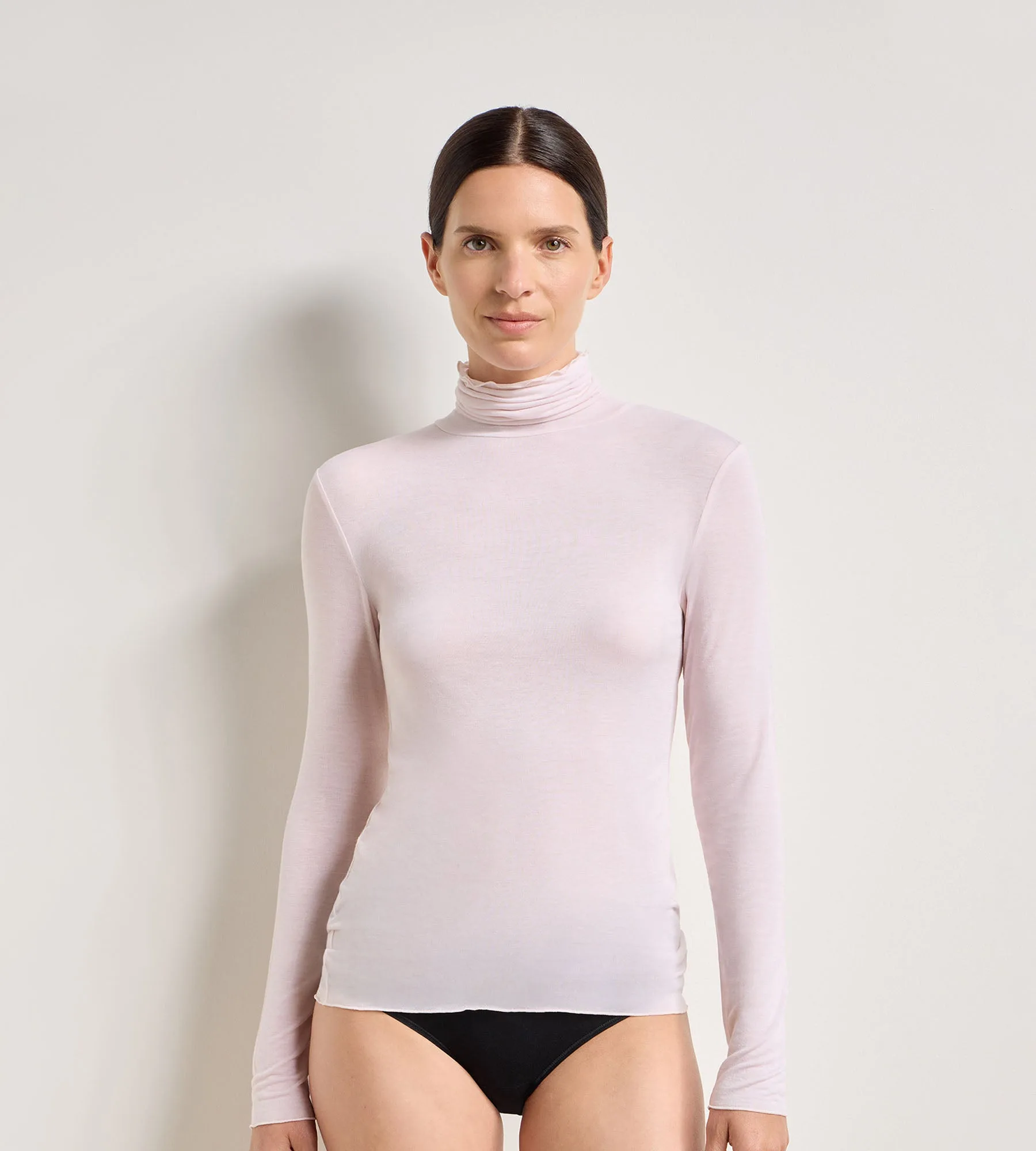
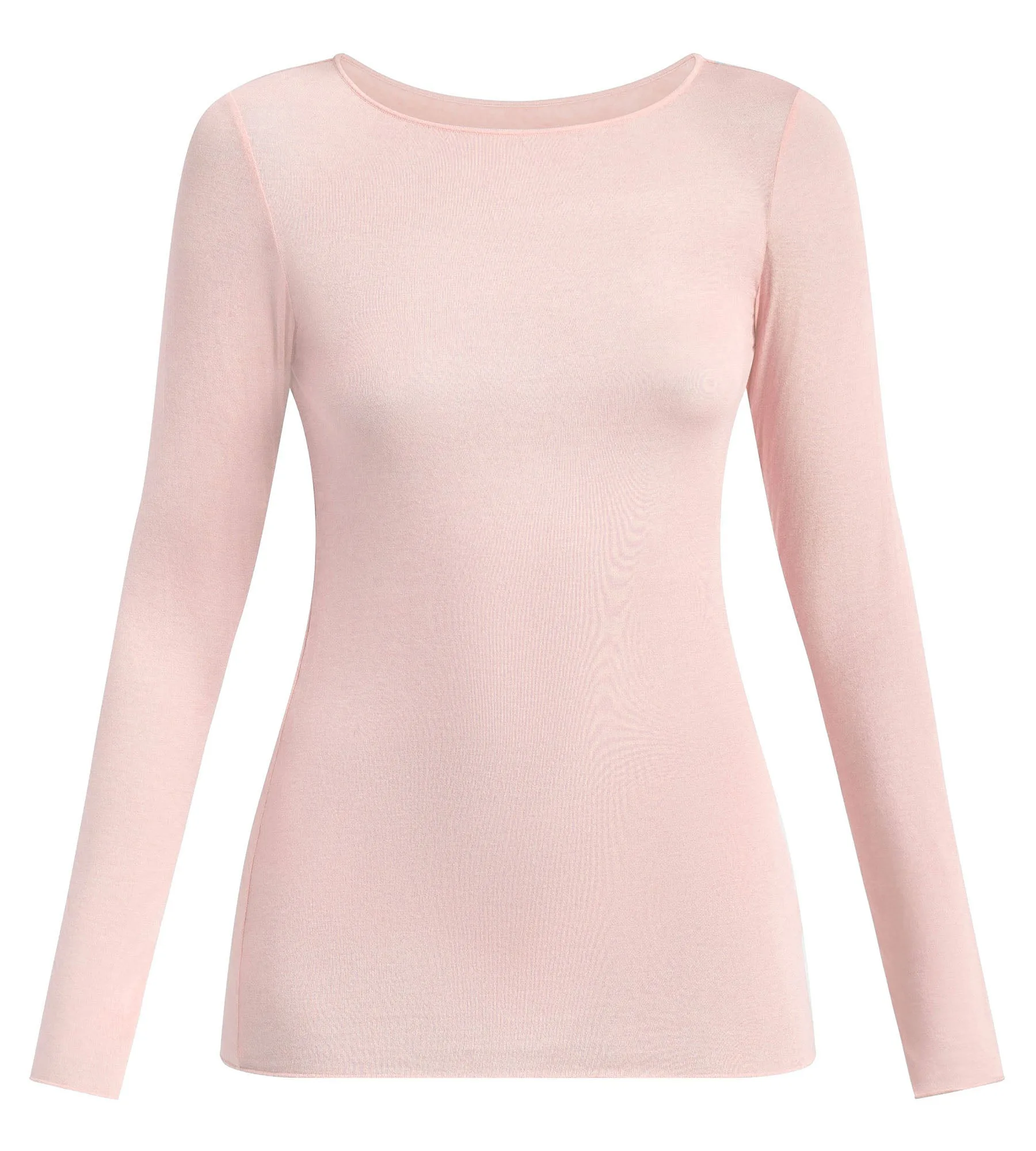
This is where a DIM nightwear basic like the https://dimegbn.com/products/t-shirt-col-rond-rose-doux-thermal-light-4f7273daafffdf3668173196-1412930T-shirt col rond rose doux Thermal Light earns its place. Its modal and cashmere blend gives moderate insulation without bulk, so it works as a base layer under a robe or on its own when the temperature is mild.
- Checkpoint: if all your sets are the same weight, you will be uncomfortable half the year.
Step 6: Add one robe or layer, not three
A single lightweight robe or cardigan extends the range of every set. It covers you for trips to the kitchen, early mornings, and guests. Choose a color from your palette so it works over everything.
Skip the heavy fleece robe unless you live in a cold climate. It takes up space, needs more washing, and rarely matches a summer capsule. One mid-weight layer is the sweet spot.
- Checkpoint: the layer must fit over your bulkiest set without pulling at the shoulders.
Step 7: Test the capsule for one week before buying more
Wear only your capsule pieces for seven days. Note what you reached for, what stayed folded, and what you wished you had. This test reveals gaps better than any checklist. It also shows whether your laundry plan actually works.
After the week, replace only what failed. If a waistband rolled or a strap slipped, fix that specific problem. Do not add a new category just because it is on sale. A capsule stays useful when every addition solves a real issue.
- Checkpoint: if you survived the week without borrowing from the reject pile, your capsule is complete.
Seven steps to a capsule nightwear wardrobe
- Audit your current sleepwear: Pull out every piece. Keep only what you wore in the last two weeks and what fits without adjusting. Checkpoint: if you would not pack it for a trip, it does not belong in the capsule.
- Set your target number: Count nights between laundry days and add one spare. Five to eight sets covers most routines. Checkpoint: write the number down before you shop so you do not overbuy.
- Lock a two- or three-color palette: Choose one dark, one light, and one optional accent. Every top must work with every bottom. Checkpoint: lay all pieces together. If two clash, remove one.
- Match fabric to your sleep temperature: Cotton and modal for hot sleepers, modal-cashmere or light thermal for cold sleepers. Keep to two easy-care fabrics. Checkpoint: if it needs a separate wash cycle, it is not a basic.
- Cover warm, cool, and in-between nights: One light set, one warm set, one mid-weight set. A modal tee like the Thermal Light handles the middle range. Checkpoint: if all sets are the same weight, you will be uncomfortable half the year.
- Add one layer, not three: A single mid-weight robe or cardigan in your palette extends every set. Skip heavy fleece unless you need it. Checkpoint: the layer must fit over your bulkiest set without pulling.
- Test for one week, then adjust: Wear only capsule pieces for seven days. Replace only what failed, and do not add new categories on impulse. Checkpoint: if you did not need the reject pile, your capsule works.
DIM pieces that fit a capsule nightwear wardrobe
- T-shirt col rond rose doux Thermal Light: Modal and cashmere blend with a fine knit, fitted cut, and classic round neck in soft pink. The fine knit stays invisible under other layers, and the moderate insulation makes it a strong in-between-season basic that pairs with shorts, long pants, or a robe.
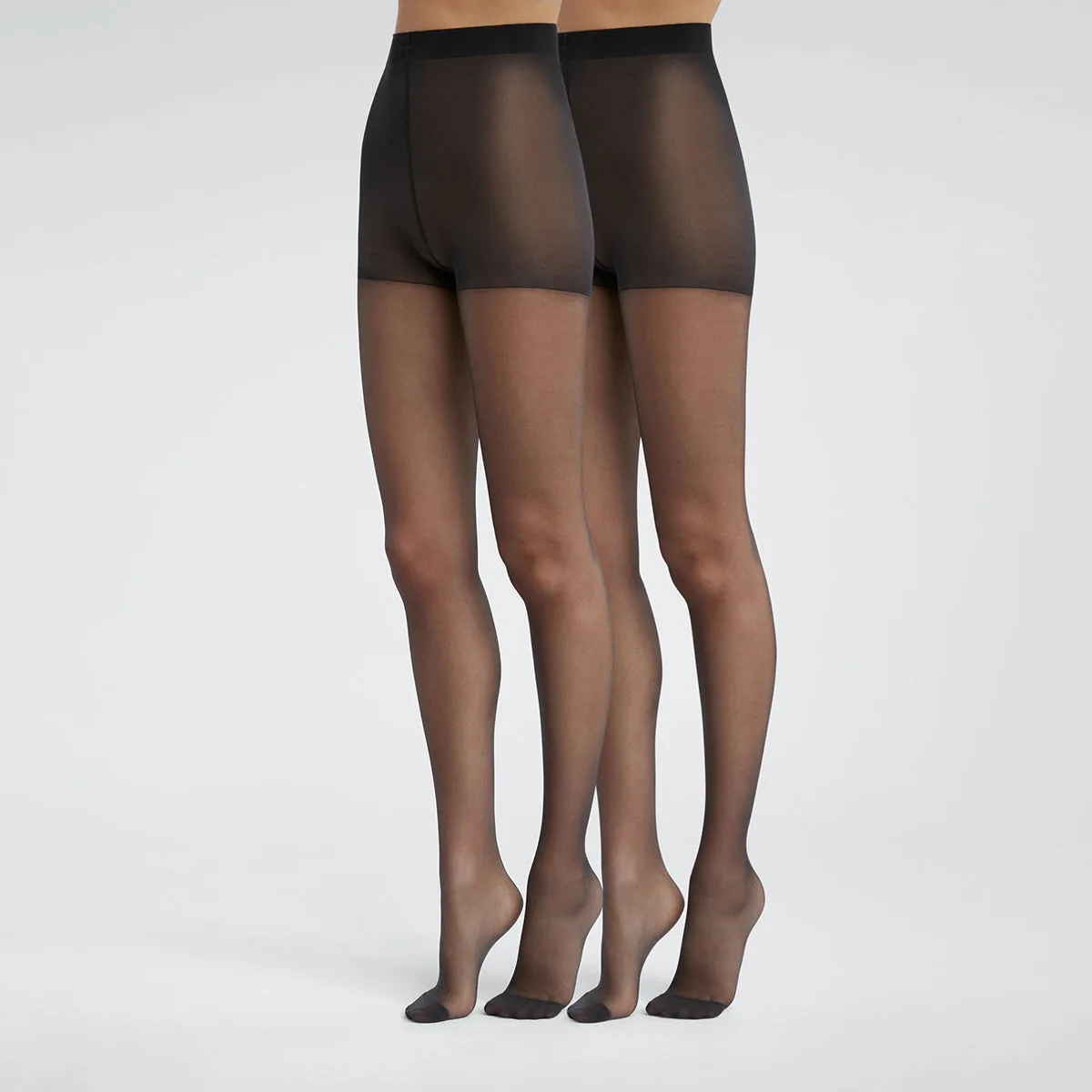
- Lot de 2 collants femme transparents en Lycra Noir Diam’s Voile Galbé: 22D sheer Lycra tights with a light veil, reinforced toes, and a built-in panty that supports and smooths. These are not sleepwear, but they belong in the same drawer logic: a two-pack of a single reliable basic covers multiple outfits without decision fatigue, which is the same principle behind a capsule.
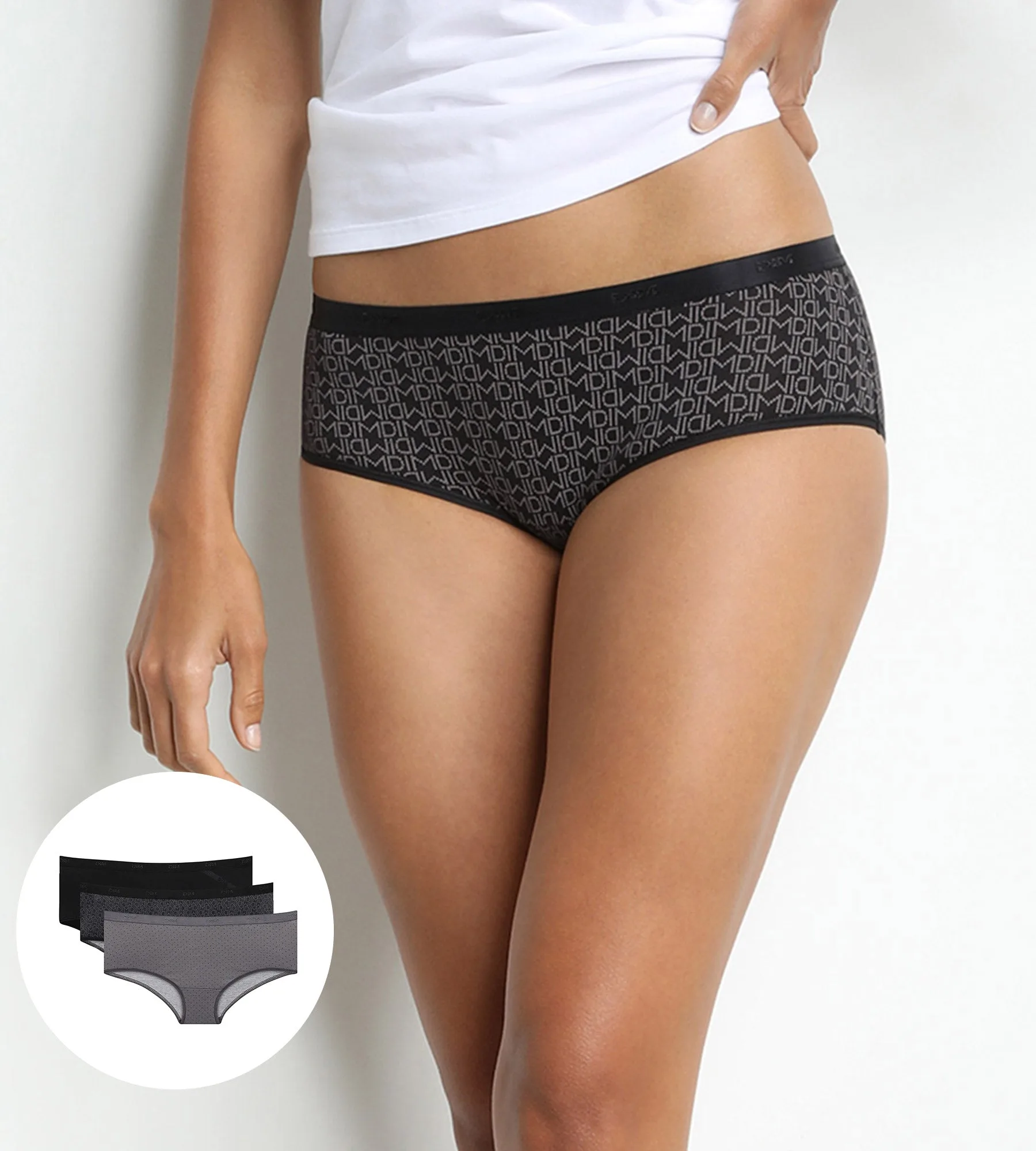
- Lot de 3 boxers noirs Femme Les Pockets Coton: Three black cotton and elastane boxers with a comfortable waistband and modal prints; sizing advice suggests choosing the larger size if between two. A three-pack of one color is the fastest way to build the bottom half of a capsule. The cotton-elastane blend washes easily and the all-black palette pairs with any top.
A capsule nightwear wardrobe is less about a perfect list and more about a repeatable system. Start with your laundry rhythm, pick a tight palette, and choose fabrics that match how you sleep. Then test for a week and fix only what actually failed. Done that way, your sleepwear drawer stays simple, comfortable, and ready every night.