Quick answer
Start by sorting pieces by color and edge shape, then assemble the border before working inward in small sections. Use a large flat surface and good lighting.
Why sorting matters more than you think
Dumping all 1000 pieces onto a table and hunting for matches is the fastest way to get frustrated. Sorting divides the huge task into manageable groups, so your brain can focus on one color or pattern at a time. A little upfront organization saves hours of searching later.
The border-first approach is not always best
Most guides tell you to build the edge first. That works well when the border has a distinct color or pattern. But if the puzzle's edge pieces look similar to interior pieces, you may spend too long hunting for border pieces. In that case, start with a recognizable section in the middle and use the border as a later anchor.
Step-by-step puzzle assembly guide
- Sort pieces by color and edge type: Separate all edge pieces (straight edges) into one pile. Then group the rest by dominant color or pattern. Use small trays or lids to keep groups separate. Common mistake: mixing similar shades together, which makes finding matches harder later. If a piece has two colors, put it in the group of the color that appears more.
- Assemble the border frame: From your edge pile, find corner pieces first. Then connect straight edges to form the full border. Check the box image to confirm orientation. Common mistake: forcing a piece that almost fits but doesn't lock smoothly — it probably belongs elsewhere. Leave the border loose until you are sure all pieces are correct; you can adjust later.
- Build recognizable sections inside the frame: Pick one color group and assemble that section on a separate board or mat. Start with the most distinct feature (a face, a tree, a bright object). Move the completed section into the border when ready. Common mistake: trying to build too many sections at once, which clutters your workspace. Finish one small area before starting another; this keeps momentum and reduces confusion.
- Connect sections and fill gaps: Once several sections are done, fit them together inside the border. Use piece shapes (knobs and holes) to match leftover pieces to empty spots. Common mistake: ignoring piece shape and relying only on color, which leads to wrong fits. If a piece seems to fit but the colors don't align, it's the wrong piece — remove it.
Puzzle we recommend for practice
-
The Dreams and Nightmares of a Dog (1000 Piece Puzzle): This puzzle was drawn by Matthew Inman of The Oatmeal and is based on his dog, Rambo. The thought bubbles show what he dreams about while napping. The distinct left (nightmares) and right (dreams) sections make it easy to sort by color theme, which is ideal for a beginner practicing section-building.
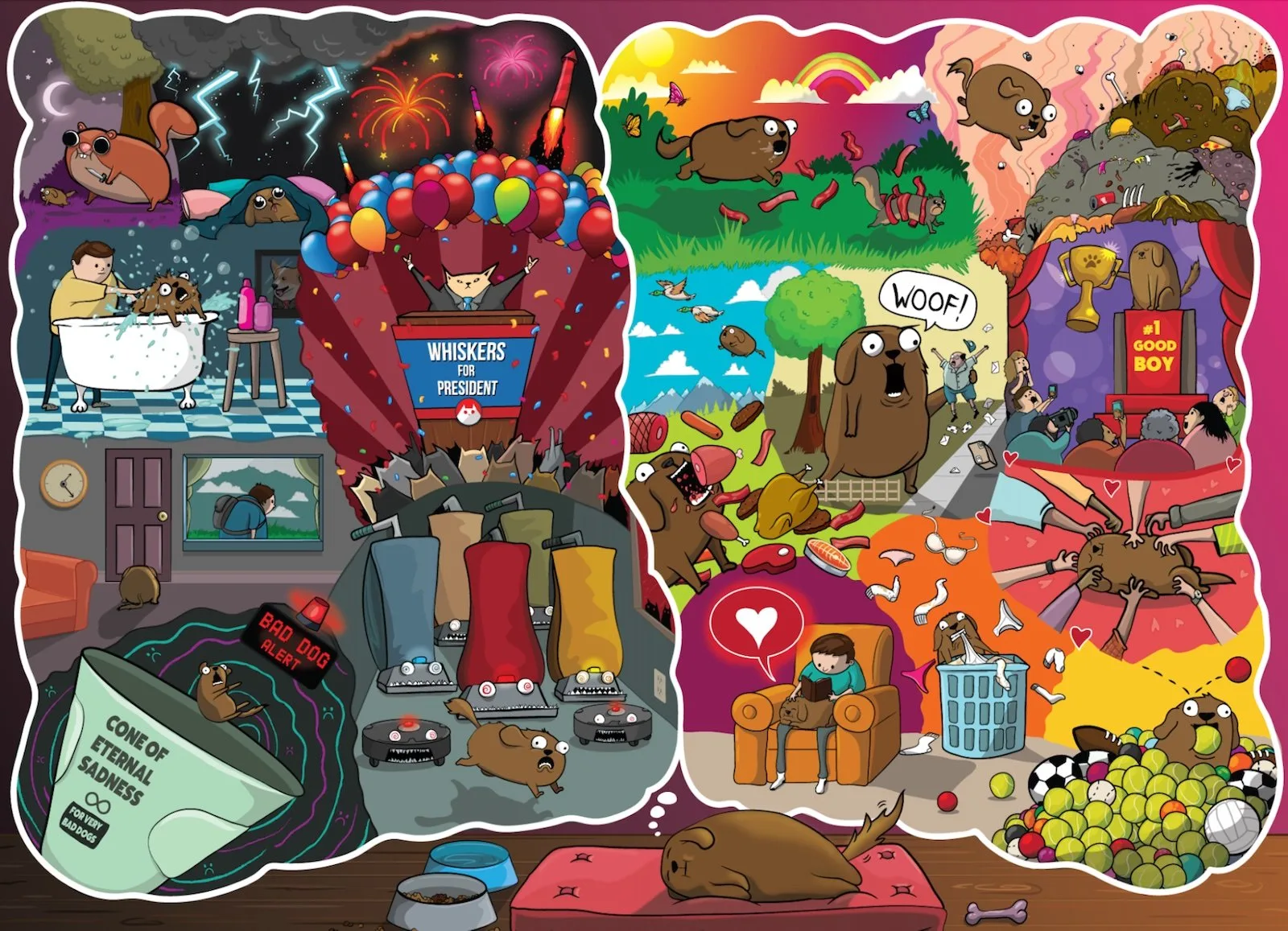
The Dreams and Nightmares of a Dog (1000 Piece Puzzle)