Quick answer
Choose 18 mesh when you want finer detail, smoother shading, and a more refined finished surface; choose 13 mesh when you want faster coverage, easier visibility, and a project that moves quickly. If you are new to needlepoint or stitching a large area, 13 mesh is usually the friendlier starting point, while 18 mesh rewards patience with detail.
Mesh count is the number of canvas threads per inch, and it quietly decides how much detail a design can hold, how quickly your needle moves, and which threads look right in the finished piece. A 13 mesh canvas has 13 threads per inch; an 18 mesh canvas has 18. That difference of five threads per inch changes almost everything about how a project feels in your hands.
This comparison looks at what each count does well, where each one frustrates stitchers, and how to match mesh to the canvas in front of you. The examples here come from real designs in the August Design Works catalog so you can see the trade-offs on actual projects rather than in the abstract.
What mesh count actually changes
Mesh count sets the size of each stitch. On 18 mesh, each stitch covers a smaller square of canvas, so a painter can place more stitches in the same space. That extra resolution is why fine faces, small lettering, and gentle color transitions look crisp on 18 mesh and muddier on 13. On 13 mesh, each stitch is larger, so the same design reads bigger and bolder with fewer stitches overall.
The practical result is a trade between detail and speed. A 13 mesh canvas covers area faster because you are making fewer, larger stitches, which suits backgrounds, simple shapes, and projects you want to finish without a marathon. An 18 mesh canvas takes longer per square inch but gives you the control to render subtle shading and small motifs that would disappear at a coarser count.
- Count threads per inch along one edge of the canvas to confirm the mesh before you buy thread.
- If a painted design has tiny facial features or thin lettering, that is a sign it was drawn for a finer count.
Thread coverage and tension on each count
Thread that covers well on 13 mesh can look thin and skimpy on 18 mesh, and thread that fills 18 mesh beautifully can look cramped on 13. The rule of thumb is to match thread weight to mesh: heavier threads for 13, finer threads for 18. Because the catalog records here do not list recommended thread weights for individual canvases, treat thread choice as a decision you make per project rather than a specification you can assume.
Tension behaves differently too. Larger stitches on 13 mesh are more forgiving of a slightly loose pull, while 18 mesh shows uneven tension more readily because each stitch is smaller and more visible. If your tension tends to wander, a coarser canvas hides it better; if you enjoy precise, even stitching, a finer canvas rewards that habit.
- Stitch a one-inch test square on scrap canvas before committing thread to a full project.
- On 18 mesh, work in smaller sections so you can catch tension drift early.
How the same design reads on different counts
A design painted for 18 mesh often loses its sharpest details if you try to stitch it on 13 mesh, because there are simply fewer places to put stitches. Conversely, a bold graphic painted for 13 mesh can look sparse on 18 mesh unless you add stitches or adjust the thread. This is why the canvas and the mesh count should be chosen together, not separately.
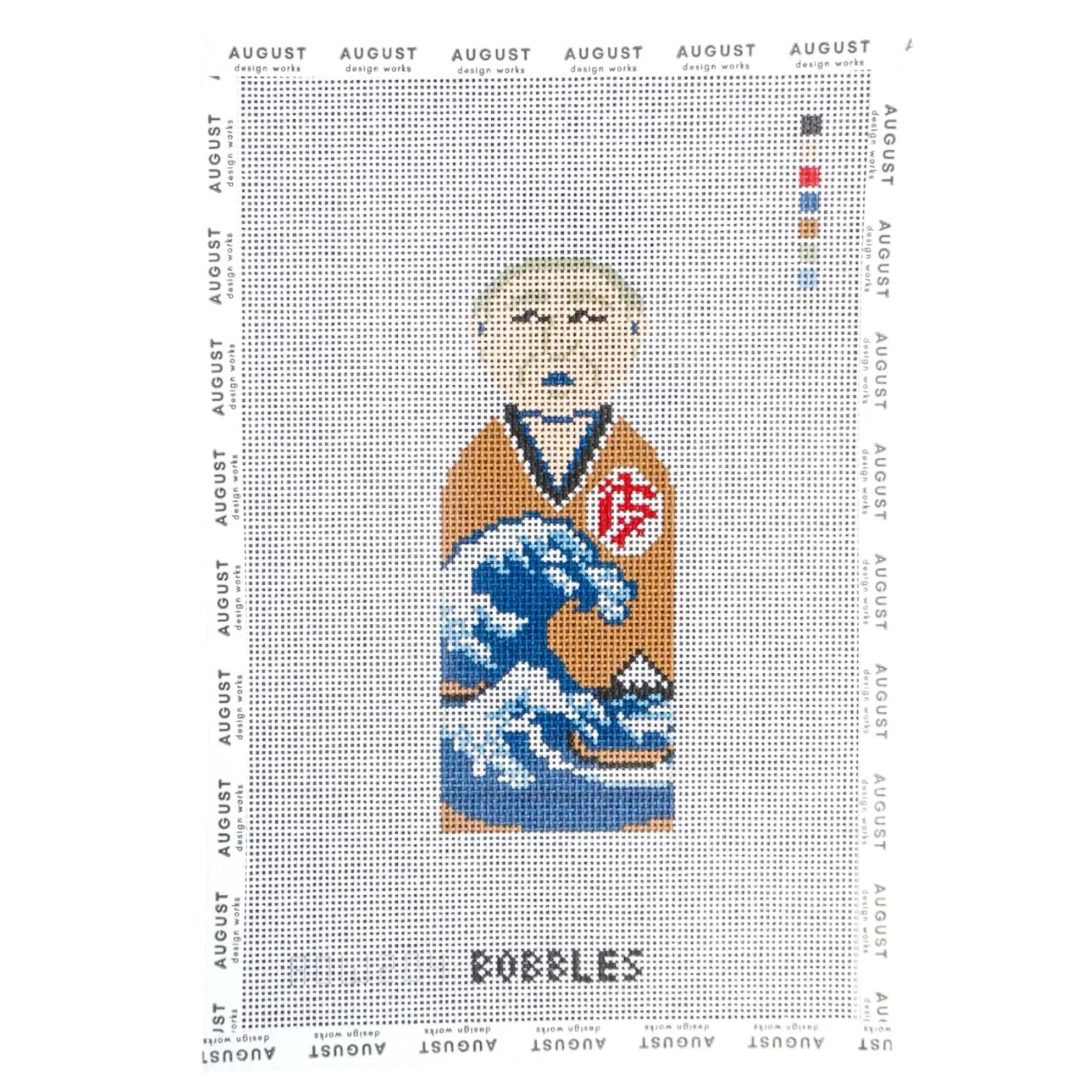
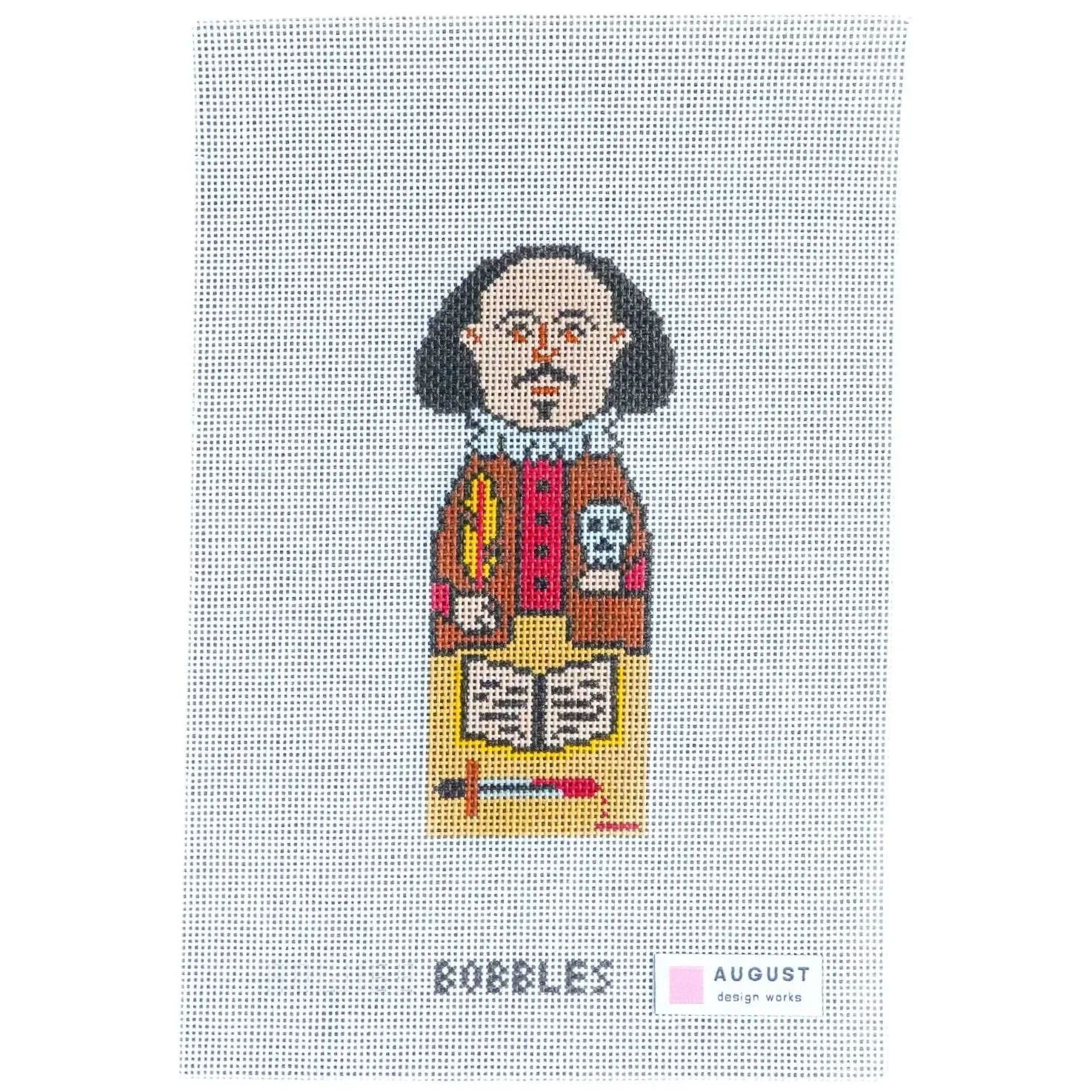
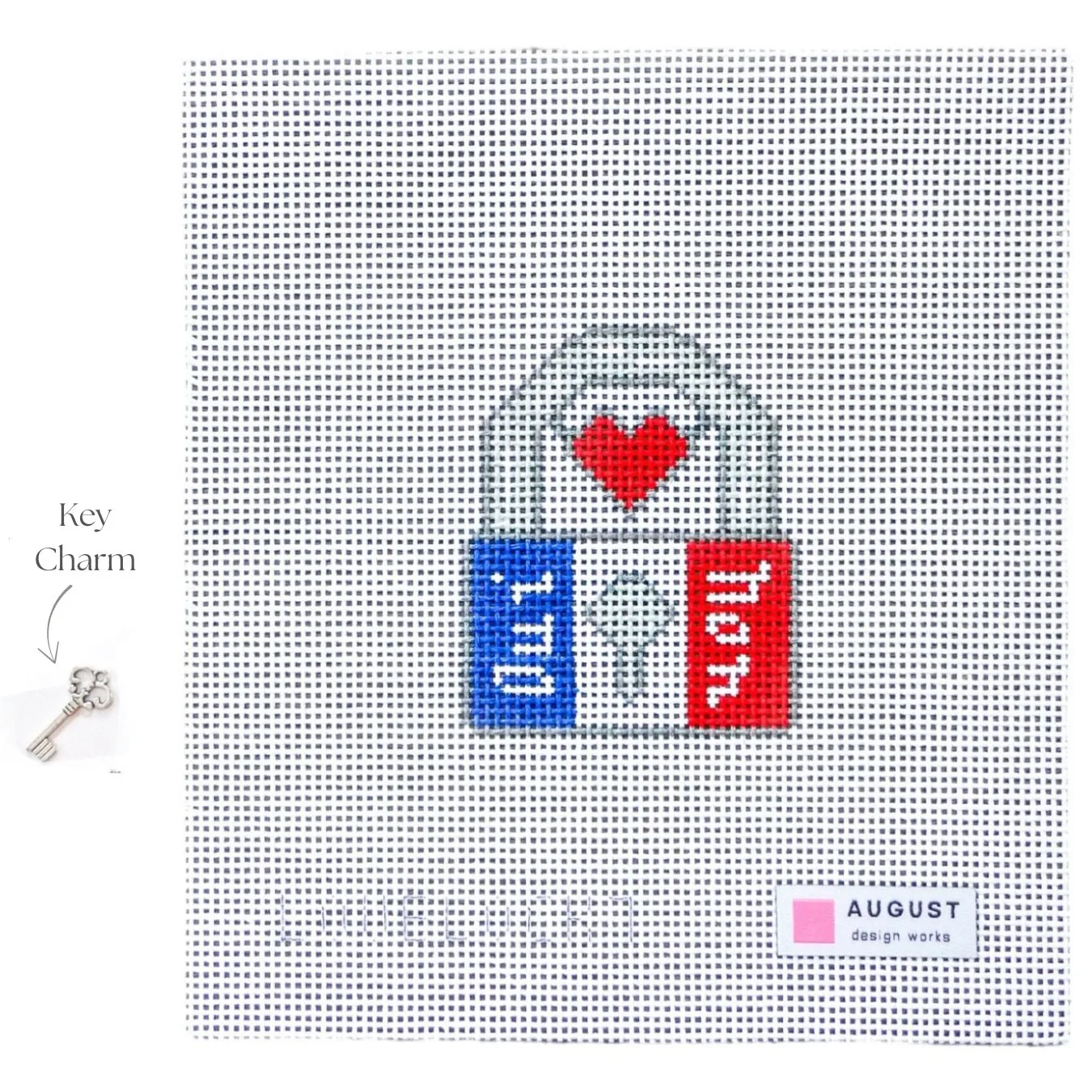
In the August Design Works catalog, the Bobbles Series canvases are painted on 18 mesh, which suits their portrait-style detail and small identifying elements. The Paris Love Lock is painted on 13 mesh, which fits its larger graphic shapes and charm-oriented format. Neither count is better in general; each matches the level of detail the design needs.
- Check whether the painted design has fine lines before assuming a coarser mesh will work.
- If you love a design but dislike its count, adjust thread and stitch choices rather than forcing the canvas.
Time, cost, and project size
A 13 mesh canvas generally finishes faster because there are fewer stitches per inch, which matters on large pieces like pillows, stockings, or backgrounds. An 18 mesh canvas takes more hours per square inch, so it suits smaller formats such as ornaments, charms, and detailed focal panels where the extra time buys visible refinement.
Cost is not determined by mesh count alone. In the supplied catalog, the 18 mesh Shakespeare Bobble, Martha Bobble, WIP IT Bobble, Darwin Bobble, and Hokusai Bobble are each listed at USD 37.50 with a catalog comparison price of USD 75.00, while the 13 mesh Paris Love Lock is listed at USD 19.50 with a catalog comparison price of USD 39.00. Those prices reflect the individual products, not a universal rule about mesh.
- Estimate stitching time by area, not by mesh alone: a small 18 mesh canvas can finish faster than a large 13 mesh one.
- For gifts with a deadline, a 13 mesh canvas usually offers a safer timeline.
Trade-offs at a glance
- Detail versus speed: 18 mesh gives you more stitches per inch for finer faces, lettering, and shading; 13 mesh covers the same area with fewer, larger stitches and finishes faster. Pick 18 mesh when the design's small details matter most; pick 13 mesh when finishing time matters most.
- Thread and tension management: 13 mesh tolerates heavier threads and slightly uneven tension; 18 mesh needs finer threads and more consistent tension to look its best. If you dislike fiddly thread matching, a coarser canvas is more forgiving.
- Project format: Large formats such as pillows and stockings favor 13 mesh for time and coverage; small formats such as ornaments and charms favor 18 mesh for refinement. Match the count to the finished object, not just to the painted design.
- Design intent: Some canvases are painted with a specific count in mind, like the 18 mesh Bobbles Series or the 13 mesh Paris Love Lock, and their detail level reflects that choice. When in doubt, stitch the canvas on the count it was painted for.
Catalog examples and what they show
- Paris Love Lock - Needlepoint Canvas + Key Charm (Wholesale): This 13 mesh canvas is inspired by the tradition of fastening a lock to a bridge and tossing away the key, and by Paris's Pont des Arts, where sweethearts sealed their promises. The 13 mesh count suits the larger graphic shapes and keeps the project approachable, making it a good fit if you want a faster stitch with clear, readable motifs.
- Shakespeare Bobble - Needlepoint Canvas (Wholesale): This 18 mesh canvas is part of the Bobbles Series, hand-painted needlepoint canvases designed to be stitched, displayed, and collected, inspired by Shakespeare's legacy as a playwright and poet. The finer 18 mesh count supports the portrait-style detail and small identifying elements that make a Bobble recognizable, so the extra stitching time translates into a more refined finished piece.
- https://augustdesignwork.com/products/hokusai-bobble-wholesale-1a0811376ffe86f7184e85b4-1481585Hokusai Bobble - Needlepoint Canvas (Wholesale): This 18 mesh canvas celebrates Katsushika Hokusai, born in Edo in 1760, who worked across nearly every artistic medium Japan had to offer and changed his name over thirty times. A tribute canvas with this much visual information benefits from 18 mesh, where small painted details survive the stitching process instead of blurring together.
Which count should you choose?
Best for
- Stitchers who want fine detail, smooth shading, and a polished finished surface on small to medium canvases
- Experienced stitchers comfortable managing tension and finer threads on 18 mesh
- Collectible or portrait-style designs where small identifying features need to survive stitching
Not for
- Beginners who want fast, forgiving coverage on a first project, who should start with 13 mesh
- Large background-heavy projects with a tight deadline, where 13 mesh finishes faster
- Stitchers who prefer heavier threads and looser tension, which suit 13 mesh better than 18
Mesh count is a design decision, not a difficulty ranking. Choose 18 mesh for detail and refinement, 13 mesh for speed and forgiveness, and when a canvas is already painted for a specific count, trust that choice. If you are unsure, stitch a small test area on each count and let your own hands decide.