Quick Answer
For most hobby projects, a 16MHz ceramic resonator is simpler and cheaper, but if you need precise timing—like for serial communication or a real-time clock—choose a 16MHz quartz crystal.
Accuracy vs. Convenience
Ceramic resonators and quartz crystals both generate a clock signal, but they differ in frequency stability. Quartz crystals are more accurate and less affected by temperature, making them the right choice for timing-sensitive circuits like UART communication or timekeeping. Ceramic resonators are less precise but are easier to use because many include built-in load capacitors, reducing external parts.
Cost and Package Trade-offs
Ceramic resonators are generally cheaper and come in small surface-mount packages, which is great for compact designs. However, through-hole crystals like the HC-49S are easier to prototype on a breadboard and are a familiar choice for Arduino builds. The right pick depends on whether you prioritize size and simplicity or precision and prototyping ease.
Trade-offs to Consider
- Accuracy: Quartz crystals offer high frequency stability, essential for precise timing in serial communication or clock circuits. Ceramic resonators have lower accuracy and may drift with temperature. If your project involves time-sensitive protocols, choose a crystal.
- Ease of Use: Ceramic resonators with built-in capacitors, like the Murata CSTCE16M0V53-R0, simplify your circuit by reducing external parts. Through-hole crystals like the HC-49S are easy to handle on a breadboard. For a quick prototype, a resonator saves time; for a permanent build, a crystal may be worth the extra components.
- Cost and Package: Ceramic resonators are typically cheaper and come in small SMD packages, ideal for compact designs. Crystals in through-hole packages are larger but often come in multi-packs, offering good value for experimentation. Consider your board space and budget: resonators win on size and price, crystals win on precision and prototyping convenience.
Oscillator Options at a Glance
-
ZTA16.00MX 16MHz Resonator: The ZTA16.00MX is a 16MHz ceramic resonator from the ZTA Series, offering a wide frequency range and extended temperature range capabilities. This resonator is a low-cost, compact option for general clock generation in hobby circuits where extreme precision isn't critical.
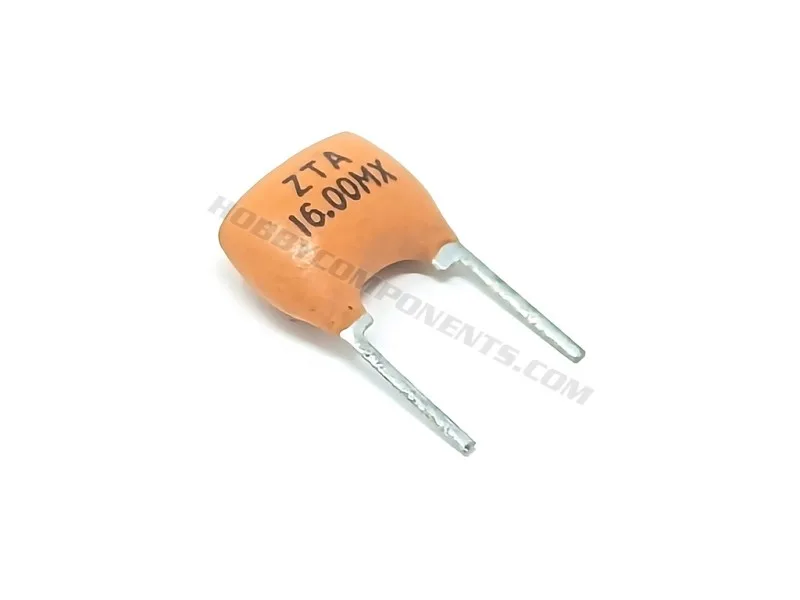
ZTA16.00MX 16MHz Resonator
-
Murata CSTCE16M0V53-R0 16MHz SM Resonator: The Murata CSTCE16M0V53-R0 is a 16MHz chip-type CERALOCK with built-in load capacitors, providing high accuracy in an extremely small package. The built-in load capacitors reduce external components, making this a space-saving choice for tight PCB layouts while still offering better accuracy than standard resonators.
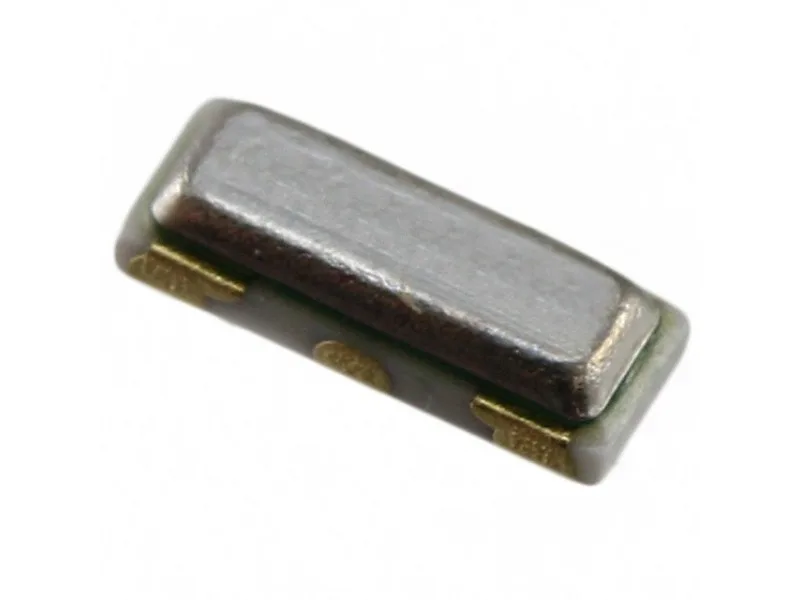
Murata CSTCE16M0V53-R0 16MHz SM Resonator
-
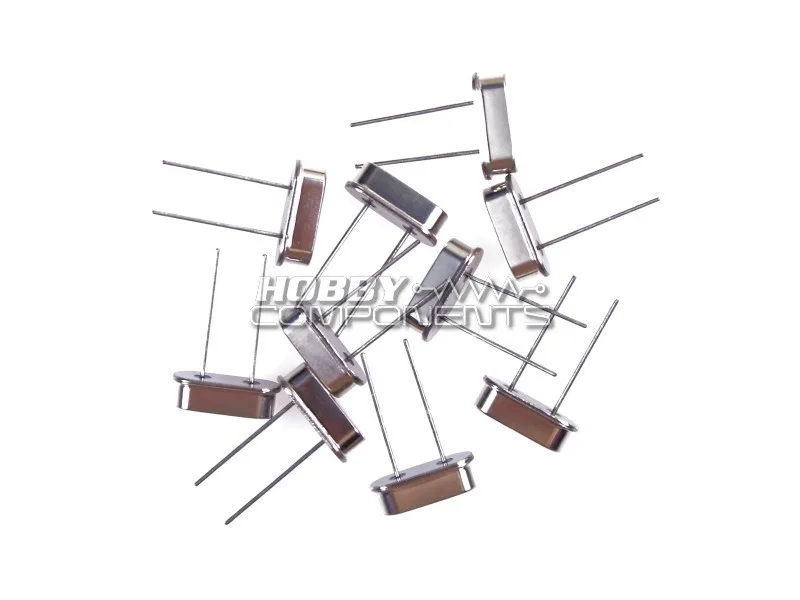
HC-49S 16MHz Crystal (Pack of 10): The HC-49S 16MHz crystal comes in a pack of 10 and is a standard through-hole package, suitable for microcontroller applications including Arduino. Through-hole crystals are easy to use on breadboards and PCBs, and the pack gives you spares for multiple projects or experiments.
Which Should You Choose?
Best for
- Hobbyists prototyping on breadboards who value ease of use and low cost
- Projects that need a compact oscillator with minimal external components
Not for
- Applications requiring high timing accuracy, such as UART communication or real-time clocks
- Designs where temperature stability is critical