Quick answer
Choose 18-pocket pages for maximum card density in a binder, ideal for bulk storage or complete sets. Choose 9-pocket pages for better visibility and a more spacious layout, perfect for premium cards or decks.
Capacity vs. Visibility: The Core Trade-off
The most significant difference between these two page sizes is how they balance storage density with card visibility. 18-pocket pages pack more cards per square inch, making them excellent for storing large collections or complete sets in fewer binders. However, the smaller pockets mean cards sit closer together, which can make it harder to view individual cards without removing them. 9-pocket pages offer larger, more spaced-out pockets. Each card has more room to breathe, making it easier to view and appreciate your collection at a glance. This layout is often preferred for display purposes or for cards that are frequently traded or played.
Compatibility with Card Sizes and Sleeves
Both the 18-pocket and 9-pocket pages from Gamegenic are designed to fit standard- and Japanese-sized cards. They also accommodate double-sleeved cards, a key feature for collectors who use inner and outer sleeves for maximum protection. The side-loading design on both pages helps prevent cards from sliding out, adding an extra layer of security. The main difference is that the 18-pocket pages have slightly narrower pockets. While they fit double-sleeved cards, the fit is tighter. If you use thick sleeves or have cards that are already in a snug inner sleeve, the 9-pocket pages provide a more comfortable and less cramped fit.
Trade-offs at a glance
- 18-Pocket Pages: Higher card density per page. Best for storing many cards in fewer binders, such as complete sets or bulk collections. Tighter fit for double-sleeved cards.
- 9-Pocket Pages: Lower card density but larger, more visible pockets. Best for display, premium cards, or decks that you handle often. More comfortable fit for double-sleeved cards.
- Side-loading design (both): Prevents cards from sliding out accidentally. Works with standard ring binders thanks to the 11-hole spine. Protects double-sleeved cards. Both types offer the same core security and binder compatibility. Your choice depends on whether you prioritize capacity or visibility.
Product facts at a glance
-
18-POCKET PAGES SIDE-LOADING (50 pages display): 18-pocket pages offer 18 side-loading pockets that protect even double-sleeved cards perfectly, and they fit in almost all standard-sized ring binders due to the versatile 11-hole spine. This means you can store up to 18 double-sleeved cards per page, maximizing binder space for high-density collections like complete sets or bulk trade stock.
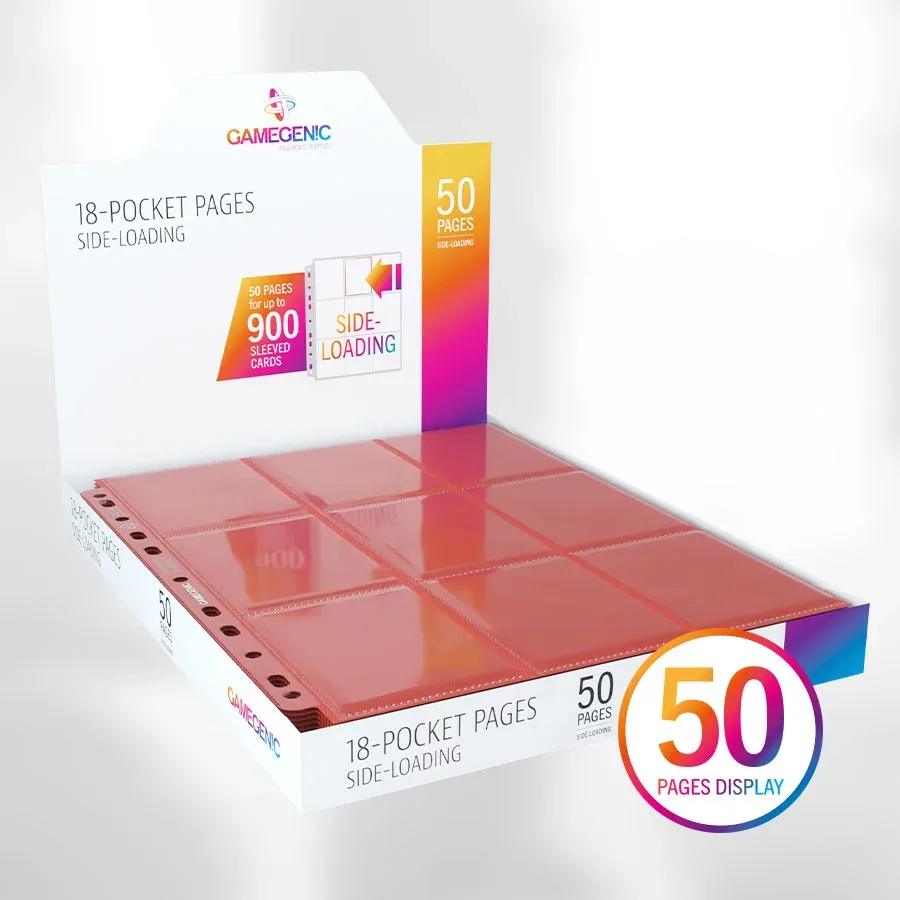
18-POCKET PAGES SIDE-LOADING (50 pages display)
-
ULTRASONIC 9-POCKET PAGESSIDE-LOADING (50 pages display): 9-pocket pages are made from extra clear polypropylene with ultrasonic-welded joints for strong, precisely measured pockets. They also have an 11-hole spine for standard binders and protect double-sleeved cards. The extra clear material and larger pockets make each card more visible, and the ultrasonic welding ensures the pockets won't stretch or tear, which is ideal for frequently accessed or high-value cards.
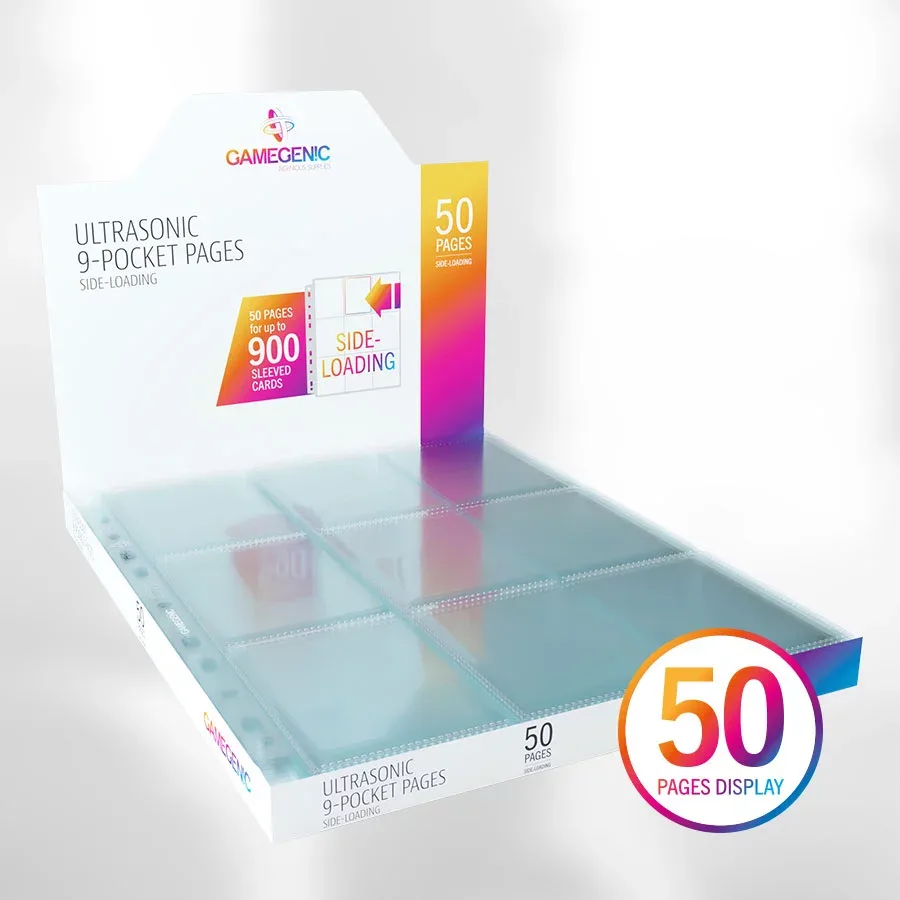
ULTRASONIC 9-POCKET PAGESSIDE-LOADING (50 pages display)
Which page is right for you?
Best for:
- Collectors who need to store large numbers of cards efficiently in a single binder (e.g., complete sets, bulk trade stock)
- Players who want to keep multiple decks in one binder without using multiple pages per deck
Not ideal for:
- Collectors who want to display premium or high-value cards with maximum visibility
- Players who frequently access individual cards and prefer a less cramped fit for double-sleeved cards