Quick answer
Choose 20–30 mmHg medical-grade compression socks if a clinician has recommended graduated compression for post-surgical recovery, anti-embolism support, or significant swelling—and you can commit to correct sizing and wear instructions. If you only want mild leg fatigue relief or everyday travel comfort, a lower pressure level is usually easier to tolerate and less likely to be overkill.
What 20–30 mmHg actually means for your legs
The mmHg number measures the pressure the sock applies at the ankle, with pressure gradually decreasing up the leg. A 20–30 mmHg range sits in the medical-grade tier—stronger than everyday 8–15 or 15–20 mmHg socks but not as intense as 30–40 mmHg. That middle ground is why it shows up in recovery settings: it aims to support venous return without the difficulty of donning a very high-pressure garment.
The trade-off is that 20–30 mmHg is less forgiving of a poor fit. A sock that is too tight at the calf or bunches at the ankle can create discomfort or restrict circulation instead of helping. Measure your ankle and calf circumference and follow the brand’s size chart rather than guessing from shoe size.
When medical-grade pressure is worth it—and when it isn’t
Medical-grade compression is typically chosen when a healthcare provider has identified a specific need, such as reducing edema after a procedure or supporting circulation during limited mobility. In those cases, the higher pressure is the point; a lighter sock may not deliver the same support.
For general tired-leg relief, long flights without a known circulation concern, or everyday standing, a lower level is often more comfortable and easier to wear consistently. Consistency matters more than intensity for routine comfort—so pick the level you will actually keep on.
Fit and wear details that change the decision
Medical-grade socks are usually tighter and harder to pull on than fashion compression. If you have limited hand strength, arthritis, or a caregiver who helps you dress, practice putting them on before relying on them daily. Some people find a stocking donner helpful, but check with your provider if you have skin sensitivity or wounds.
Also consider the sock length and toe style. Knee-high coverage is common for anti-embolism support, while open-toe designs can be easier to check toe color and temperature. The SexySkinz Medical-Grade Compression Socks (20–30 mmHg) come in multiple sizes and colors, so you can match the fit chart rather than defaulting to one universal size.
Decision rules for choosing 20–30 mmHg
- Start with the prescription, not the label: If a clinician has told you to use 20–30 mmHg or medical-grade anti-embolism socks, follow that instruction. If you are self-selecting for mild fatigue, start with a lower pressure level unless a professional advises otherwise. Write down the exact mmHg or grade your provider recommends before you shop.
- Match the sock to the recovery stage: Use 20–30 mmHg when the goal is post-surgical or post-procedure edema control and circulation support during reduced mobility. For long-term daily wear after you are fully mobile, ask whether you can step down to a lower level.
- Size by ankle and calf, not shoe size: Measure both legs at the ankle and the widest part of the calf, then use the brand’s size chart. If you are between sizes, choose based on the larger measurement—but confirm with the brand’s guidance because a too-loose sock will slide and a too-tight one can bind. Re-measure if your swelling changes noticeably; the size that fit in week one may not fit in week three.
- Check the wear window and skin: Follow your provider’s wear schedule. Remove the socks if you notice numbness, tingling, color change, or increasing pain, and inspect skin for redness or irritation. Medical-grade compression is not a wear-all-day-without-checking garment for most people.
Product facts to know
-
Medical-Grade Compression Socks (20–30 mmHg) Recovery & Anti-Embolism Support: Engineered with graduated 20–30 mmHg compression for post-procedure circulation support and DVT prevention. This is the pressure tier discussed in this guide, so it suits readers whose clinician has specified medical-grade compression rather than mild everyday support.
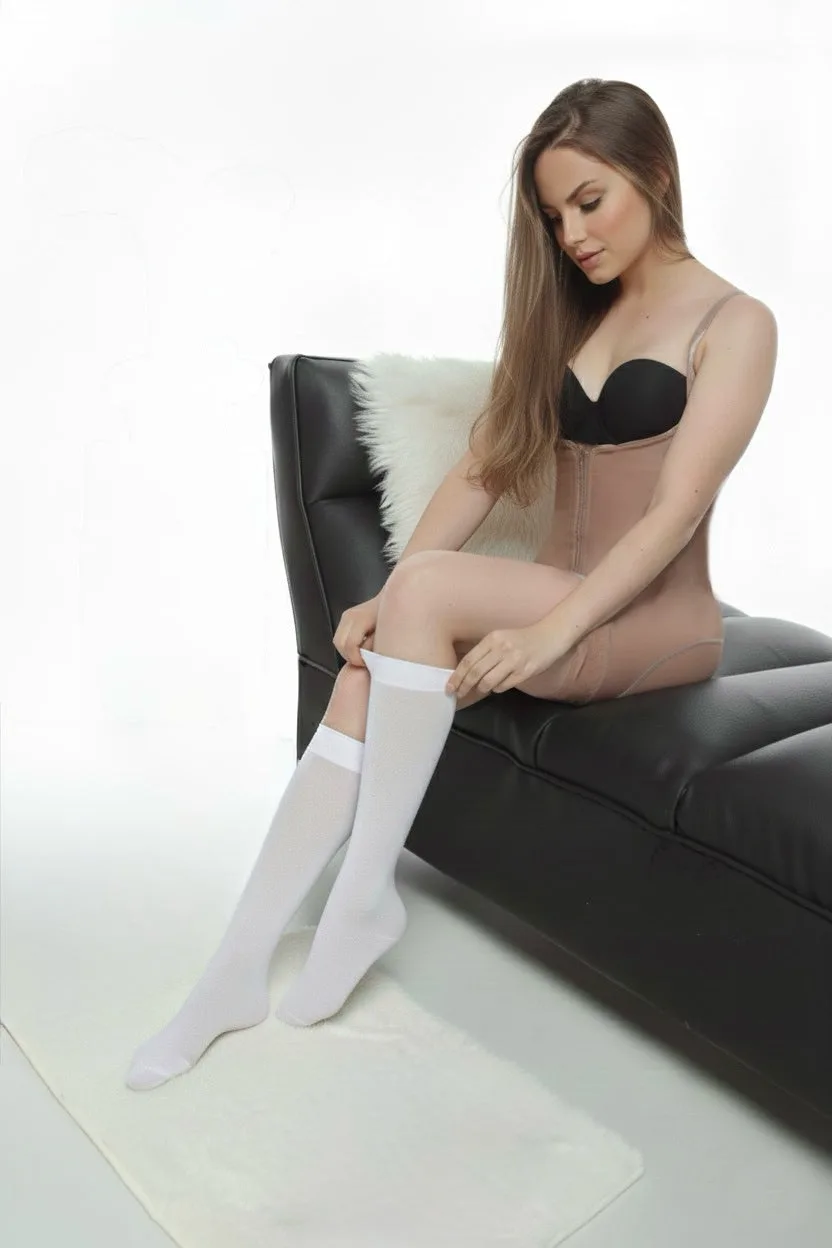
Medical-Grade Compression Socks (20–30 mmHg) Recovery & Anti-Embolism Support
Who should choose 20–30 mmHg medical-grade socks
Best for
- People whose clinician has recommended 20–30 mmHg compression after surgery or a procedure
- Anyone needing anti-embolism support during limited mobility or bed rest
- Travelers with a known circulation or swelling concern who have been advised to use medical-grade compression
Not for
- Mild everyday leg fatigue where a lower 8–15 or 15–20 mmHg sock would be easier to wear
- Anyone with arterial circulation problems or undiagnosed leg pain—seek medical advice before using compression
- People who cannot manage the tighter fit or who have skin conditions that make compression uncomfortable