Quick Answer
Pregnancy compression socks can significantly reduce leg swelling and ease tired, heavy legs by improving circulation. For most pregnant women, wearing them daily is a safe, non-invasive way to feel more comfortable.
Why Compression Socks Help During Pregnancy
As your pregnancy progresses, your growing uterus puts pressure on the veins in your pelvis, which can slow blood flow from your legs back to your heart. This can lead to fluid pooling in your ankles and feet, causing that familiar swelling (edema). Compression socks apply gentle, graduated pressure—tighter at the ankle and looser toward the knee—which helps push blood upward and reduces fluid buildup.
Beyond reducing swelling, better circulation can also ease the heaviness and fatigue many women feel in their legs, especially after long periods of standing or sitting. This makes compression socks a practical daily aid whether you're at work, at home, or on the go.
When to Consider Another Option
Compression socks aren't for everyone. If you have peripheral artery disease, diabetes-related nerve damage, or skin infections on your legs, wearing compression socks could be harmful. Also, if you experience sudden, severe swelling in one leg only, or swelling accompanied by pain, redness, or warmth, stop and contact your healthcare provider immediately—these can be signs of a blood clot.
For most pregnancies, 20-30mmHg compression is considered safe and effective, but always check with your doctor before starting any compression garment, especially if you have underlying health conditions.
Diagnosis: Is It Swelling or Something Else?
- Symptom: Noticeable swelling in both feet and ankles, especially later in the day, along with a feeling of heaviness or tiredness in your legs.
- Likely Cause: Normal pregnancy-related fluid retention and reduced blood flow from the legs due to pressure from the growing uterus. If swelling is mild and symmetric, compression socks are a safe first step.
- Corrective Action: Wear pregnancy compression socks during the day, especially when standing or sitting for long periods. Put them on in the morning before swelling starts, and remove them at night. Elevate your legs when resting. Consistency matters—daily wear gives the best results.
- Stop and Seek Medical Advice: If you experience sudden, severe swelling in one leg only, or swelling with pain, redness, warmth, or shortness of breath, stop wearing compression socks and contact your healthcare provider immediately. These signs may indicate a blood clot or other serious condition.
Product Facts
-
BABYGO® Pregnancy Compression Socks | Twin Pack: These twin-pack compression socks provide gentle, graduated 20-30mmHg compression to support circulation and help reduce swelling. This level of compression is often recommended for pregnancy-related swelling and offers a good balance of effectiveness and comfort for daily wear.
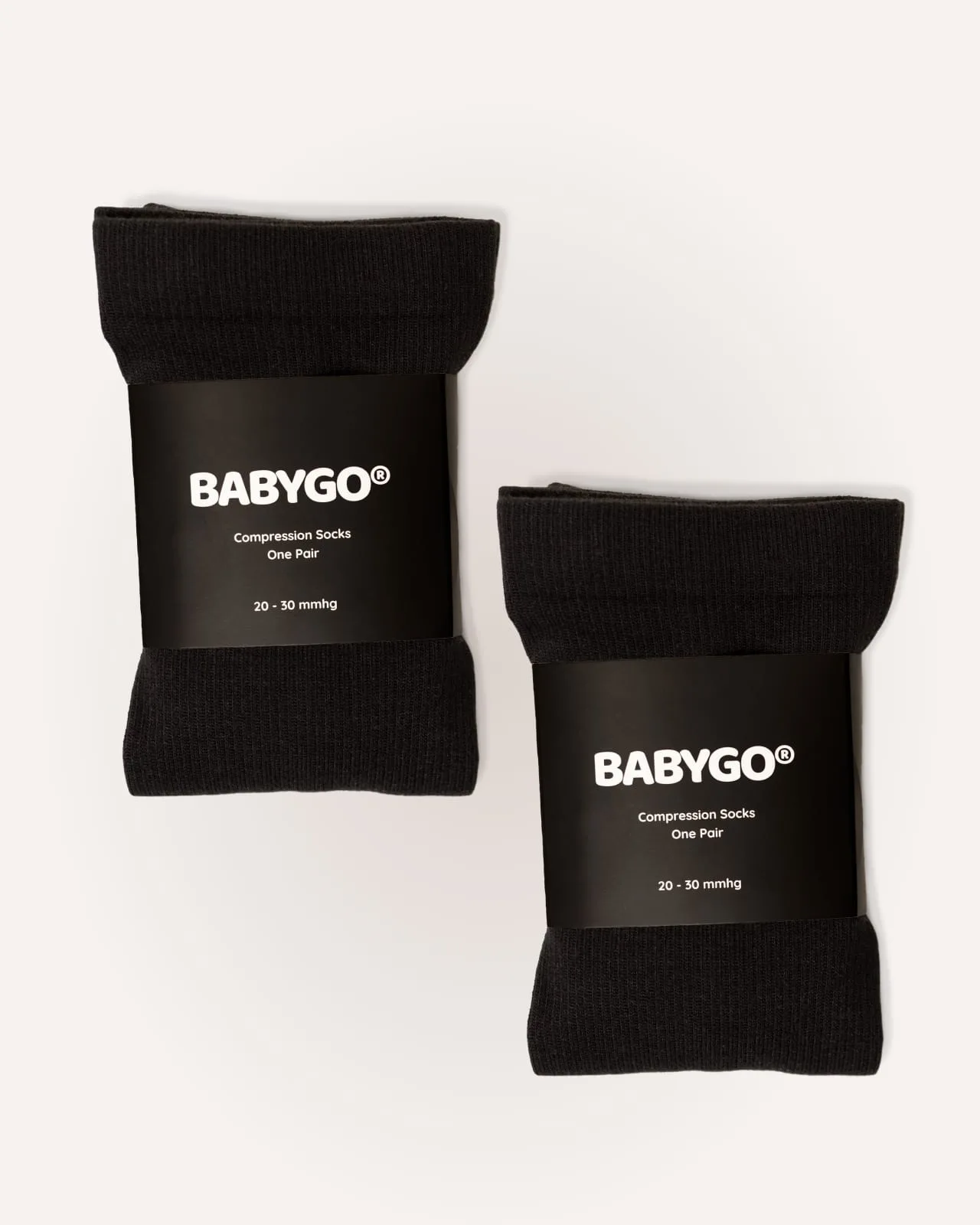
BABYGO® Pregnancy Compression Socks | Twin Pack