Quick answer
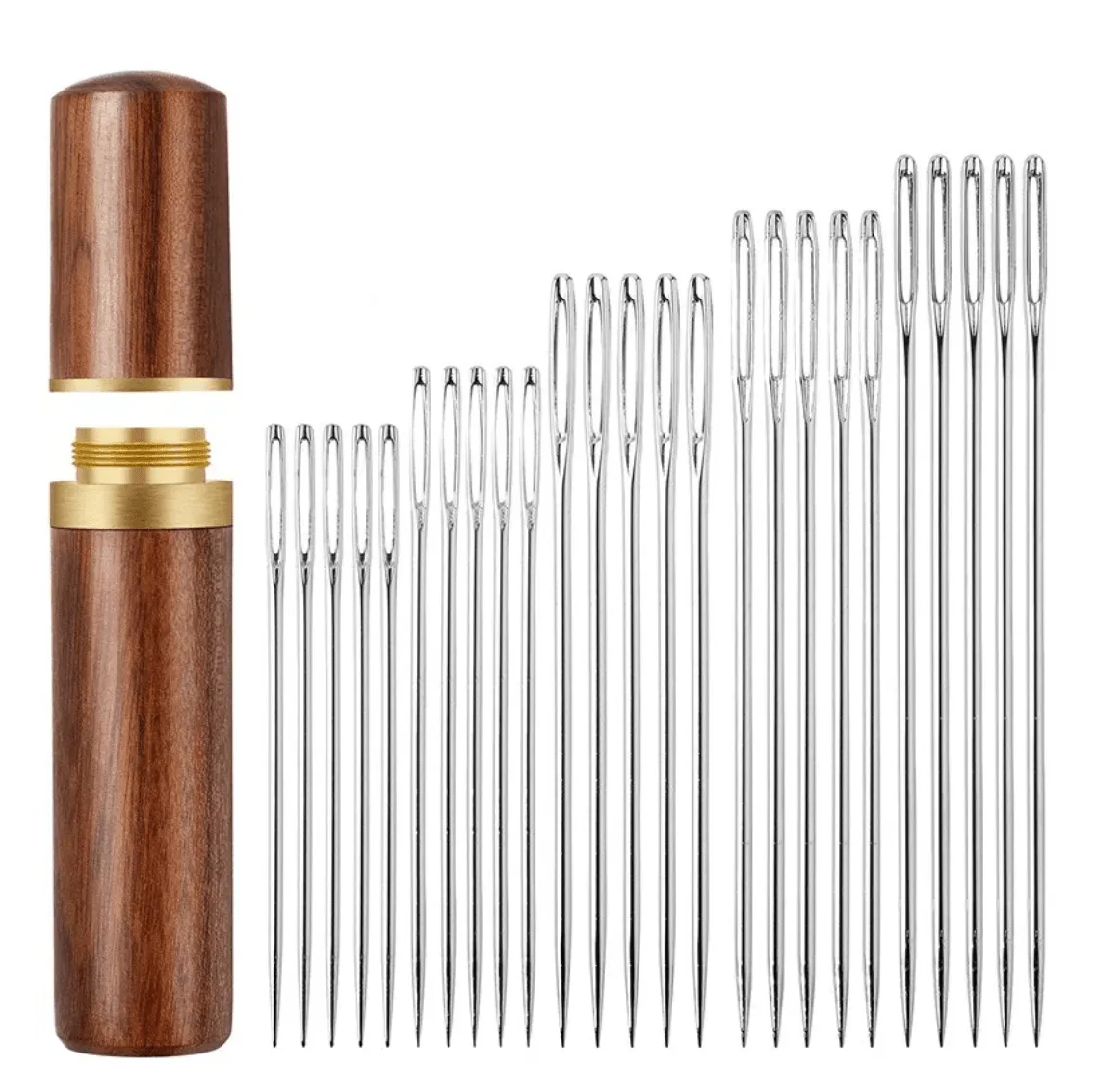
Large eye stitching needles are hand-sewing needles with an elongated eye that makes threading easier, especially for quilters who find standard needles fiddly. For most hand quilting, choose a size that matches your thread and fabric weight: a shorter, thicker needle for big-stitch quilting, a longer, finer needle for detailed work. The 25PCS Large Eye Stitching Needles set includes sizes from 1.6 to 2.4 inches and a wooden case, so you can test a few lengths before committing to one.
What sizes are in a large eye stitching needle set?
The 25PCS Large Eye Stitching Needles set contains needles ranging from 1.6 inches to 2.4 inches. That range covers common hand-quilting tasks: shorter needles for controlled stitches in small areas, longer needles for basting or reaching through thicker layers. The exact size of each needle is not marked on the set, so if you need a specific size for a pattern, measure the needles yourself or keep a separate labeled needle for reference. The wooden case helps keep the set together, but it does not label sizes.
How do I thread a large eye needle?
Fold the thread over the needle and pinch it flat, then slide the folded loop through the eye. Because the eye is elongated, you can also use a needle threader or a small piece of folded paper as a helper. If the thread still won't go through, check whether the eye is blocked by a burr; a quick pass with fine emery or a thread conditioner can smooth it. Do not force thick thread through a small eye, as it can fray and weaken the thread.
Which needle size should I use for hand quilting?
Match the needle to the thread and fabric, not to a universal rule. A thicker needle creates a larger hole, which can be useful for big-stitch quilting with perle cotton but may leave visible holes in fine cotton. A finer needle slips through tightly woven fabric with less resistance but can bend if you push too hard. For general hand quilting, start with a medium-length needle from the set and adjust based on how easily it passes through your quilt sandwich.
Can I use large eye needles for piecing and appliqué?
Yes, but choose the shortest needle in the set for piecing and appliqué. Short needles give you more control for small, precise stitches. The large eye helps when you are using thicker threads or when your eyes tire during long sessions. For very fine appliqué, a finer needle may still be better, so keep a range on hand. The set's variety lets you try different lengths without buying individual needles.
How do I care for large eye stitching needles?
Keep needles dry and store them in the wooden case to prevent rust. The set is described as rust-resistant, but that does not mean rust-proof. Wipe needles after use if your hands are damp or if you use lotion. Replace any needle that feels rough, bent, or snags thread. A needle that drags can damage fabric and make stitches uneven. The case also keeps needles from getting lost in your project bag.
FAQ checkpoints
Threading test
Try threading the needle with the thread you plan to use before you start a project. If it takes more than a few seconds, switch to a larger eye or a different needle size.
Fabric test
Push the needle through a scrap of your quilt sandwich to check for resistance or hole size. If the needle leaves a visible hole or bends, choose a different size from the set.
Storage check
Return needles to the wooden case after each session and keep the case in a dry place. This simple habit prevents rust and lost needles.
Product facts
- 25PCS Large Eye Stitching Needles: The 25PCS Large Eye Stitching Needles set includes 25 needles ranging from 1.6 inches to 2.4 inches and a premium wooden needle case. The size range covers common hand-quilting tasks, and the case keeps needles organized and protected.
- 25PCS Large Eye Stitching Needles: The needles are described as rust-resistant and glide through fabric for smooth stitching. Rust resistance helps the needles last longer with proper care, and smooth stitching reduces hand fatigue.