Start with your router's collet, then choose the radius
The 3/8 vs 1/2 inch roundover bit decision comes down to two separate questions: which shank your router accepts, and how much edge you want to soften. A 1/4-inch shank fits standard routers and trim routers with a 1/4-inch collet, while a 1/2-inch shank requires a compatible router. If your router only takes 1/4-inch bits, the 3/8-inch radius Whiteside 2003 is the practical starting point. If you have a 1/2-inch collet, the 1/2-inch radius Whiteside 2009 gives you a larger profile for heavier edge work.
Radius is not the same as cut depth. A 3/8-inch radius produces a 3/8-inch roundover profile; a 1/2-inch radius produces a 1/2-inch profile. The larger the radius, the more material comes off the corner and the softer the edge looks. For furniture, trim, and moldings, both sizes are common, but the right one depends on the thickness of your stock and the visual weight you want.
Whiteside 2003: 3/8-inch radius on a 1/4-inch shank
-
3/8″ Roundover Router Bit x 1/4″ Shank – Whiteside 2003: 3/8-inch radius, 1/4-inch shank, 1-1/4-inch large diameter, recommended RPM 13,000. The 1/4-inch shank fits standard routers and trim routers with a 1/4-inch collet, making this bit accessible if you do not have a 1/2-inch collet. The 3/8-inch radius is a moderate roundover for cabinets, furniture, and moldings.
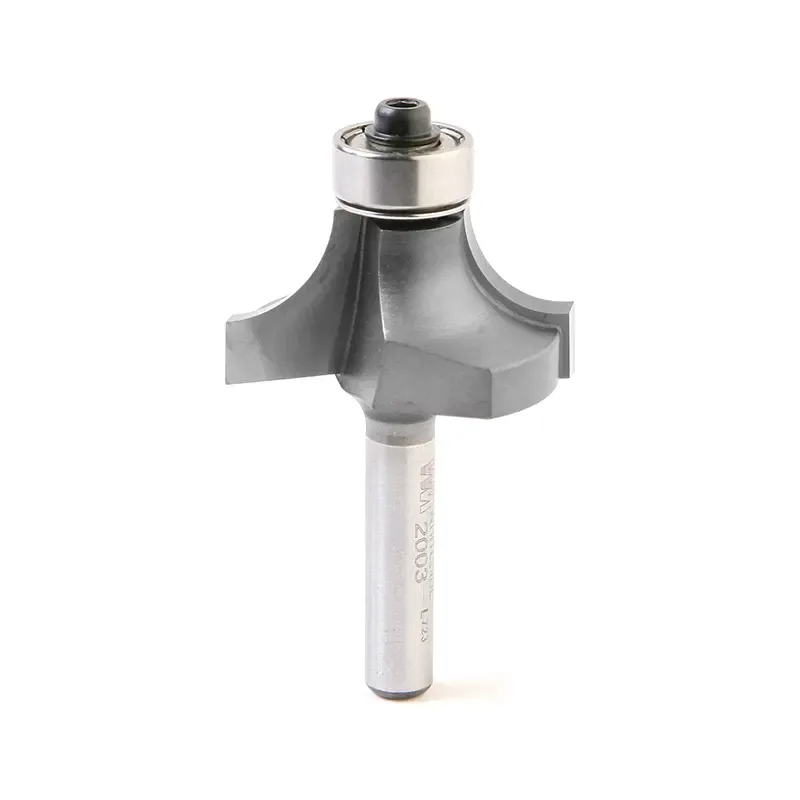
3/8″ Roundover Router Bit x 1/4″ Shank – Whiteside 2003
-
3/8″ Roundover Router Bit x 1/4″ Shank – Whiteside 2003: Used to round the edges on wood, plastic, and composites. If you work with materials beyond solid wood, this bit is rated for plastic and composites as well, so it covers more than just hardwood edge profiles.
Whiteside 2009: 1/2-inch radius on a 1/2-inch shank
-
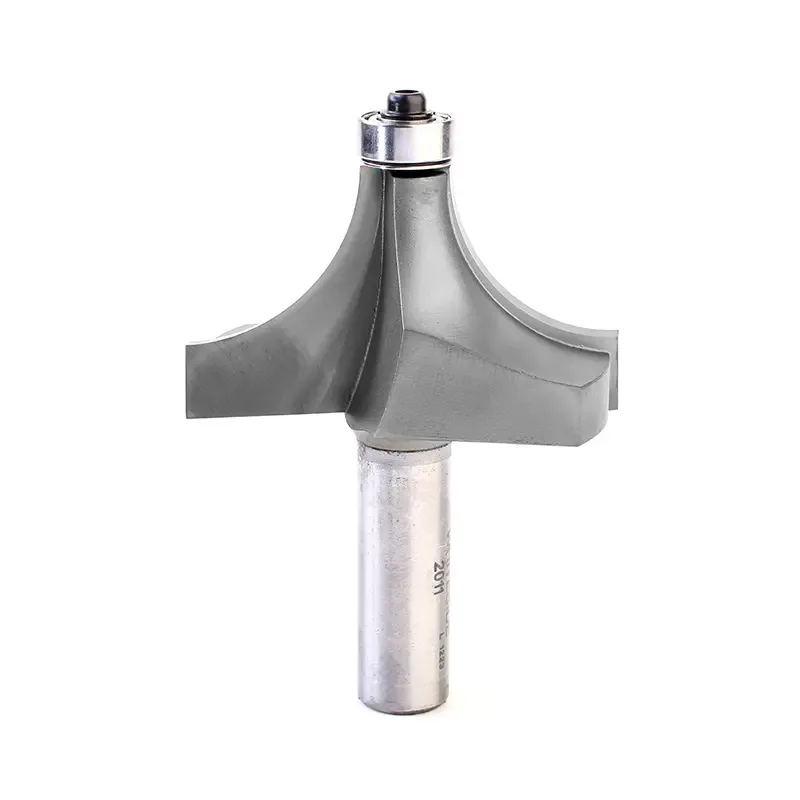
1/2″ Roundover Router Bit x 1/2″ Shank – Whiteside 2009: 1/2-inch radius, 1/2-inch shank, 3/4-inch cut length, 1-1/2-inch large diameter, recommended RPM 13,000. The 1/2-inch shank requires a compatible router with a 1/2-inch collet. The larger radius and cut length suit thicker stock and more pronounced edge profiles.
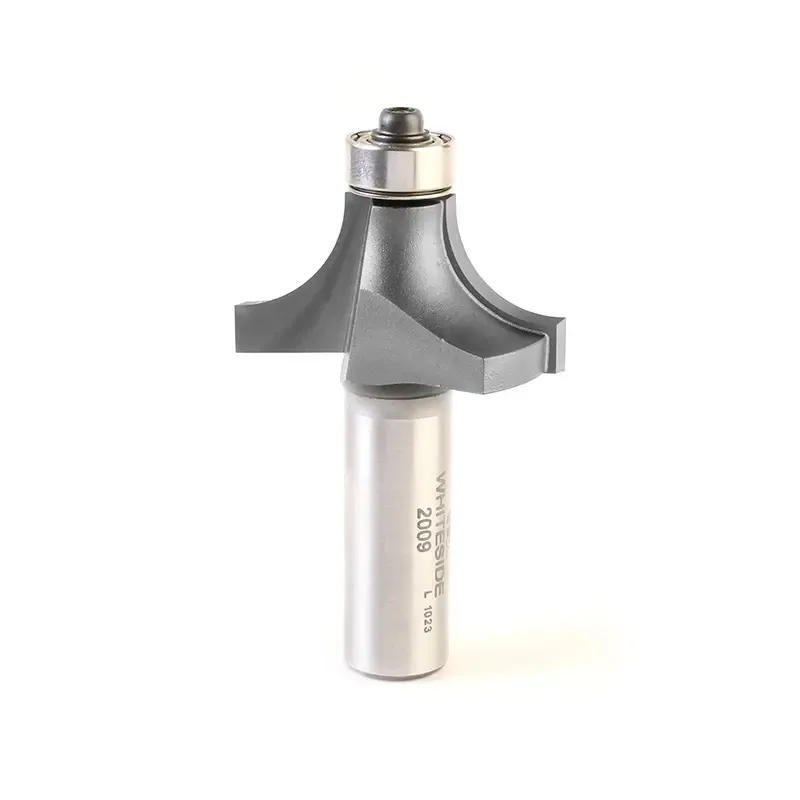
1/2″ Roundover Router Bit x 1/2″ Shank – Whiteside 2009
-
1/2″ Roundover Router Bit x 1/2″ Shank – Whiteside 2009: Used to round the edges on wood, plastic, and composites. Like the 2003, this bit is not limited to wood, so it can handle plastic and composite edge work when your router supports the shank size.
When the 3/8-inch radius is the better fit
Choose the 3/8-inch radius when you want a subtle, finished edge without removing too much material. It is a good match for 3/4-inch thick stock where a 1/2-inch radius might feel too aggressive or leave little flat surface. The 1/4-inch shank also makes it the safer choice for trim routers and smaller routers that do not accept 1/2-inch bits. If you are rounding the edges of cabinet parts, furniture components, or small moldings, the 2003 keeps the profile proportionate.
The trade-off is that a 1/4-inch shank is less rigid than a 1/2-inch shank. For light to moderate cuts in wood, plastic, and composites, that is usually fine, but you should follow the recommended 13,000 RPM and take sensible passes. The catalog does not supply a depth-of-cut limit, so let the material and your router's power guide you rather than forcing a full-depth cut.
When the 1/2-inch radius earns its place
Step up to the 1/2-inch radius when you want a more generous, softened edge on thicker stock or when the design calls for a pronounced roundover. The Whiteside 2009 has a 1/2-inch shank, which adds rigidity and is the common choice for larger routers. Its 3/4-inch cut length and 1-1/2-inch large diameter mean it can handle more substantial edge profiles, but it also demands a router that can safely turn a bit of that size.
The main constraint is your router's collet. If you only have a 1/4-inch collet, the 2009 is not an option without an adapter, and the catalog does not confirm adapter compatibility. Do not assume a 1/4-inch router can run a 1/2-inch shank bit. Check your router's manual and collet size before buying.
3/8 vs 1/2 inch roundover bit at a glance
- Shank size: Whiteside 2003 uses a 1/4-inch shank; Whiteside 2009 uses a 1/2-inch shank. Match this to your router's collet first.
- Radius: 3/8-inch radius on the 2003; 1/2-inch radius on the 2009. The larger radius removes more corner material and creates a softer edge.
- Large diameter: 1-1/4-inch on the 2003; 1-1/2-inch on the 2009. The larger bit may require more router power and clearance.
- Cut length: The 2003's cut length is not supplied in the catalog; the 2009 has a 3/4-inch cut length. Use the 2009 for deeper edge profiles when your setup allows.
- Recommended RPM: Both list 13,000 RPM. Always confirm your router's speed range and the bit's recommended RPM before cutting.
- Materials: Both are listed for wood, plastic, and composites. The catalog does not provide material-specific feed rates or depth limits.
What the catalog does not settle
The supplied records do not include preparation steps, depth-of-cut limits, or feed rates for either bit. They also do not confirm whether a 1/4-inch collet adapter can safely run the 1/2-inch shank 2009. Treat those as open questions to resolve with your router manufacturer's documentation and the bit's full instructions. The absence of that information here is not evidence that the bits lack those instructions; it simply means you should not guess.
For edge profiles on wood, plastic, and composites, both bits are rated. The decision still comes back to your router's collet and the visual weight you want. If you have a 1/4-inch collet and want a moderate roundover, the 2003 is the straightforward choice. If you have a 1/2-inch collet and need a larger, more pronounced edge, the 2009 is the better fit.