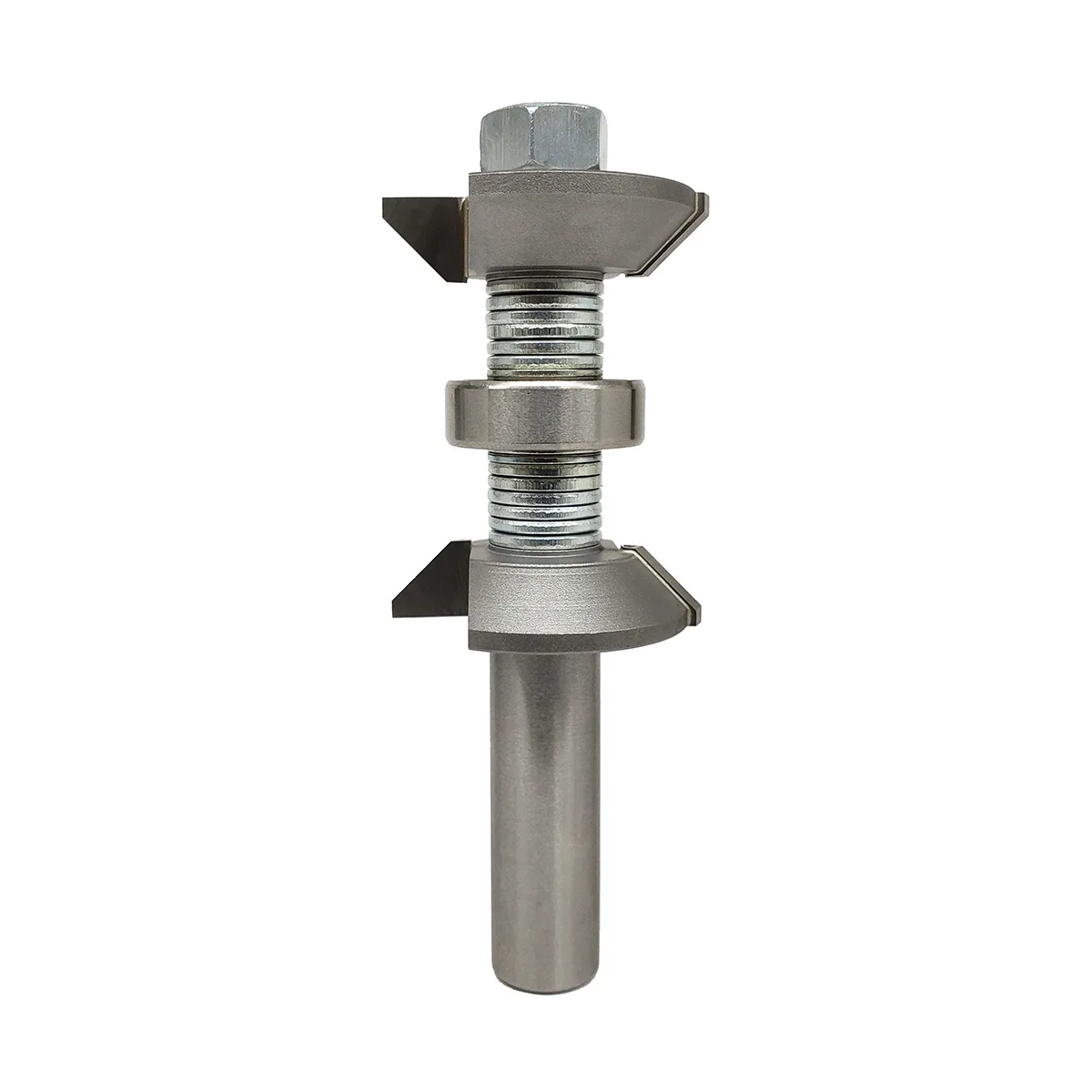
Start with the edge you want, then work backward
A plunge roundover bit does two jobs at once: it cuts a flat bottom and leaves a traditional roundover edge. That makes it useful when you want a rounded profile without switching bits or when you need to cut out a project and keep a clean roundover on the side. The buying decision comes down to three numbers: radius, shank diameter, and pattern length. Radius sets the size of the rounded edge. Shank diameter must match your router collet. Pattern length tells you how much cutting edge you have for the depth of your profile.
The catalog below covers four Whiteside plunge roundover bits with different radii and shanks. Use the specs to narrow the field before you buy, and check your router collet size first so you don't end up with a bit that won't mount.
Radius and shank at a glance
These four bits share a plunge roundover profile but differ in radius, shank, and cutting length. The smallest radius suits fine edges; the largest gives a bolder roundover. Shank size determines which router or CNC spindle you can use.
- Whiteside 2050 — 1/8′′ radius, 1/4′′ shank: Smallest radius in this group. 1/4′′ pattern length, 3/8′′ large diameter, 1/8′′ small diameter. Recommended RPM: 16,000–18,000. Made in USA.
- Whiteside 2052 — 1/4′′ radius, 1/4′′ shank: Mid-size radius. 3/8′′ pattern length, 3/4′′ large diameter, 1/4′′ small diameter. Recommended RPM: 16,000–18,000. Made in USA.
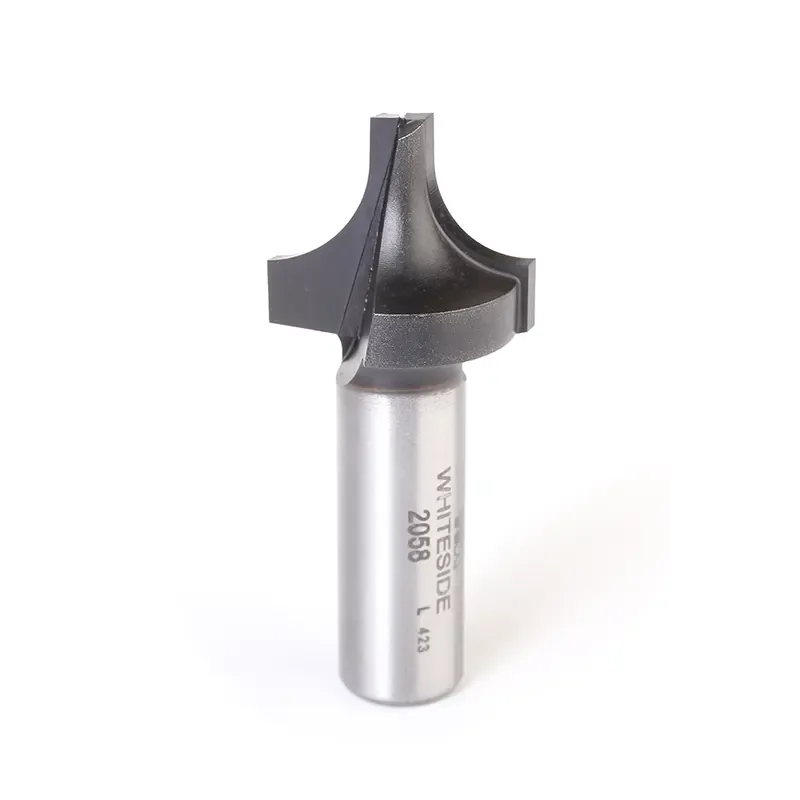
- Whiteside 2058 — 3/8′′ radius, 1/2′′ shank: Larger radius with a heavier shank. 9/16′′ pattern length, 1′′ large diameter, 1/4′′ small diameter. Astra Coated.
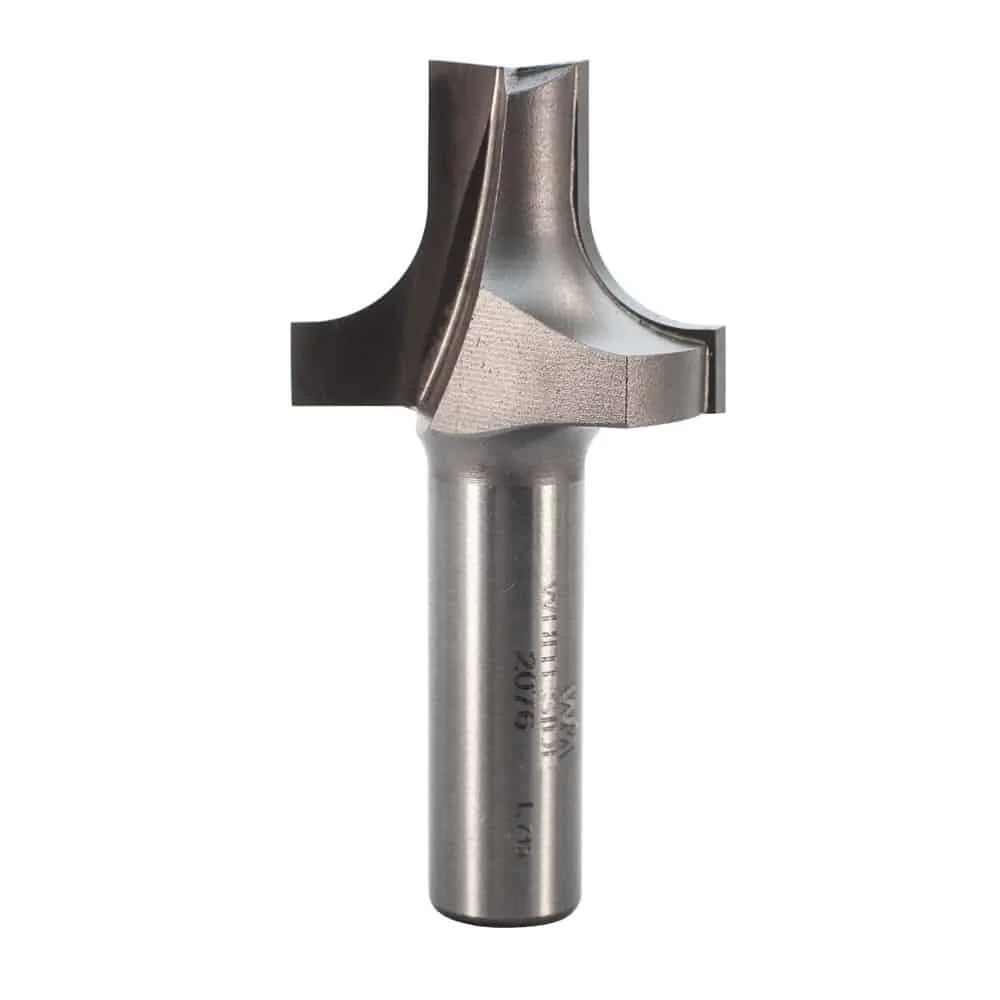
- Whiteside 2076 — 3/8′′ radius long nose, 1/2′′ shank: Long nose roundover and edge trim bit. 13/16′′ pattern length, 1-3/8′′ large diameter, 1/2′′ small diameter. Astra Coated.
Small radius: the 1/8′′ Whiteside 2050
-
1/8″ Plunge Roundover Bit – AstraHP Coated – Whiteside (2050): 1/8′′ radius, 1/4′′ shank, 1/4′′ pattern length, 3/8′′ large diameter, 1/8′′ small diameter, recommended RPM 16,000–18,000, Made in USA, AstraHP coated. A 1/8′′ radius leaves a subtle rounded edge, useful for small parts, drawers, or light trim where a larger roundover would remove too much material. The 1/4′′ shank fits trim routers and many CNC spindles, and the short 1/4′′ pattern length keeps the cut compact.
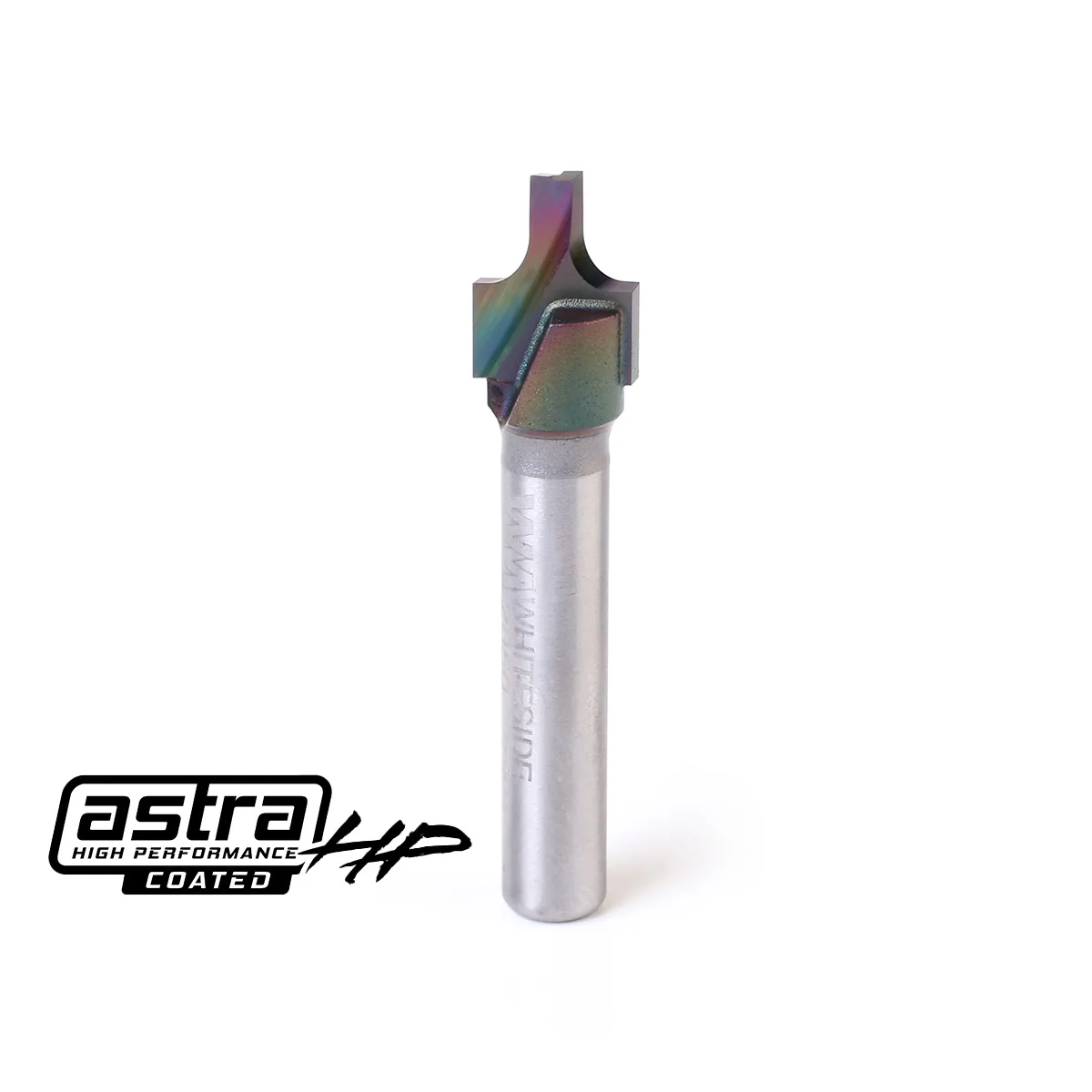
1/8″ Plunge Roundover Bit – AstraHP Coated – Whiteside (2050)
Why the 1/4′′ shank matters for small routers and CNC
The Whiteside 2050 and 2052 both use a 1/4′′ shank. That is the common size for trim routers, palm routers, and many compact CNC spindles. If your router only accepts 1/4′′ bits, these are the two in this group that will mount without an adapter. A 1/2′′ shank bit like the 2058 or 2076 requires a router with a 1/2′′ collet or a reducer, and the catalog for these bits does not list a reducer or adapter, so confirm your setup before ordering.
The 2050 has a 1/4′′ pattern length, while the 2052 has a 3/8′′ pattern length. That extra 1/8′′ of cutting edge on the 2052 gives you a little more room for deeper profiles, but the radius is also larger—so the trade-off is edge size versus cutting depth.
Mid radius: the 1/4′′ Whiteside 2052
-
1/4″ Plunge Roundover Bit x 1/4″ Shank – AstraHP Coated – Whiteside (2052): 1/4′′ radius, 1/4′′ shank, 3/8′′ pattern length, 3/4′′ large diameter, 1/4′′ small diameter, recommended RPM 16,000–18,000, Made in USA, AstraHP coated. A 1/4′′ radius is a versatile middle ground for furniture edges, shelves, and general roundovers. The 1/4′′ shank keeps it compatible with small routers, and the 3/8′′ pattern length provides a bit more cutting edge than the 2050.
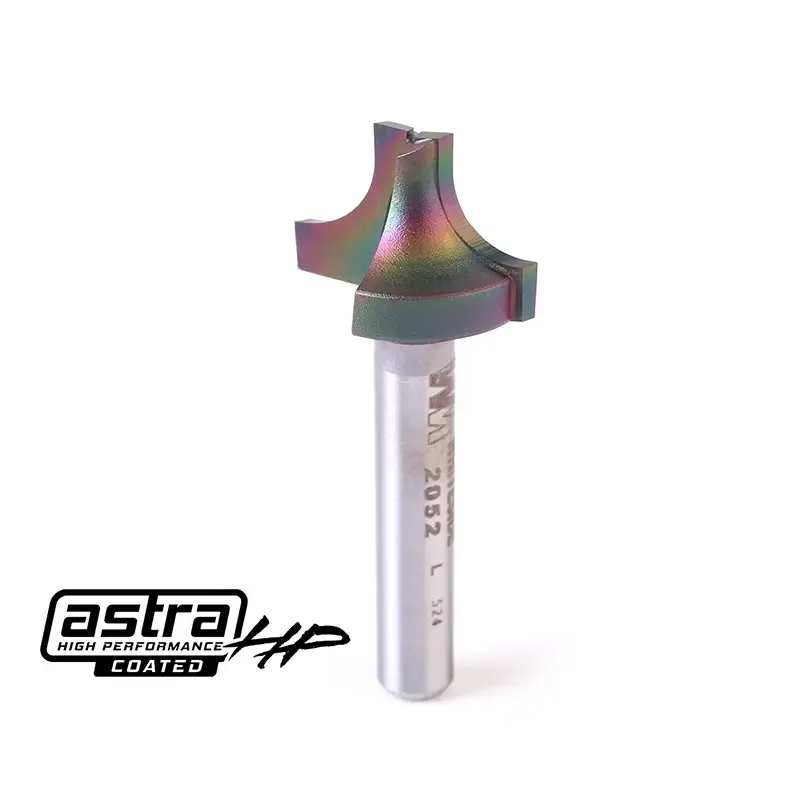
1/4″ Plunge Roundover Bit x 1/4″ Shank – AstraHP Coated – Whiteside (2052)
When to step up to a 3/8′′ radius and 1/2′′ shank
The 3/8′′ radius bits—the Whiteside 2058 and 2076—produce a more pronounced roundover. They also use a 1/2′′ shank, which is stiffer and common on larger routers and CNC machines. The 2058 has a 9/16′′ pattern length and a 1′′ large diameter, while the 2076 long nose has a 13/16′′ pattern length and a 1-3/8′′ large diameter. The long nose design on the 2076 is intended for edge trimming and cutting out a profile while leaving a roundover, so it can be useful when you need reach or when the bit has to clear a thicker workpiece.
Neither the 2058 nor the 2076 lists a recommended RPM in the supplied catalog. That is a gap in the available information, not a statement that the bits have no RPM limit. Check the manufacturer's published speed guidance for these models before running them, especially if you are used to the 16,000–18,000 range of the 2050 and 2052.
Large radius: Whiteside 2058 and 2076
- 3/8″ Plunge Round Over Router Bit x 1/2″ Shank – Astra Coated – Whiteside (2058): 3/8′′ radius, 1/2′′ shank, 9/16′′ pattern length, 1′′ large diameter, 1/4′′ small diameter, Astra Coated. This is the standard 3/8′′ plunge roundover for a 1/2′′ collet router. The 9/16′′ pattern length gives more cutting edge than the 1/4′′ radius bits, and the 1/2′′ shank suits larger routers and CNC spindles.
- 3/8″ Long Nose Roundover & Edge Trim Bit – Astra Coated – Whiteside (2076): 3/8′′ radius long nose roundover and edge trim bit, 1/2′′ shank, 13/16′′ pattern length, 1-3/8′′ large diameter, 1/2′′ small diameter, Astra Coated. The long nose shape and longer 13/16′′ pattern length make this bit suited to cutting out a profile while leaving a roundover edge, or to edge trimming where extra reach helps. The 1/2′′ shank requires a matching collet.
What the catalog does not settle
- Recommended RPM for the 2058 and 2076: The supplied records for these two bits do not list a recommended RPM. The 2050 and 2052 list 16,000–18,000, but do not assume that range applies to the larger bits without checking the manufacturer's guidance.
- Collet adapters or reducers: No adapter or reducer is listed for the 1/2′′ shank bits. If your router only has a 1/4′′ collet, you will need a separate solution; the catalog does not confirm one.
- Material-specific feed rates: The catalog describes the bits as suitable for woodworking and CNC routing, but it does not provide feed rates or depth-per-pass recommendations. Those depend on your machine, material, and setup.
A practical way to choose
If you are working on small parts or want a subtle edge and your router has a 1/4′′ collet, start with the Whiteside 2050 for a 1/8′′ radius or the 2052 for a 1/4′′ radius. The 2052 gives you a slightly longer pattern length, which helps when you need a bit more cutting depth. If you have a 1/2′′ collet and want a more visible roundover, the Whiteside 2058 is the straightforward 3/8′′ choice. Choose the 2076 long nose when you need the extra reach or plan to cut out a profile and keep the roundover on the edge.
Before you buy, confirm two things: the radius matches the look you want, and the shank matches your router collet. The catalog gives you the dimensions and coatings to compare; your router's collet size is the hard limit that decides which half of this group you can use.